buying-guideJune 11, 2026·9 min read

Buy Dihexa: Price, COA & Cost Per Week

Only 1 vetted Dihexa source right now: $69.99 a vial, $0.20/mg. Codes save up to 10%. COA status and real cost per week.

Dihexa: where to buy, forms, and COA checks (2026) buying guide

Dihexa (CAS 1401708-83-5, also listed as PNB-0408) is a synthetic oligopeptide derived from angiotensin IV, sold as a research chemical in powder, capsule, and transdermal forms. It draws buyer attention because of a striking lab claim — that it is far more potent than BDNF at building synaptic connections — but the evidence behind that claim has changed dramatically. This guide is built for sourcing decisions: what forms exist, what a Certificate of Analysis should show, and the honest evidence context a buyer needs before spending money.

Research-context information only. Dihexa is a research peptide. Protocols, doses, and reactions reported below come from published research and self-reported community sources. This article reports what has been documented, not what should be done. Consult a licensed physician for personal medical decisions.

This is not a ranked vendor list — for that, see our Best Dihexa Vendors comparison. This guide teaches how to evaluate any Dihexa listing yourself, with extra weight on the evidence context most competitor pages leave out.

Understanding Dihexa Pricing

Dihexa is sold strictly as a research chemical — not a supplement, not a compounded medicine, and not an FDA-approved drug. That distinction shapes everything about how it is priced and packaged. There is no pharmacopeial monograph, no standardized dose, and no regulatory floor on quality, so price tracks form factor, advertised purity, and how much active material is in the package.

Three forms dominate the market:

Form Typical packaging What you're paying for Notes
Lyophilized powder ~500 mg vials/bottles Raw research material by mass Most flexible; requires the buyer to handle measurement and any solvent
Oral capsules ~5 mg per capsule, 60-count Pre-measured convenience Higher cost per mg than bulk powder; the convenience is the premium
Transdermal (DMSO-based) Pre-mixed solution A solvent carrier + active DMSO is a skin penetrant; community sources debate route, see evidence section below

The pattern across research-chemical pricing is consistent: bulk powder carries the lowest cost per mg, while pre-measured capsules and pre-mixed transdermal solutions add a convenience premium. Because Dihexa has no established human dose, "cost per dose" math depends entirely on community-reported figures rather than any validated protocol — so per-mg comparisons of the raw material are the cleaner way to compare listings. For current vendor-specific pricing, see the Best Dihexa Vendors page.

How to Verify Dihexa Quality

Dihexa COA and HPLC verification

With no regulatory oversight and no standardized product, the Certificate of Analysis (COA) is the only objective signal a buyer has. Dihexa is a small modified peptide (chemical name N-hexanoic-Tyr-Ile-(6)-aminohexanoic acid amide, formula C27H44N4O5, molecular weight ~504 Da). Synthesis impurities, incomplete reactions, and mislabeled material are real risks in the research-chemical market, and a COA is what distinguishes a tested batch from an unverified one.

What a COA Should Include

Identity confirmation

  • Mass spectrometry confirming the correct molecular weight (~504 Da for Dihexa)
  • Confirmation that the tested compound matches CAS 1401708-83-5 / PNB-0408

Purity testing

  • HPLC purity — reputable listings claim ~98% or higher
  • An HPLC chromatogram showing a single dominant peak, not a cluster of unresolved peaks

Contamination testing

  • Residual solvent analysis (especially relevant given DMSO-based transdermal forms)
  • Heavy metals screening where the supplier provides it

How to Verify a COA Is Legitimate

  1. Match the batch. The lot/batch number on the COA should match the number on the vial you receive — not just "a" COA for the product line.
  2. Check the date. A COA should be recent and tied to the production run you're buying, not a years-old generic certificate.
  3. Identify the lab. Independent third-party lab COAs carry more weight than in-house-only documents. A named lab you can look up is a better signal than an unsigned PDF.
  4. Read the chromatogram, not just the headline number. A "98%" claim with no attached HPLC trace is just a number. The trace should show one dominant peak.
  5. Confirm the compound identity. The COA should test for Dihexa specifically (correct mass, correct CAS), not a generic "peptide" assay.

Red Flags to Avoid

  • No COA available, or a COA that won't load / is image-only with no lab name
  • Batch numbers that don't match between COA and vial
  • Purity claimed with no supporting HPLC chromatogram
  • Marketing that presents the retracted "seven orders of magnitude more potent than BDNF" figure as settled fact (see the evidence section below)
  • Human dosing instructions or therapeutic claims on the listing — a tell that the seller is ignoring RUO rules
  • Vendor copy citing a "12.8-day half-life" as established — this figure appears only in vendor marketing, with no verifiable peer-reviewed source

A clean COA verifies that the powder is what the label says. It does not verify that Dihexa is safe in humans — no such data exists for this compound, which is the single most important thing for a buyer to understand.
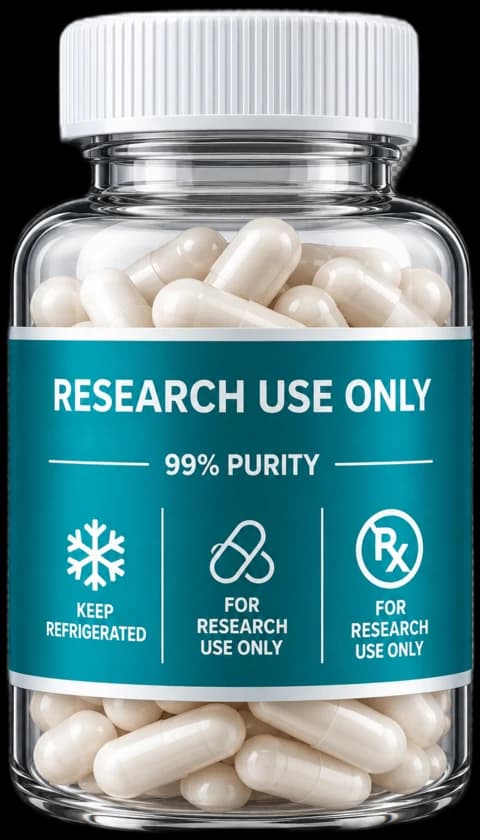
Dihexa research vial
Where to buy Dihexa
One verified, COA-tested Dihexa source
The verified, COA-tested source we track for Dihexa — shipped with a certificate of analysis. Research use only.
COA verified $14.00/mg Swiss Chems
Save 10%THEPEPTIDECATALOGat checkout
Buy at Swiss Chems — $69.99
5mg · sold research-use-only · we may earn a commission

Choosing the Right Form

Dihexa powder, capsules, and transdermal forms

Each Dihexa form trades off cost, convenience, and handling. None of them carries a validated human protocol, so this is a comparison of practical attributes only — not a recommendation about route or amount.

Form Cost per mg Convenience Buyer handling
Powder Lowest Lowest — buyer measures everything Requires a scale; any solvent prep is on the buyer
Capsules Higher Highest — pre-measured Fixed per-capsule amount (commonly 5 mg); no measuring
Transdermal (DMSO) Mid Mid — pre-mixed DMSO is a strong skin penetrant; community sources report skin reactions

A note on the route debate: community discussions (for example on LongeCity) frequently repeat the claim that oral Dihexa is reliably brain-penetrant. That claim traces back to the same WSU papers that were later retracted (see below), so it should be treated as unverified rather than established. Community-reported usage spans all three forms, with no consensus and no pharmacokinetic data in humans to settle it.

Community-reported amounts cluster around 5-20 mg per day, with newer users describing the lower end — but these figures come from vendor copy and forum threads, not pharmacokinetic studies. There is no established human dose for Dihexa, and these numbers are reported here as context, not guidance.

The Evidence Context Every Buyer Should Know

This is where Dihexa differs from most peptides a buyer might compare it against, and where most competitor pages stay silent. The foundational science is under a cloud.

The retractions. A Washington State University investigation found that lead author Leen H. Kawas — later CEO of Athira Pharma — altered images in her dissertation and in at least four co-authored papers (2011-2014). Two of the core mechanism papers were retracted in April 2025 (the retraction notices are PMID 40312092 and PMID 40312093). The original work proposing that Dihexa potentiates hepatocyte growth factor (HGF) signaling at the c-Met receptor to drive synaptogenesis (Kawas 2012, PMID 22129598; Benoist 2014, PMID 25187433) is therefore best described as a proposed mechanism from papers later retracted — not established fact. A third frequently cited paper, the source of the "seven orders of magnitude more potent than BDNF" line (McCoy 2013, PMID 23055539), carries a 2021 Expression of Concern. That potency figure came from an assay-specific in-vitro spine-density measurement (picomolar Dihexa versus nanomolar BDNF in a dish) and does not mean millions-fold greater effect in a living brain.

The independent support. Not all of the evidence is compromised. An independent Chinese group (Sun 2021, PMID 34827486) reported that Dihexa improved Morris water maze performance, raised synaptophysin, and lowered inflammatory markers (IL-1β, TNF-α) via PI3K/AKT signaling in APP/PS1 Alzheimer's-model mice. This is the cleaner independent preclinical signal — but it is a small rodent study, not human evidence. The angiotensin IV background work the field is built on (Wright & Harding 1995, PMID 7768321; Wright 1999, PMID 10234025) and a precursor synaptogenesis paper on Nle1-AngIV analogs (Benoist 2011, PMID 21719467, which does not itself name Dihexa) remain clean.

No human data — and a failed sibling trial. Dihexa has never been tested in a human clinical trial. The closest human evidence in its class comes from Athira Pharma's fosgonimeton (ATH-1017), a compound in the same HGF/c-Met program (sources conflict on whether it is a phosphate prodrug of Dihexa or a structurally distinct molecule). Its Phase 2/3 LIFT-AD Alzheimer's trial failed its primary endpoint — announced September 3, 2024, with a global statistical test result of −0.08 (P = .70). That is the nearest human read-out for this mechanism, and it was negative. None of this proves Dihexa works or doesn't work in people; it means a buyer is purchasing a compound whose human evidence base is empty and whose foundational preclinical papers are retracted.

Vendor Evaluation Methodology

When weighing any Dihexa listing, the same three-factor framework applies as for any research chemical — weighted price 40%, COA 30%, reputation 30%.

Price competitiveness (40%). Compare on cost per mg of raw material, not headline package price. Capsules and pre-mixed transdermal solutions carry a convenience premium over bulk powder; whether that premium is worth it is a handling preference, not a quality difference.

COA and testing (30%). A current, batch-matched, third-party HPLC COA showing ~98%+ purity and correct identity (mass ~504 Da, CAS 1401708-83-5) is the floor. No COA, no purchase.

Reputation (30%). Look for consistent COA practices across batches, transparent lab sourcing, and listings that respect RUO framing rather than making human-use or therapeutic claims. A vendor that markets the retracted BDNF-potency figure or a "12.8-day half-life" as fact is signaling weak editorial standards.

Shipping and Storage

What to Expect When an Order Arrives

Lyophilized Dihexa powder typically arrives as a white-to-off-white solid in a sealed vial. Buyers commonly check vial integrity (intact seal, no cracks) and confirm the lot number matches the COA on arrival. Capsules arrive pre-measured in a sealed bottle; transdermal preparations arrive as a pre-mixed liquid, often DMSO-based.

Storage Guidelines

State Storage Notes
Lyophilized powder Refrigerated or frozen, sealed and dry Cool, dark, dry storage is standard for research peptides
Powder, short-term Room temperature, away from light/humidity Acceptable briefly; cold storage preferred for longer holds
Capsules Cool, dry, sealed bottle Keep away from heat and humidity
Transdermal/DMSO solution Per supplier guidance DMSO is hygroscopic; follow the supplier's storage note

Because no standardized stability data exists for Dihexa across these forms, storage practices in the community follow general research-peptide conventions rather than compound-specific testing.

30ml bacteriostatic water vial — 0.9% benzyl alcohol multi-dose
Bac Water Made for Peptides50% off
Don't risk a $300 peptide on generic bac water.
Most cloudy reconstitutions trace back to one thing — and it isn't the peptide. Sterile, non-pyrogenic, 0.9% benzyl alcohol — formulated for peptide reconstitution, not repackaged from generic stock.
0.9% benzyl alcohol Made for peptides 30 mL multi-dose
See why our bac water doesn't ruin peptides
Ships fast · 50% off with code thepeptidecatalog

Frequently Asked Questions

Is Dihexa legal to buy?
Dihexa (CAS 1401708-83-5 / PNB-0408) is sold as a research chemical labeled 'not for human consumption.' It is not FDA-approved, not a supplement, and not a medicine. Vendors ship it for research use only (RUO); legality of possession and use varies by jurisdiction. Verify local rules before ordering.
What forms is Dihexa sold in?
Three are common: lyophilized research powder (often 500 mg), pre-measured oral capsules (commonly 5 mg/cap), and transdermal preparations usually dissolved in DMSO. Some listings also advertise injectable solutions. All are sold RUO; none has an established human dose.
What purity should a Dihexa COA show?
Reputable research-chemical COAs report HPLC purity, typically claimed at ~98% or higher, alongside an identity test (mass spec confirming the molecular weight, ~504 Da). A single dominant HPLC peak and a recent batch date matched to your lot are the core signals. No COA verifies human safety — none exists for Dihexa.
Why does the Dihexa evidence base matter when buying?
The two core mechanism papers were retracted in 2025 after a Washington State University misconduct finding, and a related Alzheimer's drug in the same pathway (fosgonimeton) failed its Phase 2/3 trial in 2024. Dihexa itself has no human trial data. A buyer should weigh that evidence context, not vendor marketing.
Can I buy Dihexa from a pharmacy?
No. Dihexa is not an approved drug and has no monograph, so pharmacies do not stock it. It is available only through research-chemical suppliers, which sell it RUO with purity dependent on the supplier's COA.
  • For background on how research-chemical COAs are read across compounds, the COA-verification framework above applies to any peptide listing.
  • Readers comparing cognitive research compounds often look at the broader nootropic-peptide landscape, where human trial data is similarly limited and evidence context matters as much as price.

References

  1. Kawas LH, et al. J Pharmacol Exp Ther. 2012 — angiotensin IV-derived HGF/Met modifiers (PMID 22129598). Retracted 2025 (retraction notice PMID 40312092).
  2. Benoist CC, et al. J Pharmacol Exp Ther. 2014 — HGF/c-Met dependence of the procognitive effect (PMID 25187433). Retracted 2025 (retraction notice PMID 40312093).
  3. McCoy AT, et al. J Pharmacol Exp Ther. 2013 — stabilized AngIV analogs; source of the BDNF-potency figure (PMID 23055539). Expression of Concern, 2021.
  4. Sun Z, et al. Brain Sci. 2021 — Dihexa in APP/PS1 Alzheimer's-model mice, independent group (PMID 34827486).
  5. Benoist CC, et al. J Pharmacol Exp Ther. 2011 — Nle1-AngIV analog synaptogenesis (PMID 21719467).
  6. Wright JW, Harding JW. Brain Res Rev. 1995 — the angiotensin IV / AT4 system (PMID 7768321).

This article is for educational and informational purposes only. It is not medical advice and should not be used to diagnose, treat, or prevent any condition. Dihexa is sold for research use only and is not for human consumption. Consult a licensed healthcare provider before using any peptide.