buying-guideJune 11, 2026·10 min read

Buy NSI-189: Price, COA & Cost Per Week

Only 1 vetted NSI-189 source right now: $22.99 a vial, $0.02/mg. Codes save up to 10%. COA status and real cost per week.

NSI-189 buying guide

NSI-189 (phosphate salt CAS 1270138-41-4, free base CAS 1270138-40-3) is a synthetic small molecule — not a peptide — developed by Neuralstem as a neurogenic candidate for major depressive disorder. It draws buyer attention for an unusual reason in the research-chemical market: it actually reached human clinical trials. But those trials are also the most important thing a buyer needs to understand, because the pivotal Phase 2 study failed its primary endpoint. This guide is built for sourcing decisions: what forms exist, what a Certificate of Analysis should show, and the honest evidence context that shapes the purchase.

NSI-189 is sold today by Swiss Chems, a recommended vendor on the catalog, as a research chemical in three forms. This is not a ranked vendor comparison — Swiss Chems is the single verified source we track for this compound — but a guide to evaluating any NSI-189 listing yourself, with extra weight on the clinical record most competitor pages leave out.

Research-context information only. NSI-189 is an investigational compound that was studied in human clinical trials but is not approved by the FDA; its clinical program was discontinued, and material sold today is a research chemical labeled not for human consumption. Protocols, doses, and reactions reported below come from published clinical trials, preclinical research, and self-reported community sources. This article reports what has been documented, not what should be done. Consult a licensed physician for personal medical decisions.

Understanding NSI-189 Pricing

NSI-189 is sold strictly as a research chemical — not a supplement, not a compounded medicine, and not an FDA-approved drug. The depression program was discontinued after the 2017 Phase 2 miss, so there is no pharmacopeial monograph, no standardized enhancement dose, and no regulatory floor on quality. Price tracks form factor, advertised purity, and how much active material is in the package.

Three forms dominate what Swiss Chems stocks:

Form Typical packaging What you're paying for Notes
NSI-189 phosphate powder 1 gram Raw research material by mass The trial-used salt; buyer handles measurement
NSI-189 phosphate capsules 20 mg per capsule, 60-count Pre-measured convenience Higher cost per mg than bulk powder; convenience is the premium
NSI-189 free-base powder 1 gram Raw research material by mass Less commonly discussed; the phosphate form was used in trials

The pattern across research-chemical pricing is consistent: bulk powder carries the lowest cost per mg, while pre-measured capsules add a convenience premium. The phosphate salt is the form used in the clinical trials and the more commonly stocked and discussed form; vendors describe it as having better solubility and stability than the free base. Because NSI-189 has no clinically-established enhancement dose, "cost per dose" math depends entirely on community-reported figures rather than a validated protocol — so per-mg comparisons of the raw material are the cleaner way to evaluate a listing.

How to Verify NSI-189 Quality
NSI-189 COA and HPLC verification

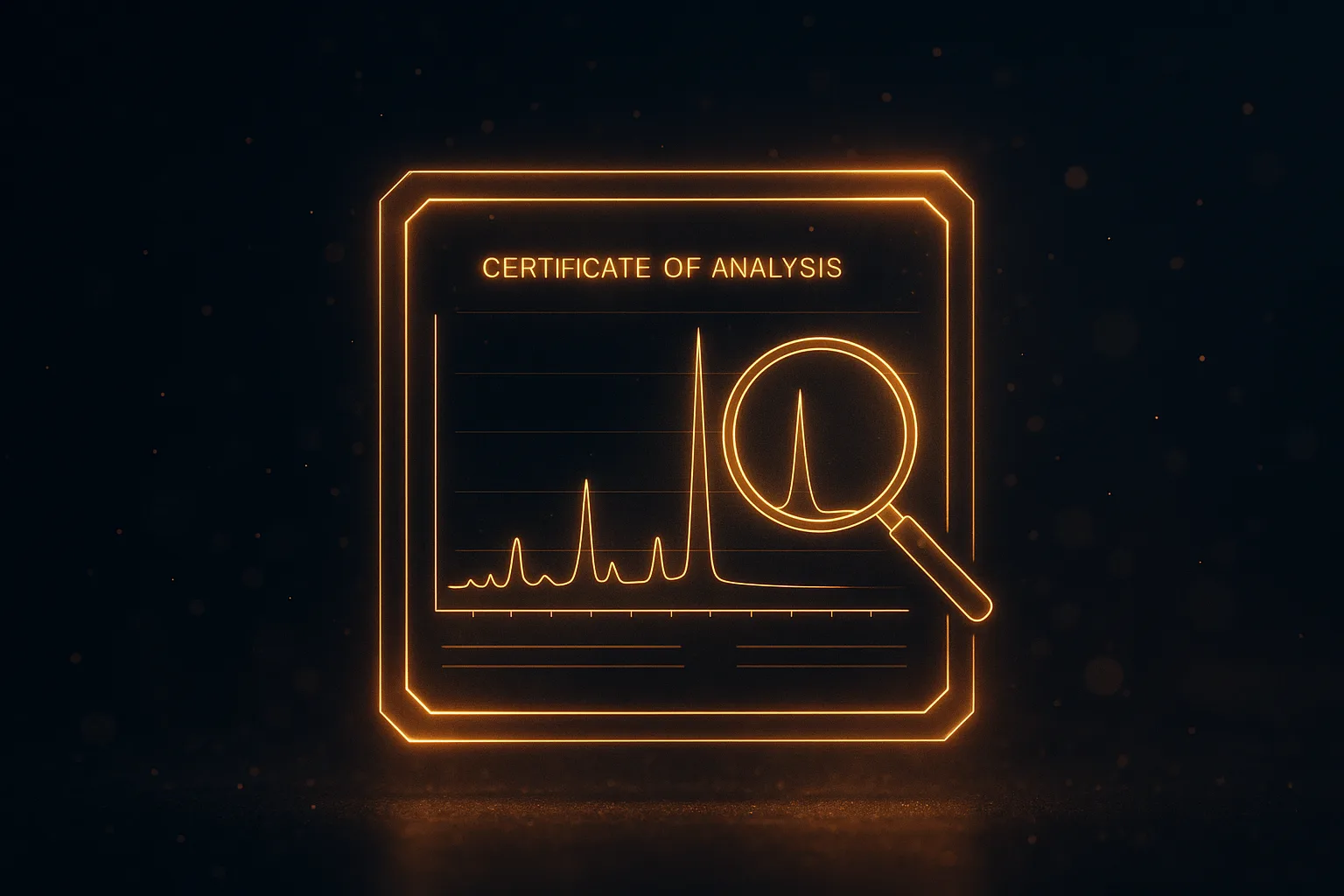
With no regulatory oversight and no standardized product, the Certificate of Analysis (COA) is the only objective signal a buyer has. NSI-189 is a synthetic benzylpiperazine-aminopyridine; the phosphate salt is registered under CAS 1270138-41-4 and the free base under CAS 1270138-40-3. Synthesis impurities, incomplete reactions, and mislabeled material are real risks in the research-chemical market, and a COA is what distinguishes a tested batch from an unverified one.

What a COA Should Include

Identity confirmation

  • Mass spectrometry confirming the compound identity
  • Confirmation that the tested material matches the correct CAS (1270138-41-4 for the phosphate, 1270138-40-3 for the free base)

Purity testing

  • HPLC purity — Swiss Chems describes third-party HPLC/MS batch testing, with purity typically claimed around 98-99%
  • An HPLC chromatogram showing a single dominant peak, not a cluster of unresolved peaks

Contamination testing

  • Residual solvent analysis from the synthesis
  • Heavy metals screening where the supplier provides it

How to Verify a COA Is Legitimate

  1. Match the batch. The lot/batch number on the COA should match the number on the product you receive — not just "a" COA for the product line.
  2. Check the date. A COA should be recent and tied to the production run you're buying, not a years-old generic certificate.
  3. Identify the lab. Independent third-party lab COAs carry more weight than in-house-only documents. A named lab you can look up is a better signal than an unsigned PDF.
  4. Read the chromatogram, not just the headline number. A "99%" claim with no attached HPLC trace is just a number. The trace should show one dominant peak.
  5. Confirm the compound identity. The COA should test for NSI-189 specifically — correct mass, correct CAS, and the correct salt form (phosphate vs free base) — not a generic assay.

Red Flags to Avoid

  • No COA available, or a COA that won't load or is image-only with no lab name
  • Batch numbers that don't match between COA and the product
  • Purity claimed with no supporting HPLC chromatogram
  • Marketing that presents NSI-189 as a proven antidepressant or cognitive enhancer — the pivotal Phase 2 trial failed its primary endpoint (see below)
  • Human dosing instructions or therapeutic claims on the listing — a tell that the seller is ignoring RUO rules
  • Free-base material sold as if it were the trial-used form — the phosphate salt is what the clinical trials used

A clean COA verifies that the powder is what the label says. It does not verify that NSI-189 is safe or effective in humans — its depression program was discontinued after a failed primary endpoint, which is the single most important thing for a buyer to understand.
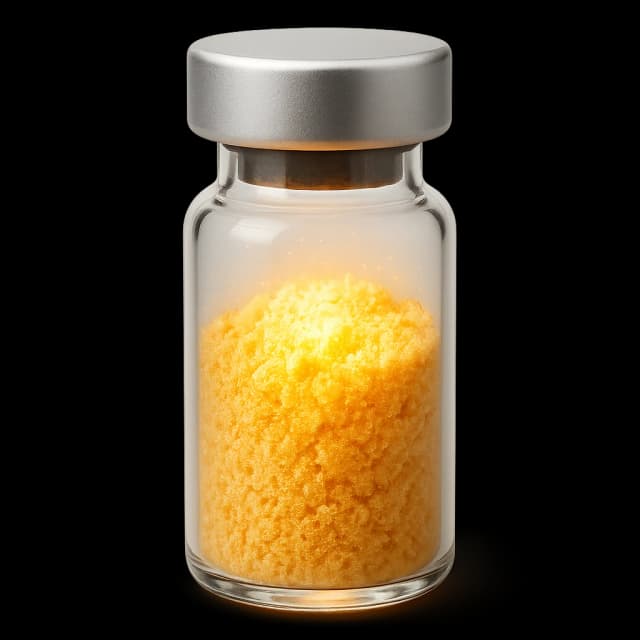
NSI-189 research vial
Where to buy NSI-189
One verified, COA-tested NSI-189 source
The verified, COA-tested source we track for NSI-189 — shipped with a certificate of analysis. Research use only.
COA verified $2.00/mg Swiss Chems
Save 10%THEPEPTIDECATALOGat checkout
Buy at Swiss Chems — $39.99
20mg · sold research-use-only · we may earn a commission

Choosing the Right Form

NSI-189 phosphate powder, capsules, and free-base forms

Each NSI-189 form trades off cost, convenience, and which salt you're handling. None of them carries a validated human enhancement protocol, so this is a comparison of practical attributes only — not a recommendation about route or amount.

Form Cost per mg Convenience Buyer handling
Phosphate powder Lowest Lowest — buyer measures everything Requires a scale; the trial-used salt
Phosphate capsules Higher Highest — pre-measured at 20 mg/cap Fixed per-capsule amount; no measuring
Free-base powder Lowest Lowest — buyer measures everything Less commonly used; not the trial form

Because NSI-189 is an oral small molecule sold as powder or capsules, there is no reconstitution or bac-water step and no dilution table applies — a key difference from injectable research peptides. The dominant community route is oral, matching the oral route used in the human trials; sublingual use is occasionally mentioned in forums but has no pharmacokinetic basis in the published record.

On amount: community and vendor sources most commonly reference about 40-80 mg per day, taken orally once daily. That range is inherited directly from the doses used in the Phase 1B and Phase 2 depression trials (40 mg and 80 mg/day arms) — it is not a dose validated for cognitive enhancement in healthy users, and no such trial exists. There is no clinically-established enhancement dose for NSI-189; the figure community sources use is the trial-derived one, reported here as context, not guidance. Community sources also commonly describe time-limited courses and on/off cycling, mirroring the 28-day to 12-week trial exposures, with no human safety data behind any specific cycle length beyond those ≤12-week windows.

The Evidence Context Every Buyer Should Know

This is where NSI-189 differs from most research chemicals a buyer might compare it against — and where most competitor pages stay quiet. Unlike a pure research peptide, NSI-189 has genuine human trial data. The headline is that the pivotal trial failed.

The failed Phase 2. The 220-patient, 12-week, double-blind, placebo-controlled Phase 2 study (Papakostas et al., 2020, PMID 30626911) tested NSI-189 at 40 mg/day and 80 mg/day versus placebo in outpatients with major depressive disorder, using a sequential-parallel comparison design. Its prospectively-defined primary endpoint — change in the Montgomery-Åsberg Depression Rating Scale (MADRS) — was not met. Neither dose reached statistical significance (40 mg pooled difference ≈ −1.8, p = 0.224; 80 mg ≈ −1.4, p = 0.344). Some subject-rated secondary scales (the SDQ and CPFQ) favored the 40 mg dose at p = 0.044, and a small hippocampal-volume increase was reported, but these are secondary, subject-rated signals that do not rescue a failed primary endpoint. On the July 2017 top-line miss, Neuralstem's stock fell roughly 61%, and the depression program did not advance to a successful Phase 3.

The post-hoc footnote. A post-hoc subgroup analysis (Johe et al., 2020, PMID 32722729) reported that the 80 mg dose benefited the moderately-depressed subgroup (baseline MADRS < 30) but not severely-depressed patients. Post-hoc subgroup findings are hypothesis-generating only; they do not change the failed primary endpoint and should not be read as evidence the compound "works for moderate depression."

The preclinical record. Animal and in-vitro work is directionally consistent but uniformly preclinical. In rats, oral NSI-189 started 6 hours post-stroke improved motor and neurological deficits and raised BDNF expression (Tajiri et al., 2017, PMID 28181668). In Angelman-syndrome model mice, it enhanced hippocampal long-term potentiation dose- and time-dependently and reversed cognitive and motor impairments, with effects associated with TrkB and Akt pathway activation (Liu et al., 2019, PMID 30408487) — the cleanest mechanistic synaptic-plasticity evidence in the record. None of this is human-efficacy evidence, and the precise molecular target of NSI-189 was never fully defined in the published literature. The mechanism is best read as proposed and partially characterized, not established.

The tolerability record — the relative positive. Unusually for this category, the short-term tolerability record is genuinely reassuring. Phase 1B (Fava et al., 2016, PMID 26643541) reported NSI-189 was relatively well tolerated at up to 120 mg/day with no serious adverse effects; the most common adverse events were headache, dizziness, and somnolence. The Phase 2 described it as safe and well tolerated with no serious adverse events attributable to the compound. The hard limit: trial exposure ran only up to ~12 weeks, so there is no long-term human safety data, and a compound proposed to promote neurogenesis carries unknown long-term proliferative-signaling implications as a mechanistic (not documented) consideration.

None of this proves NSI-189 helps or harms cognition in healthy people — it means a buyer is purchasing a compound with a failed pivotal depression endpoint, no enhancement trial, but a relatively clean ≤12-week tolerability record.

Vendor Evaluation Methodology

When weighing any NSI-189 listing, the same three-factor framework applies as for any research chemical — weighted price 40%, COA 30%, reputation 30%.

Price competitiveness (40%). Compare on cost per mg of raw material, not headline package price. Capsules carry a convenience premium over bulk powder; whether that premium is worth it is a handling preference, not a quality difference.

COA and testing (30%). A current, batch-matched, third-party HPLC COA showing ~98%+ purity and correct identity (correct CAS and salt form) is the floor. No COA, no purchase.

Reputation (30%). Look for consistent COA practices across batches, transparent lab sourcing, and listings that respect RUO framing rather than making human-use or therapeutic claims. A vendor that markets NSI-189 as a proven antidepressant or enhancer — ignoring the failed Phase 2 — is signaling weak editorial standards.

Shipping and Storage

What to Expect When an Order Arrives

NSI-189 phosphate or free-base powder typically arrives as a solid in a sealed container; capsules arrive pre-measured at 20 mg each in a sealed bottle. Buyers commonly check container integrity (intact seal, no damage) and confirm the lot number matches the COA on arrival.

Storage Guidelines

State Storage Notes
Phosphate / free-base powder Cool, dark, dry, sealed Standard for research compounds; refrigeration acceptable for longer holds
Powder, short-term Room temperature, away from light/humidity Acceptable briefly; cool storage preferred for longer holds
Capsules Cool, dry, sealed bottle Keep away from heat and humidity

Because no standardized stability data exists for NSI-189 across these forms, storage practices in the community follow general research-compound conventions rather than compound-specific testing.

30ml bacteriostatic water vial — 0.9% benzyl alcohol multi-dose
Bac Water Made for Peptides
Don't risk a $300 peptide on generic bac water.
Most cloudy reconstitutions trace back to one thing — and it isn't the peptide. Sterile, non-pyrogenic, 0.9% benzyl alcohol — formulated for peptide reconstitution, not repackaged from generic stock.
0.9% benzyl alcohol Made for peptides 30 mL multi-dose
See why our bac water doesn't ruin peptides
30ml from $18.75 · Ships fast · Code thepeptidecatalog

Frequently Asked Questions

Did NSI-189 work for depression in clinical trials?
No. The 220-patient, 12-week Phase 2 study (Papakostas et al., 2020, PMID 30626911) reported no statistically significant MADRS improvement for either the 40 mg (p=0.224) or 80 mg (p=0.344) dose versus placebo. Some subject-rated secondary scales favored 40 mg, but the prospectively-defined primary endpoint was not met, and the depression program was discontinued.
What forms is NSI-189 sold in?
Swiss Chems carries three: NSI-189 phosphate powder (1 g), NSI-189 phosphate capsules (20 mg per capsule, 60-count), and NSI-189 free-base powder (1 g). The phosphate salt is the form used in the human trials. All are sold for research use only, labeled not for human consumption.
Is there an established NSI-189 dose?
There is no clinically-established cognitive-enhancement dose. Community and vendor sources commonly reference about 40-80 mg per day taken orally once daily — a range inherited directly from the doses used in the depression trials, not from any trial validating NSI-189 for enhancement in healthy users. It is an oral small molecule, so no reconstitution or dilution applies.
What purity should an NSI-189 COA show?
Reputable research-chemical COAs report HPLC purity, typically claimed at ~98% or higher, alongside an identity test (mass spec confirming the compound). A single dominant HPLC peak and a recent batch date matched to your lot are the core signals. No COA verifies human safety — material sold today is a research chemical, not an approved drug.
Can I buy NSI-189 from a pharmacy?
No. NSI-189 reached Phase 2 for major depressive disorder but is not FDA-approved, has no monograph, and its clinical program was discontinued. Pharmacies do not stock it. It is available only through research-chemical suppliers, which sell it RUO with purity dependent on the supplier's COA.
  • The COA-verification framework above applies to any research-chemical listing, where purity depends entirely on the supplier's certificate rather than regulatory oversight.
  • Readers comparing cognitive research compounds often look at the broader nootropic landscape, where — as with NSI-189 — evidence context matters as much as price, and human enhancement data is typically absent.

References

  1. Fava M, Johe K, et al. A Phase 1B, randomized, double-blind, placebo-controlled, multiple-dose-escalation study of NSI-189 phosphate in depressed patients. Mol Psychiatry. 2016 — well tolerated up to 120 mg/day, no serious adverse effects (PMID 26643541).
  2. Papakostas GI, Johe K, et al. A phase 2, double-blind, placebo-controlled study of NSI-189 phosphate among outpatients with MDD. Mol Psychiatry. 2020 — n=220; failed primary MADRS endpoint (40 mg p=0.224; 80 mg p=0.344) (PMID 30626911).
  3. Johe KK, Kay G, et al. NSI-189 phosphate selectively benefits moderately depressed patients: a post-hoc analysis. Ann Clin Psychiatry. 2020 — 80 mg benefit in the moderate subgroup only; hypothesis-generating (PMID 32722729).
  4. Tajiri N, Quach DM, et al. NSI-189, a small molecule with neurogenic properties, exerts behavioral and neurostructural benefits in stroke rats. J Cell Physiol. 2017 — oral NSI-189 improved post-stroke deficits; raised BDNF (PMID 28181668).
  5. Liu Y, Johe K, et al. Enhancement of synaptic plasticity and reversal of impairments in Angelman Syndrome mice by NSI-189. Neuropharmacology. 2019 — dose/time-dependent LTP increase via TrkB/Akt (PMID 30408487).

This article is for educational and informational purposes only. It is not medical advice and should not be used to diagnose, treat, or prevent any condition. NSI-189 is sold for research use only and is not for human consumption. Consult a licensed healthcare provider before using any research compound.