P-21 (also written P021, CAS 1246751-68-7) is a synthetic adamantane-modified tetrapeptide — Ac-DGGLAG-NH2 — derived from the active region of ciliary neurotrophic factor (CNTF). It was developed in Khalid Iqbal's lab by paring the neurotrophic activity of Cerebrolysin down to a single defined molecule, and it draws buyer attention for a coherent body of rodent work on neurogenesis and tau reduction. This guide is built for sourcing decisions: what form exists, what a Certificate of Analysis should show, and the honest evidence context a buyer needs before spending money.
The most important thing to understand up front is the evidence gap. The P-21 literature is consistent in direction and — unlike some cognitive research chemicals — clean of retractions, but it is entirely preclinical, mostly from one lab, and has never been tested in a human trial. There is no human safety, dose, or pharmacokinetic data of any kind. That shapes how a buyer should read every listing.
Research-context information only. P-21 is a research peptide. Protocols, doses, and reactions reported below come from published research and self-reported community sources. This article reports what has been documented, not what should be done. Consult a licensed physician for personal medical decisions.
This is not a ranked vendor list. P-21 is a niche compound with a single verified recommended source, so this guide teaches how to evaluate any P-21 listing yourself — with extra weight on the COA checks and evidence context most competitor pages leave out.
Understanding P-21 Pricing
P-21 is sold strictly as a research chemical — not a supplement, not a compounded medicine, and not an FDA-approved drug. There is no pharmacopeial monograph, no standardized dose, and no regulatory floor on quality, so price tracks form factor, advertised purity, and how much active material is in the package.
Unlike compounds that ship in several formats, P-21 is sold in essentially one form across research vendors:
Form
Typical packaging
What you're paying for
Notes
Lyophilized vial
5 mg freeze-dried single vial
Raw research material by mass
Reconstituted with bacteriostatic water like a standard injectable peptide; ~36-month stated shelf life
Because P-21 has no established human dose, "cost per dose" math depends entirely on community-reported figures rather than any validated protocol. The cleaner way to compare listings is cost per mg of active material, weighed against the vendor's purity claim and COA quality. A 5 mg vial is the standard unit; the community-reported figures that circulate (roughly 500 mcg to 1 mg per use) are microgram-to-low-milligram amounts, but those are anecdotal and vendor-derived, not trial-validated, so they are not a reliable basis for cost-per-dose comparisons.
How to Verify P-21 Quality
With no regulatory oversight and no standardized product, the Certificate of Analysis (COA) is the only objective signal a buyer has. P-21 is a small adamantane-modified tetrapeptide (Ac-DGGLAG-NH2; molecular formula listed around C27H42N6O8; CAS 1246751-68-7). Synthesis impurities, incomplete reactions, and mislabeled material are real risks in the research-chemical market, and a COA is what distinguishes a tested batch from an unverified one.
What a COA Should Include
Identity confirmation
Mass spectrometry confirming the correct molecular weight for the Ac-DGGLAG-NH2 sequence
Confirmation that the tested compound matches CAS 1246751-68-7
Purity testing
HPLC purity — reputable listings claim ~98-99% or higher
An HPLC chromatogram showing a single dominant peak, not a cluster of unresolved peaks
Contamination testing
Residual solvent analysis
Heavy metals screening where the supplier provides it
How to Verify a COA Is Legitimate
Match the batch. The lot/batch number on the COA should match the number on the vial you receive — not just "a" COA for the product line.
Check the date. A COA should be recent and tied to the production run you're buying, not a years-old generic certificate.
Identify the lab. Independent third-party lab COAs carry more weight than in-house-only documents. A named lab you can look up is a better signal than an unsigned PDF.
Read the chromatogram, not just the headline number. A "98%" claim with no attached HPLC trace is just a number. The trace should show one dominant peak.
Confirm the compound identity. The COA should test for P-21 specifically (correct mass for Ac-DGGLAG-NH2, correct CAS), not a generic "peptide" assay.
Red Flags to Avoid
No COA available, or a COA that won't load / is image-only with no lab name
Batch numbers that don't match between COA and vial
Purity claimed with no supporting HPLC chromatogram
Marketing that presents rodent disease-model findings (tau reduction, neurogenesis, survival increases in mouse Alzheimer's models) as proven human benefits — these were demonstrated in animals, not people
Human dosing instructions or therapeutic claims on the listing — a tell that the seller is ignoring RUO rules
Listings that describe P-21 as "clinically proven" or "in clinical trials" — there are no human clinical trials of P-21
A clean COA verifies that the powder is what the label says. It does not verify that P-21 is safe in humans — no such data exists for this compound, which is the single most important thing for a buyer to understand.
5mg · sold research-use-only · we may earn a commission
Choosing the Right Vial Size
P-21 is sold in a single standard unit — the 5 mg lyophilized vial — so vial-size choice is simpler than for compounds sold in multiple package weights. The practical decision is how many vials to buy at once, which is a storage-and-stability question rather than a dosing one.
Because the vial ships freeze-dried, community sources describe reconstituting it with bacteriostatic water like a standard injectable peptide, then storing the reconstituted solution refrigerated. The stated shelf life of the sealed lyophilized vial is long (~36 months on common listings), but once reconstituted, a peptide solution has a much shorter practical window. That makes buying more than can be used within a reasonable reconstituted window a storage trade-off, not a savings.
A note on dose context, because it bears on how far a 5 mg vial goes: P-21 has no clinically established human dose. The figures community and vendor sources actually use cluster around 500 mcg to 1 mg once daily, within a broader cited range of roughly 100 mcg to 2 mg per day, with newer users commonly pointed toward the lower end. Community sources most often describe subcutaneous injection after reconstitution, with intranasal also mentioned, and morning dosing to avoid the sleep disruption some users report at higher or later-day doses. Every one of these figures is anecdotal or vendor-derived — none comes from human pharmacokinetic data, and rodent studies actually used oral dosing, so even the community route differs from the preclinical one. These numbers are reported here as context, not guidance.
Vendor Evaluation Methodology
When weighing any P-21 listing, the same three-factor framework applies as for any research chemical — weighted price 40%, COA 30%, reputation 30%.
Price competitiveness (40%). Compare on cost per mg of raw material against the vendor's purity claim, not headline package price alone. Since P-21 is sold in one standard 5 mg vial format, per-mg comparisons across vendors are relatively clean.
COA and testing (30%). A current, batch-matched, third-party HPLC COA showing ~98%+ purity and correct identity (correct mass for Ac-DGGLAG-NH2, CAS 1246751-68-7) is the floor. No COA, no purchase.
Reputation (30%). Look for consistent COA practices across batches, transparent lab sourcing, and listings that respect RUO framing rather than making human-use or therapeutic claims. P-21 is sold by Swiss Chems, a recommended vendor in our database, as a 5 mg lyophilized vial with stated CAS 1246751-68-7 and ~98-99% HPLC purity claims; as with any research chemical, the purity claim is only as good as the attached COA, so verify the certificate for your specific lot.
Shipping and Storage
What to Expect When an Order Arrives
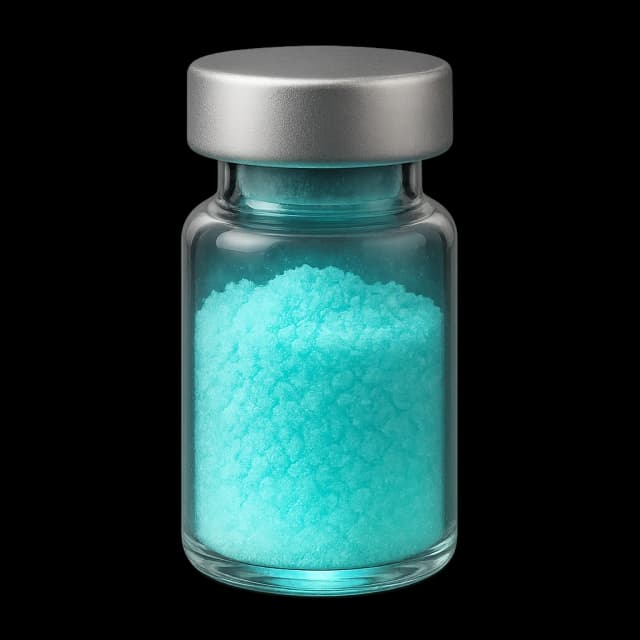
Lyophilized P-21 typically arrives as a white-to-off-white solid in a sealed vial. Buyers commonly check vial integrity (intact seal, no cracks) and confirm the lot number matches the COA on arrival. Because P-21 ships as a dry powder rather than a pre-mixed solution, no liquid handling is involved until reconstitution.
Storage Guidelines
State
Storage
Notes
Lyophilized vial, long-term
Refrigerated or frozen, sealed and dry
Cool, dark, dry storage is standard for research peptides; sealed shelf life is long (~36 months on common listings)
Lyophilized vial, short-term
Room temperature, away from light/humidity
Acceptable briefly; cold storage preferred for longer holds
Reconstituted solution
Refrigerated
Much shorter practical window than the sealed vial; keep cold and protected from light
Because no standardized stability data exists for P-21 in human-use conditions, storage practices in the community follow general research-peptide conventions rather than compound-specific testing.
Bac Water Made for Peptides
Don't risk a $300 peptide on generic bac water.
Most cloudy reconstitutions trace back to one thing — and it isn't the peptide. Sterile, non-pyrogenic, 0.9% benzyl alcohol — formulated for peptide reconstitution, not repackaged from generic stock.
✓ 0.9% benzyl alcohol✓ Made for peptides✓ 30 mL multi-dose
P-21 (P021, CAS 1246751-68-7) is sold as a research chemical labeled 'not for human consumption.' It is not FDA-approved, not a supplement, and not a medicine. Vendors ship it for research use only (RUO); legality of possession and use varies by jurisdiction. Verify local rules before ordering.
What form is P-21 sold in?
The common format is a 5 mg lyophilized (freeze-dried) vial, sold RUO. Because it ships as a dry powder, community sources describe reconstituting it with bacteriostatic water like a standard injectable peptide. Listings typically claim ~98-99% HPLC purity, which depends entirely on the supplier's COA.
What purity should a P-21 COA show?
Reputable research-chemical COAs report HPLC purity, typically claimed at ~98% or higher, alongside an identity test (mass spec confirming the molecular weight). A single dominant HPLC peak and a recent batch date matched to your lot are the core signals. No COA verifies human safety — none exists for P-21.
Does P-21 have an established dose?
There is no clinically established human dose — no human trial has defined one. The figures community and vendor sources actually use cluster around 500 mcg to 1 mg once daily (broader cited range ~100 mcg-2 mg/day). Those numbers are anecdotal and vendor-derived, not trial-validated.
Can I buy P-21 from a pharmacy?
No. P-21 is not an approved drug and has no monograph, so pharmacies do not stock it. It is available only through research-chemical suppliers, which sell it RUO with purity dependent on the supplier's COA.
For background on how research-chemical COAs are read across compounds, the COA-verification framework above applies to any peptide listing.
Readers comparing cognitive research compounds often look at the broader nootropic-peptide landscape, where human trial data is similarly limited and evidence context matters as much as price.
References
Li B, Wanka L, Blanchard J, et al. FEBS Lett. 2010 — adamantane peptides introducing P21; learning/memory and neurogenesis in normal mice (PMID 20600002).
Bolognin S, Buffelli M, Puoliväli J, Iqbal K. Neurobiol Aging. 2014 — rescue of cognitive aging in aged rats with oral P021 (PMID 24702821).
Kazim SF, Blanchard J, Dai CL, et al. Neurobiol Dis. 2014 — disease-modifying effect of chronic oral P021 in 3xTg-AD mice; tau reduced, synapses preserved, survival increased (PMID 25046994).
Khatoon S, Chalbot S, Bolognin S, et al. J Alzheimers Dis. 2015 — P021 shown BBB-permeable; reduced total tau in aged rats (PMID 26401692).
This article is for educational and informational purposes only. It is not medical advice and should not be used to diagnose, treat, or prevent any condition. P-21 is sold for research use only and is not for human consumption. Consult a licensed healthcare provider before using any peptide.