ReconstitutionSeptember 23, 2026·3 min read

PE-22-28 Reconstitution: 10mg Vial to 5mg/mL

The 2mL BAC water standard, intranasal sprayer prep vs injection draws, and why this 7-amino-acid peptide's storage window runs 3-4 weeks.

PE-22-28 Reconstitution Guide

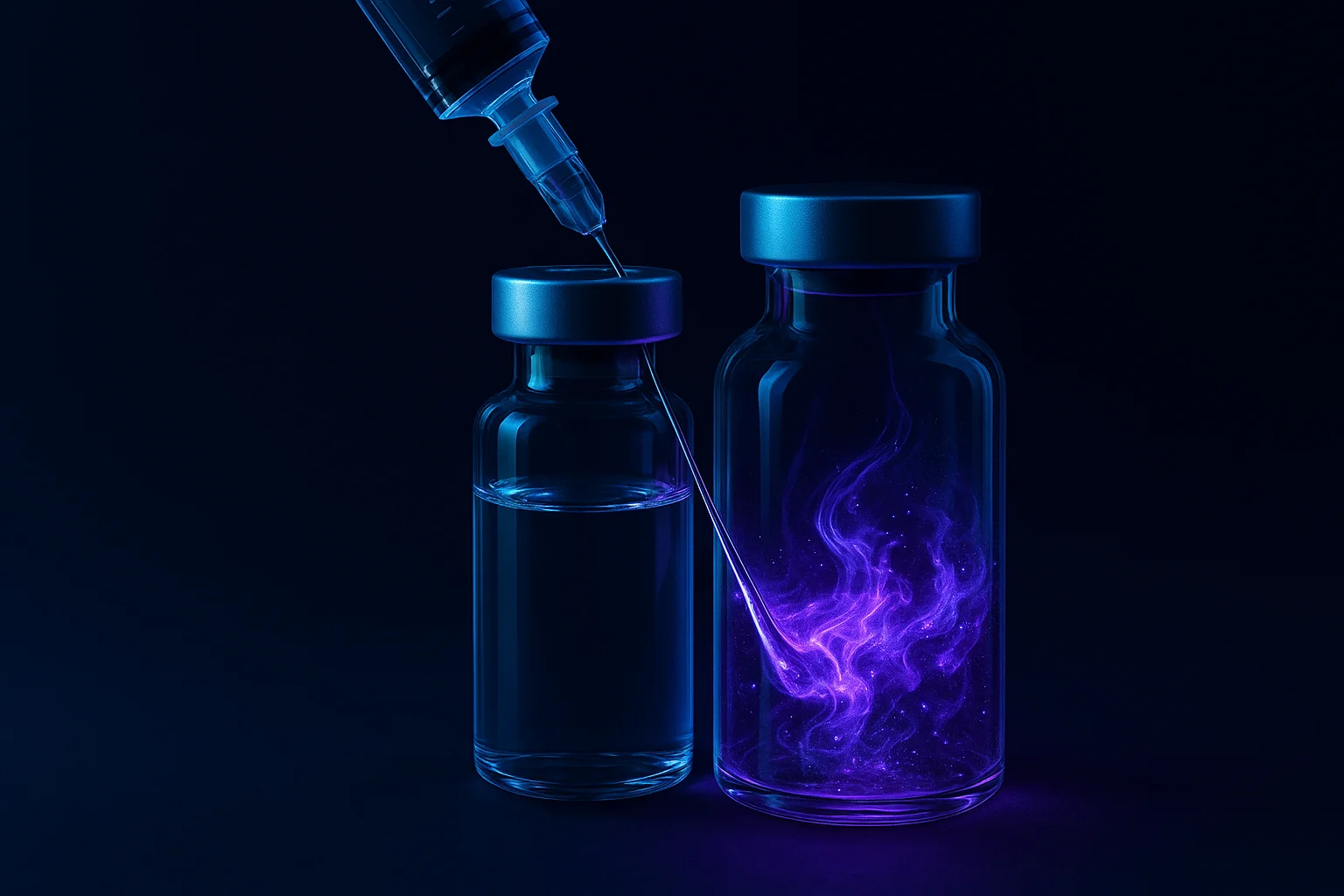
The community standard for a 10 mg PE-22-28 vial is 2 mL of bacteriostatic water — 5 mg/mL, which puts a 200 mcg dose at 4 units on an insulin syringe. This guide covers the mixing steps, the intranasal-sprayer preparation that most reports use, and the storage window.

Research-context information only. PE-22-28 is a research peptide. Protocols, doses, and reactions reported below come from published research and self-reported community sources. This article reports what has been documented, not what should be done. Consult a licensed physician for personal medical decisions.

Materials Documented in Reconstitution Protocols

  • PE-22-28 lyophilized vial (sold as 8, 10, or 20 mg)
  • Bacteriostatic water (BAC water — 0.9% benzyl alcohol)
  • Sterile syringe with needle for transferring water
  • Alcohol wipes for vial stoppers
  • For intranasal use: a metered nasal sprayer (community reports use 0.1 mL/spray metered bottles)

Documented Reconstitution Steps

  1. Wipe both vial stoppers with an alcohol swab.
  2. Draw the chosen BAC water volume — 2 mL for the standard 5 mg/mL concentration on a 10 mg vial.
  3. Inject the water slowly down the inside wall of the peptide vial, not directly onto the powder.
  4. Community reports describe swirling gently until fully dissolved — not shaking — with PE-22-28 dissolving quickly and clear.
  5. Refrigerate at 2-8°C. Community reports describe using the vial within 3-4 weeks.

Dilution Chart

Vial Size BAC Water Concentration 100 mcg 200 mcg 400 mcg
10 mg 2 mL 5 mg/mL 2 units 4 units 8 units
10 mg 5 mL 2 mg/mL 5 units 10 units 20 units
20 mg 3 mL 6.7 mg/mL 1.5 units 3 units 6 units

The math for any combination: units = dose (mcg) ÷ concentration (mcg/mL) × 100. These dilutions reflect how community protocols describe the math, not a recommended schedule.

30ml bacteriostatic water vial — 0.9% benzyl alcohol multi-dose
Bac Water Made for Peptides50% off
Don't risk a $300 peptide on generic bac water.
Most cloudy reconstitutions trace back to one thing — and it isn't the peptide. Sterile, non-pyrogenic, 0.9% benzyl alcohol — formulated for peptide reconstitution, not repackaged from generic stock.
0.9% benzyl alcohol Made for peptides 30 mL multi-dose
See why our bac water doesn't ruin peptides
Ships fast · 50% off with code thepeptidecatalog

Intranasal Sprayer Preparation

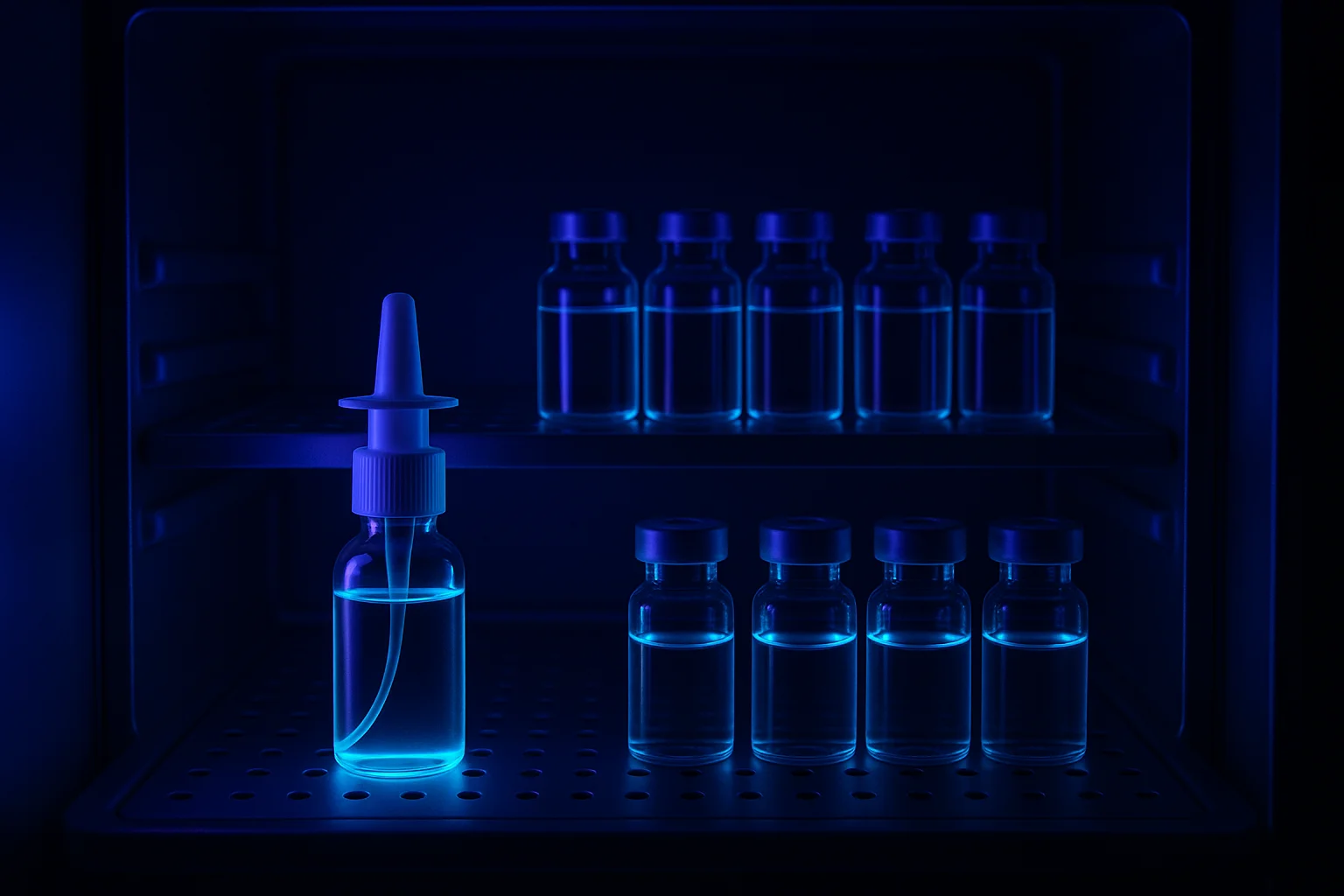
Most PE-22-28 community reports use the nasal route, which adds one step after reconstitution: transferring solution into a metered sprayer.

The math that reports describe: a standard metered sprayer delivers 0.1 mL per spray. At 5 mg/mL, one spray carries 500 mcg — above the common 200-400 mcg range — so intranasal protocols typically reconstitute more dilute (e.g., 10 mg into 5 mL → 2 mg/mL → 200 mcg per spray). Working backward from mcg-per-spray to the water volume is the entire trick of nasal prep.

No published study validates nasal absorption of PE-22-28. The community practice borrows from other nootropic peptides' conventions (Semax established the pattern), not from compound-specific data.

Ready to buy? Compare current sources on our best PE-22-28 page (vendor links are affiliate links), or browse all coupon codes for up to 50% off.

Where to buy PE-22-28
One verified, COA-tested PE-22-28 source
The verified, COA-tested source we track for PE-22-28 — shipped with a certificate of analysis. Research use only.
COA verified $2.30/mg Limitless Biotech
Save 15%peptideinfoat checkout
Buy at Limitless Biotech — $45.99
20mg · sold research-use-only · we may earn a commission

Affiliate disclosure: vendor links in this article are affiliate links — The Peptide Catalog may earn a commission if you buy through them, at no additional cost to you.

Storage Rules

PE-22-28 Storage

  • Lyophilized (before mixing): cool and dark; vendor guidance splits between room temperature and refrigeration for short holds, refrigerated for longer storage.
  • Reconstituted: 2-8°C, used within 3-4 weeks per community reports. No compound-specific stability study exists.
  • Sprayer bottles: the same refrigeration window applies; reports describe keeping the sprayer cold between uses.
  • Avoid: freezing the solution, heat, and direct light — standard peptide handling, reported rather than studied for this compound.

Common Mistakes in Reports

  • Mixing for injection concentration, then using a sprayer. At 5 mg/mL a single 0.1 mL spray is 500 mcg — beyond the range most reports target. The sprayer math has to drive the water volume.
  • Shaking the vial. The universal peptide-handling caution; gentle swirling dissolves it fine.
  • Treating the 3-4 week window as tested. It's a community convention borrowed from other peptides — nothing PE-22-28-specific has been published.

PE-22-28 Mixing Steps

Frequently Asked Questions

How much bacteriostatic water for a 10 mg PE-22-28 vial?
Community protocols standardize on 2 mL, giving 5 mg/mL (5,000 mcg/mL). At that concentration a 200 mcg dose is 0.04 mL — 4 units on a U-100 insulin syringe. More water (5 mL → 2 mg/mL) makes small doses easier to measure: the same 200 mcg becomes 10 units.
How is PE-22-28 prepared for intranasal use?
Community reports describe reconstituting the vial normally with bacteriostatic water, then transferring solution to a metered nasal sprayer — typically calibrated so one spray delivers a known mcg amount based on the concentration mixed. No published data validates nasal delivery for this peptide; the practice is entirely community convention.
How long does reconstituted PE-22-28 last?
Community reports describe refrigerated storage at 2-8°C with use within 3-4 weeks. As a small 7-amino-acid peptide it is reported as reasonably stable in solution, but no published stability study exists for PE-22-28 specifically.
Does PE-22-28 need to be refrigerated before mixing?
Lyophilized vials are commonly stored cool and dark; vendor guidance varies between room-temperature and refrigerated storage for the powder. After reconstitution, refrigeration is the consistent community standard.

References

  1. Djillani A, et al. Shortened spadin analogs display better TREK-1 inhibition, in vivo stability and antidepressant activity. Front Pharmacol. 2017;8:643. PMID 28955242 — the compound's introduction, including the in-vivo stability data (activity up to 23 h) referenced for handling context.