Tesamorelin Bloodwork Guide: What to Track and Why
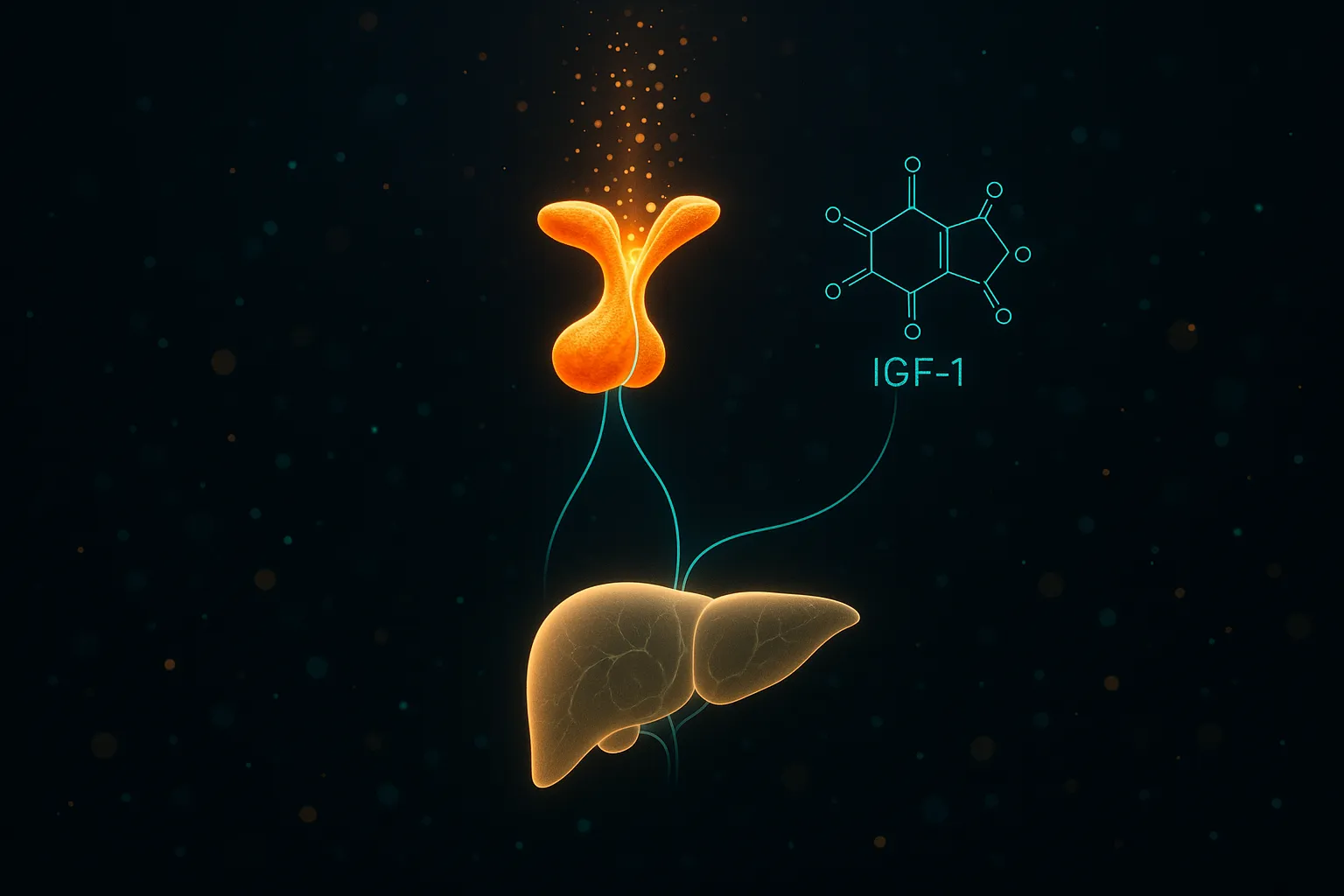
Tesamorelin is a GHRH analog that drives your pituitary to release more growth hormone, which in turn raises IGF-1 and remodels visceral fat. It is the only peptide in this class with Phase III data — but the clinical trials also set the monitoring expectation: IGF-1 checks are in the FDA label for a reason.
Most people starting tesamorelin skip bloodwork entirely, judging the protocol by waistline and mirror. That is a mistake. Tesamorelin's mechanism sits directly on top of the GH/IGF-1 axis, so the only way to confirm the peptide is actually doing something is to measure it.
Research-context information only. Tesamorelin is the active ingredient in an FDA-approved product for HIV-associated lipodystrophy only; off-label and research-peptide use is not FDA-approved. Protocols, doses, and reactions reported below come from published clinical trials and self-reported community sources. This article reports what has been documented, not what should be done. Possession or use of investigational drugs outside an authorized clinical trial may be illegal in your jurisdiction. Consult a licensed physician for personal medical decisions.
This guide covers the 7 labs that matter, when to run them, and what numbers to aim for.
The Testing Timeline
Baseline (week -1): IGF-1, IGFBP-3, fasting glucose, HbA1c, full lipid panel, ALT, hs-CRP. This is your reference point.
Early check (week 4): IGF-1 only. Confirms the peptide is biologically active. If IGF-1 has not moved, troubleshoot the protocol before continuing.
Mid-cycle (week 12): IGF-1, fasting glucose, ALT. GH antagonizes insulin — this is when glucose drift would show. Triglycerides may also start trending down by this point.
End of cycle (week 24-26 or end of protocol): Full panel. Compare everything to baseline. This tells you what stuck and what needs adjustment on the next cycle.
Tier 1: GH Axis (Efficacy Confirmation)
Tesamorelin does nothing you can feel for weeks. IGF-1 and IGFBP-3 tell you within days whether the mechanism is engaged.
IGF-1 (Insulin-like Growth Factor 1)
What it measures: Circulating IGF-1, the liver-produced hormone that mediates most of growth hormone's downstream effects on body composition and metabolism.
Why it matters for tesamorelin: This is the efficacy marker. Tesamorelin raised mean IGF-1 by approximately 108 ng/mL across Phase III trials. If your IGF-1 does not move on protocol, nothing else will either — the peptide is either inactive, under-dosed, or improperly reconstituted.
Optimization target: Upper half of age-adjusted reference range. For most adults this is 150-250 ng/mL. Do not push into the 300+ range — sustained supraphysiological IGF-1 correlates with edema, arthralgia, and theoretical cancer-promotion risk.
Age context: Reference ranges drop with age. A 40-year-old with IGF-1 of 200 ng/mL is mid-range; a 65-year-old with the same number is at the upper end. Use the age-stratified range your lab provides, not a single cutoff.
IGFBP-3 (IGF Binding Protein 3)
What it measures: The primary carrier protein for IGF-1 in circulation. Around 75-90% of IGF-1 is bound to IGFBP-3, which stabilizes it and regulates tissue delivery.
Why it matters: IGFBP-3 gives context to IGF-1. Rising IGF-1 with flat IGFBP-3 may indicate unbalanced axis activation. Rising both together is the expected, healthy response to GHRH stimulation.
Clinical use: IGFBP-3 is the tiebreaker when IGF-1 looks borderline high. If the IGF-1/IGFBP-3 ratio stays balanced, the GH axis is responding physiologically, not pathologically.
GH raises hepatic glucose output and dampens peripheral insulin sensitivity. Tesamorelin's Phase III trials did not show significant HbA1c shifts at 26 weeks, but individual responses vary — especially in users who are already insulin-resistant.
Fasting Glucose
What it measures: Blood sugar after an 8-12 hour fast. The most responsive glycemic marker — changes within days to weeks.
Why it matters for tesamorelin: Tesamorelin's GH elevation can nudge fasting glucose up by 5-10 mg/dL in some users. This is usually transient and self-corrects, but sustained elevation above 100 mg/dL is a signal to reduce dose or cycle off.
Target: 70-90 mg/dL. If baseline is already above 100, consider addressing insulin resistance before starting tesamorelin — the peptide will amplify the problem.
HbA1c (Glycated Hemoglobin)
What it measures: Your average blood glucose over the past 2-3 months, via the percentage of hemoglobin that has been glycated.
Why it matters: HbA1c is the slower-moving cousin of fasting glucose. It smooths out day-to-day variation and shows whether glucose drift is chronic or one-off. Phase III tesamorelin trials showed no significant HbA1c change at 26 weeks in HIV lipodystrophy patients.
Target: Below 5.4% for non-diabetics. A rise from 5.2 to 5.6 during a tesamorelin cycle is meaningful even though both values are "normal" — the trend matters more than the absolute.
Tier 3: Lipid Panel (Where Tesamorelin Shines)
Visceral fat reduction drives downstream lipid improvements. The metabolic phase III data from Stanley et al. showed tesamorelin-treated patients had meaningful improvements in triglycerides and cholesterol ratios, correlated with degree of visceral fat loss.
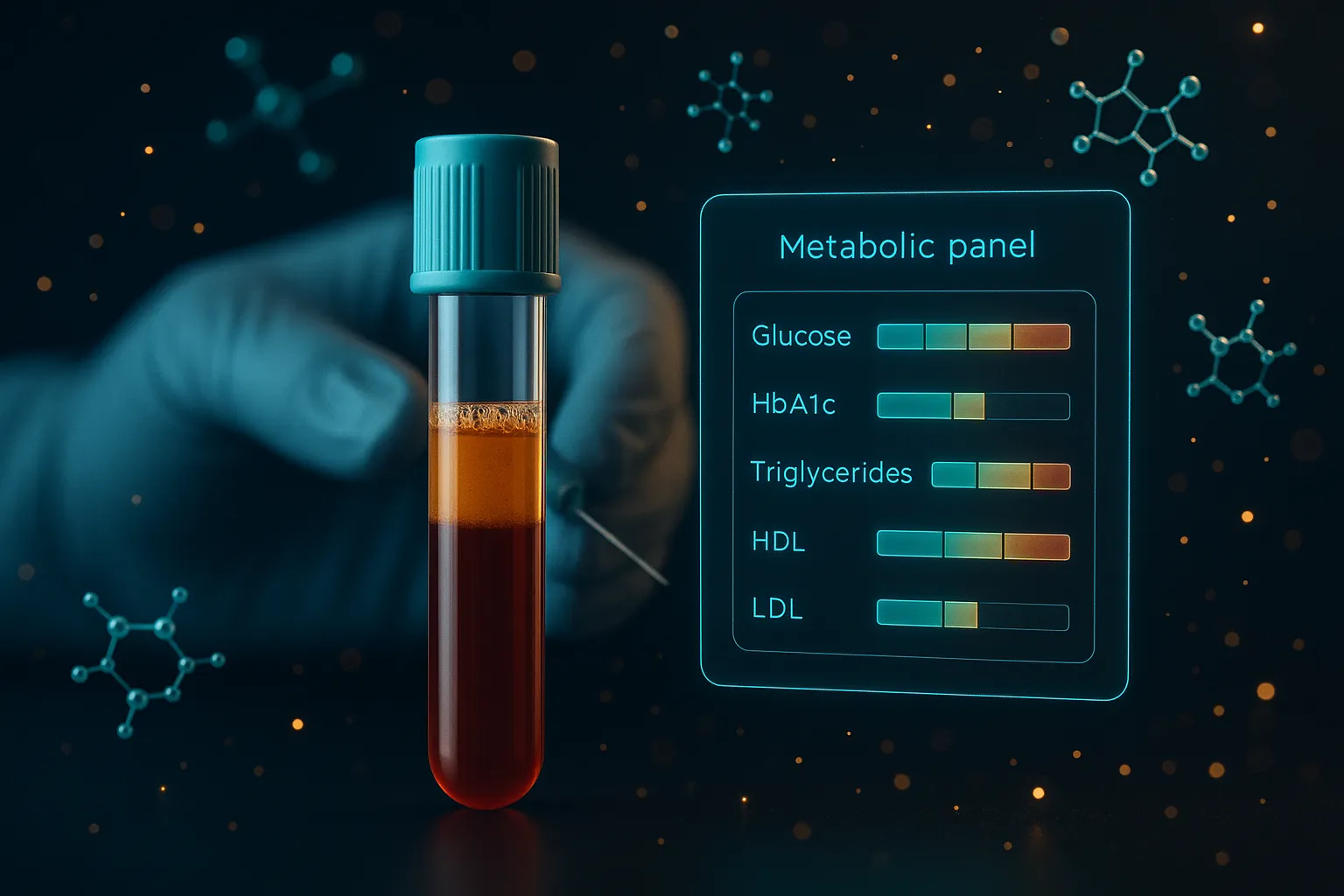
Triglycerides
What it measures: Fats circulating in the bloodstream, produced largely by the liver in response to carbohydrate intake and insulin resistance.
Why it matters for tesamorelin: Of all the lipid markers, triglycerides respond most directly to visceral fat reduction. Expect a 10-20% drop in triglycerides over a 12-26 week tesamorelin cycle if visceral fat is meaningfully reducing.
Target: Below 100 mg/dL. Triglycerides above 150 mg/dL at baseline are themselves a marker of visceral adiposity and are one reason to consider tesamorelin in the first place.
HDL and LDL Cholesterol
What they measure: HDL transports cholesterol back to the liver for disposal (protective). LDL delivers cholesterol to tissues — but each LDL particle carries one ApoB molecule, making LDL-C a reasonable proxy for atherogenic particle count.
Why it matters: Visceral fat loss tends to raise HDL and modestly lower LDL. If the lipid profile improves during your tesamorelin cycle, you have indirect evidence that visceral adipose tissue is shrinking — even without imaging.
Interpretation: A rising HDL with falling triglycerides is the signature metabolic response. If triglycerides climb instead of falling, either the dose is too low to drive meaningful lipolysis, or dietary compensation is overwhelming the effect.
Tier 4: Liver and Inflammation Safety
Tesamorelin has liver-reducing effects in NAFLD (Stanley 2019), but any compound that shifts hepatic metabolism warrants monitoring. hs-CRP tracks the systemic inflammatory drop that comes with visceral fat loss.
ALT (Liver Enzyme)
What it measures: Alanine aminotransferase — the most liver-specific of the common enzymes. Released when hepatocytes are injured.
Why it matters: In the Stanley et al. NAFLD trial, tesamorelin 2 mg daily for 12 months reduced liver fat and improved ALT. For most users, ALT should stay flat or trend down during a cycle. An upward drift above 40 U/L warrants pause and a recheck.
Optimal: Below 25 U/L. Standard labs call up to 40 U/L "normal," but that range was set using populations that included significant NAFLD. Optimal is below 25 for men and below 19 for women.
hs-CRP (High-Sensitivity C-Reactive Protein)
What it measures: Low-level systemic inflammation. CRP is produced by the liver in response to IL-6 and other inflammatory signals.
Why it matters for tesamorelin: Visceral fat is an endocrine organ that secretes inflammatory cytokines. As visceral fat shrinks, hs-CRP typically follows. A falling hs-CRP over a 12-26 week cycle is secondary evidence that the visceral fat reduction is happening.
Target: Below 1.0 mg/L. Baseline values above 3.0 mg/L indicate significant systemic inflammation — often associated with elevated visceral fat, which is itself a reason to consider tesamorelin.
Imaging: The Efficacy Gold Standard (Aspirational)
Bloodwork is a proxy for what matters most with tesamorelin: reduction in visceral adipose tissue (VAT). The Phase III endpoint was VAT measured by CT scan, showing an 18% reduction at 26 weeks.
CT or DEXA scan: The direct measurement of VAT. Typically $200-600 out of pocket depending on facility. If you are running tesamorelin for more than one cycle, a baseline and end-of-year VAT scan is worth budgeting for.
Cheaper proxies: Waist circumference (measure at the navel, not at the belt line) and waist-to-hip ratio correlate with VAT. Combined with the metabolic panel trends above, they give a reasonable picture without imaging.
For most self-funded users, bloodwork plus tape measure is the practical monitoring stack. Imaging is a bonus, not a requirement.
How to Order Labs
Three ways to get tesamorelin bloodwork done:
- Direct-to-consumer labs: HealthLabs.com offers IGF-1, HbA1c, lipid panels, and metabolic panels without a prescription. Walk in to any LabCorp or Quest site. Results in 1-3 business days.
- Primary care physician: IGF-1 is a standard endocrine test. If you have a cooperative doctor, most of this panel can be ordered under routine preventive care and may be covered by insurance.
- Functional medicine practitioner: Best option if you want a full hormone workup (IGF-1 + IGFBP-3 + thyroid + cortisol) interpreted in context. Expect $150-400 for the office visit plus labs.
Budget-conscious stack: If you can only afford three tests, run IGF-1, fasting glucose, and a lipid panel. That covers the efficacy marker, the main safety marker, and the secondary efficacy signal for about $80-120 total direct-to-consumer.
Interpreting Results: What to Do With the Numbers
IGF-1 did not rise: Check reconstitution, storage, and injection technique. Tesamorelin is temperature-sensitive and loses potency fast if mishandled. If IGF-1 is flat at week 4 despite clean protocol, the vial may be inactive — switch lots or vendors before continuing.
IGF-1 climbed above 300 ng/mL: Reduce dose by 25-50%. For most users on 1 mg daily, dropping to 1 mg 5-on/2-off or 0.5 mg daily brings IGF-1 back into the upper-normal range without losing efficacy.
Fasting glucose rose 10+ mg/dL: Temporary GH-induced insulin resistance. If it persists past week 8 and HbA1c is trending up, reduce dose or cycle off. Adding metformin is an off-label option but addresses symptom, not cause.
Triglycerides rose instead of fell: Either the dose is too low to drive lipolysis, or dietary carbohydrate load is masking the effect. Reassess before blaming the peptide.
ALT rose above 40 U/L: Pause the protocol. Recheck in 2-4 weeks. ALT elevations on tesamorelin are uncommon in trial data — persistent elevation warrants a full hepatic workup.
When to Stop
These are bloodwork signals to discontinue tesamorelin:
- IGF-1 above 400 ng/mL or above age-adjusted upper limit of normal (reduce dose first; stop if persistent)
- Fasting glucose above 126 mg/dL on two consecutive measurements
- HbA1c above 6.5%
- ALT or AST above 3x the upper limit of normal
- New-onset severe edema or carpal tunnel symptoms (GH-mediated, dose-dependent)
- Any diagnosis of active malignancy — absolute contraindication per FDA label
Putting It All Together: Sample Protocol
Week -1 (Baseline): IGF-1, IGFBP-3, fasting glucose, HbA1c, full lipid panel, ALT, hs-CRP. Write the numbers down.
Week 4 (Early check): IGF-1 only. Must rise vs baseline. If flat, troubleshoot before continuing.
Week 12 (Mid-cycle): IGF-1, fasting glucose, ALT. Confirm safety markers stable, confirm IGF-1 in target range.
Week 24-26 (End of cycle): Full panel. Compare everything to baseline. Document:
- IGF-1 delta (target: +50 to +150 ng/mL vs baseline)
- Triglyceride delta (target: 10-20% drop)
- HbA1c change (target: flat or down)
- ALT (target: flat or down)
- hs-CRP (target: down)
2-4 weeks post-cycle: Retest IGF-1. Confirms tesamorelin has cleared and IGF-1 has returned toward baseline — important if you are planning the next cycle or moving to a different GHRH analog.