Ipamorelin triggers growth hormone release within minutes of injection. The downstream effects — better sleep, improved recovery, body recomposition — unfold over weeks and months, not days.
Research-context information only. Ipamorelin is a research peptide. Protocols, doses, and reactions reported below come from published research and self-reported community sources. This article reports what has been documented, not what should be done. Consult a licensed physician for personal medical decisions.
This timeline covers what the clinical and preclinical evidence shows at each stage, what community reports consistently describe, and the factors that determine whether results land on the faster or slower end of the spectrum. Ipamorelin is the most selective growth hormone releasing peptide (GHRP), meaning it elevates GH without touching cortisol or prolactin (Raun et al., 1998). That selectivity shapes both the results and the timeline — cleaner GH pulses, fewer side effects, but no shortcuts.
This is not medical advice. Ipamorelin reached Phase II clinical trials but is not FDA-approved for any indication.
Table of Contents
What Determines the Timeline
Before the week-by-week breakdown, three variables control how fast results appear:
1. Dose consistency matters more than dose size. Ipamorelin works through repeated GH pulses that cumulatively elevate IGF-1 over weeks. Missing doses or irregular timing disrupts this accumulation. The standard 300 mcg protocol on a 5-on/2-off schedule exists because consistency drives results.
2. Fasted state is non-negotiable. Food — especially carbohydrates and fats — blunts the GH response significantly. An injection taken after a meal is a partially wasted dose. This single factor explains most "ipamorelin didn't work for me" reports.
3. Baseline GH status sets the ceiling. A 25-year-old with normal GH levels tends to see less dramatic changes than a 50-year-old with age-related GH decline. Baseline bloodwork (especially IGF-1) documents the starting point and how much room there is to improve.
Week 1: Acute GH Response
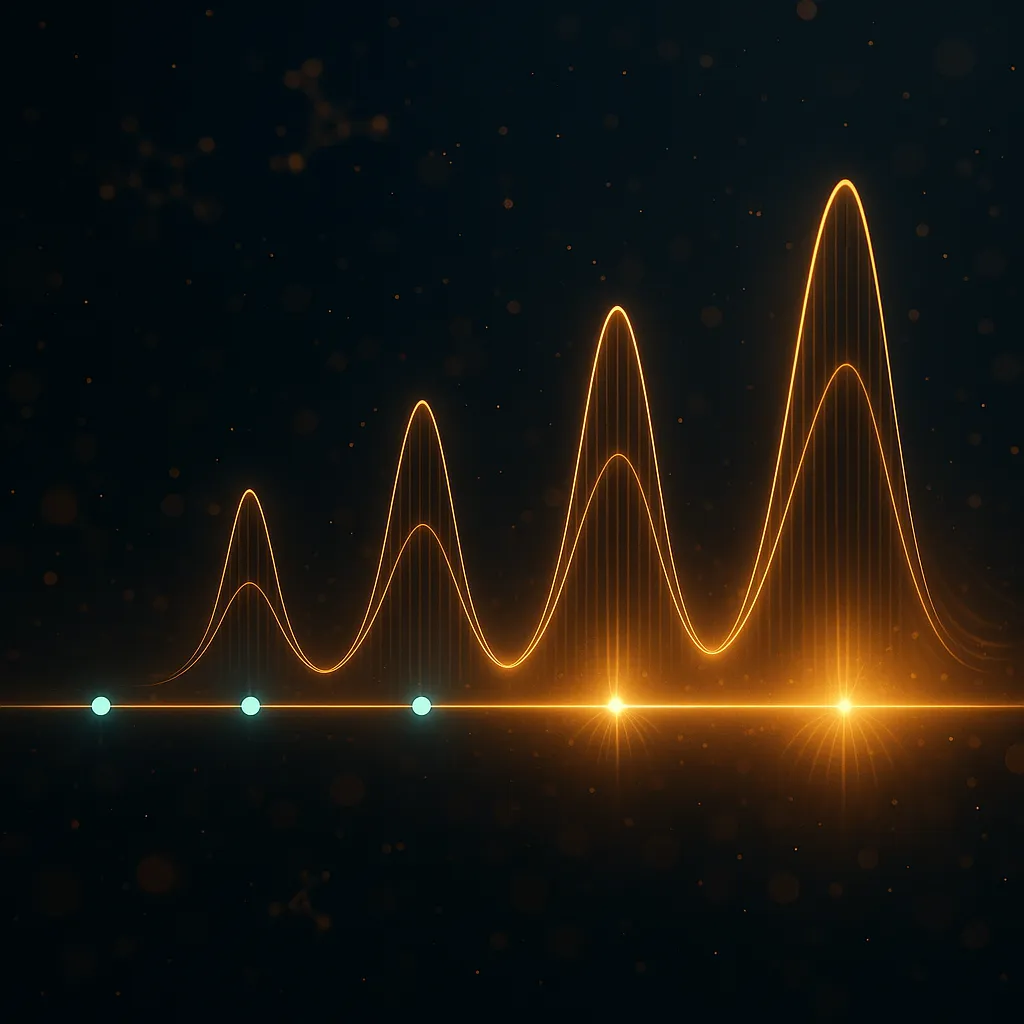
The pharmacological effect is immediate. Each ipamorelin injection produces a measurable GH pulse within 20-30 minutes, peaking at roughly 60 minutes. Pharmacokinetic modeling confirms this rapid onset with dose-dependent GH release (Agerso et al., 1999).
What community reports describe in week 1:
- Improved sleep quality (days 3-7). This is the most consistently reported early effect in community sources. Growth hormone secretagogues increase slow-wave (deep) sleep duration — MK-677 data showed a ~50% increase in stage IV sleep in young subjects (Copinschi et al., 1997). While this specific study used MK-677 (an oral GHS), the mechanism — enhanced GH pulsatility during sleep — applies to all GH secretagogues including ipamorelin.
- Mild water retention. Community sources describe a slight increase in subcutaneous water, typically 1-3 lbs. Less pronounced than with other GHRPs or exogenous GH.
- Increased appetite (mild). Unlike GHRP-6, which causes intense hunger via ghrelin-pathway activation, ipamorelin's appetite effect is subtle. Some users in community sources report no change at all.
What community reports describe as absent this early: Body composition changes, skin improvements, or measurable strength gains. One week of elevated GH pulses is insufficient to drive structural tissue changes.
What community sources commonly track: Sleep quality (subjective rating or wearable data), injection site reactions, appetite changes. A simple log becomes valuable at the 4-week mark for assessing whether the protocol is working.
Ready to buy? Compare verified vendors on our best Ipamorelin sources page, or browse all coupon codes for up to 50% off.
Weeks 2-4: IGF-1 Accumulation Phase
This is where the biochemistry shifts from acute GH pulses to sustained IGF-1 elevation. Repeated daily GH stimulation causes the liver to upregulate IGF-1 production. By week 3-4, circulating IGF-1 levels should be measurably higher than baseline.
What the research shows:
Chronic ipamorelin treatment increases the volume density of secretion granules in somatotroph cells and modulates intracellular GH content, demonstrating that sustained dosing produces cumulative pituitary-level changes rather than just transient GH spikes (Jimenez-Reina et al., 2002).
What community reports describe in weeks 2-4:
- Sleep improvements consolidate. Community sources describe deeper sleep becoming the norm rather than an occasional good night, with recovery from training sessions feeling noticeably faster.
- Skin quality begins changing (weeks 3-4). GH drives collagen type I synthesis and increases skin thickness — effects documented in GH-deficient patients receiving GH replacement (Sjogren et al., 1996). Community sources describe early signs including skin feeling more hydrated and minor improvements in elasticity.
- Recovery between workouts. Community reports describe reduced soreness duration and improved exercise tolerance, consistent with IGF-1-mediated muscle repair becoming noticeable.
- Potential mild joint stiffness. Some users in community sources report transient stiffness or mild tingling in hands/wrists during weeks 2-3 as GH levels rise. This typically resolves within a week.
Bloodwork at week 4: Community protocols describe checking bloodwork around this point. IGF-1 is the anchor metric — community sources describe a 20-40% increase from baseline as the sign the protocol is working even when visual changes are minimal. When IGF-1 is unchanged, the documented troubleshooting steps are to reassess dose timing (fasted state), injection technique, and peptide quality.
Months 1-2: Body Composition Shifts
This is where ipamorelin earns its reputation. Weeks 5-8 represent the window where cumulative GH/IGF-1 elevation translates into visible changes.
Body composition changes:
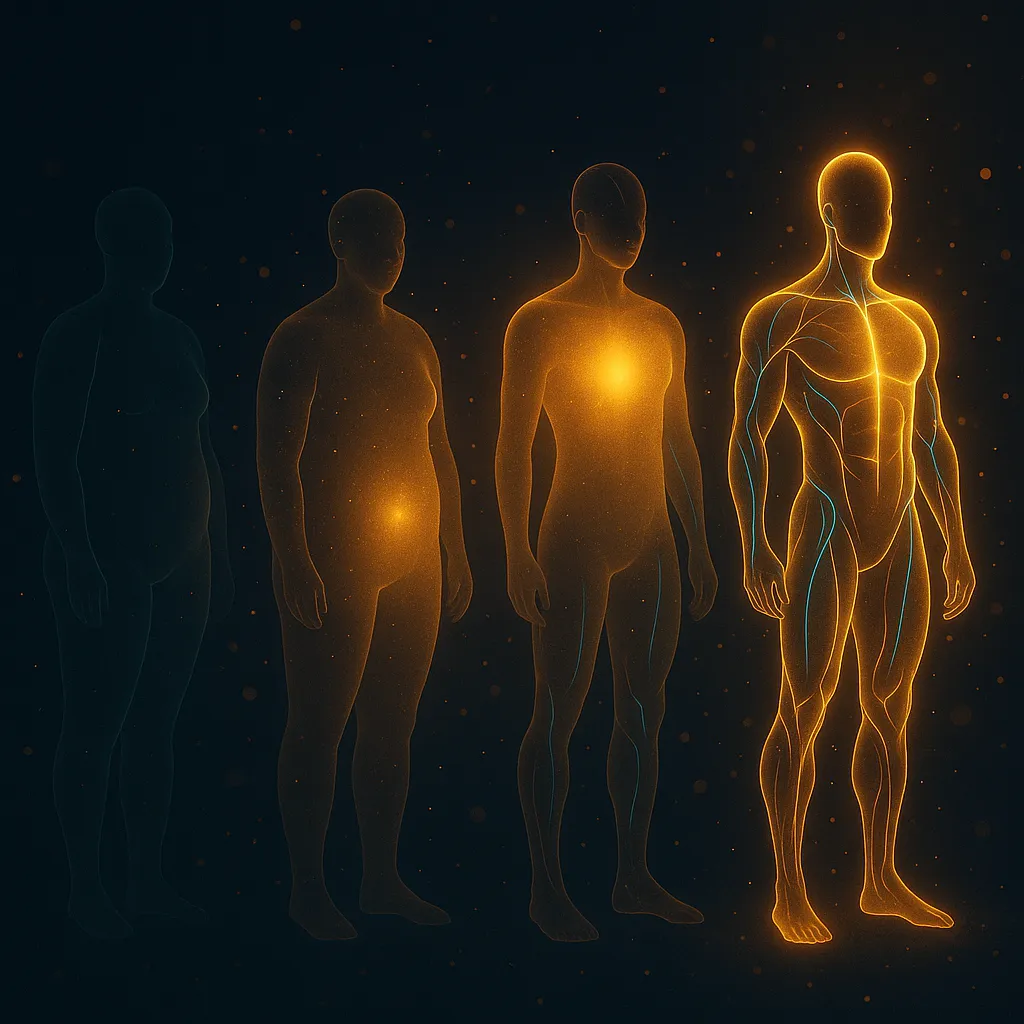
- Fat loss acceleration. GH promotes lipolysis — the breakdown of stored fat for energy. This effect is most noticeable in the abdominal region. Community sources describe subtle but measurable changes, clustering around 1-3% body fat reduction over 8 weeks with proper diet and training. GH does not override a caloric surplus.
- Improved muscle tone and fullness. Community reports describe not dramatic hypertrophy (ipamorelin is not anabolic steroids), but improved muscle quality — better pumps during training, slightly fuller appearance, and improved nitrogen retention.
- Skin and hair changes become visible. GH increases collagen deposition and mechanical strength of skin in a dose-dependent manner (Jorgensen et al., 1989). By week 6-8, skin appears tighter and more elastic. Hair growth rate may increase slightly. Nail growth accelerates.
Recovery and performance:
- Training recovery. Community sources describe recovery dropping to 24-48 hours for sessions that previously required 48-72 hours.
- Minor injuries. Community reports describe nagging tendon and ligament issues beginning to improve, consistent with IGF-1 supporting connective tissue repair.
- Joint comfort. Community sources describe improved joint comfort, attributed to GH-mediated increases in synovial fluid production and cartilage support.
What distinguishes clinical data from community reports: The preclinical data on ipamorelin focuses on GH release kinetics, bone density, and selectivity — not body composition per se. The body composition timeline above reflects community consensus cross-referenced with what we know about GH/IGF-1 physiology. Individual results vary significantly based on age, baseline GH status, diet, training, and genetics.
Months 3-6: Long-Term Optimization

Users who cycle properly (8 weeks on, 8 weeks off, or similar) and maintain the protocol through multiple cycles report compounding benefits.
What accumulates over 3-6 months:
- Bone mineral density improvements. Ipamorelin and GHRP-6 increase bone mineral content in adult rats as measured by DXA (Svensson et al., 2000). In humans, GH's bone-building effects require months of sustained IGF-1 elevation — this is a long-game benefit.
- Sustained body recomposition. Each on-cycle builds on the previous one. Users running 2-3 cycles over 6 months typically report the most significant cumulative changes: 3-6% body fat reduction, improved muscle definition, and better overall body composition.
- Skin aging markers improve. Collagen density increases, fine lines soften, skin thickness measurably increases. These changes are most dramatic in users over 40 with age-related GH decline.
- Immune function and general resilience. Anecdotal but consistent: fewer minor illnesses, faster recovery from illness when it occurs.
Diminishing returns and plateaus: Each successive cycle typically produces less dramatic changes than the first. This is normal — the largest jump occurs when going from a GH-deficient state to optimized levels. Once the optimal IGF-1 range is reached, additional cycles maintain rather than dramatically improve.
Long-term safety note: Ipamorelin was well-tolerated in its Phase II clinical trial at doses up to 0.03 mg/kg IV twice daily for up to 7 days (Beck et al., 2014). However, long-term safety data for months of subcutaneous use at community doses does not exist. Regular bloodwork monitoring is essential for anyone running extended protocols.
Nura Reconstitution Solution
Don't risk a $300 peptide on generic bac water.
Most cloudy reconstitutions trace back to one thing — and it isn't the peptide. Sterile, non-pyrogenic, 0.9% benzyl alcohol — formulated for peptide reconstitution, not repackaged from generic stock.
✓ 0.9% benzyl alcohol✓ Made for peptides✓ 30 mL multi-dose
Ships from Nura · 30% off with code thepeptidecatalog
Factors That Affect Results
Accelerators
| Factor |
Impact |
Why |
| Fasted injection |
High |
Food blunts GH release by 50%+ — this is the single biggest variable |
| Consistent 5-on/2-off |
High |
Sustained IGF-1 elevation requires daily pulsing; missed doses reset accumulation |
| Sleep 7-9 hours |
Medium |
Natural GH release peaks during deep sleep; ipamorelin amplifies this |
| Resistance training |
Medium |
Exercise potentiates GH response and gives IGF-1 a substrate to act on |
| Protein intake 1.0+ g/lb |
Medium |
IGF-1-driven tissue repair requires amino acid availability |
Inhibitors
| Factor |
Impact |
Why |
| Eating before injection |
High |
Insulin and blood glucose suppress GH release |
| Chronic sleep deprivation |
High |
Disrupts GH pulsatility and blunts recovery |
| High body fat (>25%) |
Medium |
Elevated insulin resistance reduces GH sensitivity |
| Alcohol |
Medium |
Suppresses GH secretion for 12-24 hours after consumption |
| Chronic stress/high cortisol |
Medium |
Cortisol antagonizes GH signaling pathways |
Results by Use Case
Body Composition (Fat Loss + Muscle Tone)
- First signs: Week 3-4 (improved muscle fullness, better training pumps)
- Visible changes: Week 6-8 (noticeable fat loss, especially abdominal; improved muscle definition)
- Significant results: Month 3-4 (after 1-2 full cycles; measurable body fat reduction)
- Key requirement: Caloric deficit or maintenance calories with adequate protein. Ipamorelin enhances fat oxidation but does not override energy balance.
- First signs: Week 1-2 (faster recovery between training sessions, reduced DOMS)
- Consistent improvement: Week 3-4 (training volume tolerance increases)
- Peak benefit: Week 6-8 (recovery time cut significantly; minor injuries improving)
- Key requirement: Adequate sleep and structured training. The recovery benefits are most apparent in people who actually stress their bodies.
Anti-Aging and Skin Quality
- First signs: Week 3-4 (skin hydration, subtle elasticity improvement)
- Visible changes: Week 8-12 (skin tightness, reduced fine lines, improved hair/nail growth)
- Significant results: Month 4-6 (cumulative collagen deposition; most dramatic in 40+ users)
- Key requirement: Patience. Collagen remodeling is inherently slow biology. GH accelerates it but does not make it instant.
Sleep Optimization
- First signs: Days 3-7 (deeper sleep, more vivid dreams, waking more rested)
- Consistent improvement: Week 2-3 (sleep architecture stabilizes at improved baseline)
- Peak benefit: Week 4-6 (maximum subjective sleep quality improvement)
- Key requirement: Good sleep hygiene baseline. Ipamorelin amplifies natural sleep-GH feedback loops — it cannot overcome blue light exposure until 2 AM or caffeine at 6 PM.
Markers community sources associate with a working protocol:
- Sleep quality improved within the first 1-2 weeks
- IGF-1 increased 20-40%+ from baseline at 4-6 week bloodwork
- Gradual improvements in recovery, skin quality, or body composition by weeks 6-8
- Mild, transient side effects (slight water retention, occasional joint stiffness) that resolve
Patterns community sources describe before discontinuing:
- No sleep improvement after 2 weeks — community sources describe verifying fasted injection timing and peptide source quality
- IGF-1 unchanged at 4-6 weeks — community protocols describe increasing to twice-daily dosing (300 mcg AM + PM) or evaluating peptide authenticity
- Persistent water retention or joint pain beyond week 3 — community sources interpret this as a dose running too high and describe reducing to 200 mcg
Signals community and clinical sources associate with stopping:
- Persistent numbness or tingling in extremities (potential carpal tunnel from excessive GH)
- Blood glucose consistently elevated on follow-up labs
- Any signs of abnormal growth or tissue changes — documented guidance is to discontinue and consult a physician
For detailed protocol parameters, see the ipamorelin dosing guide. For lab monitoring guidance, see the ipamorelin bloodwork guide.