Kisspeptin Dosing Guide: Protocols & Timing (2026)
Kisspeptin dosing guide with kisspeptin-10 and kisspeptin-54 protocols, pulsatile timing, cycling, and safety.

Kisspeptin is a neuropeptide encoded by the KISS1 gene that acts as the master upstream regulator of the reproductive hormone axis. It binds to the KISS1R (GPR54) receptor on GnRH neurons, triggering the release of gonadotropin-releasing hormone — which in turn drives LH and FSH secretion from the pituitary.
Two forms are used in research: kisspeptin-54 (the full-length active peptide) and kisspeptin-10 (the minimum C-terminal fragment that retains full receptor binding). They differ significantly in half-life, potency profile, and clinical applications.
No kisspeptin formulation is FDA-approved. All protocols below are derived from clinical research and community experience. For the science behind kisspeptin's mechanism and clinical applications, see our kisspeptin benefits and research guide. This is not medical advice.
Quick Reference: Research Protocols
| Parameter | Kisspeptin-10 | Kisspeptin-54 |
|---|---|---|
| Dose range | 100–500 mcg SC | 1.0–6.4 nmol/kg SC (~6.5–41 mcg/kg) |
| Route | Subcutaneous or IV | Subcutaneous or IV |
| Half-life | ~4 minutes | ~28 minutes |
| Onset | 5–15 minutes | 15–30 minutes |
| LH peak | 30–60 minutes post-dose | 4–6 hours post-dose |
| Frequency | 1–3x daily (pulsatile) | 1–2x daily or twice weekly |
| Cycle | 2–4 weeks | 2–4 weeks |
| Reconstitution | 2 mL bac water per 5 mg vial | 2 mL bac water per 5 mg vial |
| Storage | Refrigerate, use within 28 days | Refrigerate, use within 28 days |
For the full kisspeptin peptide profile and vendor pricing, see our kisspeptin peptide page.
Ready to Buy? Compare Prices
Best current prices from verified vendors with COA testing.
Penguin Peptides · 5mg · $10.40/mgCOA ✓
The Peptide Brief
Weekly price drops, new research, and vendor deals — straight to your inbox.
No spam. Unsubscribe anytime.
Understanding Pulsatile Dosing: The Critical Concept
This is the single most important concept in kisspeptin dosing — and where it differs from virtually every other peptide.
Kisspeptin naturally operates in pulses. In the hypothalamus, kisspeptin neurons in the arcuate nucleus fire in synchronized bursts roughly every 60–90 minutes, each pulse driving a corresponding GnRH pulse. This pulsatile pattern is what maintains normal LH and FSH secretion.
Continuous kisspeptin exposure causes desensitization. When KISS1R receptors are exposed to constant kisspeptin (as in continuous IV infusion studies), the receptor downregulates within hours, and LH/FSH output drops to baseline or below. This was demonstrated in clinical studies where continuous kisspeptin-54 infusion initially spiked LH but then suppressed it after 6–12 hours (Dhillo et al., 2005).
What This Means for Dosing
- Space your injections. Rather than slow-release or continuous dosing, discrete bolus injections mimic natural pulsatility
- Once or twice daily subcutaneous injections are practical for community use — the short half-life of kisspeptin-10 means the receptor "resets" between doses
- Kisspeptin-54 has a longer action window (~4–6 hours of LH elevation), so once or twice daily is typically sufficient
- Kisspeptin-10 clears faster, so 2–3 daily injections may better maintain pulsatile stimulation

Kisspeptin-10 Protocols
Kisspeptin-10 (the C-terminal decapeptide fragment) is the form most commonly available through research peptide suppliers. It retains full binding affinity for KISS1R but has a very short plasma half-life of approximately 4 minutes.
Standard Research Protocol
| Phase | Dose | Frequency | Duration |
|---|---|---|---|
| Assessment | 100 mcg SC | Once daily (AM) | 3–5 days |
| Standard | 200–300 mcg SC | 1–2x daily | 2–4 weeks |
| Enhanced | 400–500 mcg SC | 2–3x daily | 2–4 weeks |
Notes:
- Start at 100 mcg to assess tolerance and response
- Morning dosing aligns with natural testosterone peaks in males
- If dosing twice daily, space injections 8–12 hours apart
- If dosing three times daily, space injections 6–8 hours apart
- Clinical studies used IV boluses of 0.3–1.0 nmol/kg, producing robust LH pulses within 30 minutes
Kisspeptin-10 for LH Stimulation
In a clinical study comparing kisspeptin-10, kisspeptin-54, and GnRH in healthy men, kisspeptin-10 produced a rapid but short-lived LH pulse — peak at ~30 minutes, returning to baseline within 1–2 hours. This rapid-on/rapid-off profile makes kisspeptin-10 ideal for pulsatile protocols but less practical for sustained stimulation.
Kisspeptin-54 Protocols
Kisspeptin-54 (also called metastin) is the full-length active form. With a half-life of ~28 minutes and sustained LH elevation lasting 4–6 hours, it requires less frequent dosing.
Standard Research Protocol
| Phase | Dose | Frequency | Duration |
|---|---|---|---|
| Assessment | 1.0 nmol/kg SC (~6.5 mcg/kg) | Once daily | 3–5 days |
| Standard | 3.2 nmol/kg SC (~21 mcg/kg) | Once daily | 2–4 weeks |
| IVF trigger | 12.8 nmol/kg SC (single dose) | Single injection | One-time |
Notes:
- Kisspeptin-54 is weight-based in clinical studies — a 70 kg person at 3.2 nmol/kg would receive approximately 1,470 mcg (1.47 mg) per dose
- The IVF trigger dose is a single high-dose injection used in place of hCG to trigger oocyte maturation (Jayasena et al., 2014)
- Once-daily dosing is typically sufficient given the extended LH elevation window
- Clinical trials have used kisspeptin-54 subcutaneously with consistent LH responses across multiple studies
Kisspeptin-54 in IVF Research
In IVF protocols, kisspeptin-54 has been studied as an alternative oocyte maturation trigger to hCG. A single subcutaneous dose of 12.8 nmol/kg triggered oocyte maturation in women at high risk of ovarian hyperstimulation syndrome (OHSS), with zero OHSS cases — compared to the significant OHSS risk with standard hCG triggers (Abbara et al., 2015). This is a clinical application, not a community protocol.
Reconstitution Guide
Kisspeptin vials typically come in 2 mg, 5 mg, or 10 mg sizes. The reconstitution math is straightforward.
Standard Reconstitution (5 mg Vial)
| Bac Water Added | Concentration | 100 mcg = | 250 mcg = | 500 mcg = |
|---|---|---|---|---|
| 1 mL | 5,000 mcg/mL | 2 units | 5 units | 10 units |
| 2 mL | 2,500 mcg/mL | 4 units | 10 units | 20 units |
| 3 mL | 1,667 mcg/mL | 6 units | 15 units | 30 units |
Step-by-Step Reconstitution
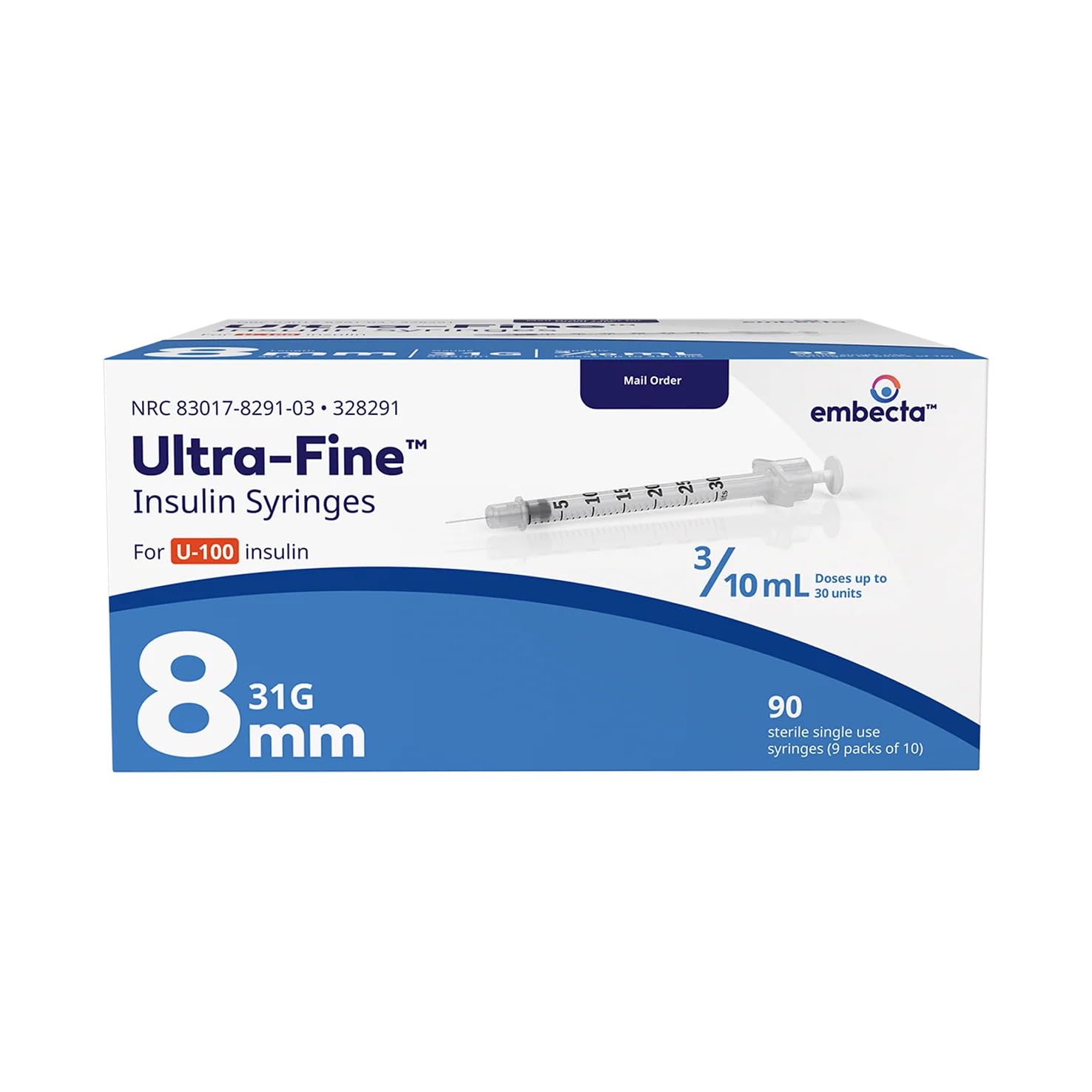
- Gather supplies: Vial of kisspeptin (lyophilized), bacteriostatic water (0.9% benzyl alcohol), alcohol swabs, insulin syringes (29–31 gauge)
- Swab both vial tops with alcohol pads
- Draw bacteriostatic water — 2 mL for a 5 mg vial is the most common choice
- Inject slowly into the kisspeptin vial, aiming the stream against the glass wall — not directly onto the powder
- Swirl gently — never shake. Let it sit for 1–2 minutes if it doesn't dissolve immediately
- Refrigerate immediately at 2–8°C (36–46°F)
- Use within 28 days of reconstitution
Storage tip: Unreconstituted lyophilized kisspeptin can be stored at -20°C for extended periods. Once reconstituted, refrigerate only — do not freeze reconstituted solution.
Injection Technique
Kisspeptin is administered subcutaneously in clinical research. The injection technique is the same as other subcutaneous peptides.
Preferred Injection Sites
- Lower abdomen — 2+ inches from the navel, alternating sides
- Upper outer thigh — mid-thigh area
- Back of the upper arm — less common but viable
Injection Steps
- Wash hands thoroughly
- Swab injection site with alcohol
- Draw the correct dose into an insulin syringe (29–31 gauge, ½ inch)
- Pinch a fold of skin at the injection site
- Insert needle at 45–90° angle
- Inject slowly and steadily
- Withdraw needle, apply gentle pressure with an alcohol swab
Rotate injection sites to prevent lipodystrophy. Use a different spot each injection.

Timing Considerations
Time of Day
- Morning dosing is most common in male protocols — it aligns with the natural circadian peak in testosterone and LH
- Evening dosing has been used in some female fertility studies, as the endogenous LH surge often occurs in early morning hours
- For twice-daily protocols, AM and PM dosing (e.g., 8 AM and 8 PM) maintains pulsatile stimulation through the day
Relative to Meals
No strong clinical data exists on food timing. Kisspeptin is administered subcutaneously, so gastric factors don't apply. Most clinical studies did not control for meal timing.
Duration and Cycling
| Protocol Type | Duration | Rest Period | Notes |
|---|---|---|---|
| Short assessment | 3–7 days | N/A | For evaluating individual response |
| Standard cycle | 2–4 weeks | 2–4 weeks off | Most common community approach |
| Clinical fertility | Days to weeks | Per clinical protocol | Under medical supervision |
| IVF trigger | Single dose | N/A | One-time administration |
Why cycle? Long-term continuous kisspeptin administration risks receptor desensitization at the KISS1R level. Cycling allows receptor resensitization. However, clinical data on optimal cycle length is limited — most human studies have used short-course protocols (days to a few weeks).
Side Effects
Kisspeptin has a remarkably clean side effect profile in clinical trials. Across multiple human studies, serious adverse events have been essentially absent.
Common (Mild, Transient)
- Flushing/warmth — reported in some subjects, typically brief
- Injection site reactions — mild redness, pain, or swelling at the subcutaneous injection site
- Headache — occasional, mild
Uncommon
- Nausea — rare and mild compared to peptides like PT-141 or Melanotan 2
- Dizziness — infrequent
- Abdominal discomfort — rare
Not Reported in Clinical Trials
Unlike GnRH agonists used long-term, kisspeptin has not been associated with:
- Bone density loss
- Hot flashes (beyond mild flushing)
- Significant mood disturbance
- Cardiovascular events
- Blood pressure changes (a notable difference from PT-141, which carries a blood pressure warning)
Safety Notes
- Kisspeptin-54 showed no serious adverse events across multiple clinical trials including IVF studies
- The 2017 fMRI study found no adverse effects from kisspeptin-54 infusion in healthy men (Comninos et al., 2017)
- The 2023 HSDD trial found kisspeptin was well-tolerated with no treatment-related serious adverse events (Ertl et al., 2023)
Contraindications and Cautions
Contraindications
- Hormone-sensitive cancers — kisspeptin stimulates LH/FSH/sex steroid production; avoid in hormone-receptor-positive breast, prostate, or endometrial cancers
- Pregnancy — insufficient safety data; kisspeptin levels change dramatically during pregnancy and exogenous administration is not studied in pregnant women
- Precocious puberty — exogenous kisspeptin could accelerate premature pubertal development
Use with Caution
- Concurrent GnRH agonist/antagonist therapy — kisspeptin acts upstream of GnRH; interactions are unpredictable
- Polycystic ovary syndrome (PCOS) — PCOS involves elevated LH pulsatility; additional kisspeptin stimulation could worsen the LH:FSH ratio imbalance
- Liver or kidney impairment — no pharmacokinetic data exists in these populations
Drug Interactions
- GnRH analogs (leuprolide, goserelin) — pharmacological conflict at the HPG axis level
- Testosterone/estrogen replacement — exogenous sex steroids suppress endogenous GnRH via negative feedback, potentially blunting kisspeptin's effect
- Clomiphene citrate — both stimulate LH release through different mechanisms; additive effects are possible but unstudied
Comparison to Other Peptides
Kisspeptin occupies a unique position — it's an upstream hormonal regulator, not a direct receptor agonist like many peptides in the sexual health space.
| Feature | Kisspeptin | PT-141 | GnRH (Gonadorelin) |
|---|---|---|---|
| Target | KISS1R → GnRH neurons | MC4R (brain) | GnRH receptor (pituitary) |
| Primary effect | LH/FSH stimulation | Sexual arousal/desire | LH/FSH stimulation |
| Fertility use | Yes (IVF trigger, hypogonadism) | No | Yes (diagnostic, treatment) |
| Sexual function | Indirect (via hormones + limbic) | Direct (central arousal) | No |
| Side effects | Minimal | Nausea, flushing, BP changes | Flushing, headache |
| FDA approved | No | Yes (HSDD in women) | Yes (diagnostic) |
For a detailed head-to-head analysis of kisspeptin vs PT-141, see our kisspeptin vs PT-141 comparison.
Key Takeaways
- Pulsatile dosing is essential — continuous kisspeptin exposure desensitizes KISS1R. Space your injections.
- Kisspeptin-10 and kisspeptin-54 are not interchangeable — they differ in half-life, dose ranges, and duration of effect.
- Start low, assess response — begin with the lower end of dosing ranges and evaluate LH/testosterone response via bloodwork.
- Side effect profile is remarkably clean — but this is still an investigational peptide without FDA approval.
- Clinical supervision is strongly recommended — kisspeptin directly manipulates the reproductive hormone axis. Bloodwork monitoring (LH, FSH, testosterone/estradiol) is essential.
Related Guides & Comparisons
- Kisspeptin Benefits & Research — Mechanism of action, fertility applications, metabolic connections, and tumor suppression research
- Kisspeptin vs PT-141 — Head-to-head comparison: hormonal regulation vs direct arousal
- PT-141 Dosing Guide — Dosing protocols for the FDA-approved melanocortin sexual health peptide
- Melanotan 2 Dosing Guide — Related melanocortin peptide with sexual health side effects
- What Are Peptides? — Foundational guide to peptide science
- How Peptides Work — Mechanisms, receptors, and signaling pathways
For educational and research purposes only. This is not medical advice. Kisspeptin is not FDA-approved for any indication.