A human fMRI study found low-dose methylene blue boosted memory retrieval. The mitochondrial mechanism, the cognition data, and where the hype outruns it.
Methylene blue occupies an unusual position: it is a genuine pharmaceutical with 150 years of medical history and a real human cognition study behind it, and it is simultaneously the subject of considerable internet hype that runs well ahead of the data. The most-cited benefit — a measurable boost in memory retrieval — comes from an actual randomized, placebo-controlled human imaging study, which sets it apart from most nootropics. But the largest controlled test of a methylene-blue-derived compound, an Alzheimer's Phase 3 program, was largely negative, which sets a firm ceiling on the bigger claims.
This article reports the benefits in order of evidence strength: the mitochondrial mechanism that underpins everything, the human memory data, the neuroprotection research, and then an honest accounting of where the cognitive story did not hold up at scale. The recurring caveat throughout is the U-shaped dose-response — every benefit described here is a low-dose phenomenon.
Research-context information only. Methylene blue is the active ingredient in FDA-approved products for methemoglobinemia; research-chemical and compounded forms are not FDA-approved and are sold for research purposes only. Findings, doses, and reactions reported below come from clinical trials and community sources. This article reports what has been documented, not what should be done. Consult a licensed physician for personal medical decisions.
How Methylene Blue Works
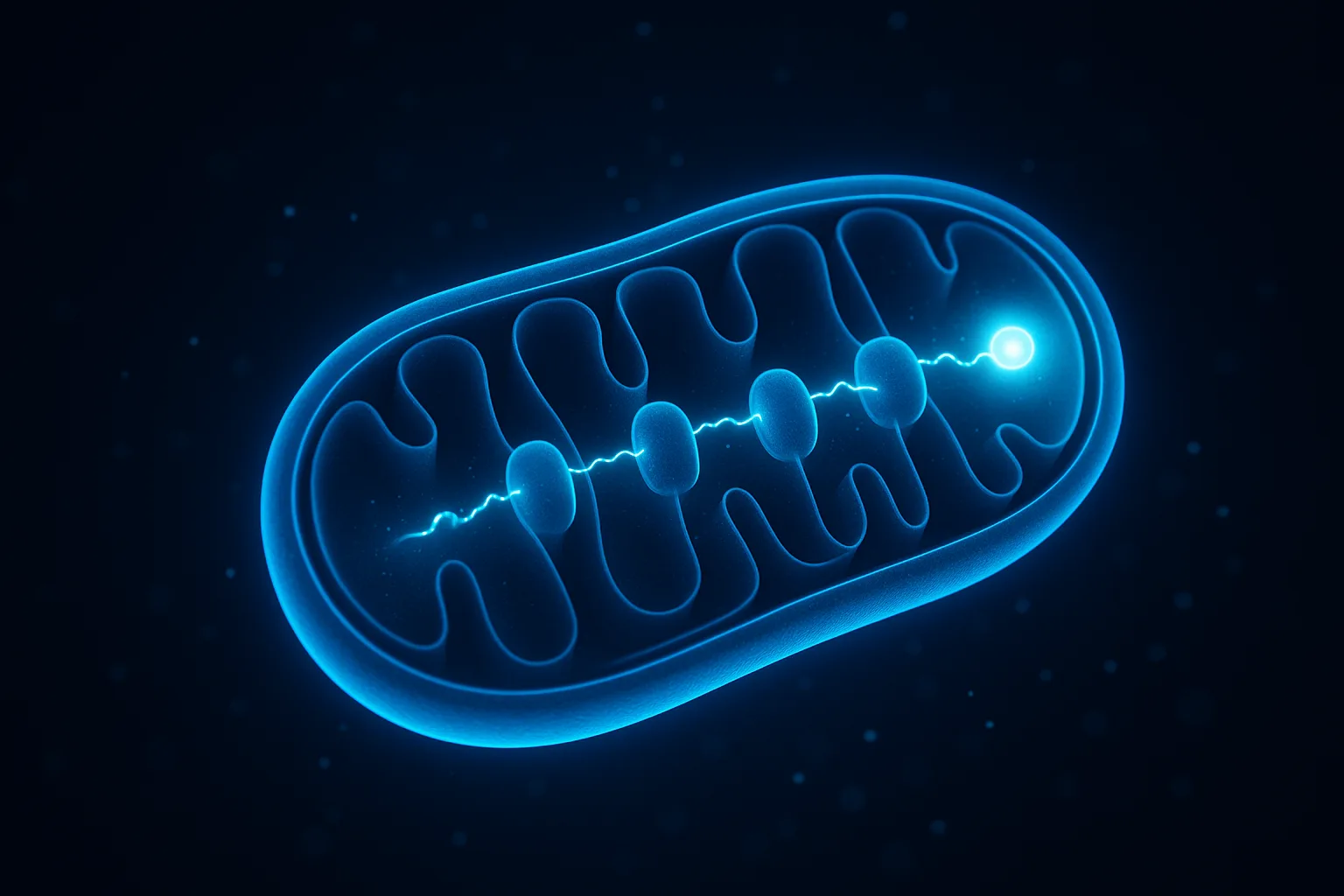
Methylene blue's mechanism is what makes it interesting and what constrains it. It is a redox-active phenothiazine dye that cycles between an oxidized form (methylene blue) and a reduced form (leucomethylene blue). At low concentrations this cycling lets it act as an alternative electron carrier in the mitochondrial electron transport chain: it picks up electrons and donates them to cytochrome c oxidase (complex IV), effectively providing a bypass around dysfunction at complexes I and III. Oz and colleagues (PMID 19760660) review this in detail. Because mitochondrial electron-transport efficiency underlies cellular energy production — and the brain is metabolically demanding — this is the mechanistic thread connecting methylene blue to cognition and neuroprotection.
The same redox chemistry makes it an antioxidant at low dose and a pro-oxidant at high dose. Bruchey and Gonzalez-Lima (PMID 20463863) documented this as a hormetic, U-shaped dose-response: benefits rise with dose, peak, then reverse. Every benefit below is therefore a low-dose claim. Methylene blue is also a potent reversible MAO-A inhibitor and a nitric-oxide-synthase inhibitor, which matter more for its side-effect profile than its benefits.
Memory and Cognition — the Strongest Human Signal
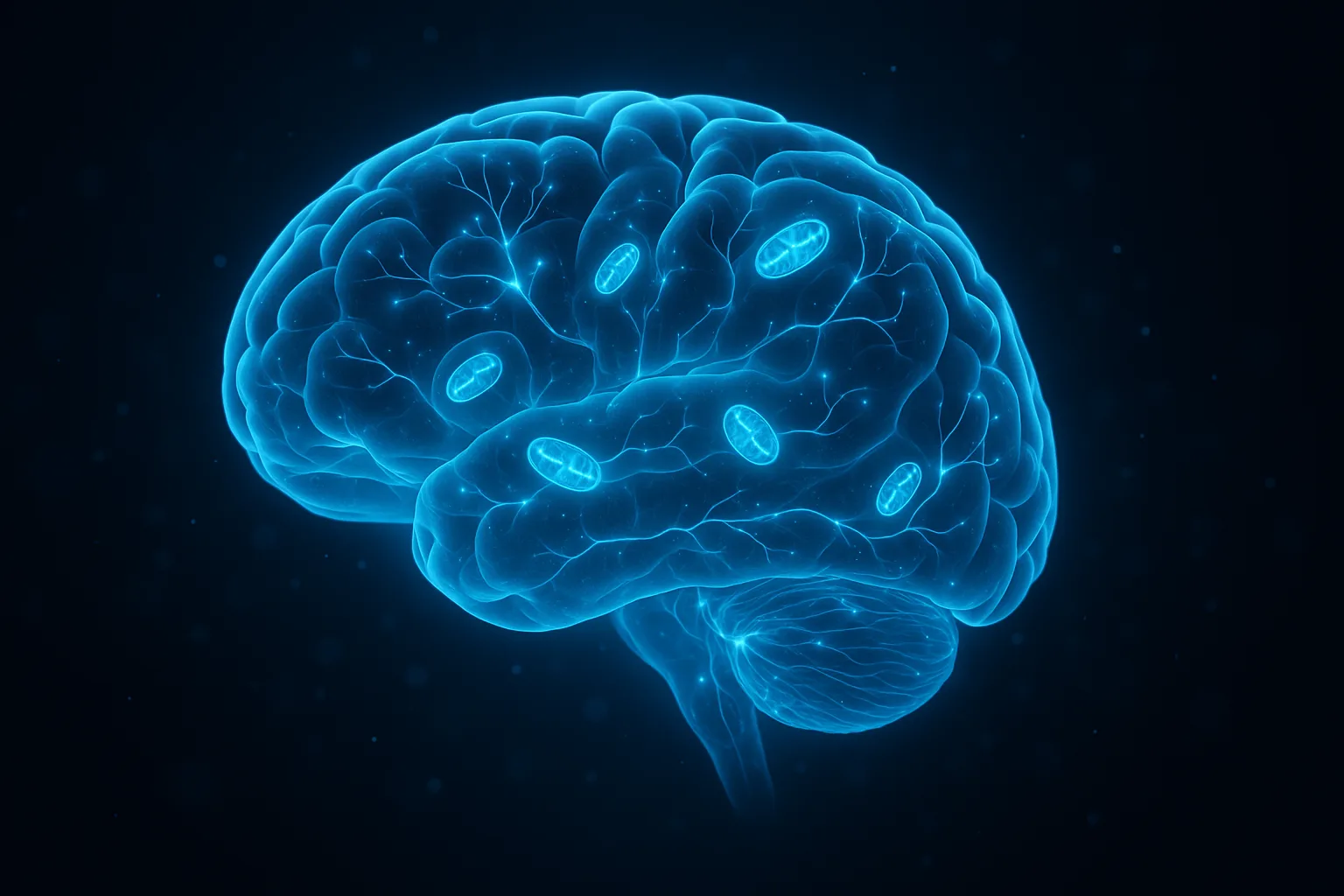
The benefit with the best human evidence is memory. Rodriguez and colleagues (PMID 27351678) ran a randomized, double-blind, placebo-controlled fMRI study in healthy adults: a single low oral dose of methylene blue increased functional MRI response in brain regions engaged during sustained-attention and short-term-memory tasks, and was associated with a roughly 7% increase in correct responses during a memory-retrieval task. That is a real, prospectively measured human cognitive effect tied to a visible change in brain activation — uncommon in the nootropic space, where most claims rest on mechanism or anecdote alone.
The honest framing matters. This is one well-designed acute study, not a replicated body of trials, and it measured a single low dose in a task setting rather than long-term real-world cognition. Community reports cluster around subjective improvements in focus and mental clarity at low doses, which align directionally with the imaging finding but carry the usual self-report limitations. The signal is genuine and worth taking seriously; it is also narrow.
The neuroprotection case follows directly from the mitochondrial mechanism. Gonzalez-Lima and Auchter (PMID 26029050) studied low-dose methylene blue alongside near-infrared light and reported protective effects, framing methylene blue as a metabolic intervention that supports neuronal energy production under stress. The logic is coherent: if neurodegeneration involves failing mitochondrial complexes, a compound that provides an alternative electron path to complex IV could buffer that failure.
The caveat is that the strongest neuroprotection evidence is preclinical — cell and animal models — rather than large human outcome trials. The mechanism is documented and the low-dose preclinical signal is consistent, but extrapolating from a protected neuron in culture to a protected brain over years is exactly the leap that the Alzheimer's program tested and where the story got more complicated. Published research describes the protective mechanism; it does not establish a clinical neuroprotective outcome in humans.
Antioxidant and Cellular-Energy Effects
Beyond memory and neuroprotection, the broadest mechanistic benefit attributed to methylene blue is cellular energy support and antioxidant activity at low dose. By shuttling electrons to cytochrome c oxidase, low-dose methylene blue can increase the activity of that terminal complex and, in preclinical models, raise cytochrome oxidase expression — the practical meaning of "supports mitochondrial function." Oz and colleagues (PMID 19760660) review this electron-carrier role, and the low-dose antioxidant behavior is the same redox property that, reversed at high dose, defines the hormetic curve (PMID 20463863).
This is where mechanism and marketing diverge most. The cellular-energy and antioxidant effects are well-documented at the biochemical and cell level; what is not established is a specific human clinical outcome attributable to them — more energy, better mood, slower aging are extrapolations from mechanism rather than trial endpoints. Community reports commonly describe a subtle energy or clarity effect at low doses, consistently labeled as self-reported rather than measured. The accurate statement is that the antioxidant and electron-carrier mechanisms are real and low-dose-specific; the human-outcome claims built on top of them are mostly unproven.
The Alzheimer's Reality Check — and Who the Research Studied
The biggest claim attached to methylene blue is dementia modification, and it is also where the data are most sobering. A methylene blue derivative, LMTM (leuco-methylthioninium), was developed as a tau-aggregation inhibitor and tested in large Phase 3 Alzheimer's trials. The primary analysis of the main trial (Gauthier et al., PMID 27863809) was negative: in 891 patients, LMTM as an add-on to existing Alzheimer's therapy did not show benefit on the primary endpoints. Subsequent analyses generated debate about a possible monotherapy signal, but the headline result of the largest controlled test of a methylene-blue-derived compound for dementia was a miss.
This is the necessary counterweight to the memory data. The acute human imaging study (PMID 27351678) showed a low-dose cognitive effect in healthy adults; the long-term dementia program (PMID 27863809) did not translate that into clinical benefit in patients. Both are true, and reporting only the first would misrepresent the evidence. The population that has the best low-dose human signal is healthy adults in an acute memory task; the population where the large trial fell short is patients with established Alzheimer's disease. Methylene blue is also a genuine clinical drug for methemoglobinemia (PMID 19760660) and has a documented history as the first synthetic medicine (Schirmer et al., PMID 21316815) — its pharmaceutical credentials are real even where its nootropic claims outrun the data.
Bac Water Made for Peptides
Don't risk a $300 peptide on generic bac water.
Most cloudy reconstitutions trace back to one thing — and it isn't the peptide. Sterile, non-pyrogenic, 0.9% benzyl alcohol — formulated for peptide reconstitution, not repackaged from generic stock.
✓ 0.9% benzyl alcohol✓ Made for peptides✓ 30 mL multi-dose
What did human research report about methylene blue and memory?
A randomized, placebo-controlled fMRI study by Rodriguez and colleagues (PMID 27351678) found that a single low oral dose of methylene blue increased functional MRI response during sustained-attention and short-term-memory tasks and was associated with a roughly 7% increase in correct responses during a memory-retrieval task. It is one well-designed human imaging study — a meaningful data point, not a large body of replicated trials.
How does methylene blue affect mitochondria?
At low concentrations methylene blue cycles between its oxidized and reduced (leuco) forms and acts as an alternative electron carrier in the mitochondrial electron transport chain, donating electrons to cytochrome c oxidase (complex IV) and bypassing dysfunction at complexes I and III. Oz and colleagues (PMID 19760660) review this mechanism. The effect is dose-dependent and antioxidant only at low doses — at high doses the same redox cycling turns pro-oxidant.
Did methylene blue work as an Alzheimer's treatment?
A methylene blue derivative, LMTM, was tested as a tau-aggregation inhibitor in large Phase 3 Alzheimer's trials. The primary analysis of the main trial (Gauthier et al., PMID 27863809) was negative — it did not show benefit as an add-on treatment. This is the most important reality check on methylene blue's cognitive claims: the largest controlled test of a methylene-blue-derived compound for dementia did not meet its primary endpoint.