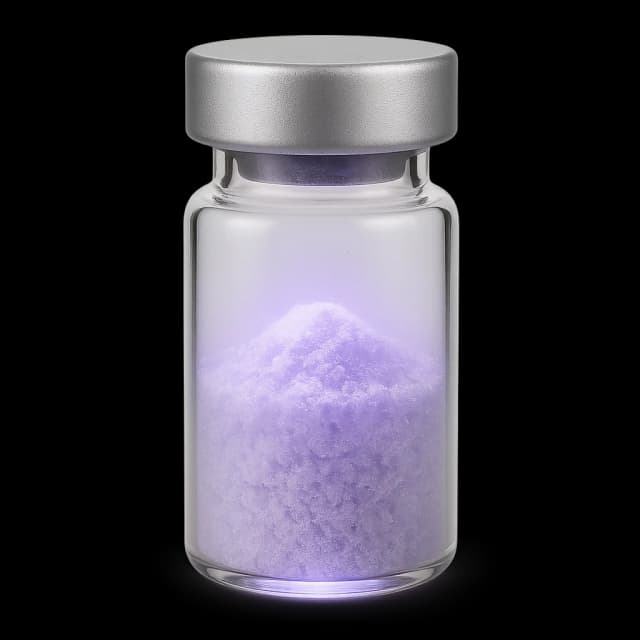
Most "Noopept timeline" pages online present a clean hour-by-hour or day-by-day schedule, as if onset has been measured precisely. The reality splits into two very different evidence classes that are easy to blur together. Noopept (INN omberacetam; development codes GVS-111, SGS-111) is unusual among research-chemical nootropics in that it actually has published human clinical data — but that data comes from Russian trials in impaired patients, where benefits developed over weeks, not from controlled studies of healthy users.
Community accounts describe something faster and more variable: a subtle onset within roughly 15-60 minutes of a dose, with the more valued effects said to build over days to a few weeks. This article keeps the clinical and community streams strictly separated and labels which is which at every step, because the distinction is the whole point. Noopept is sold in Western markets as a research chemical — research use only, not for human consumption — and is not approved by the FDA or EMA.
Research-context information only. Noopept is a research peptide. Protocols, doses, and reactions reported below come from published research and self-reported community sources. This article reports what has been documented, not what should be done. Consult a licensed physician for personal medical decisions.
How Noopept Works (Relevant to Timing)
Noopept is a dipeptide-derived small-molecule nootropic — the ethyl ester of N-phenylacetyl-L-prolylglycine — not an injectable peptide drug. It is orally active, so there is no reconstitution step. It is often described as roughly 1000x more potent by dose than piracetam, which is a potency-by-dose statement (active at tens of milligrams versus piracetam's grams), not a claim that it is 1000x more effective.
The proposed mechanism matters for understanding onset. In preclinical work, Noopept is rapidly metabolized — substantially within the brain — to cycloprolylglycine (cPG), an endogenous cyclic dipeptide that already occurs naturally in mammalian brain. cPG has been reported as a positive AMPA-receptor modulator and to raise BDNF and NGF; its dose-dependent anxiolytic activity was shown in the elevated plus-maze, with the L-enantiomer active and the D-form inactive (Gudasheva et al. 2001, PMID 11550054). The framing is that Noopept amplifies a naturally present modulatory signal rather than introducing a foreign one. These are preclinical, mechanistic findings — not proven human mechanisms.
One detail directly contradicts a common community claim. Rat pharmacokinetic work (Boyko, Zherdev & Shevchenko 2018, PMID 30378564) found that plasma cPG fits a two-compartment model with a short terminal half-life — on the order of about 80 minutes. Noopept and its active metabolite clear quickly, so the "long half-life" narrative is not supported. Any durable effects are attributed in the preclinical literature to downstream neurotrophic signaling, not to a long-circulating parent compound. That distinction — fast clearance, proposed slow-building downstream effects — is exactly why the clinical and community timelines look so different.
Week 1
CLINICAL (trial-described). In the Russian trials, the first week is the early part of a multi-week course, not a milestone in itself. Patients with mild cognitive impairment of vascular or post-traumatic origin were dosed at 10 mg twice daily (20 mg/day) over study courses of roughly 8 weeks, with cognitive and anxiolytic benefits described as developing over that period rather than within the first few days (Neznamov & Teleshova 2008, PMID 18697252; Bochkarev et al. 2008, PMID 19008801). These were disease-population outcomes, not healthy-user enhancement, and the trials were mostly open-label or piracetam-comparator.
COMMUNITY (anecdotal). Community and vendor sources describe a faster subjective onset: a subtle sense of focus or mental clarity within roughly 15-60 minutes of a single dose. Reports in this early window are inconsistent — a meaningful share of users describe Noopept as subtle or "no clear effect," and some describe it as stimulating or mildly anxiogenic rather than calming. None of these accounts is placebo-controlled. The dose people most commonly report using is in the 10-30 mg/day range, usually split into 2-3 small doses, with new users often starting around 10 mg. The 20 mg/day figure is the one actually used in the Russian trials; doses above that in the community range are anecdotal, not trial-validated.
10000mg · sold research-use-only · we may earn a commission
Weeks 2-4
CLINICAL (trial-described). Weeks two through four sit inside the core of the studied courses, and this is where the trial literature locates most of the reported benefit. Across the comparative and EEG-characterization work, improvements in memory and attention plus an anxiolytic or "regulatory" effect built over weeks of twice-daily dosing, with reported MMSE improvement in treated MCI groups (PMID 18697252, PMID 19008801). The comparative trial reported Noopept efficacy at least comparable to piracetam, and in some asthenic or post-concussional subgroups significantly greater. Again: impaired populations, mostly open-label, Russian-language, near the originating program — supportive in direction, thin in rigor.
COMMUNITY (anecdotal). Community sources describe the more valued effects — verbal fluency, memory consolidation, reduced anxiety — as building over days to a few weeks of consistent use rather than arriving all at once. Reports diverge sharply: some describe accumulating benefit, others describe early effects fading, and a substantial share maintain they noticed nothing. Many community sources pair Noopept with a choline source during this period to manage anecdotal headache. No controlled human data supports a two-to-four-week ramp in healthy users; this is the shape of the anecdote, not a validated schedule.
Bac Water Made for Peptides
Don't risk a $300 peptide on generic bac water.
Most cloudy reconstitutions trace back to one thing — and it isn't the peptide. Sterile, non-pyrogenic, 0.9% benzyl alcohol — formulated for peptide reconstitution, not repackaged from generic stock.
✓ 0.9% benzyl alcohol✓ Made for peptides✓ 30 mL multi-dose
CLINICAL (trial-described). The studied courses extended to roughly 8 weeks, and one open prospective stroke study dosed patients at about 20 mg/day for up to 12 months, reporting improved cognitive function and "a high level of safety" (Amelin, Ilyukhina & Shmonin 2011, PMID 22500312). Being open-label, that stroke result should be read as supportive rather than definitive. The longer course is also where the trial-reported adverse signals matter: small open-label cohorts reported sleep disturbance, irritability, and increased blood pressure in a minority of patients — the blood-pressure signal being notable given the vascular-MCI population studied.
COMMUNITY (anecdotal). Past the first month, community discussion shifts from onset to maintenance and cycling. Community protocols commonly describe several weeks on followed by a break, motivated partly by a perception of diminishing returns and partly by the absence of long-term human safety data. There is no trial-defined cycling schedule — cycling guidance is purely community convention. Some users report sustained benefit at this stage; others report that effects plateaued or faded.
Factors That Affect Results
Reported variability appears to track several factors, the community ones all anecdotal:
Evidence class. The clearest distinction is whether a "timeline" is drawn from the Russian trials (weeks, impaired patients) or from community anecdote (fast subtle onset, healthy users). They are not interchangeable.
Population. Every human trial was in disease populations — vascular or post-traumatic MCI, or stroke. Those outcomes do not translate directly to healthy users seeking cognitive enhancement.
Dose. Community and vendor sources cite 10-30 mg/day, usually split into 2-3 doses; 20 mg/day is the trial-derived figure. Doses above 20 mg/day are community-derived, not trial-validated.
Choline status. Headache is the most commonly reported community side effect, frequently attributed anecdotally to choline depletion; users report adding a choline source. This is community observation, not trial-established causation.
Expectancy. No community report is placebo-controlled, so expectation effects and normal day-to-day variation cannot be separated from any drug effect.
Product purity. As a research chemical, Noopept's identity and purity depend on the supplier's COA; HPLC purity claims (often around 98%+) vary by source, and research-grade powder is distinct from any Russian pharmaceutical product.
What If You See Nothing
A meaningful share of community reports describe Noopept as subtle or having no clear effect, across all of the windows above. Given that the human trials were conducted in impaired populations rather than healthy users, that community accounts are not placebo-controlled, and that the wider community dose range is not trial-validated, an absence of noticeable effect is consistent with the current evidence — it does not by itself indicate a defective product or the wrong duration.
The honest synthesis is that two timelines exist and they are not the same. The clinical timeline is measured in weeks, in impaired patients, from mostly open-label Russian studies concentrated near one originating research group — a depth-and-independence caveat, not an integrity problem (no retractions were identified for the Noopept literature). The community timeline is a fast, subtle onset said to build over days to weeks, highly variable, in healthy users, with no controlled data behind it. Neither stream establishes what a healthy person should expect.
Frequently Asked Questions
How long does Noopept take to work?
It depends on which evidence class you look at. In Russian clinical trials, cognitive and anxiolytic benefits in patients with mild cognitive impairment developed over weeks of twice-daily dosing (study courses ran roughly 8 weeks). Community users report something different — a subtle onset within about 15-60 minutes of a dose, with the more valued effects building over days to a few weeks of consistent use. Community reports are inconsistent and not placebo-controlled, so expectancy and normal day-to-day variation cannot be separated from a drug effect.
Is there a clinically established Noopept timeline for healthy users?
No. The human trials were conducted in disease populations — mild cognitive impairment of vascular or post-traumatic origin, and post-stroke patients — not healthy people seeking cognitive enhancement. They were also mostly small, open-label or piracetam-comparator, Russian-language, and near the originating research group. So a clinically studied onset window exists for impaired patients (effects over weeks), but there is no controlled trial measuring an onset timeline in healthy users.
The metabolite story: Noopept's proposed effects are attributed to cycloprolylglycine, an endogenous brain dipeptide — the mechanistic basis for why fast clearance and slow-building effects can coexist in the preclinical model.
References
Neznamov GG, Teleshova ES. Zh Nevrol Psikhiatr Im S S Korsakova. 2008. PMID 18697252 — comparative trial of Noopept vs piracetam in mild-moderate MCI of vascular/traumatic origin; 20 mg/day regimen, benefits over ~8 weeks, anxiolytic effect; source of the trial-derived dose and weeks-long clinical onset.
Bochkarev VK, Teleshova ES, Siuniakov SA, Davydova IA, Neznamov GG. Zh Nevrol Psikhiatr Im S S Korsakova. 2008. PMID 19008801 — clinical + EEG characterization in post-traumatic/vascular MCI; cortical activation plus anxiolytic component developing over the course.
Amelin AV, Ilyukhina AY, Shmonin AA. Zh Nevrol Psikhiatr Im S S Korsakova. 2011. PMID 22500312 — open prospective stroke study (~60 patients), ~20 mg/day up to 12 months; improved cognition and reported high safety; basis for the weeks-5-8 and longer clinical timeline.
Gudasheva TA, Konstantinopol'skii MA, Ostrovskaya RU, Seredenin SB. Bull Exp Biol Med. 2001. PMID 11550054 — endogenous metabolite cycloprolylglycine shows dose-dependent anxiolytic activity in the elevated plus-maze (L-form active); mechanistic basis for the proposed onset.
Boyko SS, Zherdev VP, Shevchenko RV. Biomed Khim. 2018. PMID 30378564 — rat pharmacokinetics of Noopept and active metabolite cPG; short terminal half-life (~80 min), refuting "long half-life" claims and informing the fast-clearance/slow-effect framing.