Most "NSI-189 timeline" pages present a tidy week-by-week schedule — clearer thinking in a few days, mood and motivation lifting by week two, neuroregeneration accumulating across a month. That framing implies a body of human enhancement data that does not exist. NSI-189 is a synthetic small molecule (a benzylpiperazine-aminopyridine — not a peptide) developed by Neuralstem for major depressive disorder, and unusually for a research nootropic it did reach human trials. The headline result from those trials, though, is that its pivotal Phase 2 study failed its primary endpoint.
What does exist falls into two source classes that get blurred together: human trial data (which measured depression over a fixed 4-to-12-week window, not cognitive enhancement onset) and self-reported community anecdote. This article keeps the two separated and labels which is which at every step. It also leads with the fact most competing timelines bury — the prospectively-defined Phase 2 primary endpoint was not met — and notes the one genuine positive in the human record: short-term tolerability was good.
Research-context information only. NSI-189 was studied in human clinical trials but is not FDA-approved; its clinical program was discontinued, and material sold today is a research chemical labeled not for human consumption. Doses, protocols, and reactions reported below come from published trials, preclinical research, and self-reported community sources. This article reports what has been documented, not what should be done. Consult a licensed physician for personal medical decisions.
How NSI-189 Works (Relevant to Timing)
NSI-189's development rationale was stimulating neurogenesis — the proliferation and differentiation of neural stem cells in the hippocampus. The precise molecular target was never fully defined in the published record, so the mechanism is best described as proposed and partially characterized rather than established.
The preclinical work that does exist is directionally consistent and matters for any timeline expectation. In an Angelman-syndrome mouse model, NSI-189 increased the magnitude of theta-burst-induced long-term potentiation (LTP) in hippocampal slices in a dose- and time-dependent manner, with effects associated with TrkB and Akt pathway activation, and short daily injections reversed cognitive and motor deficits (Liu et al., 2019, PMID 30408487). In a rat stroke model, oral NSI-189 started six hours post-stroke and continued 12 weeks reportedly improved motor and neurological recovery and increased BDNF expression and neurite outgrowth (Tajiri et al., 2017, PMID 28181668).
Two points follow for anyone reading an onset schedule. First, these are animal and in-vitro findings — they show measurable effects in rodents over repeated dosing, not a human onset curve. Second, neurogenesis and synaptic remodeling unfold over days to weeks of continued dosing, not minutes, so even the proposed mechanism does not predict an instant effect. None of it has been validated as cognitive enhancement in healthy people.
Week 1
There is no human enhancement trial, so the only trial-anchored framing for the first week comes from the depression studies — and those measured depression scales, not day-one cognitive effects. The Phase 1B study (Fava et al., 2016, PMID 26643541) dosed patients for 28 days across 40, 80, and 120 mg/day arms and was a safety and tolerability study, not one powered to prove early efficacy.
Everything community sources report about a "week 1" is anecdotal and not placebo-controlled. Within the first several days, self-reported community accounts most commonly describe subtle shifts: improved mood, motivation, mental clarity, or a "recovery-from-burnout" sensation. The reports are inconsistent, though — a meaningful share of community users describe no noticeable effect in the first week, and some describe a "flat" or blunted feeling, headache, or irritability rather than benefit. With no placebo control behind any of it, ordinary day-to-day variation and expectancy cannot be separated from a drug effect.
1000mg · sold research-use-only · we may earn a commission
Weeks 2-4
The dose people actually use sits squarely in this window's discussion, and it is worth stating plainly because some write-ups wrongly claim NSI-189 has no real dose. It does. Community and vendor sources commonly reference about 40-80 mg per day, taken orally once daily — a range carried over directly from the 40 mg and 80 mg/day arms used in the depression trials. That is not a dose validated for cognitive enhancement in healthy users, and no such trial exists, but unlike many research nootropics the figure maps cleanly onto real human trial doses rather than vendor guesswork.
Across weeks two through four, the most consistent community pattern is that those who report an effect describe it building gradually over a multi-week course rather than arriving at once. This loosely mirrors the multi-week design of the trials, but it remains anecdote — there is no placebo-controlled human data supporting a two-to-four-week ramp for enhancement, or any other timeline. Community reports also diverge here: some describe continued gains, others describe early effects fading, and others maintain they felt nothing throughout. Oral capsules and powder are the dominant community routes, matching the oral route used in the trials; sublingual use is occasionally mentioned in forums but has no pharmacokinetic basis in the published record.
Bac Water Made for Peptides
Don't risk a $300 peptide on generic bac water.
Most cloudy reconstitutions trace back to one thing — and it isn't the peptide. Sterile, non-pyrogenic, 0.9% benzyl alcohol — formulated for peptide reconstitution, not repackaged from generic stock.
✓ 0.9% benzyl alcohol✓ Made for peptides✓ 30 mL multi-dose
The trials ran out to 12 weeks, so this window overlaps the back half of the Phase 2 assessment period (Papakostas et al., 2020, PMID 30626911). That study's prospectively-defined primary endpoint — change in MADRS versus placebo — was not met at either dose (40 mg, p = 0.224; 80 mg, p = 0.344). The positive signals it did report were secondary and subject-rated: the 40 mg dose showed greater reductions on two patient-rated scales (the Symptoms of Depression Questionnaire and the Cognitive and Physical Functioning Questionnaire, pooled SDQ p = 0.044), and a hippocampal-volume increase was described. A separate post-hoc analysis of the same dataset reported the 80 mg dose benefited only a moderately-depressed subgroup (Johe et al., 2020, PMID 32722729) — but post-hoc subgroup findings are hypothesis-generating, not confirmatory, and do not change the failed primary endpoint. None of these readouts establishes an onset curve a healthy person could expect to track.
Past the first month, community discussion shifts from onset to maintenance and cycling. Self-reported community protocols commonly describe time-limited courses (echoing the 28-day to 12-week trial exposures) and on/off cycling, motivated partly by the absence of any long-term human safety data. Some community users report sustained benefit at this stage; others report effects plateauing or fading. There is no controlled human evidence establishing what happens at weeks five through eight — only divergent anecdote.
Factors That Affect Results
Community-reported variability appears to track several factors, all anecdotal:
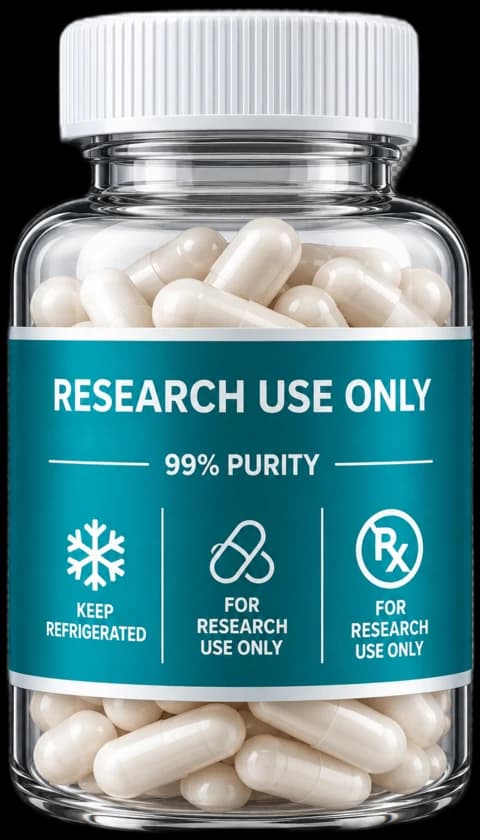
Form. Swiss Chems sells NSI-189 as phosphate powder, phosphate capsules (20 mg each), and free-base powder. The phosphate salt is the form used in the clinical trials and is described as having better solubility and stability; there is no reconstitution or bac-water step because NSI-189 is an oral small molecule, not an injectable.
Dose. Community sources cluster around 40-80 mg/day orally, inherited from the trial doses. There is no clinically-established cognitive-enhancement dose, only this trial-derived range.
Course length. Trial exposure ran 28 days to 12 weeks; community sources describe similar time-limited courses. No human safety data exists beyond ~12 weeks.
Product purity. As a research chemical, NSI-189's identity and purity depend entirely on the supplier's certificate of analysis; HPLC purity claims (often ~98-99%) should be verified against the current COA.
Expectancy. With no placebo control behind any community report, expectation effects cannot be separated from any drug effect.
What If You See Nothing
A substantial share of community reports describe no perceptible effect from NSI-189, across all of the windows above. Given that the prospectively-defined Phase 2 primary endpoint failed, that no trial has ever tested NSI-189 for cognitive enhancement in healthy people, and that the community-used 40-80 mg/day figure is trial-derived rather than enhancement-validated, an absence of noticeable effect is fully consistent with the current evidence — it does not necessarily indicate a defective product or an insufficient duration.
The honest summary is twofold. First, NSI-189's short-term tolerability record is genuinely a relative positive: across Phase 1B and Phase 2 it was reported as well tolerated with no serious adverse events at up to 12 weeks, with headache, dizziness, and somnolence the most common adverse events — though there is no long-term human safety data. Second, no one can presently say what a "working" NSI-189 enhancement timeline looks like in humans, because that timeline has never been measured. What was measured — depression efficacy — did not meet its primary endpoint.
Frequently Asked Questions
Is there a clinical timeline for how fast NSI-189 works?
Not for cognitive enhancement. NSI-189 reached human trials for major depression, but its 220-patient Phase 2 study (Papakostas et al., 2020, PMID 30626911) assessed outcomes over a 12-week window and failed its primary MADRS endpoint (40 mg p=0.224; 80 mg p=0.344). No trial has ever measured an onset curve for enhancement in healthy people, so any week-by-week schedule online reflects community anecdote layered onto trial-derived dosing, not validated human data.
What dose do community sources report for NSI-189?
Community and vendor sources most commonly reference about 40-80 mg per day, taken orally once daily. That range is carried over directly from the doses used in the human depression trials (40 mg and 80 mg/day arms). It is not a dose validated for cognitive enhancement in healthy users — no such trial exists — but it is the figure people actually report using, and there is a real trial-derived dose, unlike many research nootropics.
Mechanism background: the hippocampal-neurogenesis and TrkB/Akt research line (Liu et al., 2019) is the cleanest synaptic-plasticity evidence behind the "neurogenic" descriptor — all of it preclinical.
References
Papakostas GI, Johe K, et al. A phase 2, double-blind, placebo-controlled study of NSI-189 phosphate among outpatients with major depressive disorder. Mol Psychiatry. 2020;25(7):1569-1579. PMID 30626911 — failed primary MADRS endpoint (40 mg p=0.224; 80 mg p=0.344); 12-week assessment window; secondary SDQ/CPFQ signal at 40 mg.
Fava M, Johe K, et al. A Phase 1B, randomized, double-blind, placebo-controlled, multiple-dose-escalation study of NSI-189 phosphate in depressed patients. Mol Psychiatry. 2016;21(10):1372-1380. PMID 26643541 — 28-day dosing; well tolerated at 40/80/120 mg/day; AEs headache, dizziness, somnolence.
Johe KK, Kay G, et al. NSI-189 phosphate selectively benefits moderately depressed patients: post-hoc analysis. Ann Clin Psychiatry. 2020;32(3):182-196. PMID 32722729 — post-hoc 80 mg benefit in moderate (MADRS<30) subgroup only; hypothesis-generating.
Liu Y, Johe K, et al. Enhancement of synaptic plasticity and reversal of impairments in Angelman Syndrome model mice by NSI-189. Neuropharmacology. 2019. PMID 30408487 — dose/time-dependent LTP increase via TrkB/Akt; cleanest synaptic-plasticity evidence.
Tajiri N, Quach DM, et al. NSI-189, a small molecule with neurogenic properties, exerts behavioral and neurostructural benefits in stroke rats. J Cell Physiol. 2017. PMID 28181668 — oral NSI-189 improved post-stroke deficits; increased BDNF and neurite outgrowth.