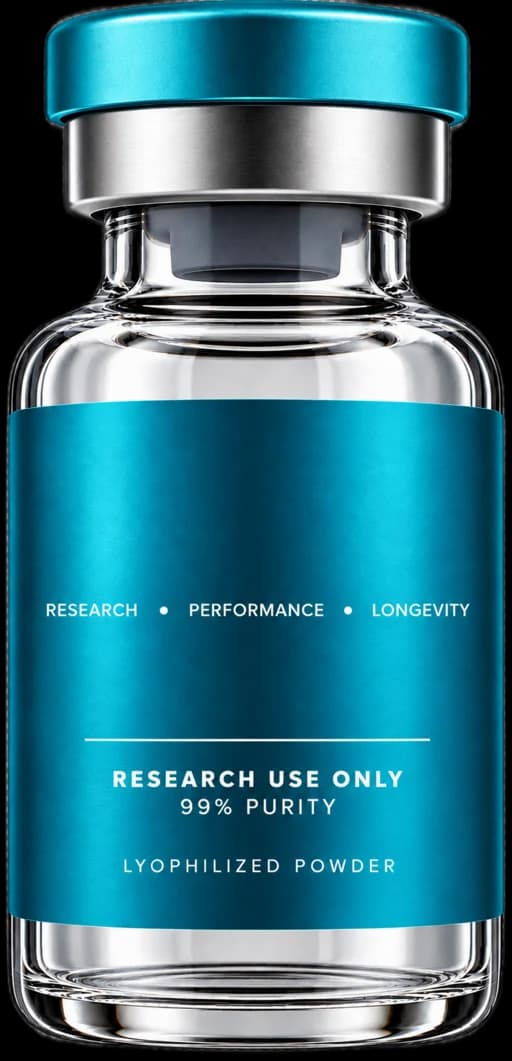
Thymogen is the synthetic dipeptide Glu-Trp (EW), one of the short active peptides that the Soviet-era bioregulator school identified inside thymalin, the thymus-tissue extract, and then reproduced as a single defined molecule. Its reputation is almost entirely an immune-modulation story: the originators, V.G. Morozov and V.Kh. Khavinson, reported that it could push a T-cell compartment toward a more active, "younger" profile. Among the synthetic Khavinson peptides, thymogen sits at the stronger end of an admittedly thin evidence base — but "stronger" here still means old, single-lab, and largely unreplicated outside Russia.
The most useful thing to hold onto before reading the claims is the distinction between the extract and the molecule. Thymalin is a crude peptide fraction whose composition varies batch to batch; thymogen is one clean sequence, which makes it more reproducible but also means the sprawling clinical reputation attached to "thymic peptides" belongs mostly to the extract parent, not to the two-amino-acid research chemical sold under this name. Evidence for one does not automatically transfer to the other, and the human data behind both comes overwhelmingly from one group, decades ago, in largely Russian-language journals.
Research-context information only. Thymogen is a research peptide. Protocols, doses, and reactions reported below come from published research and self-reported community sources. This article reports what has been documented, not what should be done. Consult a licensed physician for personal medical decisions.
How Thymogen Works
The proposed mechanism comes mostly from the compound's originators and is not independently established. In their model, thymogen acts as a thymic bioregulator: it promotes differentiation of T-lymphocyte precursors and is reported to shift lymphocyte populations and the CD4/CD8 balance toward the values seen in a younger immune system. A second strand of the model involves cytokine modulation, with the dipeptide reported to dampen pro-inflammatory signaling in blood-cell assays.
Khavinson's group also advances a more speculative idea — that a short peptide like Glu-Trp can enter cells, bind double-stranded DNA and histones, and modulate gene expression directly. This gene-expression hypothesis is the group's signature theory, and it is largely built on in-vitro and cell-culture work from the originators themselves. It should be read as a proposed mechanism, not an established fact. Because thymogen is a defined synthetic dipeptide rather than the thymalin extract it came from, its mechanism is at least easier to study cleanly — but the clinical weight behind the thymic-peptide idea still rests on the extract-based literature.
Immune Modulation: The Central Claim
The immune case is the reason thymogen exists, and it is where the evidence is deepest — though "deepest" here still means old and single-source. A 1997 paper from the originators reported that natural and synthetic thymic peptides, including thymogen, activated T-cell differentiation and were used clinically as immunocorrectors in Russian practice (PMID 9637345). This is foundational work, and it is one of the few citations that names the synthetic peptide directly rather than only the extract. But it comes from the people who developed the compound, which is a limit worth keeping in mind for every claim that follows.
What this paper reports is a mechanism and a pattern of clinical use, not a modern controlled trial. There is no large, independent, placebo-controlled Western study confirming that thymogen improves infection resistance or immune markers in people. The reasonable read is that the immune-modulation claim is plausible in mechanism and long-established in Russian clinical practice, but unproven in the rigorous sense that word usually implies.
The Rodent Longevity and Anti-Tumor Data — Read Carefully
The more dramatic claims around thymogen — that it slows aging or protects against cancer — trace back to animal work from the same research lineage. A rodent study from the originating group reported that Glu-Trp influenced lifespan and reduced the development of spontaneous tumors in treated animals (PMID 11707921). Taken at face value, that is the kind of result that fuels the anti-aging narrative in peptide forums.
Read carefully, it is preclinical animal data from the compound's own developers. A reduction in spontaneous tumor formation in rodents is a genuine finding, but it does not establish an anti-cancer or longevity benefit in humans — the translation from mouse cage to human clinic is exactly where most promising signals fail. There is no independent replication of this work outside the originating group, and no human trial testing thymogen for lifespan or cancer outcomes. The honest framing is a single unreplicated animal study, not "clinically proven to extend life or prevent cancer."
None of this means the finding is wrong. It means the evidence is thin, one-sided, and animal-only, and the anti-aging reputation thymogen carries is built on this rodent work plus community extrapolation. Readers should weight it accordingly rather than treating a mouse tumor-incidence result as a human health claim.
Extract vs Synthetic, and What Community Sources Describe
A recurring source of confusion is worth restating: the deep clinical file — the decades of Russian immunocorrection and geroprotection reports — is largely about the thymalin extract and the broader thymic-peptide family, while the product sold as thymogen is the isolated synthetic Glu-Trp dipeptide. The two are related by design, but a claim proven for an extract is not automatically proven for one of its component peptides in isolation. Where the literature names thymogen specifically, as in PMID 9637345, it does so alongside the extract rather than in a dedicated modern trial.
Beyond the published work, thymogen has an anecdotal reputation. Users in community sources commonly describe improved resistance to colds and infections and a general sense of "immune resilience" built over a multi-week course, with little acute effect during dosing. These are self-reported community claims, explicitly anecdotal, with no controlled-trial support. The gap between an in-vitro or rodent signal and a person feeling more resilient is wide, and none of these timelines should be read as evidence of efficacy.
Who Thymogen Has Been Studied In
The originating literature is oriented toward age-related immune decline — older adults whose thymic output has fallen — rather than healthy young users, which is the population where a thymic peptide's proposed mechanism would be most relevant. The animal longevity and anti-tumor work sits alongside that framing rather than in a distinct human population.
What is essentially absent is independent safety data. The originating literature states that thymogen and related thymic peptides had "practically no side effects" over decades of Russian clinical use, but there are no large Western trials and no modern pharmacovigilance behind that statement. General injectable-peptide considerations still apply — injection-site reactions, the sterility and contamination risk of research-chemical products, unknown long-term immunomodulatory effects, and unverified purity of non-pharmaceutical-grade material. Thymogen is reported well-tolerated in older Russian clinical use, but there is no independent modern safety evaluation, and it is not an approved drug in the West.
Bac Water Made for Peptides
Don't risk a $300 peptide on generic bac water.
Most cloudy reconstitutions trace back to one thing — and it isn't the peptide. Sterile, non-pyrogenic, 0.9% benzyl alcohol — formulated for peptide reconstitution, not repackaged from generic stock.
✓ 0.9% benzyl alcohol✓ Made for peptides✓ 30 mL multi-dose
What did studies report about thymogen and immune function?
Work from the compound's originators reported that thymic peptides isolated and synthesized as thymogen activated T-lymphocyte differentiation and were used clinically as immunocorrectors in Russian practice (PMID 9637345). That paper comes from the group that developed the compound, the human data is decades old, and there has been no independent Western replication.
Is thymogen the same as thymalin?
No. Thymalin is a crude multi-peptide fraction extracted from thymus tissue. Thymogen is the single synthetic dipeptide Glu-Trp (EW), one of the short peptides identified inside thymalin and then made synthetically. Because thymogen is a defined molecule rather than an extract, it is more reproducible batch-to-batch, but much of the deep clinical reputation belongs to the thymalin extract it was derived from.
What did the rodent longevity and anti-tumor work actually measure?
A rodent study from the originating research group reported that Glu-Trp influenced lifespan and reduced spontaneous tumor development in animals (PMID 11707921). This is preclinical animal data from the compound's developers, not a human trial, and it does not establish a longevity or anti-cancer benefit in people.
Is thymogen an approved drug?
Thymogen is not approved by the FDA and is not approved in the EU or UK. It has been used clinically in Russia for decades as an immunocorrector, but in Western markets it is sold only as a research chemical labeled not for human consumption, with no independent modern safety evaluation.
Related Reading
Thymalin for immune support — the thymus-extract parent thymogen was derived from, and how its evidence compares.
Thymalin dosing guide — documented protocols and community-reported administration for the related thymic peptide.
Best Thymogen sources — verified research-chemical vendors compared on price and COA.
References
Morozov VG, Khavinson VK. Natural and synthetic thymic peptides as therapeutics for immune dysfunction. Int J Immunopharmacol. 1997. PMID 9637345.
Anisimov VN, Khavinson VKh, et al. Effect of synthetic dipeptide thymogen (Glu-Trp) on lifespan and spontaneous tumor development in animals. 2001. PMID 11707921.