Body Composition Benefits
The type of weight lost matters as much as the amount. Retatrutide's trial-reported profile here is particularly compelling.
Fat Loss vs. Muscle Preservation
A common concern with any aggressive weight loss intervention is the loss of lean muscle mass. Phase 2 body composition substudy data using DEXA scans showed that retatrutide participants lost predominantly fat mass, with a favorable fat-to-lean mass loss ratio. The glucagon receptor component may contribute to this by promoting fat oxidation as the primary fuel source and supporting protein turnover.
Trial protocols and community sources typically pair treatment with resistance training to support muscle retention.
Visceral Fat Reduction
Visceral fat — the metabolically dangerous fat surrounding internal organs — appears to be preferentially targeted. This is clinically significant because visceral fat drives insulin resistance, inflammation, and cardiovascular risk far more than subcutaneous fat. Community reports describe waist circumference decreasing faster than the scale would suggest.
Hepatic Fat Clearance (MASLD)
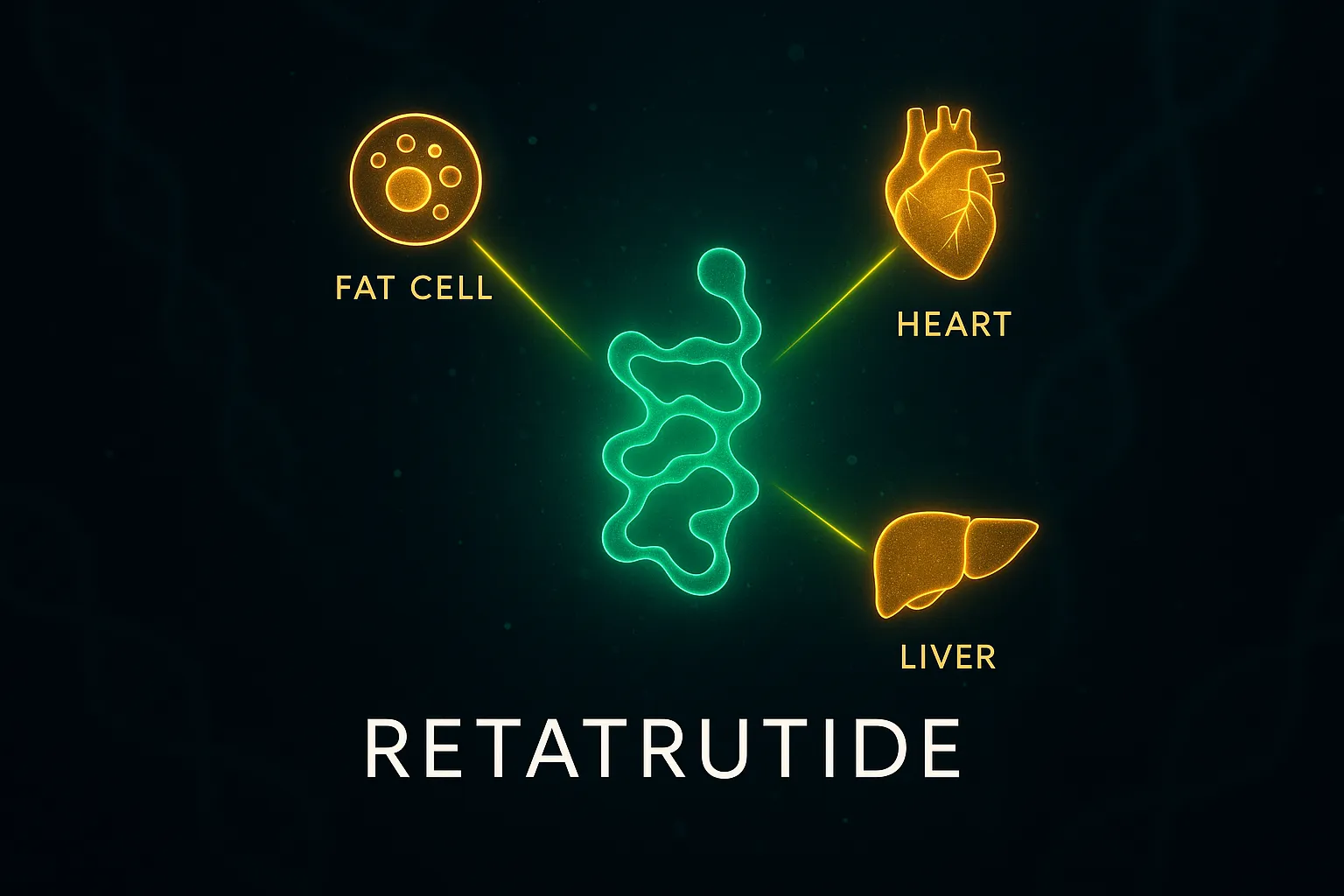
Perhaps the most striking body composition finding is retatrutide's effect on liver fat. In a dedicated phase 2a trial studying participants with MASLD (formerly NAFLD), retatrutide achieved resolution of liver steatosis in over 85% of participants. Hepatic fat content dropped dramatically — a benefit largely attributed to glucagon receptor activation, which directly stimulates hepatic lipid oxidation and reduces lipogenesis.
Based on that >85% steatosis-resolution rate reported in the phase 2a MASLD trial, retatrutide ranks among the most effective pharmacological interventions studied for fatty liver disease to date.
Beyond weight loss, retatrutide delivers broad metabolic improvements that address the root causes of cardiometabolic disease.
Insulin Sensitivity and Blood Glucose
Retatrutide's triple mechanism improves glycemic control through multiple pathways:
- GLP-1 activity stimulates glucose-dependent insulin secretion and suppresses glucagon when blood sugar is high
- GIP activity enhances insulin sensitivity in adipose tissue and improves nutrient partitioning
- Glucagon activity paradoxically improves hepatic insulin sensitivity by reducing liver fat and improving hepatic glucose metabolism
In the phase 2 type 2 diabetes trial, participants achieved HbA1c reductions of up to 2.02% — bringing many into the normal glycemic range. Fasting glucose and post-meal glucose spikes both improved significantly.
Lipid Panel Changes
Retatrutide consistently improves lipid profiles:
- Triglycerides: Significant reductions, driven by reduced hepatic VLDL production and improved fat metabolism
- LDL cholesterol: Modest reductions observed
- HDL cholesterol: Tends to be preserved or mildly increased
- Non-HDL cholesterol: Meaningful improvements across studies
These lipid changes are clinically relevant and contribute to the overall cardiovascular risk reduction profile.
Cardiovascular Benefits
The cardiovascular benefit profile of retatrutide extends beyond what weight loss alone would predict.
Blood Pressure
Clinically meaningful reductions in both systolic and diastolic blood pressure have been observed across retatrutide trials. These reductions appear early in treatment and are sustained, likely driven by the combination of weight loss, improved insulin sensitivity, and reduced systemic inflammation.
Inflammatory Markers
Chronic low-grade inflammation is a hallmark of obesity and metabolic syndrome. Retatrutide reduces key inflammatory biomarkers including C-reactive protein (CRP). The reduction in visceral fat — a major source of pro-inflammatory cytokines — is a primary driver of this benefit.
Cardiovascular Risk Reduction
When you combine significant weight loss, improved blood pressure, better lipid profiles, reduced inflammation, and improved glycemic control, the composite cardiovascular risk profile improves substantially. While dedicated cardiovascular outcomes trials for retatrutide are still ongoing, the surrogate markers paint a very promising picture.
How Retatrutide Compares
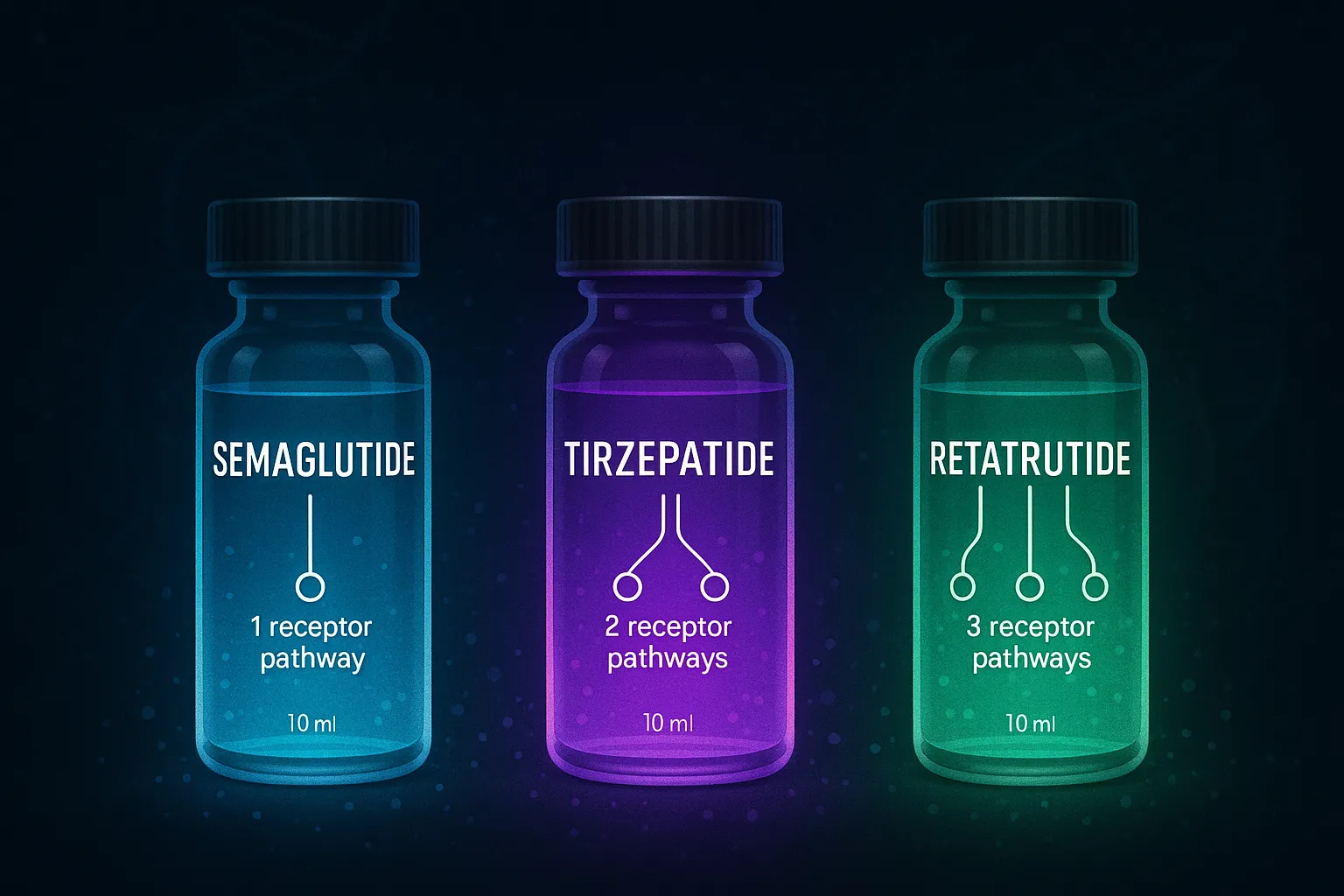
Understanding where retatrutide fits relative to existing options helps clarify who benefits most.
| Benefit |
Semaglutide |
Tirzepatide |
Retatrutide |
| Receptor targets |
GLP-1 only |
GLP-1 + GIP |
GLP-1 + GIP + Glucagon |
| Weight loss magnitude |
Moderate-high |
High |
Highest observed |
| Appetite suppression |
Strong |
Strong |
Strong |
| Energy expenditure boost |
Minimal |
Minimal |
Significant |
| Liver fat clearance |
Moderate |
Moderate-high |
Very high (>85% resolution) |
| Muscle preservation |
Average |
Good |
Good-to-excellent |
| Glycemic control |
Strong |
Very strong |
Very strong |
| Cardiovascular markers |
Proven outcomes |
Positive signals |
Positive signals |
Semaglutide has the longest track record and proven cardiovascular outcomes data (SELECT trial). Tirzepatide offers greater efficacy through dual agonism. Retatrutide appears to push the boundaries further with its third receptor target. For a deeper comparison of the first two, see our semaglutide vs tirzepatide comparison.
Who Is Retatrutide Best For?
Obesity (BMI ≥30)
Retatrutide's potent weight loss profile makes it particularly suited for individuals with significant obesity who need substantial weight reduction. The weight loss reported in retatrutide's phase 2 trial data exceeds figures reported for other single pharmacological agents in comparable trials. See our retatrutide vendor rankings for current pricing and third-party testing verification.
Overweight with Comorbidities
For individuals with BMI 27-30 who have metabolic complications — type 2 diabetes, MASLD, dyslipidemia, hypertension — retatrutide's multi-system benefits address multiple conditions simultaneously rather than treating each one separately.
Type 2 Diabetes
The robust glycemic improvements make retatrutide a strong option for people with type 2 diabetes, especially those who also need significant weight loss. The HbA1c reductions reported in the phase 2 diabetes trial are comparable in magnitude to those reported for dedicated diabetes medications.
Prior GLP-1 Non-Responders
Some individuals don't respond adequately to single-target GLP-1 agonists like semaglutide. The additional GIP and glucagon receptor pathways in retatrutide may provide benefit where GLP-1 alone was insufficient — either for weight loss or glycemic control. This is one of the most interesting potential applications, though formal head-to-head data in this population is limited.
MASLD/Fatty Liver Disease
Given the remarkable liver fat clearance data, individuals with diagnosed metabolic liver disease may see outsized benefits from retatrutide compared to other options.