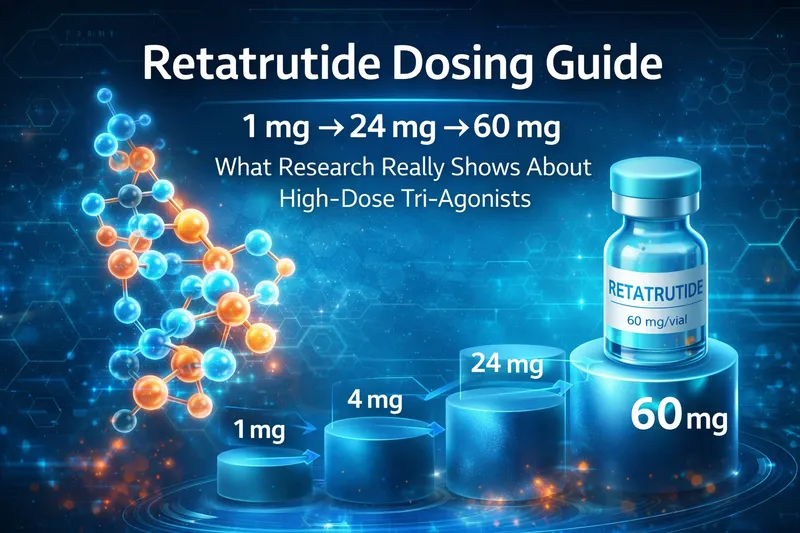
Community-reported protocols start at 0.25–0.5 mg/week and titrate to 1.5–4 mg/week over 8–12 weeks as GI tolerance is assessed. Phase 2 trials used up to 12 mg/week and produced 24.2% body weight loss at 48 weeks — community protocols are deliberately more conservative.
Research-context information only. Retatrutide is an investigational drug not approved by the FDA. Protocols, doses, and reactions reported below come from published clinical trials and self-reported community sources. This article reports what has been documented, not what should be done. Possession or use of investigational drugs outside an authorized clinical trial may be illegal in your jurisdiction. Consult a licensed physician for personal medical decisions.
Retatrutide is a triple-agonist peptide targeting GLP-1 + GIP + glucagon receptors simultaneously — the most pronounced weight-loss data from any metabolic peptide studied to date. Below: the community-reported 8-weeks-on/8-weeks-off cycle, week-by-week titration math, side-effect-driven adjustments, and how community doses compare to the trial-published 12 mg/week ceiling.
Retatrutide Dosing Table
Match your vial size below — reconstitution and dose math update automatically.
| Dose | Syringe units | mL volume | Schedule |
|---|---|---|---|
| 0.5 mg | 5 units | 0.05 mL | Weekly (start dose)Weeks 1-2 |
| 1 mg | 10 units | 0.1 mL | WeeklyWeeks 3-4 |
| 2 mg | 20 units | 0.2 mL | WeeklyWeeks 5-8 |
| 4 mg | 40 units | 0.4 mL | Weekly (target)Weeks 9+ |
| 8 mg | 80 units | 0.8 mL | Weekly (advanced) |
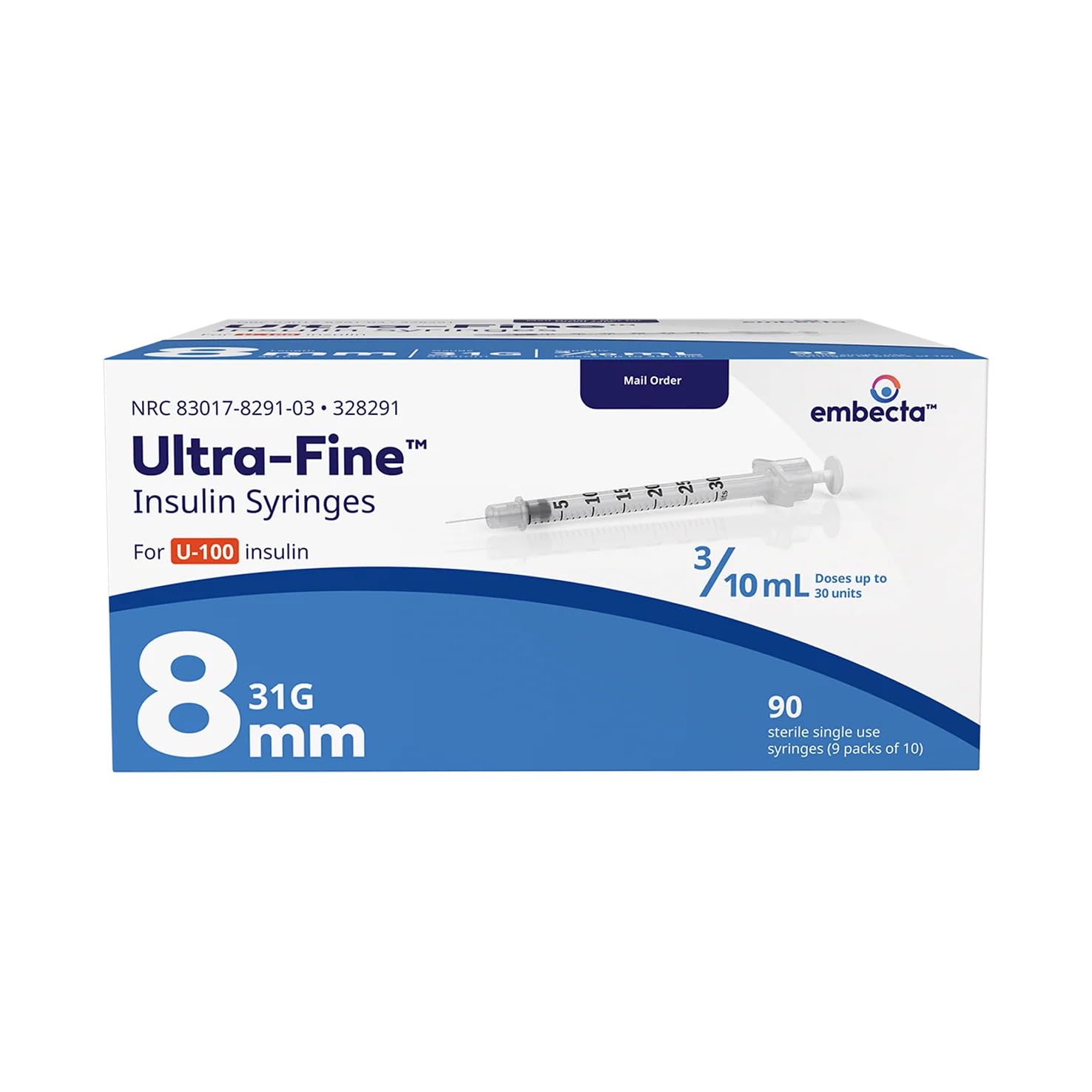
Math assumes U-100 insulin syringes (1 mL = 100 units). Verify your syringe matches before injecting. Round half-units to the nearest visible mark.
| Dose | Syringe units | mL volume | Schedule |
|---|---|---|---|
| 0.5 mg | 5 units | 0.05 mL | Weekly (start dose)Weeks 1-2 |
| 1 mg | 10 units | 0.1 mL | WeeklyWeeks 3-4 |
| 2 mg | 20 units | 0.2 mL | WeeklyWeeks 5-8 |
| 4 mg | 40 units | 0.4 mL | Weekly (target)Weeks 9+ |
| 8 mg | 80 units | 0.8 mL | Weekly (advanced) |
Math assumes U-100 insulin syringes (1 mL = 100 units). Verify your syringe matches before injecting. Round half-units to the nearest visible mark.
| Dose | Syringe units | mL volume | Schedule |
|---|---|---|---|
| 0.5 mg | 8 units | 0.08 mL | Weekly (start dose) |
| 1 mg | 17 units | 0.17 mL | Weekly |
| 2 mg | 33 units | 0.33 mL | Weekly |
| 4 mg | 67 units | 0.67 mL | Weekly (target) |
Math assumes U-100 insulin syringes (1 mL = 100 units). Verify your syringe matches before injecting. Round half-units to the nearest visible mark.
| Dose | Syringe units | mL volume | Schedule |
|---|---|---|---|
| 0.5 mg | 10 units | 0.1 mL | Weekly (start dose) |
| 1 mg | 20 units | 0.2 mL | Weekly |
| 2 mg | 40 units | 0.4 mL | Weekly |
| 4 mg | 80 units | 0.8 mL | Weekly (target) |
Math assumes U-100 insulin syringes (1 mL = 100 units). Verify your syringe matches before injecting. Round half-units to the nearest visible mark.
| Dose | Syringe units | mL volume | Schedule |
|---|---|---|---|
| 0.5 mg | 13 units | 0.13 mL | Weekly (start dose) |
| 1 mg | 25 units | 0.25 mL | Weekly |
| 2 mg | 50 units | 0.5 mL | Weekly |
Math assumes U-100 insulin syringes (1 mL = 100 units). Verify your syringe matches before injecting. Round half-units to the nearest visible mark.
| Dose | Syringe units | mL volume | Schedule |
|---|---|---|---|
| 1 mg | 8 units | 0.08 mL | Weekly |
| 2 mg | 17 units | 0.17 mL | Weekly |
| 4 mg | 33 units | 0.33 mL | Weekly (target) |
| 8 mg | 67 units | 0.67 mL | Weekly (advanced) |
Math assumes U-100 insulin syringes (1 mL = 100 units). Verify your syringe matches before injecting. Round half-units to the nearest visible mark.
| Dose | Syringe units | mL volume | Schedule |
|---|---|---|---|
| 0.5 mg | 10 units | 0.1 mL | Weekly (start dose) |
| 1 mg | 20 units | 0.2 mL | Weekly |
| 2 mg | 40 units | 0.4 mL | Weekly |
| 4 mg | 80 units | 0.8 mL | Weekly (target) |
Math assumes U-100 insulin syringes (1 mL = 100 units). Verify your syringe matches before injecting. Round half-units to the nearest visible mark.
| Dose | Syringe units | mL volume | Schedule |
|---|---|---|---|
| 0.5 mg | 7 units | 0.07 mL | Weekly (start dose) |
| 1 mg | 14 units | 0.14 mL | Weekly |
| 2 mg | 29 units | 0.29 mL | Weekly |
| 4 mg | 57 units | 0.57 mL | Weekly (target) |
Math assumes U-100 insulin syringes (1 mL = 100 units). Verify your syringe matches before injecting. Round half-units to the nearest visible mark.
| Dose | Syringe units | mL volume | Schedule |
|---|---|---|---|
| 0.5 mg | 5 units | 0.05 mL | Weekly (start dose) |
| 1 mg | 10 units | 0.1 mL | Weekly |
| 2 mg | 20 units | 0.2 mL | Weekly |
| 4 mg | 40 units | 0.4 mL | Weekly (target) |
| 8 mg | 80 units | 0.8 mL | Weekly (advanced) |
Math assumes U-100 insulin syringes (1 mL = 100 units). Verify your syringe matches before injecting. Round half-units to the nearest visible mark.
| Dose | Syringe units | mL volume | Schedule |
|---|---|---|---|
| 0.5 mg | 4 units | 0.04 mL | Weekly (start dose) |
| 1 mg | 8 units | 0.08 mL | Weekly |
| 2 mg | 17 units | 0.17 mL | Weekly |
| 4 mg | 33 units | 0.33 mL | Weekly (target) |
| 8 mg | 67 units | 0.67 mL | Weekly (advanced) |
Math assumes U-100 insulin syringes (1 mL = 100 units). Verify your syringe matches before injecting. Round half-units to the nearest visible mark.
| Dose | Syringe units | mL volume | Schedule |
|---|---|---|---|
| 0.5 mg | 5 units | 0.05 mL | Weekly (start dose) |
| 1 mg | 10 units | 0.1 mL | Weekly |
| 2 mg | 20 units | 0.2 mL | Weekly |
| 4 mg | 40 units | 0.4 mL | Weekly (target) |
| 8 mg | 80 units | 0.8 mL | Weekly (advanced) |
Math assumes U-100 insulin syringes (1 mL = 100 units). Verify your syringe matches before injecting. Round half-units to the nearest visible mark.
| Dose | Syringe units | mL volume | Schedule |
|---|---|---|---|
| 0.5 mg | 4 units | 0.04 mL | Weekly (start dose) |
| 1 mg | 8 units | 0.08 mL | Weekly |
| 2 mg | 17 units | 0.17 mL | Weekly |
| 4 mg | 33 units | 0.33 mL | Weekly (target) |
| 8 mg | 67 units | 0.67 mL | Weekly (advanced) |
Math assumes U-100 insulin syringes (1 mL = 100 units). Verify your syringe matches before injecting. Round half-units to the nearest visible mark.
| Dose | Syringe units | mL volume | Schedule |
|---|---|---|---|
| 0.5 mg | 5 units | 0.05 mL | Weekly (start dose) |
| 1 mg | 10 units | 0.1 mL | Weekly |
| 2 mg | 20 units | 0.2 mL | Weekly |
| 4 mg | 40 units | 0.4 mL | Weekly (target) |
| 8 mg | 80 units | 0.8 mL | Weekly (advanced) |
Math assumes U-100 insulin syringes (1 mL = 100 units). Verify your syringe matches before injecting. Round half-units to the nearest visible mark.
| Dose | Syringe units | mL volume | Schedule |
|---|---|---|---|
| 0.5 mg | 5 units | 0.05 mL | Weekly (start dose) |
| 1 mg | 10 units | 0.1 mL | Weekly |
| 2 mg | 20 units | 0.2 mL | Weekly |
| 4 mg | 40 units | 0.4 mL | Weekly (target) |
| 8 mg | 80 units | 0.8 mL | Weekly (advanced) |
Math assumes U-100 insulin syringes (1 mL = 100 units). Verify your syringe matches before injecting. Round half-units to the nearest visible mark.
What Phase 3 Trials Used
Lilly's Phase 3 TRIUMPH program dosed retatrutide once weekly by subcutaneous injection. Per Lilly's trial releases, participants started at 2 mg once weekly and stepped up every four weeks until reaching an assigned target dose: 4 mg (after one 4-week step at 2 mg), 9 mg (via steps at 2, 4 and 6 mg) or 12 mg (via steps at 2, 4, 6 and 9 mg). On that schedule, the 12 mg arm reached its target dose at week 16 (Lilly TRIUMPH-1 release, May 2026).
| Trial | Population | Start dose | Escalation | Doses studied | Duration | Reported result | Source |
|---|---|---|---|---|---|---|---|
| TRIUMPH-1 | 2,339 adults with obesity, or overweight plus a weight-related comorbidity, without diabetes | 2 mg weekly | Stepwise every 4 weeks | 4 / 9 / 12 mg vs placebo | 80 weeks | −19.0% / −25.9% / −28.3% body weight vs −2.2% placebo | Lilly topline, May 2026; NEJM, Sept 2026 |
| TRIUMPH-2 | 1,152 adults with type 2 diabetes and obesity or overweight | 2 mg weekly | Stepwise every 4 weeks | 4 / 9 / 12 mg vs placebo | 80 weeks | −12.7% / −19.1% / −20.8% vs −4.0% placebo; A1C −1.4 to −1.6 points vs −0.2 | Lilly topline, July 2026; Lancet, Sept 2026 |
| TRIUMPH-3 | 1,949 adults with BMI ≥35 and established cardiovascular disease | 2 mg weekly | Stepwise every 4 weeks | 9 / 12 mg vs placebo | 80 weeks | −21.6% / −22.6% vs −3.2% placebo | Lilly topline, July 2026 |
Results in the table are the efficacy-estimand figures from Lilly's topline releases (TRIUMPH-2 and TRIUMPH-3 release, July 2026). The peer-reviewed papers report the more conservative treatment-regimen estimand: TRIUMPH-1 in the New England Journal of Medicine reported 17.6–25.0% mean weight reduction versus 3.9% on placebo (NEJM, 2026), and TRIUMPH-2 in The Lancet reported −11.9%, −16.8% and −18.8% versus −5.1% (Lancet, 2026). In TRIUMPH-1, Lilly reported discontinuation due to adverse events of 4.1%, 6.9% and 11.3% across the 4, 9 and 12 mg arms, versus 4.9% on placebo.
How Phase 2 differed: the 48-week Phase 2 obesity trial (338 adults) tested 1, 4, 8 and 12 mg weekly arms, some started at 2 mg and some at 4 mg; investigators reported that gastrointestinal events were partially mitigated by the lower 2 mg starting dose (Jastreboff et al., 2023). Phase 3 used a 2 mg start for every arm and replaced the 8 mg target with 9 mg.
Retatrutide remains an investigational drug and is not FDA-approved for any indication. The community-reported protocol below uses smaller, split doses and differs from every trial schedule above. For full trial readouts and safety data, see Retatrutide Phase 3 Results.
Quick Reference: Community-Reported Protocol
Community-reported protocol (self-reported; compiled from community dosing logs and reconstitution guides — documentation of what sources describe, not a recommendation):
| Parameter | Detail |
|---|---|
| Vial | 10 mg |
| BAC Water | 2 mL |
| Concentration | 5 mg/mL |
| Dose | 0.5 mg (10 units on insulin syringe) |
| Route | Subcutaneous |
| Timing | AM, empty stomach (community-reported) |
| Frequency | 3x/week (Mon/Wed/Fri) |
| Cycle | 8 weeks on, 8 weeks off |
| Storage | Refrigerate, use within 28 days |
Self-reported starting doses are typically 0.25 mg for the first week to assess GI tolerance, before increasing to 0.5 mg.
Cycling Details
The most commonly reported community cycle is 0.5 mg 3x/week (1.5 mg/week total) for 8 weeks, then 8 weeks off. Some community reports describe goal-oriented cycles — continuing until a target weight, then cycling off — and maintenance phases reported at 2x/week (1 mg/week total). Clinical trials did not cycle: Phase 2 and Phase 3 participants dosed once weekly throughout.
The 3x/week split (vs. single weekly injection used in clinical trials) may provide more stable receptor activation throughout the week.
Routes of Administration
Subcutaneous injection is the only route. Retatrutide cannot be taken orally.
- Sites: Abdomen, thigh, or anywhere with subcutaneous fat
- Volume: 0.1 mL with insulin syringe (29-31 gauge)
- Rotation: Trial protocols describe rotating injection sites to minimize lipodystrophy risk

Reconstitution Quick Reference
| Vial Size | BAC Water | Concentration | 0.25 mg | 0.5 mg | 1 mg |
|---|---|---|---|---|---|
| 10 mg | 2 mL | 5 mg/mL | 5 units | 10 units | 20 units |
Math: 10 mg / 2 mL = 5 mg/mL. For 0.5 mg: 0.5 / 5 = 0.1 mL = 10 units.
Community protocols describe gentle swirling — not shaking — to avoid degradation, with storage at 2–8°C and use within 28 days of reconstitution. For step-by-step instructions and vial size comparisons, see the full Retatrutide Reconstitution Guide.