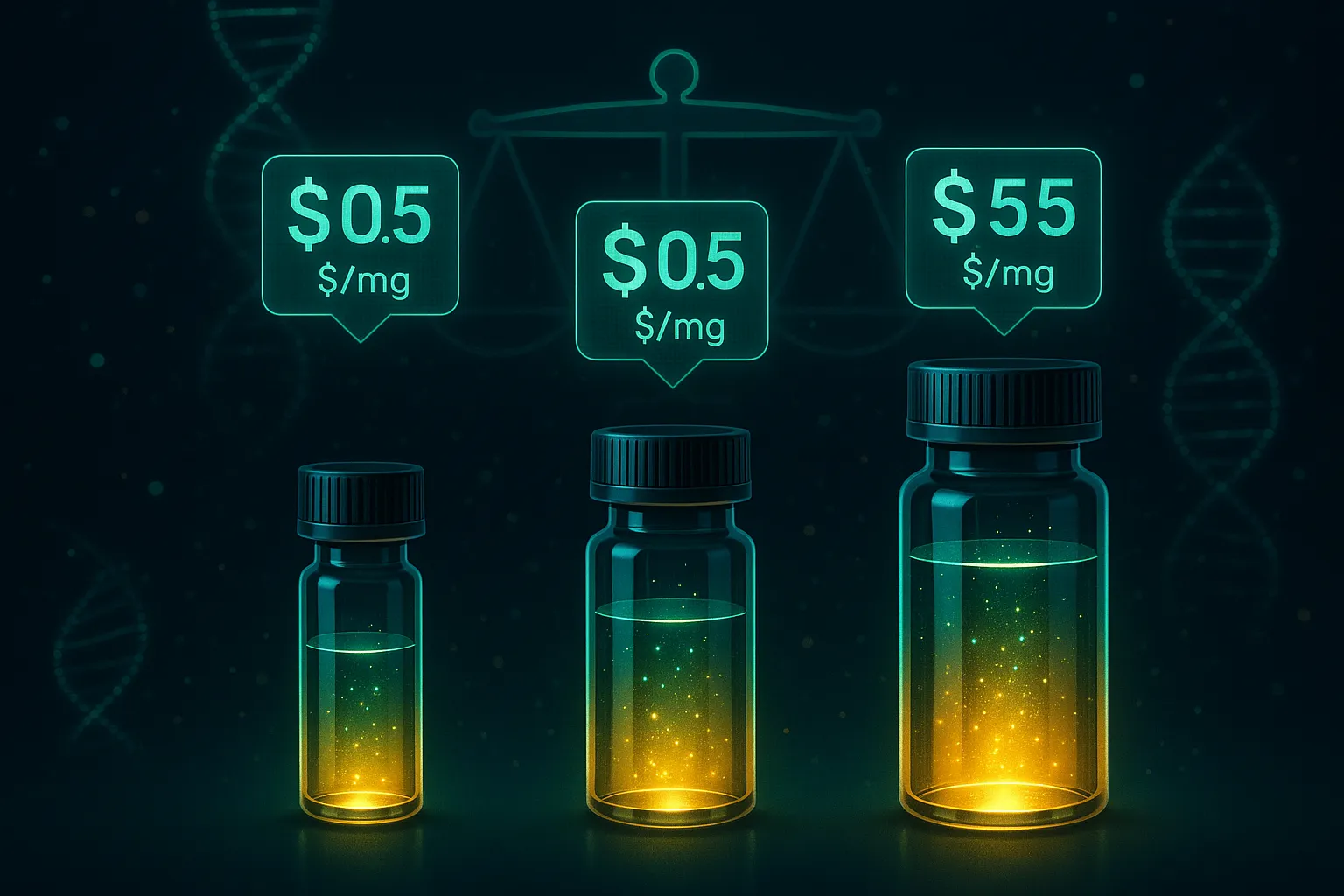
Retatrutide is one of the most-searched research peptides for sale right now, and vials swing 4× in price across vendors for the same molecule. If you want to buy retatrutide by the single vial, Nura Peptide is the cheapest at both common sizes — 10mg at $45.50 and 30mg at $105.00 with their 30% code. For the lowest per-mg on a larger order, Nura's 10-vial 30mg pricing works out to $3.15/mg. But the real question isn't just "what's cheapest," it's "what's cheapest from a vendor whose COA matches the vial." This guide is the framework for that decision.
It covers: how to verify quality, which vial size makes sense for your protocol, what you should actually pay per milligram, and the vendor red flags that signal you should walk away.
Research-context information only. Retatrutide is an investigational drug not approved by the FDA. Protocols, doses, and reactions reported below come from published clinical trials and self-reported community sources. This article reports what has been documented, not what should be done. Possession or use of investigational drugs outside an authorized clinical trial may be illegal in your jurisdiction. Consult a licensed physician for personal medical decisions.
Some links below are affiliate links — we may earn a commission if you use them, at no additional cost to you.
This is not a ranked vendor list — for that, see our Best Retatrutide Vendors comparison. This guide teaches you how to evaluate any vendor yourself.
Understanding Retatrutide Pricing
Retatrutide is sold in lyophilized (freeze-dried) form in sealed glass vials. The price you pay depends on three factors: vial size, vendor markup, and whether the vendor invests in third-party testing.
Current Market Pricing (2026)
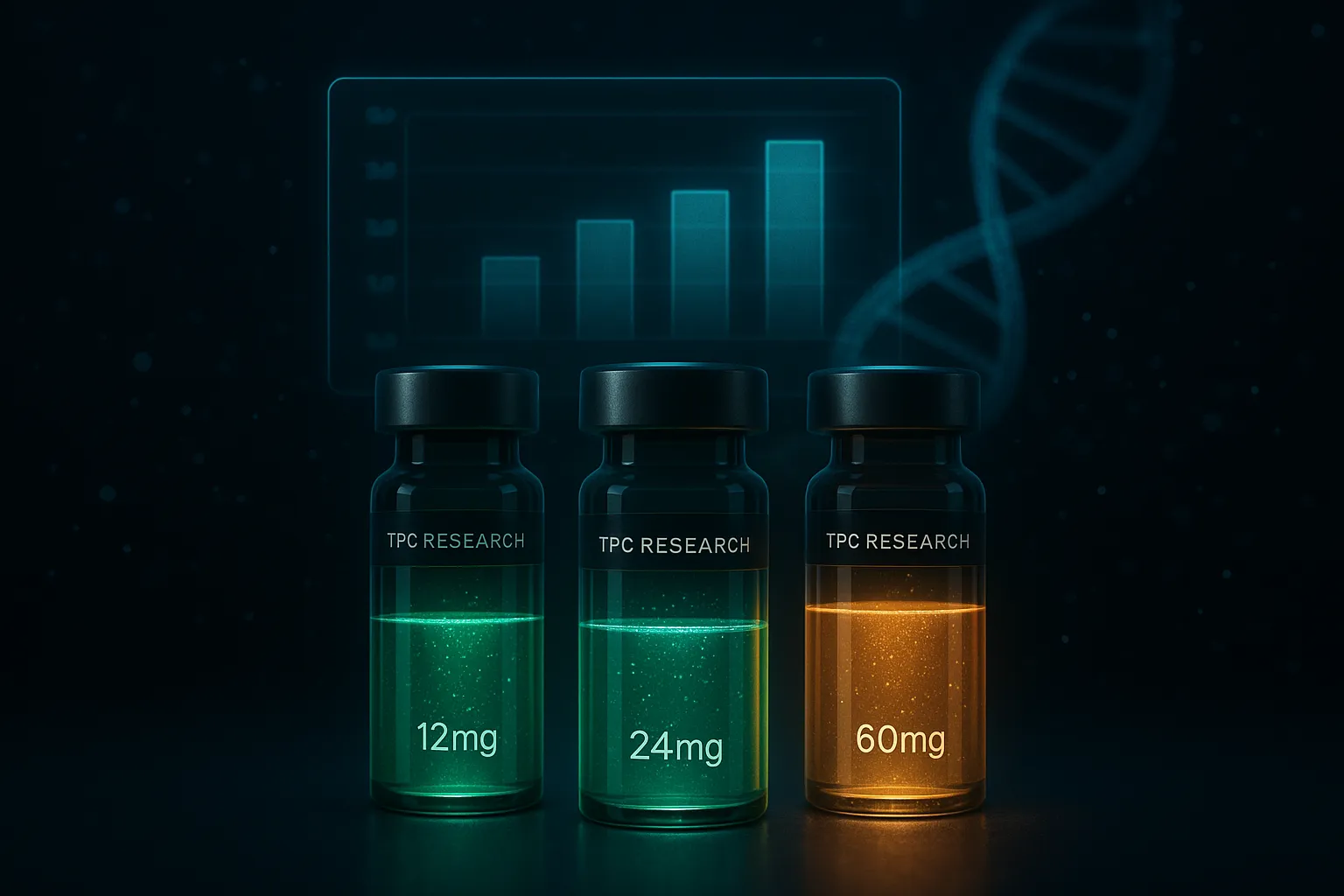
| Vial Size | Typical Price Range | Price Per mg | Best For |
|---|---|---|---|
| 5 mg | $39 | $7.80/mg | Testing tolerance, very low doses |
| 10 mg | $58.50-$125 | $5.85-12.50/mg | Short protocols, beginners |
| 12 mg | $82 | $6.83/mg | Standard protocols (12 weeks at 1mg/wk) |
| 24 mg | $118 | $4.92/mg | Mid-length protocols, better value |
| 50 mg | $189-$213.99 | $3.78-4.28/mg | Best $/mg before discounts |
| 60 mg | $248.99 | $4.15/mg | Extended use, largest single vial |
The pattern is clear: larger vials cost more upfront but significantly less per milligram. A 60mg vial can save 30-40% per dose compared to buying multiple 12mg vials. For market-wide context, Q1 2026 vendor pricing trends tracked 148 retatrutide observations across 5 vendors with a median of $6.37/mg — the widest absolute range of any peptide in the deep-dive set.
Vial-count math depends on the protocol you're running, so cross-check your retatrutide dosage before placing the order — buying for a 1 mg/week titration looks very different from a 4 mg/week maintenance protocol.
Cheapest single vials: Nura Peptide is the lowest-priced reta vendor at both common sizes — 10mg for $45.50 and 30mg for $105.00 with their 30% code, beating Ion and Ascension at each size.
Nura multi-vial pricing (stacks with the code): ordering multiple vials adds 3% off at 3+, 5% at 5+, and 10% at 10+ on top of the 30% code. A 10-vial 30mg order works out to $94.50/vial — $3.15/mg ($945 for 300mg); ten 10mg vials come to $4.10/mg ($409.50 for 100mg).
Also worth a look: Ion 50mg at $160.65 ($3.21/mg, 15% code); Ascension 50% off catalog-wide (30mg → $125, $4.17/mg).
Cost Per Week at Common Doses
| Weekly Dose | Monthly Cost (12mg vial) | Monthly Cost (60mg vial) | Savings |
|---|---|---|---|
| 1 mg/week | $30/month | $18/month | ~39% |
| 2 mg/week | $59/month | $36/month | ~39% |
| 4 mg/week | $119/month | $72/month | ~39% |
For current vendor-specific pricing with exact $/mg breakdowns, see our Best Retatrutide Vendors comparison.
How to Verify Retatrutide Quality

Quality verification is the single most important step when purchasing any research peptide. Retatrutide is a complex 39-amino-acid peptide — synthesis errors, degradation, or contamination can render it ineffective or unsafe.
What a COA (Certificate of Analysis) Should Include
A legitimate Certificate of Analysis from a third-party lab will contain:
Identity Confirmation
- Mass spectrometry (MS) confirming the correct molecular weight (about 4,731 Da for retatrutide, formula C221H342N46O68)
- Amino acid sequence verification
Purity Testing
- HPLC (High-Performance Liquid Chromatography) purity — look for 98%+ purity
- The HPLC chromatogram should show a single dominant peak with minimal secondary peaks
Contamination Testing
- Endotoxin levels (bacterial contamination)
- Residual solvent analysis
- Heavy metals screening (ideal but not always included)
How to Verify a COA Is Legitimate
Not all COAs are real. Some vendors photoshop results or reuse old certificates. Here's how to verify:
-
Check the testing lab — Reputable labs include Janoshik Analytical, MZ Biolabs, and Colmaric Analyticals. Avoid vendors who only show "in-house" testing.
-
Verify on the lab's website — Janoshik COAs have a task number you can look up directly at janoshik.com. If the vendor won't provide a verifiable task number, that's a red flag.
-
Check the date — COAs should be recent (within 6 months). Old COAs may not represent the current batch.
-
Match the batch — The batch/lot number on the COA should match what's printed on your vial.
-
Look for the original PDF — Screenshots of COAs are easier to fake than full PDFs with lab letterhead and signatures.
Red Flags to Avoid
- No COA available — Any vendor unwilling to provide testing results is not worth the risk
- Only in-house testing — Self-reported purity numbers are meaningless without independent verification
- Prices significantly below market — If retatrutide is priced 50%+ below competitors, quality corners are being cut
- No contact information — Legitimate vendors have real customer service, not just a payment page
- Cryptocurrency only — While some good vendors accept crypto, vendors that only accept untraceable payment are higher risk
- No return policy — Reputable vendors stand behind their products