Buying Guide··8 min read

Buy Retatrutide + Cagrilintide Blend: Vendor Prices

Compare 3 Retatrutide + Cagrilintide Blend vendors: from $105 a vial, best value $5.21/mg. Codes save up to 30%. Vial sizes, COA status, cost per week.

Where to Buy Retatrutide and Cagrilintide Stack

The retatrutide + cagrilintide stack (blend overview) is sourced two different ways: pre-mixed in a single vial at a fixed 5:1 retatrutide:cagrilintide ratio, or as separate component vials that can be titrated independently. Each format has tradeoffs that map onto where the user is in the staged titration protocol.

Research-context information only. Retatrutide and cagrilintide are both investigational drugs not approved by the FDA. The combination has not been formally tested in any published clinical trial. Vendor data, prices, and formats reported below come from public vendor product pages. This article reports what has been documented, not what should be done. Possession or use of investigational drugs outside an authorized clinical trial may be illegal in your jurisdiction. Consult a licensed physician for personal medical decisions.

This guide is the framework for sourcing the stack: the formats available, what each costs, what a defensible COA looks like for a two-compound blend, and the format that fits each phase of the titration.

This is not a ranked vendor list — for that, see Best Retatrutide+Cagrilintide Vendors. This guide teaches you how to evaluate any vendor yourself.

Format Options

Three formats dominate the retatrutide+cagrilintide research-vendor market.

Format 1 — Separate Vials

Standard research-vendor retatrutide vials (5 mg or 10 mg) plus standard cagrilintide vials (5 mg). Each is reconstituted separately with bacteriostatic water. Doses can be titrated independently — which matters during the staged community titration where retatrutide is ramped first, then cagrilintide is layered on a separate 4-week-per-step ramp.

Pros: independent dose control, lower per-mg cost, easier COA verification (single compound per vial). Cons: two reconstitutions, two storage timelines, two injections per week (most community sources describe same-day separate-site injection).

Format 2 — Pre-Mixed 12.5 / 2.5 mg Vial (5:1)

A single vial containing 12.5 mg retatrutide and 2.5 mg cagrilintide co-lyophilized. Reconstituted as one. Each draw delivers the fixed 5:1 ratio.

Pros: single reconstitution, single weekly injection, simpler logistics at maintenance. Cons: locked ratio means the user cannot titrate components independently; COA must address both compounds + ratio.

Format 3 — Pre-Mixed 20 / 4 mg Vial (5:1)

Same 5:1 ratio, larger total mass. Lasts longer between reconstitutions for users on extended protocols.

Pros: fewer reconstitution events; lower per-mg pricing on most vendor pages compared with the 12.5/2.5 vial. Cons: more compound mass in one vial means a single contamination event affects more weeks of dosing; same locked-ratio limitation.

Pricing Framework

Common per-compound separate-vial sizes (current prices render in the live offers below — hand-typed ranges go stale on every reprice):

Compound Vial size
Retatrutide 5 mg
Retatrutide 10 mg
Cagrilintide 5 mg

Pre-mixed blend pricing:

Configuration Total peptide
12.5 mg reta + 2.5 mg cagri 15 mg
20 mg reta + 4 mg cagri 24 mg

Pattern: current vendor listings show no consistent per-mg premium for pre-mixed blends over separate-vial sourcing — depending on vendor and vial size, a pre-mixed vial can cost less or more per total mg than buying each compound separately. The tradeoff is structural rather than price: pre-mixed vials offer convenience and a fixed ratio, while during titration the locked ratio is a limitation.

Cost Per Month at Community Maintenance

Community-reported stack protocols using a 5:1 pre-mixed vial describe maintenance at 4 mg/week retatrutide + 0.8 mg/week cagrilintide, the same example the stack dosing guide uses for its vial-duration math. Applied to each sourcing path:

Sourcing path Per-week peptide cost Per-month
Separate vials (10 mg reta + 5 mg cagri) (4 ÷ 10 × reta vial price) + (0.8 ÷ 5 × cagri vial price) Weekly cost × ~4.3
Pre-mixed 12.5/2.5 mg vial Vial price ÷ weeks per vial (5:1 locked; ~3 weeks at 4 mg reta / 0.8 mg cagri per week) Weekly cost × ~4.3
Pre-mixed 20/4 mg vial Vial price ÷ weeks per vial (5:1 locked; ~5 weeks at 4 mg reta / 0.8 mg cagri per week) Weekly cost × ~4.3

(Rates depend on vendor pricing at the time of purchase. Always verify the current rate on the vendor's product page.)

Which path costs less depends on the live per-mg prices at the time of purchase. The 5:1 vial only fits maintenance protocols where the cagrilintide dose is one-fifth of the retatrutide dose; community-reported protocols that pair retatrutide with a higher cagrilintide dose are described with separate vials.

How to Verify Quality on a Two-Compound Blend

A pre-mixed blend's COA needs to address two molecules and one ratio. That is more demanding than a single-compound COA, and it's where most blend-vendor COAs fall short.

What a Pre-Mixed Reta+Cagri COA Should Include

Identity confirmation (both compounds)

  • Mass spectrometry showing two distinct peaks at the expected molecular weights:
    • Retatrutide: ~4731 Da
    • Cagrilintide: ~3775 Da
  • HPLC chromatogram showing two well-resolved peaks at the expected retention times

Purity testing (both compounds)

  • HPLC purity for retatrutide: 97%+ (research-grade floor)
  • HPLC purity for cagrilintide: 97%+ (research-grade floor)
  • Each compound assessed independently — not a single combined purity number

Ratio quantification

  • Reported as the actual mass ratio in the vial (e.g., "12.4 mg retatrutide : 2.6 mg cagrilintide" or "83% retatrutide / 17% cagrilintide by mass")
  • Match to the labeled ratio (5:1 = 83.3% / 16.7%)

Contamination testing

  • Bacterial endotoxin
  • Heavy metals
  • Residual solvents

Red Flags Specific to Pre-Mixed Blends

  • COA reports a single purity number without breaking it down per compound. Walk away — this means the lab didn't separate the compounds.
  • No ratio quantification. Walk away — the only way to verify a 5:1 vial actually contains 5:1 is the ratio measurement.
  • Mass spectrometry shows extra peaks beyond retatrutide and cagrilintide. This indicates contamination or substitution.
  • HPLC retention times don't match the expected retatrutide and cagrilintide values. Identity confirmation has failed.
  • Generic "blend purity 98%" without per-compound breakdown — this is not a research-grade COA.

For COA verification on the parent compounds individually, see Where to Buy Retatrutide.
Top Retatrutide + Cagrilintide Blend Vendors

Ranked by price, COA availability, and reputation

Vendor Evaluation Methodology

The site-wide vendor scoring uses three weighted factors. For pre-mixed reta+cagri blends, an additional fourth factor — ratio verification — is the gating quality check.

Price Competitiveness (40%)

Per-mg cost across the format. Neither separate vials nor pre-mixed blends are consistently cheaper per mg across current vendor listings; compare the live per-mg figure for each format.

COA & Testing (30%)

For pre-mixed blends, this requires per-compound HPLC + mass spec + ratio quantification. Single-compound COAs are not sufficient evidence on a two-compound product.

Reputation (30%)

Track record of the vendor across the GLP-1 category. Vendors with strong retatrutide and cagrilintide track records individually are the conservative starting point for the pre-mixed blend.

Ratio Verification (Pre-Mixed Only)

Whether the third-party COA explicitly addresses the retatrutide:cagrilintide ratio, and whether that ratio matches the label.

Format Selection by Protocol Phase

The right format depends on where the user is in the staged titration.

Phase 1 — Retatrutide Titration (Months 0–3)

Format commonly described: retatrutide vial alone. Cagrilintide is not yet introduced in the staged community protocol.

A pre-mixed vial at this phase would bring cagrilintide into the protocol before retatrutide is stable, which is the failure mode the staged protocol is described as avoiding. Community references describe separate compounds here, with cagrilintide introduced only at the staged sequencing point.

Phase 2 — Cagrilintide Layering (Months 3–7)

Format commonly described: separate vials. Cagrilintide is on its own 4-week-per-step ramp from 0.25 mg to 2.4 mg. The pre-mixed 5:1 ratio at this phase would deliver cagrilintide at the wrong dose for the titration cadence.

Phase 3 — Maintenance (Month 7+)

Format commonly described: either. The pre-mixed vial's locked 5:1 ratio only matches a maintenance protocol where the cagrilintide dose is one-fifth of the retatrutide dose (for example 4 mg / 0.8 mg per week). Convenience favors pre-mixed; cost depends on live per-mg pricing.

A commonly described hybrid: separate vials through the full titration, then a switch to pre-mixed at maintenance when the maintenance doses sit at a 5:1 ratio.

Shipping and Storage

What to Expect When Your Order Arrives

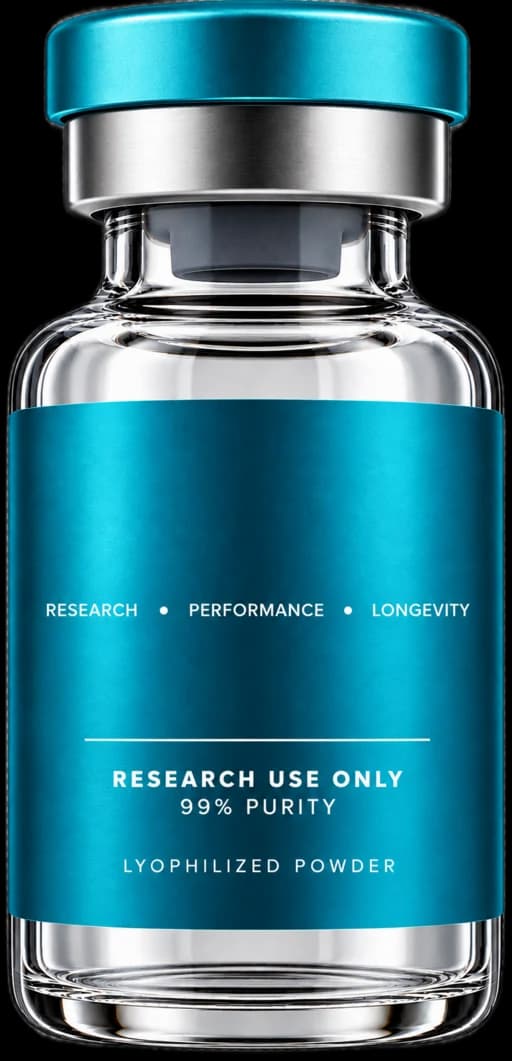
Lyophilized vials (separate or pre-mixed): Sealed glass vial with white-to-off-white powder. Outer aluminum cap intact, stopper undamaged. Reta+cagri pre-mixed vials may have a slight off-white tint vs pure white from cagrilintide content — both are normal.

Cold-pack shipping: Both compounds are stable at room temperature in lyophilized form for the duration of typical shipping. Vendors who ship with cold-packs do so as belt-and-suspenders, not as a hard requirement.

Storage Guidelines

State Temperature Shelf Life
Lyophilized retatrutide (sealed) –20 °C ideal; 2–8 °C acceptable 18+ months at –20 °C
Lyophilized cagrilintide (sealed) –20 °C ideal; 2–8 °C acceptable 18+ months at –20 °C
Lyophilized reta+cagri pre-mixed (sealed) –20 °C ideal; 2–8 °C acceptable 18+ months at –20 °C
Reconstituted (any) 2–8 °C (refrigerated) 4 weeks

For reconstitution math and storage detail, see the Retatrutide+Cagrilintide Reconstitution Guide.

Bacteriostatic water vial — 0.9% benzyl alcohol multi-dose
Bac Water Made for Peptides
Don't risk a $300 peptide on generic bac water.
Most cloudy reconstitutions trace back to one thing — and it isn't the peptide. Sterile, non-pyrogenic, 0.9% benzyl alcohol — formulated for peptide reconstitution, not repackaged from generic stock.
✓ 0.9% benzyl alcohol✓ Made for peptides✓ 30 mL multi-dose
Shop bac water made for peptides

Frequently Asked Questions

Should I buy a pre-mixed retatrutide+cagrilintide blend or separate vials?
Community references describe separate vials during titration (because the 5:1 ratio in pre-mixed vials forces a fixed ratio that doesn't match the staged titration cadence) and pre-mixed vials at maintenance (when both compounds are already at a stable per-week ratio). Either format is sold by research vendors. Pre-mixed reduces reconstitution events but locks the dose ratio.
How much does the retatrutide+cagrilintide stack cost per month?
Costs vary by vendor, format and vial size, and change with every reprice — the live offers on this page show current per-vial and per-mg prices. Monthly cost is the weekly mg of each compound divided by the vial mg, times the vial price. A pre-mixed vial locks a 5:1 ratio, so at 4 mg retatrutide / 0.8 mg cagrilintide per week a 12.5/2.5 mg vial lasts roughly 3 weeks and a 20/4 mg vial roughly 5 weeks. Per-mg pricing does not consistently favor either format; it depends on the vendor and vial size.
What COA should I expect for a pre-mixed reta+cagri blend?
Two compounds in one vial requires two HPLC purity confirmations (one for each peptide), mass-spec identity confirmation matching both expected masses, plus the ratio quantification — typically reported as a percentage of total peptide mass. A reputable COA on a pre-mixed blend will explicitly call out the retatrutide:cagrilintide ratio. If the COA does not address the ratio, the blend isn't third-party verified.
Are the 12.5/2.5 and 20/4 ratios always 5:1?
Both common research-vendor configurations are 5:1 retatrutide:cagrilintide by mass. The 12.5/2.5 vial holds 15 mg total peptide; the 20/4 vial holds 24 mg total. Same ratio, different total mass. Different vendors may stock other ratios — always verify on the product COA.
Can I trust pre-mixed peptide blends with two active compounds?
The risk profile is higher than for single-compound vials. The blend has two molecules to characterize and a ratio to verify, which means more places for the COA to be incomplete. Vendors with established reputation across the GLP-1 category and a third-party COA addressing both compounds + ratio are the conservative starting point.
Is retatrutide+cagrilintide available through a pharmacy or telehealth clinic?
No. Both compounds are investigational; the combination has no approved finished product anywhere; and no compounding pharmacy or telehealth clinic offers a reta+cagri blend. The compounds are sold only by research-chemical vendors.

References

Citation Topic PMID
Jastreboff et al., NEJM (2023) Retatrutide Phase 2 obesity 37366315
Giblin et al., Diabetes, Obesity and Metabolism (2026) — TRIUMPH program design Retatrutide Phase 3 41090431
Lau et al., Lancet (2021) Cagrilintide Phase 2 dose-finding 34798060
Garvey et al., NEJM (2025) — REDEFINE 1 Cagrilintide+semaglutide Phase 3 40544433

For educational and research purposes only. This is not medical advice. Retatrutide and cagrilintide are investigational drugs without FDA approval; the combination has not been formally tested in any published clinical trial.