Tirzepatide is a dual GLP-1/GIP receptor agonist. Phase 3 trials (Frias et al., 2021; Jastreboff et al., 2022) documented superior weight loss and glycemic control compared to single-target GLP-1 agonists, with up to 22.5% body weight reduction at 72 weeks in the SURMOUNT-1 trial.
Research-context information only. Tirzepatide is the active ingredient in FDA-approved products for type 2 diabetes and chronic weight management; research-peptide and compounded forms are not FDA-approved and are sold for research purposes only. Protocols, doses, and reactions reported below come from clinical trials and community sources. This article reports what has been documented, not what should be done. Consult a licensed physician for personal medical decisions.
FDA-approved for diabetes and weight management. Research peptide protocols use lower doses than pharmaceutical formulations. This is not medical advice.
The dosing table below carries two labelled row sets. The weekly 2.5-15 mg rows are the FDA-label titration used in the SURMOUNT trials; the 0.25 mg and 0.5 mg 3x/week rows on the 10 mg vial are the community-reported protocol summarised in the Quick Reference.
Tirzepatide Dosing Table
Match your vial size below — reconstitution and dose math update automatically.
Weekly rows follow the FDA-label / SURMOUNT titration (2.5 mg start, then 2.5 mg steps after at least 4 weeks on each dose, max 15 mg). They are not the community 3x/week protocol described in the guide.
| Dose | Syringe units | mL volume | Schedule |
|---|---|---|---|
| 2.5 mg | 13 units | 0.13 mL | Weekly (start dose)Weeks 1-4 |
| 5 mg | 25 units | 0.25 mL | WeeklyWeeks 5-8 |
| 7.5 mg | 38 units | 0.38 mL | WeeklyWeeks 9-12 |
| 10 mg | 50 units | 0.5 mL | WeeklyWeeks 13-16 |
| 12.5 mg | 63 units | 0.63 mL | WeeklyWeeks 17-20 |
| 15 mg | 75 units | 0.75 mL | Weekly (max)Maintenance |
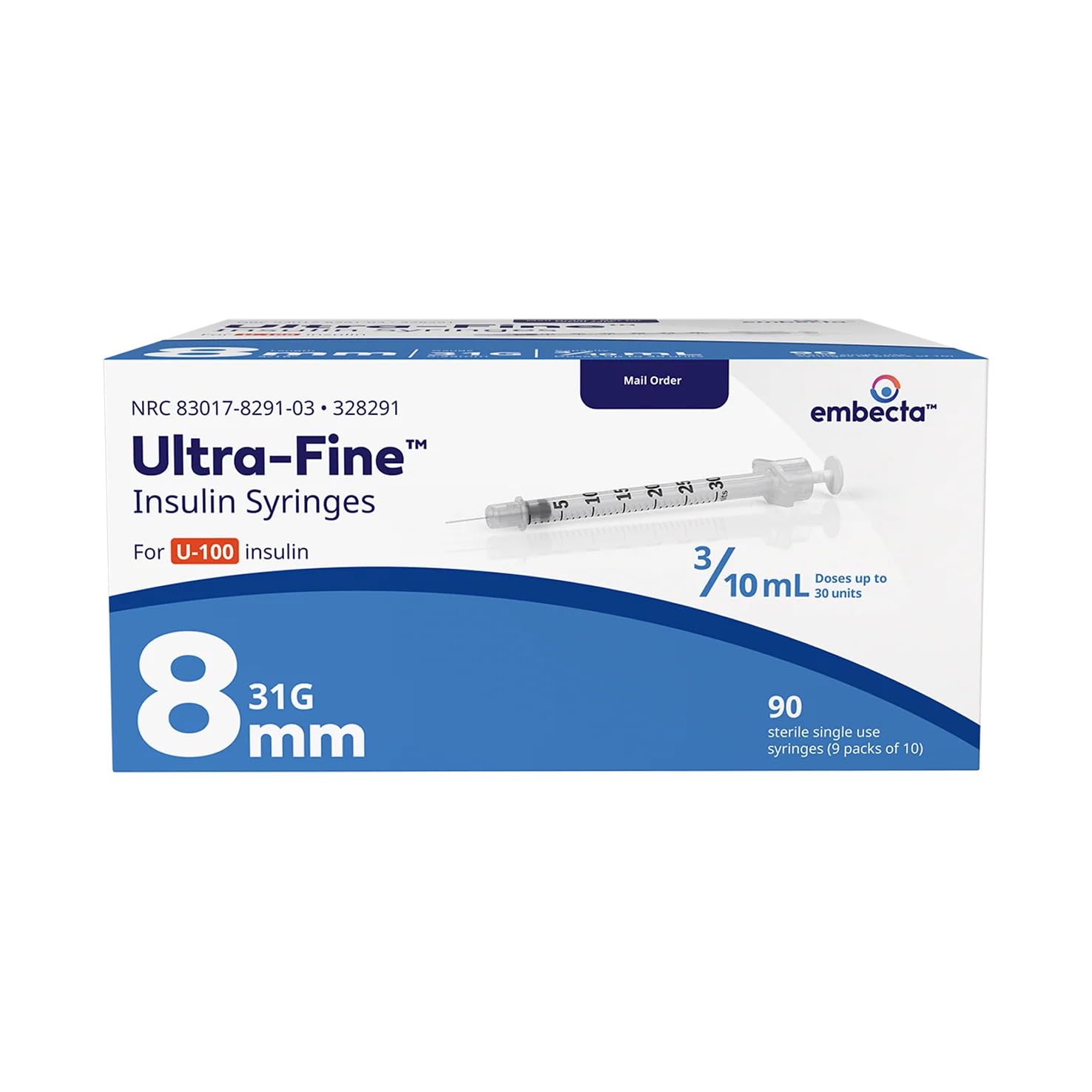
Math assumes U-100 insulin syringes (1 mL = 100 units). Verify your syringe matches before injecting. Round half-units to the nearest visible mark.
Weekly rows follow the FDA-label / SURMOUNT titration (2.5 mg start, then 2.5 mg steps after at least 4 weeks on each dose, max 15 mg). They are not the community 3x/week protocol described in the guide.
| Dose | Syringe units | mL volume | Schedule |
|---|---|---|---|
| 2.5 mg | 17 units | 0.17 mL | Weekly (start dose) |
| 5 mg | 33 units | 0.33 mL | Weekly |
| 7.5 mg | 50 units | 0.5 mL | Weekly |
| 10 mg | 67 units | 0.67 mL | Weekly |
| 15 mg | 100 units | 1 mL | Weekly (max) |
Math assumes U-100 insulin syringes (1 mL = 100 units). Verify your syringe matches before injecting. Round half-units to the nearest visible mark.
The 3x/week rows are the community-reported protocol from the dosing guide (not a trial regimen). The weekly rows are the FDA-label / SURMOUNT titration.
| Dose | Syringe units | mL volume | Schedule |
|---|---|---|---|
| 0.25 mg | 5 units | 0.05 mL | 3x/week SubQCommunity-reported start (2-4 weeks) |
| 0.5 mg | 10 units | 0.1 mL | 3x/week SubQCommunity-reported protocol |
| 2.5 mg | 50 units | 0.5 mL | Weekly (start dose)FDA-label titration |
| 5 mg | 100 units | 1 mL | Weekly |
| 7.5 mg | 150 units | 1.5 mL | Weekly |
Math assumes U-100 insulin syringes (1 mL = 100 units). Verify your syringe matches before injecting. Round half-units to the nearest visible mark.
Weekly rows follow the FDA-label / SURMOUNT titration (2.5 mg start, then 2.5 mg steps after at least 4 weeks on each dose, max 15 mg). They are not the community 3x/week protocol described in the guide.
| Dose | Syringe units | mL volume | Schedule |
|---|---|---|---|
| 2.5 mg | 50 units | 0.5 mL | Weekly (start dose) |
| 5 mg | 100 units | 1 mL | Weekly |
Math assumes U-100 insulin syringes (1 mL = 100 units). Verify your syringe matches before injecting. Round half-units to the nearest visible mark.
Weekly rows follow the FDA-label / SURMOUNT titration (2.5 mg start, then 2.5 mg steps after at least 4 weeks on each dose, max 15 mg). They are not the community 3x/week protocol described in the guide.
| Dose | Syringe units | mL volume | Schedule |
|---|---|---|---|
| 2.5 mg | 17 units | 0.17 mL | Weekly (start dose) |
| 5 mg | 33 units | 0.33 mL | Weekly |
| 7.5 mg | 50 units | 0.5 mL | Weekly |
| 10 mg | 67 units | 0.67 mL | Weekly |
| 15 mg | 100 units | 1 mL | Weekly (max) |
Math assumes U-100 insulin syringes (1 mL = 100 units). Verify your syringe matches before injecting. Round half-units to the nearest visible mark.
Weekly rows follow the FDA-label / SURMOUNT titration (2.5 mg start, then 2.5 mg steps after at least 4 weeks on each dose, max 15 mg). They are not the community 3x/week protocol described in the guide.
| Dose | Syringe units | mL volume | Schedule |
|---|---|---|---|
| 2.5 mg | 19 units | 0.19 mL | Weekly (start dose) |
| 5 mg | 38 units | 0.38 mL | Weekly |
| 7.5 mg | 56 units | 0.56 mL | Weekly |
| 10 mg | 75 units | 0.75 mL | Weekly |
| 15 mg | 113 units | 1.13 mL | Weekly (max) |
Math assumes U-100 insulin syringes (1 mL = 100 units). Verify your syringe matches before injecting. Round half-units to the nearest visible mark.
Weekly rows follow the FDA-label / SURMOUNT titration (2.5 mg start, then 2.5 mg steps after at least 4 weeks on each dose, max 15 mg). They are not the community 3x/week protocol described in the guide.
| Dose | Syringe units | mL volume | Schedule |
|---|---|---|---|
| 2.5 mg | 13 units | 0.13 mL | Weekly (start dose) |
| 5 mg | 25 units | 0.25 mL | Weekly |
| 7.5 mg | 38 units | 0.38 mL | Weekly |
| 10 mg | 50 units | 0.5 mL | Weekly |
| 15 mg | 75 units | 0.75 mL | Weekly (max) |
Math assumes U-100 insulin syringes (1 mL = 100 units). Verify your syringe matches before injecting. Round half-units to the nearest visible mark.
Weekly rows follow the FDA-label / SURMOUNT titration (2.5 mg start, then 2.5 mg steps after at least 4 weeks on each dose, max 15 mg). They are not the community 3x/week protocol described in the guide.
| Dose | Syringe units | mL volume | Schedule |
|---|---|---|---|
| 2.5 mg | 14 units | 0.14 mL | Weekly (start dose) |
| 5 mg | 28 units | 0.28 mL | Weekly |
| 7.5 mg | 42 units | 0.42 mL | Weekly |
| 10 mg | 56 units | 0.56 mL | Weekly |
| 15 mg | 83 units | 0.83 mL | Weekly (max) |
Math assumes U-100 insulin syringes (1 mL = 100 units). Verify your syringe matches before injecting. Round half-units to the nearest visible mark.
Weekly rows follow the FDA-label / SURMOUNT titration (2.5 mg start, then 2.5 mg steps after at least 4 weeks on each dose, max 15 mg). They are not the community 3x/week protocol described in the guide.
| Dose | Syringe units | mL volume | Schedule |
|---|---|---|---|
| 2.5 mg | 13 units | 0.13 mL | Weekly (start dose) |
| 5 mg | 25 units | 0.25 mL | Weekly |
| 7.5 mg | 38 units | 0.38 mL | Weekly |
| 10 mg | 50 units | 0.5 mL | Weekly |
| 15 mg | 75 units | 0.75 mL | Weekly (max) |
Math assumes U-100 insulin syringes (1 mL = 100 units). Verify your syringe matches before injecting. Round half-units to the nearest visible mark.
Quick Reference: Standard Protocol
| Parameter | Community-Reported Protocol |
|---|---|
| Dose | 0.5 mg (10 units on insulin syringe) |
| Route | Subcutaneous injection (abdomen or thigh) |
| Timing | AM, empty stomach |
| Frequency | 3x per week (M/W/F or T/Th/S) |
| Cycle | 8 weeks on, 8 weeks off |
| Vial size | 10 mg |
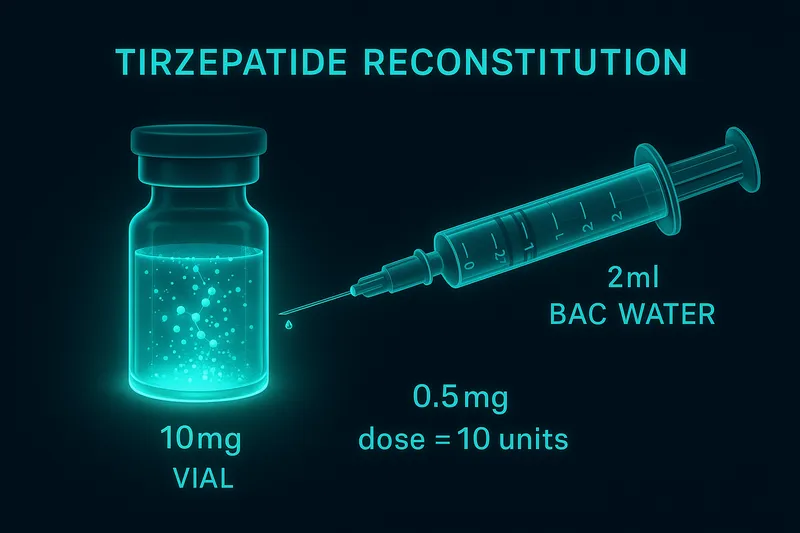
| Reconstitution | 2 mL bacteriostatic water → 5,000 mcg/mL |
| Documented draw | 10 units on insulin syringe (at 5 mg/mL dilution) |
| Storage | Refrigerate, use within 28 days |
Self-reported starting doses begin around 0.25 mg 3x weekly for 2-4 weeks to assess tolerance, before increasing to 0.5 mg 3x weekly. Split dosing is described as producing more stable levels than once-weekly injection. For the full tirzepatide profile, vendor pricing, and stacking options, see our tirzepatide peptide page.
Cycling Details
The standard community cycle is 8 weeks on, 8 weeks off. Community sources describe starting conservatively at 0.25 mg 3x weekly (0.75 mg total weekly) for the first 2-4 weeks — the dual GLP-1/GIP mechanism can cause more intense initial GI side effects than single-target agonists.
Community protocols then increase to 0.5 mg 3x weekly (1.5 mg total weekly) when well-tolerated. The split-dosing approach (3x weekly vs once weekly) is described as maintaining more consistent hormone levels and reducing peak-related side effects. Some users self-report continuing until goal weight, then cycling off.
Enhanced Protocol (FDA/Clinical)
Note: The standard protocol above uses research peptide community doses. The FDA-approved protocol below uses significantly higher doses.
| Parameter | FDA Titration |
|---|---|
| Week 1-4 | 2.5 mg weekly |
| Week 5-8 | 5 mg weekly |
| Week 9-12 | 7.5 mg weekly |
| Week 13-16 | 10 mg weekly |
| Week 17-20 | 12.5 mg weekly |
| Maintenance | Up to 15 mg weekly |
Community research peptide protocols use 1.5 mg/week total — roughly 60% of the FDA starting dose and 10% of the maximum. Lower doses still provide meaningful effects with substantially fewer side effects.
Routes of Administration
Subcutaneous (standard and only route): Protocols describe rotating between abdomen, thigh, and upper arm, with abdomen typically providing the most consistent absorption. Community sources describe a 29-31 gauge insulin syringe and the same time each dosing day, morning on an empty stomach preferred.

Reconstitution Quick Reference
Community-documented dilution ratios — full unit conversion math below.
| Vial Size | BAC Water | Concentration | 0.25 mg | 0.5 mg |
|---|---|---|---|---|
| 10 mg | 2 mL | 5,000 mcg/mL | 5 units | 10 units |
10 mg vial + 2 mL BAC water = 5,000 mcg/mL. A 0.5 mg dose is 10 units on an insulin syringe.
Protocols describe swirling gently, not shaking. Storage is documented as refrigerated at 2–8°C, with use within 28 days.
Ready to buy? Compare verified vendors on our best tirzepatide sources page, or browse all coupon codes for up to 50% off.