guidesMay 5, 2026·8 min read

RetaCagri Reconstitution: Pre-Mixed & Separate Vial Math

12.5/2.5 and 20/4 pre-mix vials in 2 mL BAC water, plus the separate-vial titration math. Insulin syringe units for every common community dose.

Retatrutide and Cagrilintide Stack Reconstitution Guide

The retatrutide+cagrilintide stack (blend overview) reconstitutes either as two separate vials or as a single pre-mixed vial at a fixed 5:1 retatrutide:cagrilintide ratio. The math differs slightly between formats; the underlying reconstitution principles (sterile technique, swirling not shaking, refrigerated storage post-reconstitution, 4-week stability window) are the same as for any GLP-1 class peptide.

Research-context information only. Retatrutide and cagrilintide are both investigational drugs not approved by the FDA. The combination has not been formally tested in any published clinical trial. Reconstitution and storage protocols described below come from per-compound trial-protocol documentation and self-organized community references. This article reports what has been documented, not what should be done. Possession or use of investigational drugs outside an authorized clinical trial may be illegal in your jurisdiction. Consult a licensed physician for personal medical decisions.

This guide is the practical mixing reference for both formats: what BAC water volumes are most-described in community protocols, what insulin-syringe units those produce at common community doses, and the storage rules that apply once the powder is in solution.

This article does not prescribe doses. It documents what reconstitution math the published trial protocols and community references use. Per-cycle dose decisions belong with a licensed physician.

New to bacteriostatic water? Start with what it is, how much to use per vial, and how long it lasts — or see the full Bacteriostatic Water Guide.

What You Need

For either format:

  • Lyophilized peptide vial(s) — separate retatrutide + cagrilintide, or one pre-mixed reta+cagri blend
  • Bacteriostatic water (BAC water) — sterile water with 0.9% benzyl alcohol preservative
  • 30 mL syringe with 22-gauge needle for transferring BAC water
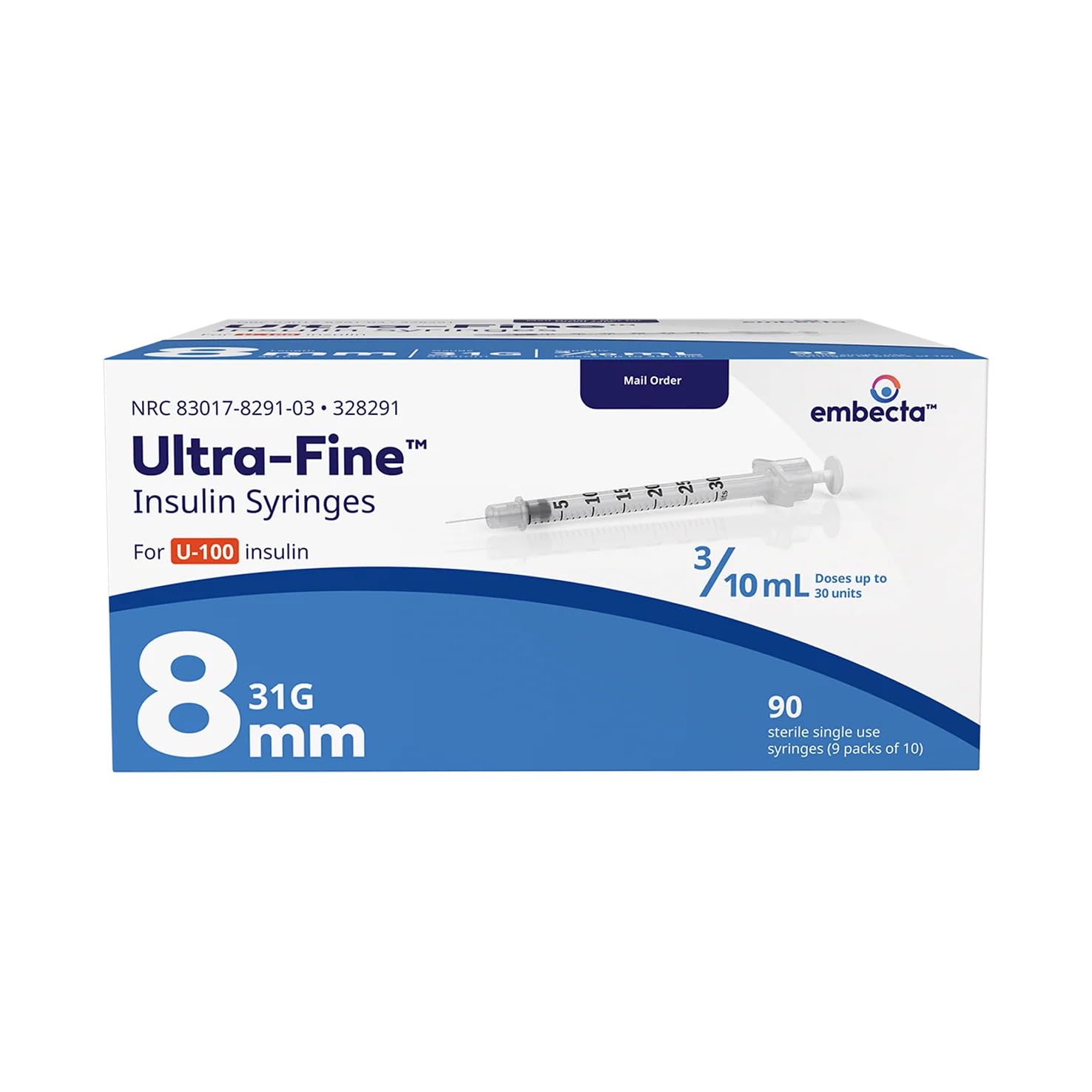
  • 100-unit insulin syringes (U-100) for individual draws
  • Alcohol swabs for vial-stopper sterilization
  • Sharps container for used needles
  • Clean flat surface with hands washed
30ml bacteriostatic water vial — 0.9% benzyl alcohol multi-dose
Bac Water Made for Peptides
Don't risk a $300 peptide on generic bac water.
Most cloudy reconstitutions trace back to one thing — and it isn't the peptide. Sterile, non-pyrogenic, 0.9% benzyl alcohol — formulated for peptide reconstitution, not repackaged from generic stock.
0.9% benzyl alcohol Made for peptides 30 mL multi-dose
See why our bac water doesn't ruin peptides
30ml from $18.75 · Ships fast · Code thepeptidecatalog

Pre-Mixed 12.5 / 2.5 mg Vial Reconstitution

The 12.5/2.5 mg vial holds 15 mg total peptide (12.5 mg retatrutide + 2.5 mg cagrilintide) in a 5:1 mass ratio. Most-referenced community reconstitution: 2 mL BAC water.

Documented Preparation Sequence

The most-referenced community preparation sequence for the 12.5/2.5 mg vial: hands washed, flat surface prepared with the unopened vial, BAC water, syringes, and alcohol swabs within reach; both stoppers sterilized with separate swabs; 2 mL BAC water drawn into a 30 mL transfer syringe; water injected slowly down the inside vial wall, not onto the lyophilized cake (which protects the peptide structure); vial swirled (not shaken) for 30–60 seconds, since shaking introduces foam that can denature the peptide; allowed to rest 1–2 minutes at room temperature until the solution is clear with no visible particulates; refrigerated at 2–8 °C until the next draw.

Concentration Math

Component Mg in vial Concentration in 2 mL
Retatrutide 12.5 mg 6.25 mg/mL
Cagrilintide 2.5 mg 1.25 mg/mL
Total peptide 15 mg 7.5 mg/mL

Insulin Syringe Units (U-100, 100 units = 1 mL)

Combined dose (reta + cagri) Volume Units
0.5 mg + 0.1 mg = 0.6 mg 0.08 mL 8 units
1.0 mg + 0.2 mg = 1.2 mg 0.16 mL 16 units
2.0 mg + 0.4 mg = 2.4 mg 0.32 mL 32 units
3.0 mg + 0.6 mg = 3.6 mg 0.48 mL 48 units
4.0 mg + 0.8 mg = 4.8 mg 0.64 mL 64 units

Yield at maintenance: at a 1.2 mg combined dose per week, the vial provides ~3 weeks of dosing (15 mg ÷ 1.2 mg/wk = 12.5 weeks at total mass, but draws of 16 units twice a week or 16 units once a week land at ~3 weeks of practical use given common dosing patterns).

Pre-Mixed 20 / 4 mg Vial Reconstitution

The 20/4 mg vial holds 24 mg total peptide (20 mg retatrutide + 4 mg cagrilintide) in the same 5:1 mass ratio. Most-referenced reconstitution: 3 mL BAC water.

Concentration Math

Component Mg in vial Concentration in 3 mL
Retatrutide 20 mg 6.67 mg/mL
Cagrilintide 4 mg 1.33 mg/mL
Total peptide 24 mg 8 mg/mL

Insulin Syringe Units

Combined dose Volume Units
0.6 mg 0.075 mL ~7-8 units
1.2 mg 0.15 mL 15 units
2.4 mg 0.30 mL 30 units
3.6 mg 0.45 mL 45 units
4.8 mg 0.60 mL 60 units

Yield at maintenance: at a 1.2 mg combined dose per week, the 20/4 vial provides ~5 weeks of dosing — ~67% more than the 12.5/2.5 vial. Fewer reconstitution events per protocol cycle.

Separate-Vial Reconstitution (Titration-Compatible)

Separate vials are the format that matches the staged community titration cadence, where retatrutide is titrated first and cagrilintide is layered on its own 4-week-per-step ramp. Locked-ratio pre-mixed vials don't fit this phase.

Retatrutide 10 mg Vial

Most-referenced reconstitution: 2 mL BAC water → 5 mg/mL.

Retatrutide dose Volume Units
0.25 mg 0.05 mL 5 units
0.5 mg 0.10 mL 10 units
1.0 mg 0.20 mL 20 units
2.0 mg 0.40 mL 40 units
3.0 mg 0.60 mL 60 units
4.0 mg 0.80 mL 80 units

For step-by-step retatrutide reconstitution detail, see the Retatrutide Reconstitution Guide.

Cagrilintide 5 mg Vial

Most-referenced reconstitution: 2 mL BAC water → 2.5 mg/mL.

Cagrilintide dose Volume Units
0.25 mg 0.10 mL 10 units
0.5 mg 0.20 mL 20 units
1.0 mg 0.40 mL 40 units
1.7 mg 0.68 mL 68 units
2.4 mg 0.96 mL 96 units

The 2.4 mg maintenance dose is close to the 1 mL capacity of a standard U-100 insulin syringe, which is why some community sources reconstitute cagrilintide at higher concentration (e.g., 5 mg in 1.5 mL → 3.33 mg/mL → 2.4 mg = 0.72 mL = 72 units) to keep dose volume manageable.

Top Retatrutide + Cagrilintide Blend Vendors

Ranked by price, COA availability, and reputation

Affiliate disclosure: vendor links in this article are affiliate links — The Peptide Catalog may earn a commission if you buy through them, at no additional cost to you.

Storage Rules

Both retatrutide and cagrilintide are stable peptides with well-characterized storage profiles. The pre-mixed blend follows the same rules.

State Temperature Shelf Life
Lyophilized vial (sealed) –20 °C ideal; 2–8 °C acceptable 18+ months at –20 °C
Lyophilized vial (sealed) Room temperature Several months only
Reconstituted vial 2–8 °C (refrigerated) 4 weeks

Community protocols and trial storage documentation describe avoiding freeze-thaw cycles on reconstituted vials — freeze-thaw cycles are the documented cause of peptide structure damage. The lyophilized form can be frozen; the reconstituted form is not.

Light protection is standard practice. Both peptides are not particularly photosensitive, but storing the reconstituted vial in its original carton or a dark area of the refrigerator is the conservative default.

Before each draw, community protocols describe checking the solution; cloudiness, particulates, or color change in a previously clear solution are cited as signs to discard and start a new vial.

Injection Technique — Same-Day, Separate-Site

The most-described community pattern for two-compound stacks is same-day, separate-site injection: both compounds delivered the same day each week, but at different subcutaneous sites. This concentrates peak GI effect on a single day rather than smearing nausea across the week.

Compound Most-described site
Retatrutide Abdomen (rotating left/right, upper/lower)
Cagrilintide Thigh (rotating left/right, upper/lower)

For pre-mixed blend users, only one injection is needed — the site rotation pattern is the same as for retatrutide alone (abdomen, rotating).

Subcutaneous Injection Technique (Same for All Formats)

Community injection protocols document standard subcutaneous technique for this class of peptide: sterilizing the injection site; pinching a fold of subcutaneous tissue; inserting a U-100 insulin needle at 90° (or 45° in lean frames); injecting the drawn volume slowly over 5–10 seconds; holding the needle in place ~5 seconds before withdrawal; applying gentle pressure without rubbing; and disposing of the needle in a sharps container. First-time users are advised to review subcutaneous injection technique with a licensed healthcare provider before starting.

Common Errors and Fixes

Error What happens Community-documented response
Shook the vial vigorously Foam, possible peptide denaturation Community protocols describe discarding the vial — foam introduces dose-volume error
Used regular tap water No microbial preservative; risk of contamination Community references describe discarding and restarting with bacteriostatic water
Reconstituted at room temp and forgot to refrigerate Risk of degradation If under 24 hours and solution still clear, community protocols describe refrigerating and continuing; if longer, discarding
Drew up an air bubble Less peptide in the dose than intended Community references describe tapping to raise the bubble, returning it to the vial, and redrawing
Lost track of which vial is reta and which is cagri Can't titrate independently Labeling vials at reconstitution with compound name and date is the documented practice
Drew dose with the wrong concentration math Over- or under-dose Recalculating before drawing is the documented approach; if drawn and noticed, community protocols describe documenting and adjusting the next draw

Frequently Asked Questions

How much bacteriostatic water should be added to a 12.5/2.5 mg pre-mixed vial?
Trial-protocol style reconstitution most often described in community references: 2 mL BAC water for the 12.5/2.5 mg vial, producing 7.5 mg/mL total peptide (6.25 mg/mL retatrutide + 1.25 mg/mL cagrilintide). At a combined 1.2 mg dose (1 mg reta + 0.2 mg cagri), that's 0.16 mL = 16 units on a 100-unit insulin syringe. Other reconstitution volumes are also referenced — choose one and stay consistent.
What about the 20/4 mg pre-mixed vial?
Most-referenced reconstitution: 3 mL BAC water for 8 mg/mL total peptide (6.67 mg/mL retatrutide + 1.33 mg/mL cagrilintide). At a combined 1.2 mg maintenance dose, that's 0.15 mL = 15 units on a 100-unit insulin syringe. The 20/4 vial provides ~5 weeks at maintenance compared with ~3 weeks from the smaller blend.
How do separate-vial reconstitutions look?
Standard research-vendor sizes most often reconstituted as: retatrutide 10 mg vial in 2 mL BAC water → 5 mg/mL (1 mg = 20 units); cagrilintide 5 mg vial in 2 mL BAC water → 2.5 mg/mL (1 mg = 40 units, 0.5 mg = 20 units). These ratios mirror trial-protocol concentrations and match insulin-syringe unit math cleanly.
Is bacteriostatic water required, or can sterile water be used for reconstitution?
For single-use draws, community references describe sterile water as usable. For multi-draw vials, bacteriostatic water is the documented standard — benzyl alcohol preservative is the cited reason for stability across repeated stopper punctures. Pre-mixed blends are typically multi-draw vials, where bacteriostatic water is the documented standard.
How long does the reconstituted blend stay usable?
Both retatrutide and cagrilintide reconstituted in BAC water are typically described as stable at 2–8 °C for 4 weeks. The pre-mixed blend follows the same 4-week refrigerated stability. Both compounds are peptides with well-characterized stability profiles — neither degrades faster than the other in the blend.
What injection-site rotation patterns do community protocols describe for this stack?
Community references describe rotating sites. For separate-vial users injecting both compounds the same day, the most-described pattern is retatrutide in the abdomen and cagrilintide in the thigh. Rotating within each site (left/right, upper/lower abdomen) has been described in community protocols as reducing injection-site reactions over a multi-month protocol.

For educational and research purposes only. This is not medical advice. Retatrutide and cagrilintide are investigational drugs without FDA approval; the combination has not been formally tested in any published clinical trial.