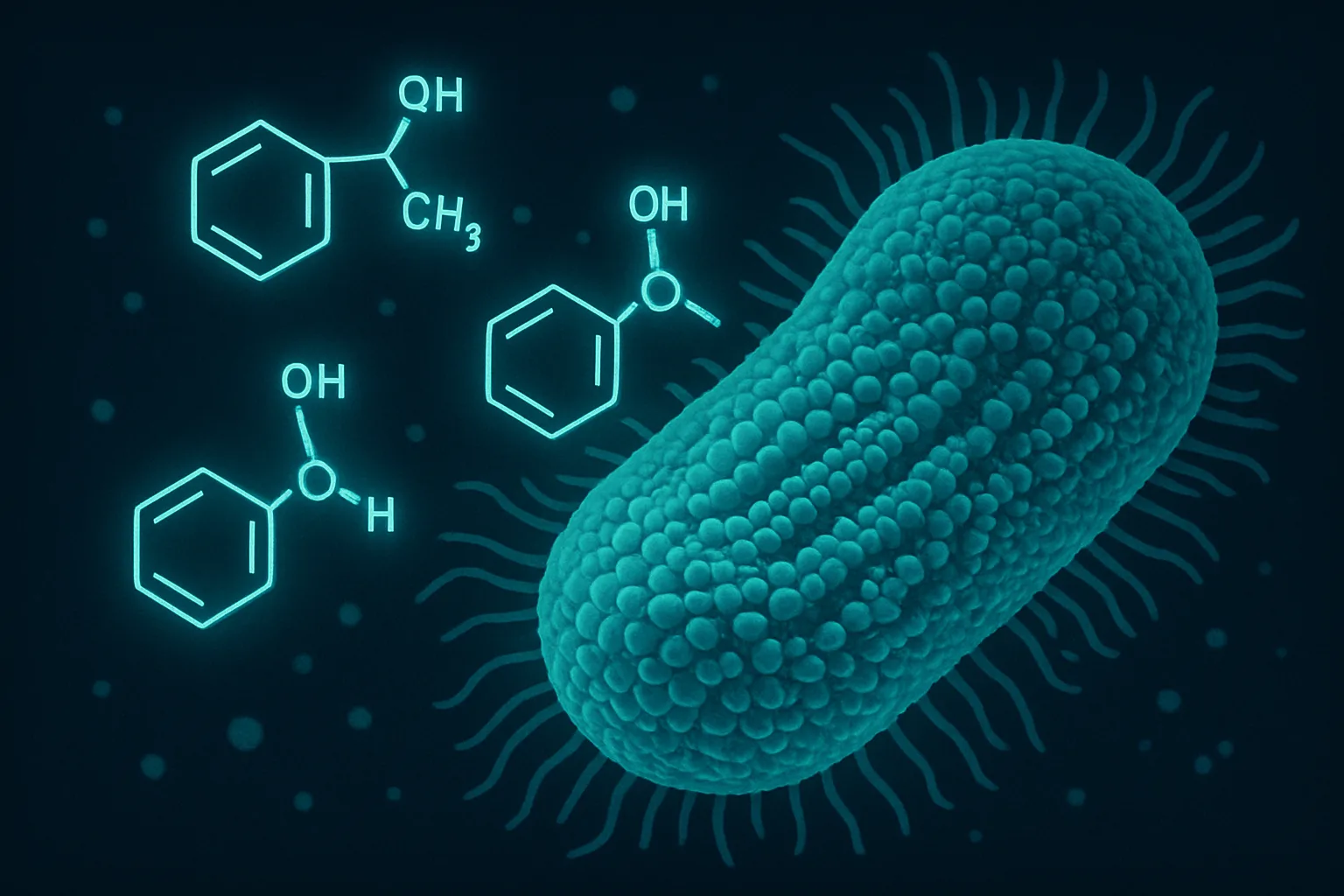
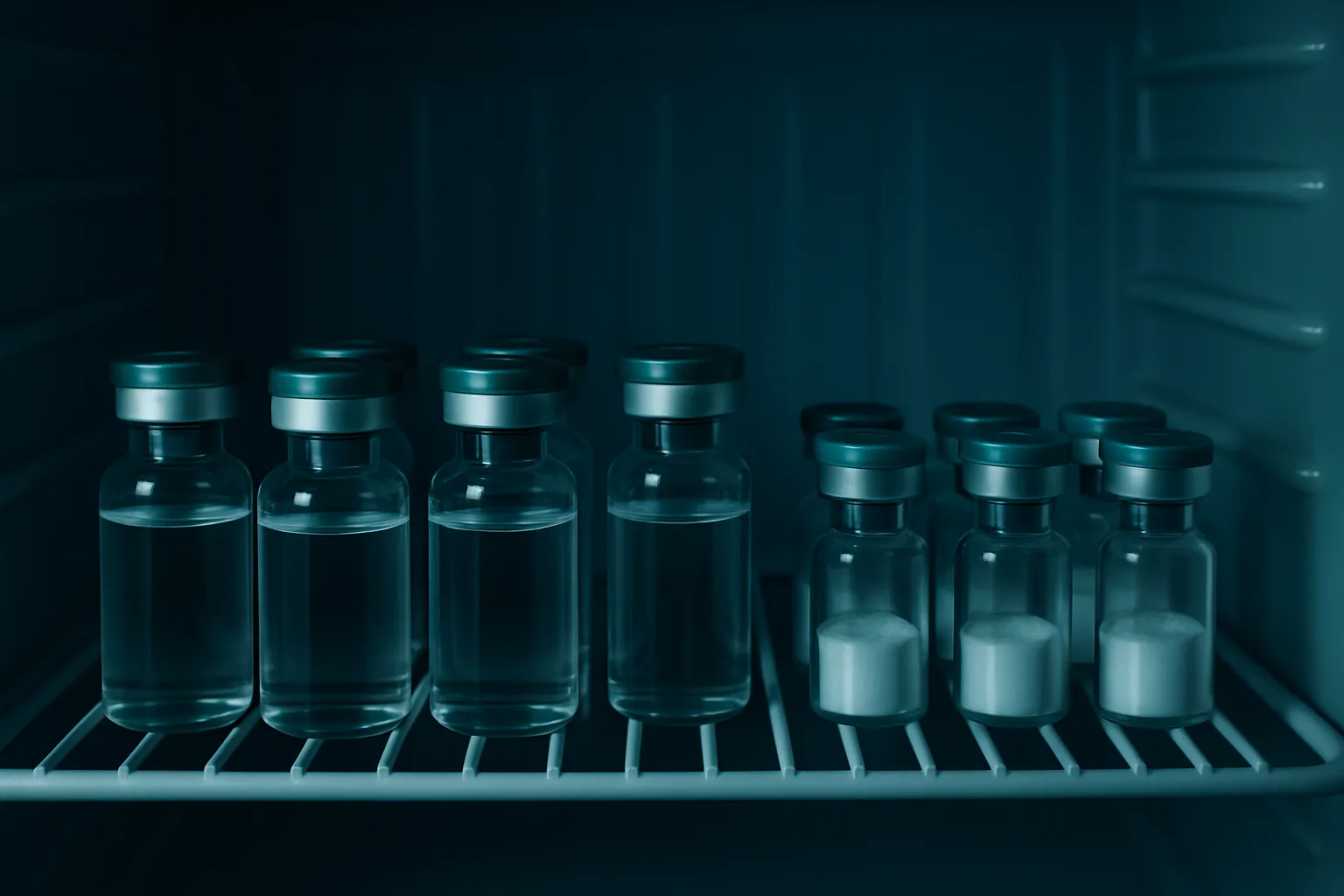
Bacteriostatic water is one of those products that sounds more complicated than it is. It is sterile water with one additive — 0.9% benzyl alcohol — and that single ingredient is the reason multi-dose injectable vials work at all.
Without the preservative, every needle puncture introduces bacteria into the vial with no defense. The vial becomes a contamination risk after the first use. With the preservative, the same vial stays usable for up to 28 days.
Research-context information only. Information below reflects pharmaceutical prescribing information, USP standards, and published research. This article reports what has been documented about bacteriostatic water for injection as a pharmaceutical product. It is not medical advice. Consult a licensed physician for personal medical decisions.
This article covers what bacteriostatic water is, how the preservative works, what it is used for, and how it differs from other injectable waters.
What bacteriostatic water actually is
Bacteriostatic water for injection, USP is a sterile, nonpyrogenic preparation of water for injection containing 0.9% (9 mg/mL) benzyl alcohol as a bacteriostatic preservative. It is supplied in glass vials with rubber stoppers sealed by aluminum crimps.
The composition is two ingredients:
Component
Concentration
Purpose
Water for injection, USP
99.1%
Solvent
Benzyl alcohol, NF
0.9% (9 mg/mL)
Bacteriostatic preservative
The product has a pH range of 4.5 to 7.0. It contains no other additives — no buffers, no antimicrobial agents beyond benzyl alcohol, no tonicity agents. The simplicity is intentional: the fewer inactive ingredients in the diluent, the lower the risk of interaction with whatever medication is being reconstituted.
Bacteriostatic water is classified as a pharmaceutical diluent, not a medication. Its purpose is to dissolve lyophilized (freeze-dried) powders into injectable solutions. It is defined by the United States Pharmacopeia (USP) and manufactured under current Good Manufacturing Practice (cGMP) standards.
How the preservative works
Benzyl alcohol's bacteriostatic mechanism has been characterized in published research. The preservative does not sterilize — it inhibits bacterial growth, which is an important distinction.
The mechanism in three steps:
Membrane disruption. Benzyl alcohol increases bacterial cell membrane fluidity and destabilizes membrane structures. Published research using Raman spectroscopy has demonstrated that benzyl alcohol attacks bacterial surface structures by integrating into the lipid bilayer (PMID: 26519389).
Growth suppression. At the 0.9% concentration used in bacteriostatic water, benzyl alcohol suppresses proliferation of common contaminants including Staphylococcus aureus, Escherichia coli, Pseudomonas aeruginosa, Candida albicans, and Aspergillus niger. Preservative efficacy studies have characterized the concentration-dependent and temperature-dependent antimicrobial activity of benzyl alcohol against these organisms (PMID: 3531242).
Sustained activity. The preservative maintains bacteriostatic activity through the 28-day use window specified in prescribing information, assuming refrigerated storage and proper aseptic technique on each puncture.
The word "bacteriostatic" itself means "bacteria-stopping" — it halts growth rather than killing organisms outright. This is sufficient for multi-dose vial use because the preservative continuously suppresses any small microbial load introduced during punctures, preventing it from reaching levels that pose contamination risk.
Bacteriostatic water for injection has applications across multiple clinical and research contexts.
Peptide reconstitution. The most common use in the research peptide context. Lyophilized peptides — BPC-157, TB-500, GHK-Cu, semaglutide, tirzepatide, and others — are supplied as freeze-dried powder and require reconstitution with a diluent before use. Bacteriostatic water is the documented standard for multi-dose peptide vials because the preservative allows repeated withdrawals across days or weeks. For specific reconstitution volumes per peptide, see How Much Bac Water Per Peptide Vial: Chart + Math.
Multi-dose medication vials. Beyond peptides, bacteriostatic water is used to reconstitute a wide range of injectable medications supplied in multi-dose format. Any lyophilized drug intended for repeated withdrawals from the same vial typically specifies bacteriostatic water as the diluent. Studies examining multi-dose vial sterility have documented that preservative-containing diluents maintain vial integrity through the labeled use period (PMID: 6562087).
Compounding pharmacies. Compounding pharmacies use bacteriostatic water as a base diluent for preparing sterile compounds. USP Chapter 797 governs beyond-use dating and sterility standards for these preparations (PMID: 19710449).
Allergy testing. Allergen extracts used in skin testing and immunotherapy are commonly diluted with bacteriostatic water. The preservative maintains vial sterility across the multiple withdrawals required for allergy panel testing (PMID: 29753035).
Compare Top Peptides
Best vendor pricing, COA verified, with active discount codes
Three injectable waters look similar but behave differently. The key distinctions:
Property
Bacteriostatic water
Sterile water for injection
Normal saline (0.9% NaCl)
Preservative
0.9% benzyl alcohol
None
None
Multi-dose use
Up to 28 days (refrigerated)
Single use only
Single use only
Tonicity
Hypotonic
Hypotonic
Isotonic
IV compatible
Not without solute
Yes (with solute)
Yes
Peptide reconstitution
Documented standard
Only for single-dose vials
Not standard
The critical difference is the preservative. Sterile water is identical to bacteriostatic water minus the benzyl alcohol — which means every puncture after the first introduces bacteria with nothing to suppress their growth. Saline adds a different problem: the sodium chloride can interact with some peptide chemistries and provides no bacteriostatic activity.
Bacteriostatic water for injection is a well-characterized pharmaceutical product, but it carries specific contraindications and precautions documented in prescribing information.
Benzyl alcohol sensitivity. Some individuals have documented sensitivity to benzyl alcohol. Reactions can include injection-site irritation, redness, or localized pain beyond what is typical for subcutaneous injection. Prescribing information notes that allergic-type reactions, including anaphylactoid symptoms, have been reported in rare cases.
Neonatal contraindication. Bacteriostatic water for injection is contraindicated in neonates. Benzyl alcohol has been associated with toxicity in premature infants, including the condition described in medical literature as "gasping syndrome" — characterized by metabolic acidosis, respiratory distress, and central nervous system dysfunction. This was documented in a landmark 1982 New England Journal of Medicine report that identified benzyl alcohol doses exceeding 99 mg/kg/day as toxic in low-birth-weight neonates (PMID: 7133084). This contraindication applies specifically to neonates and does not extend to adults at the concentrations present in standard reconstitution volumes.
Not for IV use without a solute. Bacteriostatic water is hypotonic. Intravenous administration without an isotonic admixture can cause hemolysis (red blood cell destruction). The product is intended for reconstituting medications that are then administered via the appropriate route — most commonly subcutaneous or intramuscular for peptide applications.
Injection-site reactions. The benzyl alcohol preservative can cause mild stinging or burning at the injection site in some individuals. This is distinct from an allergic reaction and is generally transient.
Bac Water Made for Peptides
Don't risk a $300 peptide on generic bac water.
Most cloudy reconstitutions trace back to one thing — and it isn't the peptide. Sterile, non-pyrogenic, 0.9% benzyl alcohol — formulated for peptide reconstitution, not repackaged from generic stock.
✓ 0.9% benzyl alcohol✓ Made for peptides✓ 30 mL multi-dose
Bacteriostatic water for injection is available through several channels:
Pharmacies — Available behind the counter at most pharmacies (prescription not required in most US states, though policies vary by location)
Online retailers — Dedicated suppliers offer pharmaceutical-grade bacteriostatic water with certificates of analysis (COAs) confirming benzyl alcohol concentration, sterility, and pyrogenicity testing
Compounding pharmacies — Often stock bacteriostatic water as a standard inventory item
The key quality markers to verify in any source: USP-grade designation, 0.9% benzyl alcohol concentration, sterility and pyrogenicity testing, and an expiration date at least 12 months out from purchase.
What is the difference between bacteriostatic water and sterile water?
Bacteriostatic water contains 0.9% benzyl alcohol as a preservative that inhibits bacterial growth. Sterile water for injection contains no preservative. The practical difference: bacteriostatic water supports multi-dose use for up to 28 days after first puncture (refrigerated), while sterile water must be used immediately after opening because contamination from each needle puncture goes unchecked.
What does the prescribing information report about bacteriostatic water for injection?
Bacteriostatic water for injection is a USP-defined pharmaceutical product intended as a diluent for reconstituting medications administered via subcutaneous or intramuscular injection. It is not for intravenous use without a solute — the prescribing information warns that IV administration of hypotonic solution without an isotonic admixture can cause hemolysis. It is contraindicated in neonates due to benzyl alcohol toxicity risk.
How long does bacteriostatic water last after opening?
Pfizer/Hospira prescribing information specifies 28 days after first needle puncture when stored refrigerated at 2-8 degrees C (36-46 degrees F). The 28-day clock starts at first puncture, not at purchase or unboxing. Unopened vials last until the manufacturer-printed expiration date, typically 18-24 months from production.
What is the benzyl alcohol in bacteriostatic water for?
Benzyl alcohol at 0.9% concentration (9 mg/mL) serves as a bacteriostatic preservative. Published research describes its mechanism as disrupting bacterial cell membranes and increasing membrane fluidity, which suppresses bacterial proliferation from contaminants introduced during repeated needle punctures. This preservative action is what enables multi-dose vial use.
Can bacteriostatic water be used for anything other than peptides?
Bacteriostatic water for injection is used broadly in pharmaceutical and clinical settings. Common applications include reconstituting lyophilized medications, diluting drugs for injection in multi-dose formats, allergy testing dilutions, and compounding pharmacy preparations. Peptide reconstitution is one of many documented uses for this product.
Passalacqua, K.D., et al. "Pentanol and Benzyl Alcohol Attack Bacterial Surface Structures Differently." Applied and Environmental Microbiology. 2016;82(1):71-79. PMID: 26519389
Ringertz, S., Ringertz, O. "Studies on the evaluation of preservative efficacy--II. The determination of antimicrobial characteristics of benzylalcohol." Journal of Pharmacy and Pharmacology. 1986;38(10):728-732. PMID: 3531242
Gershanik, J., et al. "The gasping syndrome and benzyl alcohol poisoning." New England Journal of Medicine. 1982;307(22):1384-1388. PMID: 7133084
Sheth, N.K., et al. "Multidose medication vial sterility: an in-use study and a review of the literature." Infection Control. 1983;4(4):268-272. PMID: 6562087
Nath, P., et al. "Safety of multidose immunotherapy vials after routine use." Journal of Allergy and Clinical Immunology: In Practice. 2018;6(6):2109-2110. PMID: 29753035
Rich, D.S. "Pharmacy compounding of high-risk level products and patient safety." American Journal of Health-System Pharmacy. 2009;66(17):1531-1535. PMID: 19710449