Dosing Guide·6 min read

Vitamin B12 Injection Dosage: 1mg Protocol

The 1mg loading-then-maintenance schedule, oral vs injection evidence, methylcobalamin vs cyanocobalamin, and exact syringe units per vial size.

Vitamin B12 Dosing Guide

The documented vitamin B12 protocol is 1000 mcg (1 mg) injected SubQ or IM on a loading schedule — alternate days to three times weekly for roughly four weeks — then stepped down to weekly or monthly maintenance. On the common 10 mg research vial with 2 mL of bacteriostatic water, each 1 mg dose draws as 20 units on an insulin syringe.

Research-context information only. Vitamin B12 (cobalamin) is the active ingredient in FDA-approved injectable products for vitamin B12 deficiency, including pernicious anemia; research vials and compounded forms are not FDA-approved and are sold for research purposes only. Protocols, doses, and reactions reported below come from clinical trials and community sources. This article reports what has been documented, not what should be done. Consult a licensed physician for personal medical decisions.

Vitamin B12 is an essential water-soluble vitamin required for red-blood-cell formation, DNA synthesis, and neurological function. This guide covers the documented injection schedules, the oral-versus-injection evidence, and the syringe math per vial size.

Vitamin B12 Dosing Table

Match your vial size below — reconstitution and dose math update automatically.

Reconstitute: add 2 mL of bacteriostatic water to the 10 mg vial. Resulting concentration: 5 mg/mL.
500 mcg10 units · 0.1 mL
3x/week SubQ
Conservative start
1 mg20 units · 0.2 mL
3x/week SubQ (loading, 4 weeks)
Standard clinical unit
1 mg20 units · 0.2 mL
Weekly SubQ (maintenance)

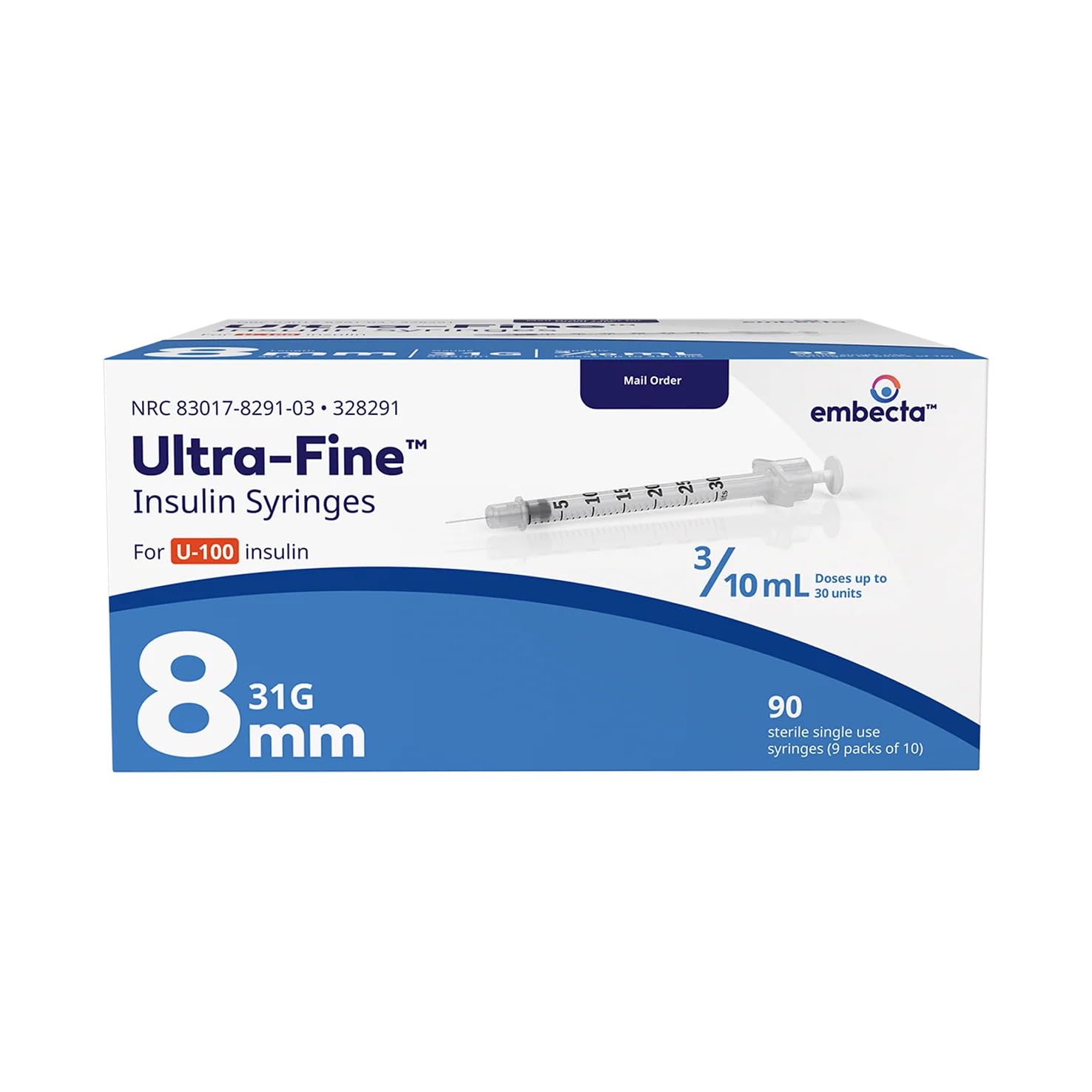
Math assumes U-100 insulin syringes (1 mL = 100 units). Verify your syringe matches before injecting. Round half-units to the nearest visible mark.

Quick Reference: Documented Protocol

Parameter Documented Protocol
Dose 1000 mcg / 1 mg (20 units on insulin syringe)
Route SubQ or IM injection
Timing Any time of day
Frequency Loading: 3x/week (alternate days) for 4 weeks → maintenance: weekly to monthly
Cycle Until repleted; ongoing where an absorption disorder is documented
Vial size 10 mg (also sold as 5 mg)
Reconstitution 2 mL bacteriostatic water → 5 mg/mL
Draw amount 20 units on insulin syringe
Storage Refrigerate, protect from light, use within 28 days

Documented protocol: 1 mg three times weekly for 4 weeks, then 1 mg weekly to monthly. The clinical trial schedule this simplifies from (Kuzminski 1998) dosed 1 mg on days 1, 3, 7, 10, 14, 21, 30, 60 and 90.

Cycling Details

B12 is not cycled the way research peptides are. Documented protocols run a front-loaded repletion phase until levels recover, then hold a maintenance frequency — weekly in community protocols, monthly in the classical clinical pattern. Where the underlying cause is an absorption disorder (pernicious anemia, post-GI-surgery), published guidance describes maintenance as ongoing rather than time-boxed (Stabler, 2013).

There is no documented off-phase requirement: B12 is water-soluble, and clinical reviews report no established upper limit, with excess excreted renally.

Routes of Administration

Intramuscular (IM). The classical clinical route in trials and approved-product labeling. Deltoid or ventrogluteal in published practice.

Subcutaneous (SubQ). Widely used in community protocols and described as comparable for cobalamin absorption. Smaller needle, abdominal or thigh sites in self-reported use.

High-dose oral / sublingual (1-2 mg daily). Backed by randomized-trial evidence — see "Where These Numbers Come From." The documented route where injections are not warranted.

Bacteriostatic water vial — 0.9% benzyl alcohol multi-dose
Bac Water Made for Peptides
Don't risk a $300 peptide on generic bac water.
Most cloudy reconstitutions trace back to one thing — and it isn't the peptide. Sterile, non-pyrogenic, 0.9% benzyl alcohol — formulated for peptide reconstitution, not repackaged from generic stock.
✓ 0.9% benzyl alcohol✓ Made for peptides✓ 30 mL multi-dose
Shop bac water made for peptides

Reconstitution Quick Reference

Research vendors ship B12 either as a ready-made solution (no mixing) or as a lyophilized vial. For lyophilized vials, the common math:

Vial Size BAC Water Concentration 1 mg dose
10 mg 2 mL 5 mg/mL 20 units
5 mg 1 mL 5 mg/mL 20 units

10 mg vial + 2 mL BAC = 5 mg/mL. 1 mg = 0.2 mL = 20 units. The dilution above reflects how community reconstitution protocols describe the math, not a set of instructions to follow.

Swirl gently — do not shake. Refrigerate at 2-8°C, protect from light (cobalamin is photosensitive), and use within 28 days.

Ready to buy? Compare verified vendors on our best B12 sources page, or browse all coupon codes for up to 50% off.
Vitamin B12 research vial
Where to buy Vitamin B12
One verified, COA-tested Vitamin B12 source
The verified, COA-tested source we track for Vitamin B12 — shipped with a certificate of analysis. Research use only.
✓ COA verified✓ $3.50/mg✓ Ion Peptide
Save 15%thepeptidecatalogat checkout
Buy at Ion Peptide — $35.00
10mg · sold research-use-only · we may earn a commission

Affiliate disclosure: vendor links in this article are affiliate links — The Peptide Catalog may earn a commission if you buy through them, at no additional cost to you.

Where These Numbers Come From

B12 Injection Schedule

The 1 mg unit is not arbitrary — it is the dose used across the deficiency-correction literature. The randomized trial by Kuzminski et al., 1998 assigned newly diagnosed cobalamin-deficient patients to 1 mg IM on days 1, 3, 7, 10, 14, 21, 30, 60 and 90, against 2 mg oral daily. Both arms corrected hematologic and neurologic abnormalities; the oral arm finished with higher serum B12 at four months (1,005 vs 325 pg/mL).

That oral finding replicated at scale: the pragmatic OB12 trial in primary care reported oral B12 non-inferior to intramuscular dosing for deficiency treatment (Sanz-Cuesta et al., 2012 — Project OB12). Roughly 1% of an oral dose absorbs passively, independent of intrinsic factor — which is why 1-2 mg oral can match injections even in pernicious anemia.

The clinical review anchoring modern practice (Stabler, 2013, NEJM) describes the loading-then-maintenance shape used above and the populations where injection remains first-line: severe neurologic involvement, absorption disorders, and post-surgical states.

Form matters less than the mcg amount. Cyanocobalamin is the form in most approved products and trials; methylcobalamin — the active coenzyme form most research vendors sell — is dosed identically, and the body converts cyanocobalamin readily.

Stacking Protocols

B12 appears in community wellness stacks alongside other injectable cofactors:

Compound Dose Timing Purpose in reports
NAD+ 50-100 mg Separate injection, same phase Energy-metabolism pairing
Glutathione 200 mg Separate injection Antioxidant pairing
L-Carnitine 500 mg Pre-activity Fat-metabolism pairing

These are reported combinations, not documented synergies — no trial has tested the stacks.

Side Effects & Safety

  • Injection-site soreness or redness — the most commonly reported reaction
  • Mild acne flare, reported at high frequencies of dosing
  • Very low systemic toxicity; no tolerable upper intake level established in clinical reviews
  • Hypokalemia has been reported during rapid correction of severe megaloblastic anemia — a clinical-monitoring context
  • Cobalt sensitivity (rare) — cobalamin contains a cobalt core
  • Documented caution: B12 supplementation can mask folate-deficiency anemia on bloodwork

B12 Vial and Syringe Math

mg to Units Conversion

On a standard U-100 insulin syringe, each unit is 0.01 mL. The conversions below reflect the dilutions documented in community reconstitution protocols — they report how the math is described, not a dosing schedule.

Reconstitution A: 10 mg vial + 2 mL BAC water (5 mg/mL) — the standard dilution from the Quick Reference above.

Dose Volume (mL) Units (insulin syringe)
500 mcg 0.1 mL 10 units
1 mg 0.2 mL 20 units
2 mg 0.4 mL 40 units

Reconstitution B: 10 mg vial + 1 mL BAC water (10 mg/mL) — less volume per draw from the same vial.

Dose Volume (mL) Units (insulin syringe)
500 mcg 0.05 mL 5 units
1 mg 0.1 mL 10 units
2 mg 0.2 mL 20 units

These conversions reflect the dilutions documented in community reconstitution protocols. They report how the math is described, not a recommended dosing schedule.

Frequently Asked Questions

What is the standard vitamin B12 injection dose?
The standard clinical unit is 1000 mcg (1 mg). Deficiency-correction protocols documented in clinical practice use 1 mg by IM or SubQ injection on a loading schedule — daily or alternate days for the first weeks — then step down to weekly or monthly maintenance. On a 10 mg research vial reconstituted with 2 mL bacteriostatic water, 1 mg draws as 20 units on a U-100 insulin syringe.
How often are B12 injections given?
Published deficiency protocols front-load: the trial schedule in Kuzminski 1998 dosed 1 mg IM on days 1, 3, 7, 10, 14, 21, 30, 60 and 90. Community research protocols commonly simplify this to 1 mg three times weekly for about four weeks, then once weekly to monthly for maintenance.
Do B12 injections work better than oral B12?
Randomized trials report high-dose oral B12 (1-2 mg daily) corrects deficiency comparably to injections — the Kuzminski trial found oral 2 mg/day produced higher serum B12 at 4 months than the injection arm, and the OB12 trial reported non-inferiority in primary care. Injections remain the documented route where absorption is compromised or rapid repletion is the goal.
What is the difference between methylcobalamin and cyanocobalamin dosing?
Doses are interchangeable at the same mcg amount. Cyanocobalamin is the form used in most approved products and large trials; methylcobalamin is the active coenzyme form most research vendors sell. The body converts cyanocobalamin readily, and no published dosing schedule distinguishes the two by amount.
How many units is a 1 mg B12 dose on an insulin syringe?
Per documented reconstitution protocols: a 10 mg vial with 2 mL bacteriostatic water gives 5 mg/mL, so 1 mg is 0.2 mL — 20 units on a U-100 syringe. A 5 mg vial with 1 mL of water is also 5 mg/mL, so the draw is identical.
Is there an upper limit for vitamin B12?
No tolerable upper intake level has been established for B12 — it is water-soluble and excess is excreted. Clinical reviews describe very low toxicity even at the high doses used in deficiency correction. That is a reported property of the vitamin, not a reason to exceed documented protocols.

References

  1. Kuzminski AM, et al. Effective treatment of cobalamin deficiency with oral cobalamin. Blood. 1998;92(4):1191-1198. PMID 9694707
  2. Stabler SP. Clinical practice. Vitamin B12 deficiency. N Engl J Med. 2013;368(2):149-160. PMID 23301732
  3. Sanz-Cuesta T, et al. Oral versus intramuscular administration of vitamin B12 for vitamin B12 deficiency in primary care (Project OB12). BMJ Open. 2012. PMID 22650964