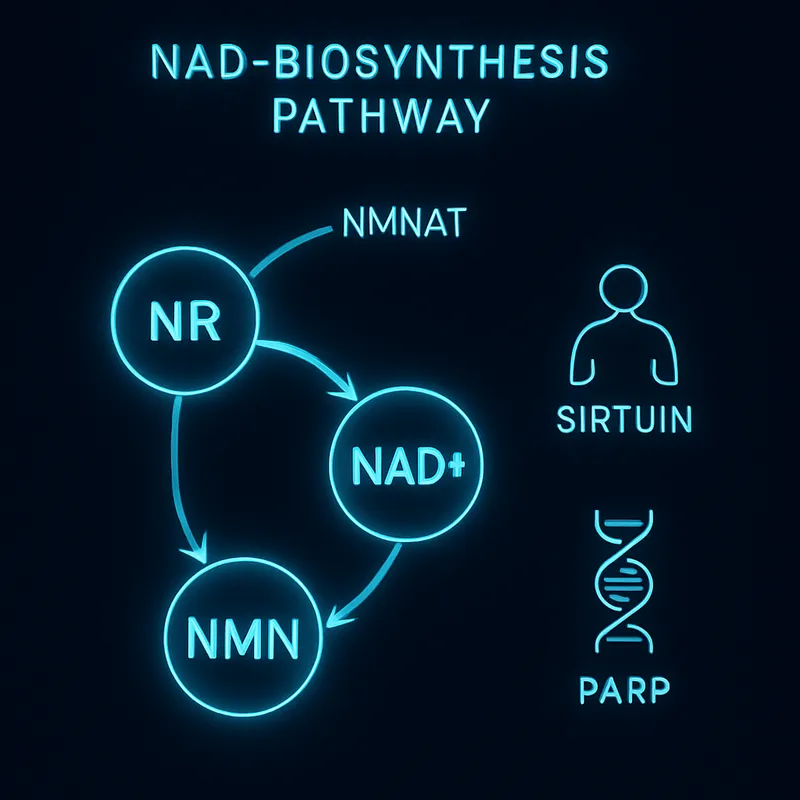
NAD+ (nicotinamide adenine dinucleotide) is a coenzyme present in every living cell, essential for mitochondrial energy production, DNA repair, and sirtuin activation. NAD+ levels decline approximately 50% between ages 40 and 60 (Massudi et al., 2012), driving interest in direct supplementation to restore youthful concentrations.
Research-context information only. NAD+ is a research peptide. Protocols, doses, and reactions reported below come from published research and self-reported community sources. This article reports what has been documented, not what should be done. Consult a licensed physician for personal medical decisions.
NAD+ is not FDA-approved as an anti-aging therapy. The protocols below reflect published research, clinical practice patterns, and community experience. This is not medical advice.
NAD+ Dosing Table
Match your vial size below — reconstitution and dose math update automatically.
Reconstitute: add 5 mL of bacteriostatic water to the 500 mg vial. Resulting concentration: 100 mg/mL.
Dose
Syringe units
mL volume
Schedule
50 mg
50 units
0.5 mL
2-3x/week SubQStarter
100 mg
100 units
1 mL
2-3x/week SubQStandard
200 mg
200 units
2 mL
2x/week SubQAdvanced
50 mg50 units · 0.5 mL
2-3x/week SubQ
Starter
100 mg100 units · 1 mL
2-3x/week SubQ
Standard
200 mg200 units · 2 mL
2x/week SubQ
Advanced
Math assumes U-100 insulin syringes (1 mL = 100 units). Verify your syringe matches before injecting. Round half-units to the nearest visible mark.
Reconstitute: add 10 mL of bacteriostatic water to the 1000 mg vial. Resulting concentration: 100 mg/mL.
Dose
Syringe units
mL volume
Schedule
50 mg
50 units
0.5 mL
2-3x/week SubQ
100 mg
100 units
1 mL
2-3x/week SubQ
200 mg
200 units
2 mL
2x/week SubQ
50 mg50 units · 0.5 mL
2-3x/week SubQ
100 mg100 units · 1 mL
2-3x/week SubQ
200 mg200 units · 2 mL
2x/week SubQ
Math assumes U-100 insulin syringes (1 mL = 100 units). Verify your syringe matches before injecting. Round half-units to the nearest visible mark.
Reconstitute: add 2.5 mL of bacteriostatic water to the 250 mg vial. Resulting concentration: 100 mg/mL.
Dose
Syringe units
mL volume
Schedule
50 mg
50 units
0.5 mL
2-3x/week SubQ
100 mg
100 units
1 mL
2-3x/week SubQ
50 mg50 units · 0.5 mL
2-3x/week SubQ
100 mg100 units · 1 mL
2-3x/week SubQ
Math assumes U-100 insulin syringes (1 mL = 100 units). Verify your syringe matches before injecting. Round half-units to the nearest visible mark.
Reconstitute: add 1 mL of bacteriostatic water to the 100 mg vial. Resulting concentration: 100 mg/mL.
Dose
Syringe units
mL volume
Schedule
50 mg
50 units
0.5 mL
2-3x/week SubQStarter
100 mg
100 units
1 mL
2-3x/week SubQStandard
50 mg50 units · 0.5 mL
2-3x/week SubQ
Starter
100 mg100 units · 1 mL
2-3x/week SubQ
Standard
Math assumes U-100 insulin syringes (1 mL = 100 units). Verify your syringe matches before injecting. Round half-units to the nearest visible mark.
Reconstitute: add 7 mL of bacteriostatic water to the 700 mg vial. Resulting concentration: 100 mg/mL.
Dose
Syringe units
mL volume
Schedule
50 mg
50 units
0.5 mL
2-3x/week SubQ
100 mg
100 units
1 mL
2-3x/week SubQ
200 mg
200 units
2 mL
2x/week SubQ
50 mg50 units · 0.5 mL
2-3x/week SubQ
100 mg100 units · 1 mL
2-3x/week SubQ
200 mg200 units · 2 mL
2x/week SubQ
Math assumes U-100 insulin syringes (1 mL = 100 units). Verify your syringe matches before injecting. Round half-units to the nearest visible mark.
Reconstitute: add 15 mL of bacteriostatic water to the 1500 mg vial. Resulting concentration: 100 mg/mL.
Dose
Syringe units
mL volume
Schedule
50 mg
50 units
0.5 mL
2-3x/week SubQ
100 mg
100 units
1 mL
2-3x/week SubQ
200 mg
200 units
2 mL
2x/week SubQ
50 mg50 units · 0.5 mL
2-3x/week SubQ
100 mg100 units · 1 mL
2-3x/week SubQ
200 mg200 units · 2 mL
2x/week SubQ
Math assumes U-100 insulin syringes (1 mL = 100 units). Verify your syringe matches before injecting. Round half-units to the nearest visible mark.
NAD+ is unique among peptides in having five practical administration routes, each with different onset and bioavailability:
Route
Dose Range
Frequency
Onset
Bioavailability
Subcutaneous injection
100-200 mg
2-3x per week
Days
High (direct)
IV infusion
250-500 mg
1-2x per month
Hours
Highest
Sublingual
50-100 mg
Daily
1-2 weeks
Moderate
Nasal spray
25-50 mg
Daily
1-2 weeks
Moderate
Oral NMN
250-1000 mg
Daily
2-4 weeks
Indirect
Oral NR
300-1000 mg
Daily
2-4 weeks
Indirect
Cycling Details
NAD+ doesn't require strict cycling like most peptides. The "as needed" approach reflects that NAD+ is a coenzyme, not a receptor agonist — there's no desensitization concern in the same way.
Community protocols most commonly describe an 8-12 week injectable course (100-200 mg SC 2-3x/week), with oral NMN (500 mg daily) as a bridge during off periods before repeating.
Routes of Administration
Subcutaneous injection is the route community and clinical protocols most commonly use as the primary injectable route. Injection site stinging lasting 5-15 minutes is the most frequently reported side effect; community sources describe slow injection and site rotation as common approaches. Community sources most often describe morning timing, citing potential energizing effects.
IV infusion (250-500 mg over 2-4 hours) delivers the highest peak levels and is used in clinical settings. In a small pilot study, a 6-hour infusion (3 μmol/min, roughly 750 mg total) increased plasma NAD+ approximately 398% above baseline by the end of the infusion (Grant et al., 2019). Loading protocols use 250-500 mg daily for 3-5 days.
Oral precursors (NMN/NR) are the most accessible route. NMN at 250 mg/day for 12 weeks significantly increased NAD+ metabolites and improved physical performance (Yoshino et al., 2021). NR at 1000 mg/day increased whole-blood NAD+ by ~60% over 6 weeks (Martens et al., 2018).
Buffered vs Unbuffered and Injection Comfort
The subcutaneous sting noted above tracks with the solution's pH. Reconstituted NAD+ is acidic, and subcutaneous tissue registers that as burning; buffered (pH-adjusted) NAD+ is reported to inject far more comfortably than plain acidic stock. The trade-off is comfort only — the dose and its effect are unchanged. Route matters here: IV infusions are diluted in saline and run over hours, so acidity is far less noticeable, while subcutaneous users feel it directly. The side-effects guide covers the sting, and buffered versus unbuffered forms, in more detail.
Reconstitution Quick Reference
Vial Size
BAC Water
Concentration
100 mg Dose
200 mg Dose
500 mg
5 mL
100 mg/mL
100 units
200 units (split)
Math (as described in community reconstitution protocols): 500 mg ÷ 5 mL = 100 mg/mL. For a 100 mg dose: 100 ÷ 100 = 1.0 mL = 100 units on an insulin syringe.
Bac Water Made for Peptides
Don't risk a $300 peptide on generic bac water.
Most cloudy reconstitutions trace back to one thing — and it isn't the peptide. Sterile, non-pyrogenic, 0.9% benzyl alcohol — formulated for peptide reconstitution, not repackaged from generic stock.
✓ 0.9% benzyl alcohol✓ Made for peptides✓ 30 mL multi-dose
Protocols describe refrigerating after mixing and using within 28 days. NAD+ is less stable in solution than many peptides, so prompt refrigeration matters. For step-by-step instructions, see the full NAD+ Reconstitution Guide.
Affiliate disclosure: vendor links in this article are affiliate links — The Peptide Catalog may earn a commission if you buy through them, at no additional cost to you.
Where These Numbers Come From
NAD+ replenishment targets several interconnected aging pathways, all driven by the age-related decline in NAD+ levels:
Sirtuin activation: NAD+ is required for SIRT1-7 function — deacetylases that regulate DNA repair, mitochondrial biogenesis, inflammation, and stress resistance. Age-related NAD+ decline impairs sirtuin function (Imai & Guarente, 2014).
Mitochondrial energy: NAD+ is a critical electron carrier in the electron transport chain. Declining levels directly impair oxidative phosphorylation and ATP production (Stein & Imai, 2012).
DNA repair: PARP enzymes consume NAD+ during DNA repair. As damage accumulates with age and NAD+ falls, repair capacity is compromised (Fang et al., 2017).
Cognitive function: NAD+ supports neuronal health through SIRT1-mediated neuroprotection and PARP-dependent DNA repair in neurons (Lautrup et al., 2019).
Exercise performance: NMN supplementation improved aerobic capacity in amateur runners (Liao et al., 2021).
SS-31 optimizes mitochondrial machinery; NAD+ provides the fuel. MOTS-c enhances how cells use energy; NAD+ ensures there is energy to use.
Side Effects & Safety
Injection site stinging/burning — very common, lasting 5-15 minutes (most frequently reported side effect)
Mild flushing — occasional, less intense than IV route
IV-specific: flushing, warmth, chest tightness, nausea — common and rate-dependent, managed by slowing infusion
GI discomfort with oral precursors — mild and infrequent at standard doses
Insomnia — occasional if taken late in the day (avoid evening dosing)
No serious adverse events reported in published human trials for NR 1000 mg/day or NMN 250 mg/day
mg to Units Conversion
On a standard 100-unit insulin syringe, each "unit" equals 0.01 mL (so 100 units = 1 mL). Once NAD+ is reconstituted, the conversion from a target dose to syringe units depends on the chosen dilution.
The two reconstitution ratios most often described in community protocols are below.
Reconstitution A: 500 mg vial + 5 mL BAC water (100 mg/mL) — the standard dilution from the Quick Reference above.
Dose (mg)
Volume (mL)
Units (insulin syringe)
25 mg
0.25 mL
25 units
50 mg
0.5 mL
50 units
75 mg
0.75 mL
75 units
100 mg
1 mL
100 units
Reconstitution B: 500 mg vial + 1 mL BAC water (500 mg/mL) — less BAC water for a lower total volume, so smaller draws and less fridge space.
Dose (mg)
Volume (mL)
Units (insulin syringe)
25 mg
0.05 mL
5 units
50 mg
0.1 mL
10 units
75 mg
0.15 mL
15 units
100 mg
0.2 mL
20 units
These conversions reflect the dilutions documented in community reconstitution protocols. They report how the math is described, not a recommended dosing schedule.
Core Supplies for This Protocol
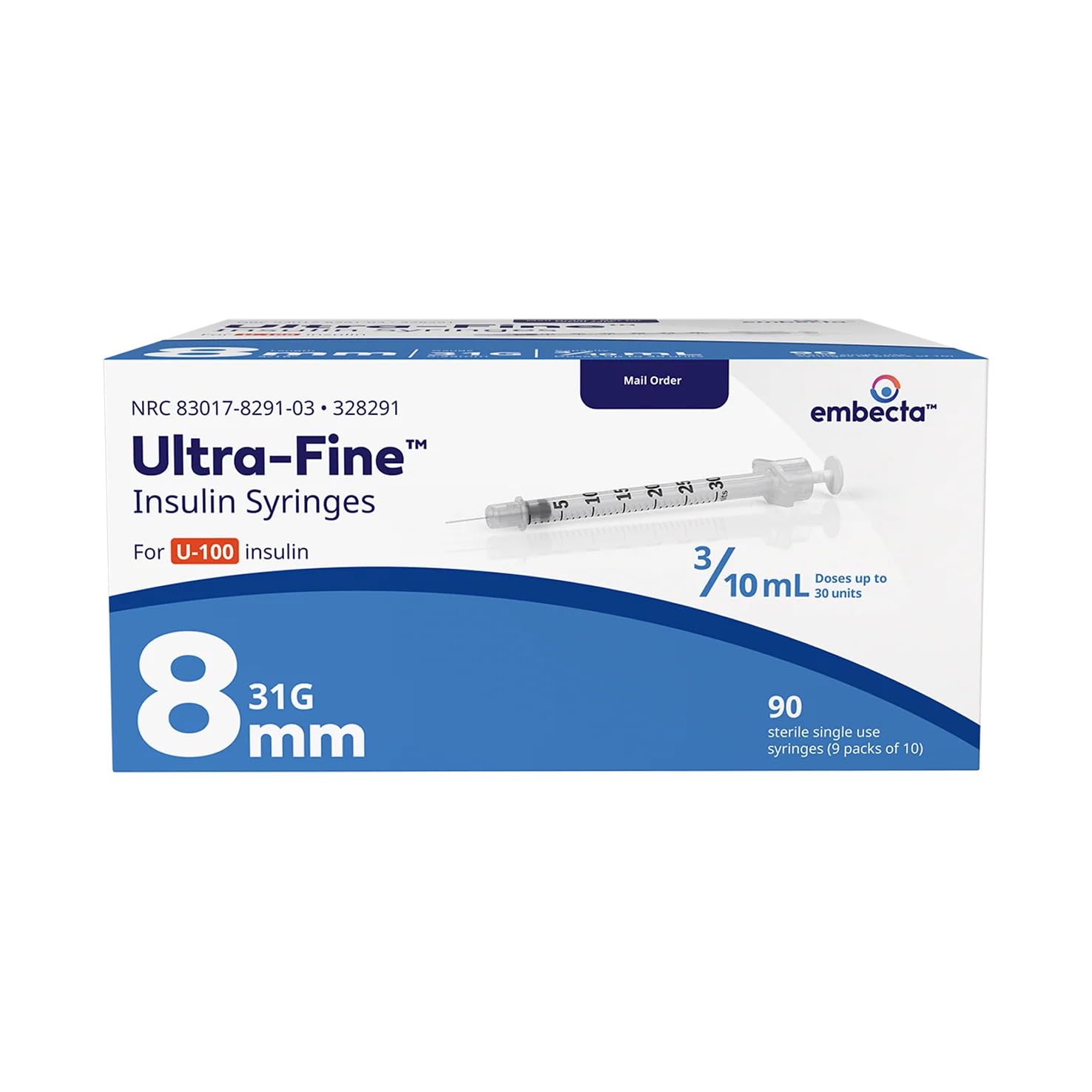
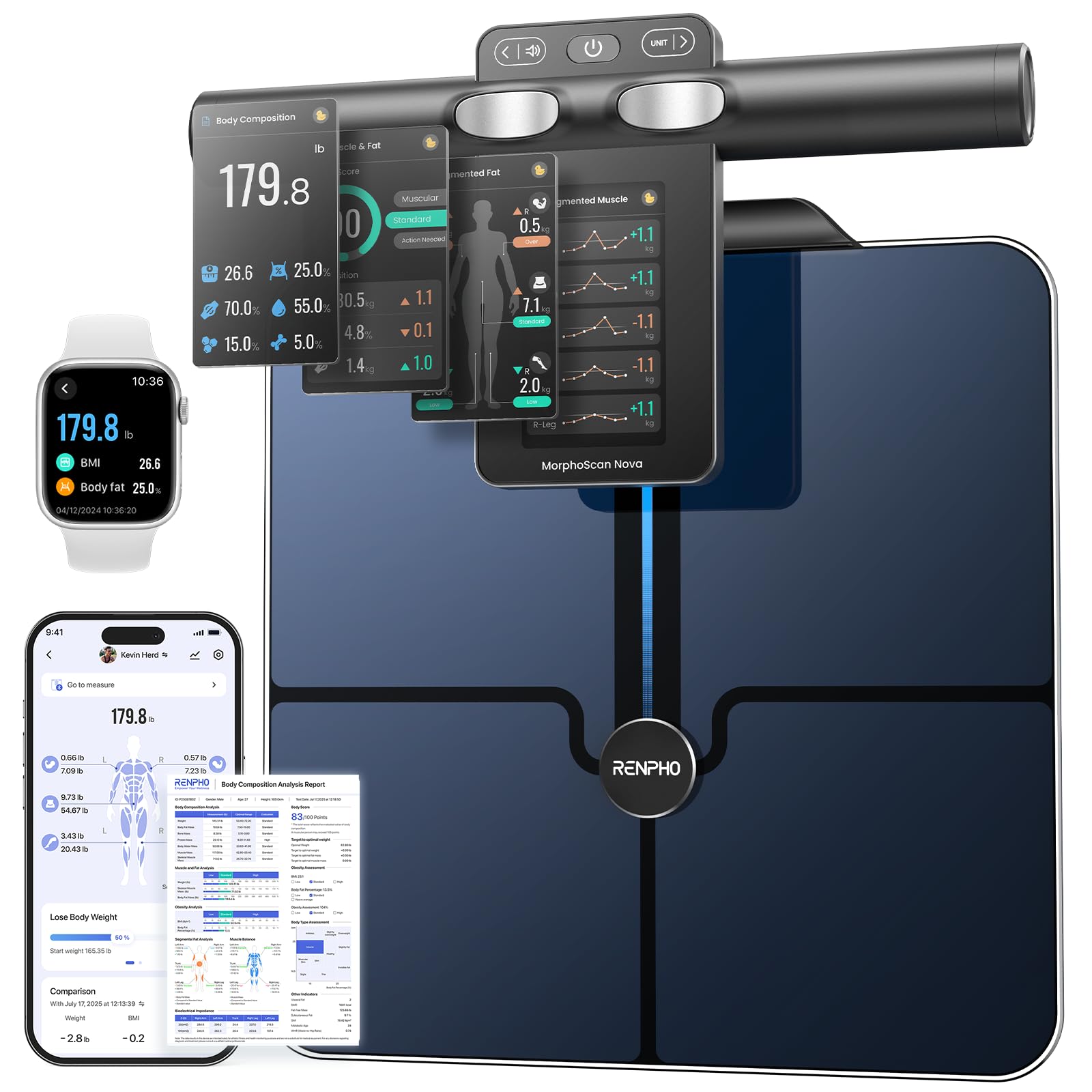
The essentials for running any reconstituted injectable: cold storage, accurate syringes, alcohol prep pads, and metabolic tracking.
NAD+ reconstitutes into a larger volume than microgram-dosed peptides, so the dose draws slowly through a fine 31G insulin syringe. Community protocols describe pulling the reconstituted solution with a larger-gauge draw needle, then switching to a thin 30G needle for the injection itself.
Frequently Asked Questions
What is the standard NAD+ injection dose?
The standard documented protocol is 100 mg subcutaneously in the morning, 2-3 times per week, as needed. Protocols describe reconstituting a 500 mg vial with 5 mL BAC water (100 mg/mL) and drawing 100 units per dose.
What is the best route of administration for NAD+?
Community sources and clinical protocols most commonly describe subcutaneous injection as offering the best balance of bioavailability and practical convenience. IV infusion delivers the highest peak levels but requires clinical supervision. Sublingual and nasal routes are non-invasive alternatives. Oral NMN/NR precursors are the most accessible but rely on indirect NAD+ synthesis.
Why does IV NAD+ cause flushing and nausea?
NAD+ activates the GPR109A receptor (the same niacin flush receptor), triggering prostaglandin release that causes vasodilation, warmth, flushing, and sometimes nausea. Slower infusion rates (2-4 hours for 250-500mg) significantly reduce these effects.
What do documented protocols describe for NAD+ reconstitution and injection preparation?
Protocols describe adding 5 mL bacteriostatic water to a 500 mg vial for a 100 mg/mL concentration, then drawing 100 units on an insulin syringe for a 100 mg dose. Documented storage is refrigerated at 2-8C, used within 28 days.
How do oral NMN or NR compare to injected NAD+?
Oral NMN (250-1000 mg daily) and NR (300-1000 mg daily) are convenient precursors that raise NAD+ levels over days to weeks. Direct injection provides faster, higher peak levels. Many users combine low-dose oral precursors with periodic injections.
What do community sources describe about cycling NAD+?
NAD+ is dosed as needed — no strict cycling is required. Some users run 8-12 week injectable courses with oral precursor bridges during off periods.
What stacking protocols are documented for NAD+ and other longevity peptides?
Yes. NAD+ is commonly stacked with SS-31 (mitochondrial membrane stabilization), MOTS-c (AMPK activation), or Epitalon (telomerase activation). These target different aging pathways and complement NAD+ replenishment.
Research Supplies for NAD+
Hand-picked storage, injection, and recovery supplies paired with NAD+ protocols.