|All Peptides

Epitalon

Last reviewed: April 18, 2026 by The Peptide Catalog Team

A telomere-targeting peptide for longevity and cellular rejuvenation. Epitalon (Epithalon) is a synthetic tetrapeptide studied for its effects on telomerase activation and potential anti-aging properties. Based on the pineal gland peptide Epithalamin. Researched for longevity, sleep regulation, and cellular health.

Overview

Epitalon Results Timeline

Progression
1
Week 1–2
Physical Changes
Improved sleep depth, falling asleep faster
Performance & Recovery
More vivid dreams, feeling more rested upon waking
Other Benefits
Telomerase activation occurring at cellular level
2
Week 3–4
Physical Changes
Skin appears more hydrated, improved complexion
Performance & Recovery
Better circadian rhythm, consistent energy throughout day
Other Benefits
Pineal gland effects — melatonin regulation normalizing
3
Month 2–3
Physical Changes
Improved skin elasticity, hair/nail quality improvements
Performance & Recovery
Enhanced stress resilience, mental clarity
Other Benefits
Cumulative telomere-protective effects building
4
3+ Months
Physical Changes
Sustained skin/hair benefits, slower visible aging markers
Performance & Recovery
Improved overall vitality and recovery
Other Benefits
Typical protocol: 10-20 days on, then cycle off; repeat 2-3x/year

Timeline is illustrative and non-guaranteed. Outcomes vary and are commonly discussed alongside training, nutrition, sleep, and cycling practices.

Read the full Epitalon results timeline →

Evidence at a glance

Two parallel grades per outcome — clinical RCT depth and real-world community adoption. See the Research Overview below for citations and detail.

OutcomeClinical EvidenceCommunity Evidence
Telomerase activation / telomere lengthPreliminaryWeak
Lifespan extension in animal modelsPreliminaryWeak
Geroprotective effects in elderlyWeakWeak
Melatonin / circadian rhythm restorationPreliminaryWeak
How It WorksLongevity Peptide — Telomerase Activator

Target → Telomerase Activation → Cellular Renewal → Outcomes

1
Target

Telomerase (hTERT) + Pineal Gland

Epitalon activates telomerase, the enzyme that maintains telomere length at chromosome ends. It also stimulates the pineal gland to normalize melatonin production, which declines with age. These two targets address both cellular aging and circadian rhythm disruption.

2
Cellular Signal

Telomerase Activation → Telomere Maintenance

By activating telomerase, Epitalon helps maintain telomere length — the protective caps on chromosomes that shorten with each cell division. Shortened telomeres are associated with cellular senescence and aging. Pineal gland stimulation restores youthful melatonin patterns.

3
Systemic Effect

Cellular Protection + Circadian Normalization

Telomere maintenance supports cellular longevity across multiple tissue types. Normalized melatonin production improves sleep architecture, antioxidant defense, and immune function. The combination targets two fundamental mechanisms of aging.

4
What You Notice

Better Sleep → Skin Quality → Vitality

Improved sleep depth and quality (often the first effect, weeks 1-2). Gradual improvements in skin elasticity, hair quality, and overall vitality over months. Benefits are subtle and cumulative — Epitalon works at a fundamental cellular level rather than producing dramatic acute effects.

What Makes This Peptide Different

Epitalon is unique in targeting telomere maintenance— a fundamental mechanism of cellular aging. Unlike GH peptides (hormonal), healing peptides (tissue repair), or metabolic peptides (energy), Epitalon addresses aging at the chromosomal level. The short, intensive dosing protocol (20 consecutive days, 2-3 cycles per year) reflects its mechanism — telomerase activation doesn't require continuous stimulation.

Research overview

Outcome-by-outcome look at what the evidence actually supports for Epitalon, including human vs. animal study counts and our editorial take on each.

Telomerase / telomere lengthening

Clinical:PreliminaryCommunity:Weak

Khavinson 2003 showed in vitro telomerase upregulation and modest telomere lengthening in human somatic cell cultures with epitalon (Ala-Glu-Asp-Gly tetrapeptide). The work has been replicated by other Khavinson-group papers. Translation to in vivo human telomere extension has not been demonstrated in any properly controlled trial.

0 human studies · 6 animal studies

Key findings & citations
  • Khavinson 2003: dose-dependent hTERT mRNA upregulation in human somatic cell cultures.
  • Replicated within the Khavinson group; independent Western replication is sparse.
  • No published controlled human trial of in vivo telomere length change.

Our take

Mechanistic finding in cell culture. The leap to 'epitalon extends human telomeres' is not what the data shows.

Lifespan and geroprotection

Clinical:PreliminaryCommunity:Weak

Anisimov 2003 reported lifespan extension in CBA mice with epitalon. Khavinson 2003 (266 elderly observational cohort) reported normalization of cardiovascular, endocrine, and immune indices with combined epithalamin and thymalin. Both studies are within the same research group and have not been independently replicated by Western labs at the same scale.

1 human study · 6 animal studies

Key findings & citations
  • Mouse lifespan extension reported (Anisimov 2003).
  • 266-patient elderly Russian cohort study reported broad geroprotective effects.
  • Almost all published epitalon work is from the Khavinson group — independent replication is limited.

Our take

Single-research-group claim. Treat the entire epitalon evidence base as needing independent Western replication before drawing strong conclusions.

What Epitalon doesn't do

Claims that current evidence does not support. Worth knowing before you set expectations.

Top Epitalon Vendors

Dosing ProtocolLongevity / Telomeres

Educational reference only. Individual responses vary. Consult healthcare provider before use.

Vial Size
20 mg
Reconstitution
2 ml BAC water
Dose
2 mg (20 units on 1ml syringe)
Timing
PM (evening)
Frequency
Every day
Duration
20 days in a row, 3x per year
Protocol Notes
Telomerase activator. Short intensive courses — not for continuous daily use. Typical yearly protocol: 3 separate 20-day cycles spaced throughout the year.

Why This Dosing Protocol

Why 20 consecutive days? Research protocols use short intensive courses to activate telomerase, followed by extended breaks. Continuous daily use is not necessary — telomerase activation has a lasting effect once initiated.

Why 2-3 cycles per year? Spacing cycles 4-6 months apart allows time for the telomere-protective effects to manifest. This is a maintenance approach, not a continuous treatment.

Why evening?Epitalon's pineal gland stimulation aligns with evening/nighttime melatonin production cycles.

Reconstitution Calculator

Dilution math and unit conversions. Prefilled using a common vial size for this peptide.

Open calculator

Storage & Handling

Storage at a glance

Proper storage temperatures, shelf life, reconstitution best practices, and travel tips for lyophilized and reconstituted peptides.

Powder: Freezer
1+ year at -20°C
Reconstituted: Fridge
4 weeks max at 2-8°C
View Complete Storage Guide

Handling specifics

Educational overview on storage, labeling, and traceability considerations for lab environments. Consult primary literature and vendor documentation for specifics.

Powder storage (very stable)
  • Freezer (-20°C): 1+ year
  • Refrigerator (2-8°C): 1-3 months
  • Room temperature: 2-3 weeks (emergency only)
Reconstituted storage (fragile)
  • MUST refrigerate at 2-8°C
  • 4-week maximum shelf life
  • NEVER freeze after reconstitution
  • Use bacteriostatic water for multi-dose
Molecular Structure

Epitalon sequence

Click any residue to see its properties.

HydrophobicPolarAcidic (−)Basic (+)Special

Sequence-derived properties

Length
4 residues
Molecular weight
390.3 Da
backbone only
Avg hydrophobicity
-1.40
Kyte–Doolittle scale

Residue classes

Hydrophobic: 1 (25%)Acidic (−): 2 (50%)Special: 1 (25%)

Net charge distribution

Positive0 (0%)
Neutral2 (50%)
Negative2 (50%)

Amino acid frequency

A×1D×1E×1G×1

Modifications

  • Synthetic tetrapeptide derived from pineal extract

Sequence and properties provided for educational reference. Not for clinical dosing decisions.

  • Length: 4 amino acids
    (Tetrapeptide structure.)
  • Origin: Pineal gland
    (Synthetic version of Epithalamin.)
  • Target: Telomerase
    (May activate telomerase enzyme.)
  • Primary Use: Longevity research
    (Anti-aging, telomere support.)
Peptide sequence
Ala-Glu-Asp-Gly
This simple tetrapeptide sequence is believed to regulate pineal gland function and potentially activate telomerase, the enzyme that maintains telomere length.
Key takeaway: Epitalon is studied in longevity research for its potential to activate telomerase and support healthy cellular aging. It may also help regulate circadian rhythms through its effects on the pineal gland.

FAQ

What is Epitalon studied for?

Epitalon is studied for its effects on telomerase activation and potential anti-aging properties. It's a synthetic version of Epithalamin, a peptide produced by the pineal gland. Research focuses on longevity, sleep regulation, and cellular health.

How does Epitalon work?

Epitalon activates telomerase, the enzyme that lengthens telomeres — the protective caps on chromosomes that shorten with age. Shortened telomeres are associated with cellular aging and death. By activating telomerase, Epitalon may help maintain telomere length and extend cellular lifespan.

What are telomeres and why do they matter?

Telomeres are protective DNA sequences at the ends of chromosomes, like the plastic tips on shoelaces. Each time a cell divides, telomeres shorten. When they become too short, cells enter senescence or die. Telomere length is considered a biomarker of biological age — longer telomeres correlate with longevity.

What is Epithalamin and how does it relate to Epitalon?

Epithalamin is a natural peptide extract from the pineal gland, discovered by Russian scientist Vladimir Khavinson. Epitalon (Epithalon) is a synthetic tetrapeptide (Ala-Glu-Asp-Gly) designed to mimic Epithalamin's active component. The synthetic version provides consistent dosing and avoids animal-derived material.

Does Epitalon affect sleep and melatonin?

Yes, Epitalon influences the pineal gland and may help regulate melatonin production. Users often report improved sleep quality and normalized circadian rhythms. This is especially relevant for older individuals whose pineal function and melatonin production have declined with age.

What is the typical Epitalon protocol?

A common research dosage is 2 mg per day (20 units on 1ml syringe), administered via subcutaneous injection in the PM. Protocol: 20 days in a row, repeated 3 times per year. The cyclic approach mimics how the original Epithalamin research was conducted.

What were the results of Epitalon research?

Russian studies by Dr. Khavinson showed Epithalamin/Epitalon increased lifespan in animals and improved various biomarkers in elderly humans. One study of 266 elderly patients over 6 years showed reduced mortality in the treatment group. However, these studies have limited replication in Western research and more studies are needed.

What are the side effects of Epitalon?

Epitalon is generally well-tolerated with minimal reported side effects. Some users report mild injection site reactions or temporary headache. The main theoretical concern is that telomerase activation could potentially promote cancer cell growth, though no evidence of this has been observed in studies. Long-term safety data is limited.

How long does reconstituted peptide last?

Once mixed with bacteriostatic water, peptides remain stable for up to 4 weeks when refrigerated at 2-8°C (36-46°F). Unopened powder can last 1+ year in the freezer. Get our complete Storage & Travel Guide.

Is this peptide legal to purchase?

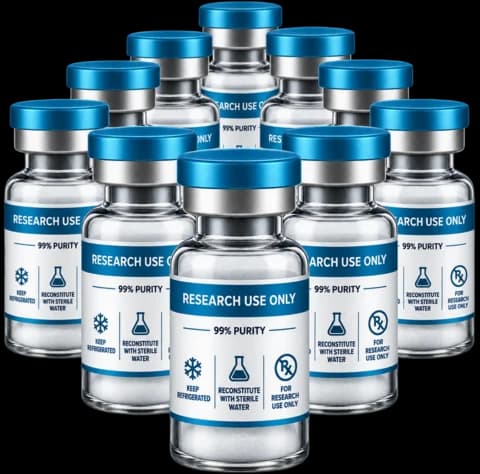
Peptides sold "for research purposes only" are legal to purchase in the US, but are not FDA-approved for human use outside of specific medical applications. Always consult a healthcare provider before use.

New to peptides?

Take our Peptide Match tool to find the best peptide for your goals. You can also read our Complete Guide to Peptides to learn the basics.
Scientific Sources

The following peer-reviewed studies and official resources provide additional scientific context for this peptide:

Epitalon Research Articles

Compare Epitalon to alternatives

Side-by-side mechanism, dose, half-life, and vendor pricing.

Open compare →

Disclosure: we may earn affiliate commission from qualifying purchases. Educational information only — not medical advice.