articlesJanuary 25, 2025โ€ขThe Peptide Catalog

What Are Peptides? The Complete 2026 Research Guide

What peptides are, how they work, and key categories: growth hormone, metabolic, healing, and cognitive peptides.

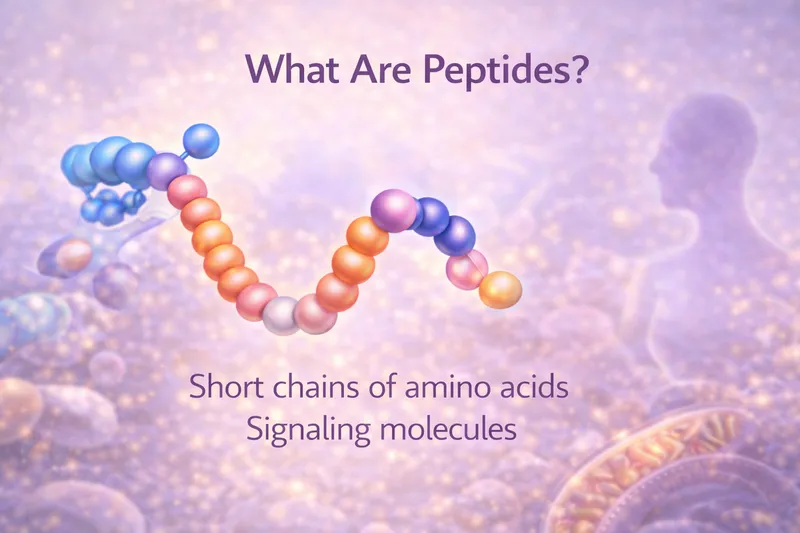
What are peptides - amino acid chains that act as biological messengers

Peptides are rapidly becoming one of the most discussed topics in the fields of performance science, longevity, metabolic research, and cellular repair. With hundreds of studies exploring their roles in biological signaling, peptides are attracting interest from researchers, athletes, and longevity enthusiasts alike.

This guide breaks down what peptides are, how they work in the body, and how different classes of peptides interact with specific biological pathways.


What Exactly Are Peptides?
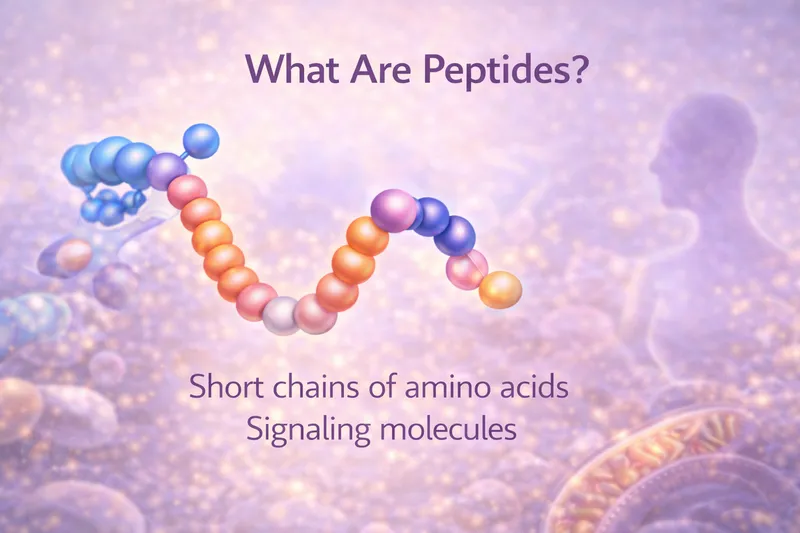
Peptides are short chains of amino acids, usually between 2โ€“50 units long. You can think of them as mini-proteins that act as messengers, telling cells what to do.

Peptides commonly influence:

Because of their targeted nature, peptides often affect specific tissues or receptors, making them an exciting area for research.


How Do Peptides Work in the Body?
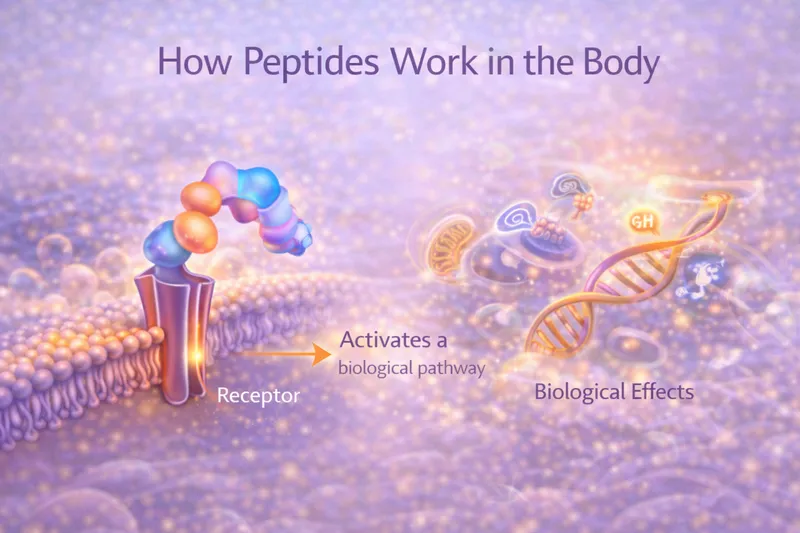
How peptides work - receptor-mediated signaling in the body

Peptides usually work through receptor-mediated signaling.

A peptide attaches to a receptor on a cell โ†’ This triggers a cascade of biological events โ†’ The targeted pathway becomes activated or inhibited.

Example Pathways:


Different Categories of Peptides

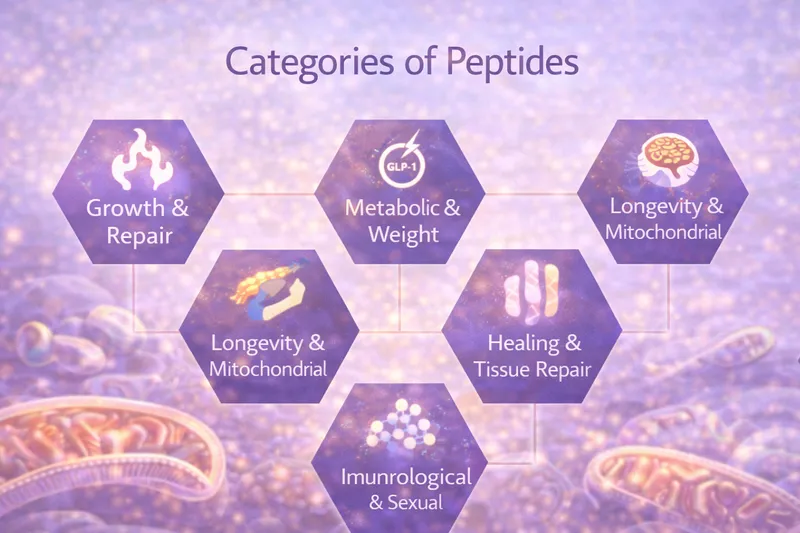
Categories of peptides - growth, metabolic, longevity, healing, immune, and more

Peptides fall into major classes based on their biological roles. Below are the categories and their key characteristics.

1. Growth & Repair Peptides

Often researched for:

Examples: CJC-1295, Sermorelin, Ipamorelin, IGF-1 LR3

๐Ÿ‘‰ Browse all Growth Peptides


2. Metabolic & Weight Management Peptides

Peptides studied for:

Examples: AOD-9604, Semaglutide, Tirzepatide, 5-Amino-1MQ, Tesofensine

๐Ÿ‘‰ Browse all Weight Loss Peptides


๐Ÿงช

Ready to Buy? Compare Prices

Best current prices from verified vendors with COA testing.

BPC-157

EZ Peptides ยท 10mg ยท $3.50/mgCOA โœ“

$35.00
Semaglutide

EZ Peptides ยท 10mg ยท $4.80/mgCOA โœ“

$48.00
CJC-1295

EZ Peptides ยท 5mg ยท $7.00/mgCOA โœ“

$35.00
๐Ÿ’ฐ

The Peptide Brief

Weekly price drops, new research, and vendor deals โ€” straight to your inbox.

No spam. Unsubscribe anytime.

3. Longevity & Mitochondrial Peptides

These peptides interact with:

Examples: NAD+, MOTS-c, SS-31, Humanin, Epitalon

๐Ÿ‘‰ Browse all Longevity Peptides


4. Healing & Tissue Repair Peptides

Commonly researched for:

Examples: BPC-157, TB-500

๐Ÿ‘‰ Browse all Healing Peptides


5. Immune Modulation Peptides

Interact with:

Examples: Thymosin Alpha-1, LL-37, KPV, Thymulin

๐Ÿ‘‰ Browse all Immune Peptides


6. Neurological & Cognitive Peptides

Known for influencing:

Examples: Semax, Selank

๐Ÿ‘‰ Browse all Cognitive Peptides


7. Sexual Function & Reproductive Peptides

These peptides influence:

Examples: PT-141, Oxytocin, Kisspeptin โ€” kisspeptin is the master upstream regulator of reproductive hormones and is being studied for IVF and fertility applications

๐Ÿ‘‰ Browse all Sexual Health Peptides


Why Peptides Are So Popular in 2025โ€“2026

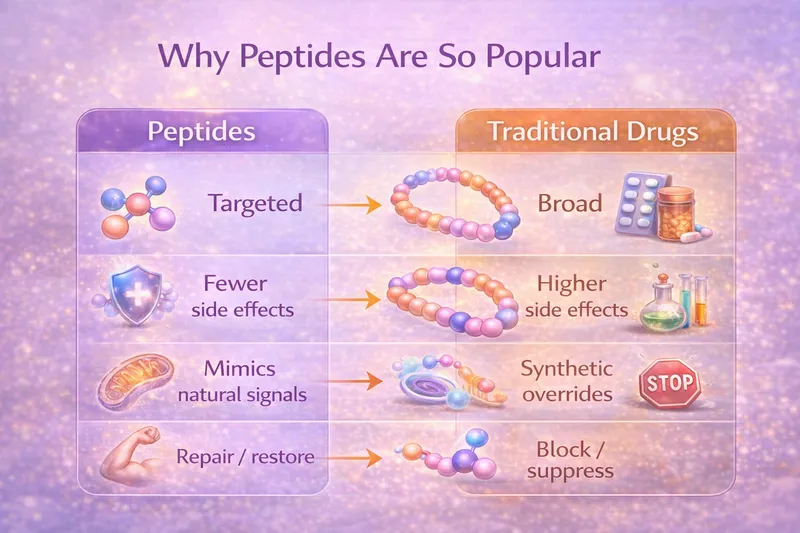
Why peptides are popular - targeted, specific actions with clear pathways

Because peptides target specific receptors, they offer:

Plus โ€” unlike small-molecule drugs โ€” peptides often mimic natural signals already present in the body.


Peptides vs Proteins vs Amino Acids

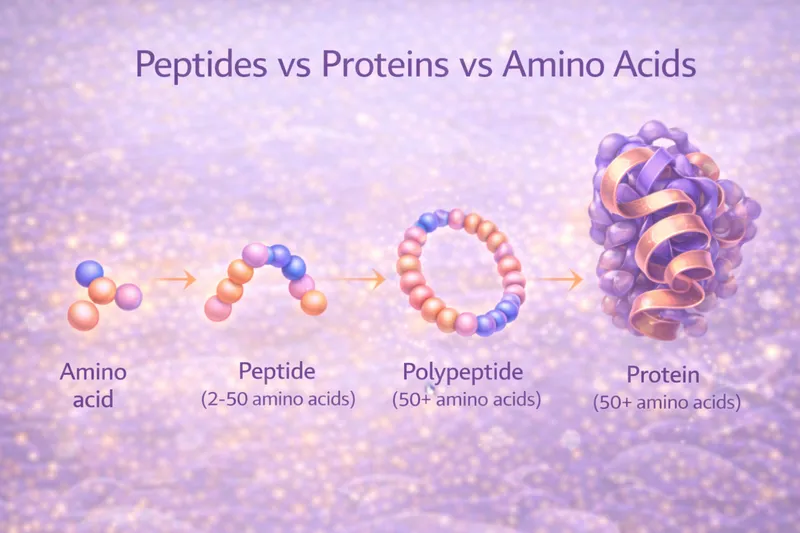
Peptides vs proteins vs amino acids - size comparison

MoleculeSizeFunctionExample
Amino acidsSmallest unitsBuilding blocksGlycine
Peptides2โ€“50 amino acidsSignaling moleculesSermorelin
Proteins50+ amino acidsStructural/enzymaticGrowth hormone

This simple distinction helps explain why peptides behave differently than full proteins.


Common Questions About Peptides

Frequently asked questions about peptides

Are peptides the same as proteins?

No โ€” peptides are shorter and act mainly as signaling molecules, while proteins are larger and often serve structural or enzymatic functions.

Are peptides naturally found in the body?

Yes. Many hormones and signaling molecules are peptides. Your body produces peptides constantly as part of normal biological function.

What makes each peptide different?

Their amino acid sequence, which determines which receptor they activate and what biological response they trigger.

Which peptides are used in metabolic research?

Semaglutide, Tirzepatide, AOD-9604, 5-Amino-1MQ, and Tesofensine are commonly studied for metabolic effects.

How many peptide categories exist?

The main categories include growth, metabolic/weight loss, immune, cognitive, sexual health, longevity, and healing peptides.

What peptides can I learn about?

Here's a complete list of peptides covered in our catalog:

Growth & Repair: CJC-1295, CJC-1295 DAC, Sermorelin, Tesamorelin, Ipamorelin, GHRP-2, GHRP-6, Hexarelin, MK-677, IGF-1 LR3

Weight Loss & Metabolic: Semaglutide, Tirzepatide, Liraglutide, Retatrutide, AOD-9604, 5-Amino-1MQ, Tesofensine

Healing & Tissue Repair: BPC-157, TB-500, Thymosin Beta-4, GHK-Cu, LL-37

Longevity & Mitochondrial: Epitalon, MOTS-c, SS-31, Humanin, NAD+

Immune Modulation: Thymosin Alpha-1, KPV, Thymulin

Cognitive & Neuro: Semax, Selank

Sexual Health & Hormones: PT-141, Oxytocin, Kisspeptin

Tanning: Melanotan-1, Melanotan-2

Hair Growth: PTD-DBM


Explore the Peptide Catalog

Ready to dive deeper? Our Peptide Catalog features clear diagrams, pathway explanations, and vendor comparison pages for 30+ peptides.

๐Ÿ‘‰ Browse All Peptides

Related Guides

This article is for educational and research purposes only. Consult a healthcare professional before making any decisions related to peptide use.