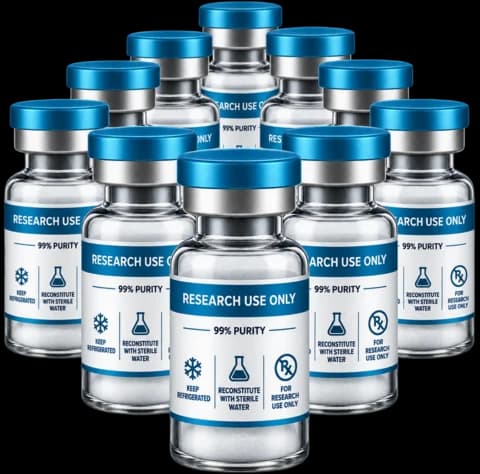
LL-37
An antimicrobial peptide for immune defense and wound healing. LL-37 is a human cathelicidin antimicrobial peptide that plays a role in innate immunity. Studied for its antimicrobial, immunomodulatory, and wound healing properties. Researched in contexts of infection, inflammation, and immune support.
Compare Prices🧬Key Characteristics
- Length: 37 amino acids(Derived from hCAP18.)
- Structure: α-helical(Amphipathic membrane-active.)
- Mechanism: Membrane disruption(Direct antimicrobial + immune modulation.)
- Primary Use: Immune support(Antimicrobial + wound healing.)
Overview
Core Benefits
Key AdvantagesThese are educational summaries of commonly discussed effects in wellness/regenerative contexts, not guarantees.
LL-37 Results Timeline
ProgressionTimeline is illustrative and non-guaranteed. Outcomes vary and are commonly discussed alongside training, nutrition, sleep, and cycling practices.
How It Works
Antimicrobial Peptide — Human CathelicidinTarget → Membrane Disruption → Immune Defense → Outcomes
Microbial Membranes + Immune Cell Recruitment
LL-37 is the only human cathelicidin — an endogenous antimicrobial peptide your body naturally produces. It directly disrupts bacterial, viral, and fungal membranes while simultaneously recruiting and activating immune cells.
Membrane Disruption + Chemokine Release + Biofilm Attack
LL-37 inserts into microbial membranes, creating pores that kill pathogens. It also triggers chemokine release to recruit immune cells, modulates inflammatory responses, and disrupts bacterial biofilms — protective structures that make infections resistant to antibiotics.
Broad-Spectrum Antimicrobial + Immune Modulation
Direct killing of bacteria, viruses, and fungi. Biofilm disruption makes resistant infections more vulnerable. Immune cell activation enhances the body's own defense response. Also promotes wound healing through angiogenesis stimulation.
Immune Support → Infection Resolution → Wound Healing
Often used during acute infections or for immune support protocols. May help resolve stubborn or biofilm-protected infections. Supports wound healing. Vitamin D increases natural LL-37 production — part of why vitamin D supports immune health.
What Makes This Peptide Different
LL-37 is the only human cathelicidin — your body already makes it. Unlike synthetic antimicrobials, it works through multiple mechanisms simultaneously (membrane disruption, biofilm attack, immune recruitment, wound healing). Its connection to vitamin D is notable — vitamin D upregulates LL-37 expression, which is part of vitamin D's immune-supporting mechanism.
Dosing Protocol
Immunity / AntimicrobialEducational reference only. Individual responses vary. Consult healthcare provider before use.
Why This Dosing Protocol
Why 50 days straight? Antimicrobial protocols require sustained levels to fully resolve infections, especially biofilm-protected ones. The extended daily dosing ensures consistent antimicrobial pressure.
Why 4 weeks off after? Allows the immune system to recalibrate after the intensive antimicrobial protocol. LL-37 modulates immune responses — cycling prevents potential immune overactivation.
Diagrams
Hover for preview • Click to open full sizeLL-37 Pricing
We surface in-stock offers first and normalize by price per mg for quick comparisons.
Looking for medical guidance?
Join the waitlist for doctor-guided peptide plans. We'll notify you when telehealth consultations are available in your state.
Reconstitution calculator
Dilution math and unit conversions. Prefilled using a common vial size for this peptide.
Open calculatorEducational Videos
How to Reconstitute Peptides
Handling
Educational overview on storage, labeling, and traceability considerations for lab environments. Consult primary literature and vendor documentation for specifics.
- Freezer (-20°C): 1+ year ✓
- Refrigerator (2-8°C): 1-3 months ✓
- Room temperature: 2-3 weeks (emergency only)
- MUST refrigerate at 2-8°C
- 4-week maximum shelf life
- NEVER freeze after reconstitution
- Use bacteriostatic water for multi-dose
Storage & Handling Guide
Learn proper storage temperatures, shelf life timelines, reconstitution best practices, and travel tips for lyophilized and reconstituted peptides.
FAQ
What is LL-37?
LL-37 is the only human cathelicidin antimicrobial peptide, a 37-amino acid peptide that plays a crucial role in innate immunity. It has broad-spectrum antimicrobial activity against bacteria, viruses, and fungi, plus immunomodulatory properties. Produced naturally by immune cells, skin, and mucosal tissues.
How does LL-37 kill pathogens?
LL-37 kills microbes primarily by disrupting their cell membranes. Its positive charge attracts it to negatively charged bacterial membranes, where it inserts and creates pores, causing cell death. It also neutralizes bacterial toxins (like LPS) and can disrupt viral envelopes. Human cells are protected because their membranes have a different composition.
What is LL-37's anti-biofilm activity?
Biofilms are protective structures bacteria create that make them resistant to antibiotics. LL-37 can penetrate and disrupt biofilms, making the bacteria vulnerable again. This is particularly relevant for chronic infections like those in wounds, implants, or the lungs in cystic fibrosis patients.
What is the connection between Vitamin D and LL-37?
Vitamin D directly upregulates LL-37 production — this is a major mechanism behind vitamin D's immune benefits. When vitamin D binds its receptor, it activates the gene for LL-37. This explains why vitamin D deficiency is linked to increased infection susceptibility. Sun exposure and vitamin D supplementation both increase LL-37 levels.
What conditions is LL-37 being researched for?
Research areas include chronic wounds, diabetic ulcers, bacterial infections (including antibiotic-resistant strains), viral infections, cystic fibrosis lung infections, periodontal disease, and as a potential cancer therapy due to effects on tumor cells. It's also studied for inflammatory conditions due to its immune-modulating properties.
What are the side effects of LL-37?
As a naturally occurring human peptide, LL-37 is generally well-tolerated. Potential side effects may include injection site reactions (pain, redness) and rarely mild flu-like symptoms. High concentrations can be cytotoxic, so proper dosing is important. Most research uses low doses that are well-tolerated.
How long does reconstituted peptide last?
Once mixed with bacteriostatic water, peptides remain stable for up to 4 weeks when refrigerated at 2-8°C (36-46°F). Unopened powder can last 1+ year in the freezer. Get our complete Storage & Travel Guide.
Is this peptide legal to purchase?
Peptides sold "for research purposes only" are legal to purchase in the US, but are not FDA-approved for human use outside of specific medical applications. Always consult a healthcare provider before use.
New to peptides?
Take our Peptide Match tool to find the best peptide for your goals. You can also read our Complete Guide to Peptides to learn the basics.
Scientific Sources
The following peer-reviewed studies and official resources provide additional scientific context for this peptide:
Disclosure: we may earn affiliate commission from qualifying purchases. Educational information only — not medical advice.