side-effectsMay 11, 2026·4 min read

CJC-1295 DAC Side Effects: Sustained GH Risks

Albumin binding extends half-life to 5-8 days. Water retention, hand tingling, and IGF-1 elevation cluster. Full breakdown.

CJC-1295 DAC side effects from trial and community data

CJC-1295 DAC is the drug-affinity-complex-modified version of the GHRH analog CJC-1295. The DAC moiety covalently binds endogenous albumin in plasma, extending the molecule's half-life from minutes (non-DAC) to 5-8 days (Teichman et al., PMID 16352683; Jetté et al., PMID 15817669). The pharmacologic consequence is sustained GH and IGF-1 elevation rather than the pulsatile pattern of unmodified GHRH analogs.

Research-context information only. CJC-1295 DAC is a research peptide. Protocols, doses, and reactions reported below come from published research and self-reported community sources. This article reports what has been documented, not what should be done. Consult a licensed physician for personal medical decisions.

The clinical and community implication: convenience of less-frequent dosing in exchange for greater cumulative GH/IGF-1 exposure, which maps to a different adverse-event profile.

Trial-Reported Adverse Events for the DAC Version

From Phase 1/2 trials of CJC-1295 DAC (Teichman et al., PMID 16352683):

Event Frequency in active arm Source
Injection-site erythema ~15% PMID 16352683
Facial flushing post-injection ~10% PMID 16352683
Headache 5-10% PMID 16352683
IGF-1 elevation 1.5-3x baseline sustained 5-8 days Pharmacologic PMID 16352683
Serious adverse events None at studied doses PMID 16352683

The trial cohort was adult volunteers across 28-49 day protocols. The published trials were not designed to detect rare adverse events.

Top CJC-1295 with DAC Vendors

Ranked by price, COA availability, and reputation

1
Nura PeptidePREMIUMCOA
10/10
5mg$13.40/mg
2
Ion PeptideCOA
9.7/10
5mg$11.80/mg
3
Glacier AminosCOA
9.3/10
5mg$10.40/mg

Self-Reported Community Adverse Events

Note on labeling: the events below come from r/peptides, r/PeptideTherapy, and peptide forums for subcutaneous CJC-1295 DAC use.

Hand tingling and "fluid feel" hands

The most consistent community feedback that distinguishes DAC from non-DAC. Self-reported community sources describe hand tingling, numbness, and a swollen-feel pattern in the hands during the first 2-4 weeks of use. The pattern is dose-dependent. Community sources commonly describe dose reduction or transitioning to non-DAC CJC-1295 to resolve it.

Facial and lower-extremity fluid retention

Community reports cluster around mild fluid retention — particularly the face appearing "puffy" and ankles feeling tighter in shoes — during the first 2-4 weeks. The pattern resolves with dose reduction.

Injection-site reactions

The most consistent community feedback shared with non-DAC. Mild redness, itching, or a small welt at the subcutaneous injection site.

Vivid dreams or disrupted sleep

Self-reported community timelines describe vivid dreams or restless sleep in the first 1-2 weeks. The pattern is more frequently reported with DAC than non-DAC, attributed by community sources to sustained nighttime GH elevation.

Joint stiffness or achiness

Community sources describe mild joint stiffness in some users during the first 2-4 weeks, attributed to fluid-retention effects on joint capsules.

Less Commonly Reported Events

These appear sparsely in community data.

  • Morning glucose elevation — sparse reports of transient morning glucose increase, consistent with the GH-axis effect on insulin sensitivity.
  • Headache at higher doses — community sources describe dose-splitting to resolve.
  • Bloating — uncommon; attributed by community sources to fluid retention.
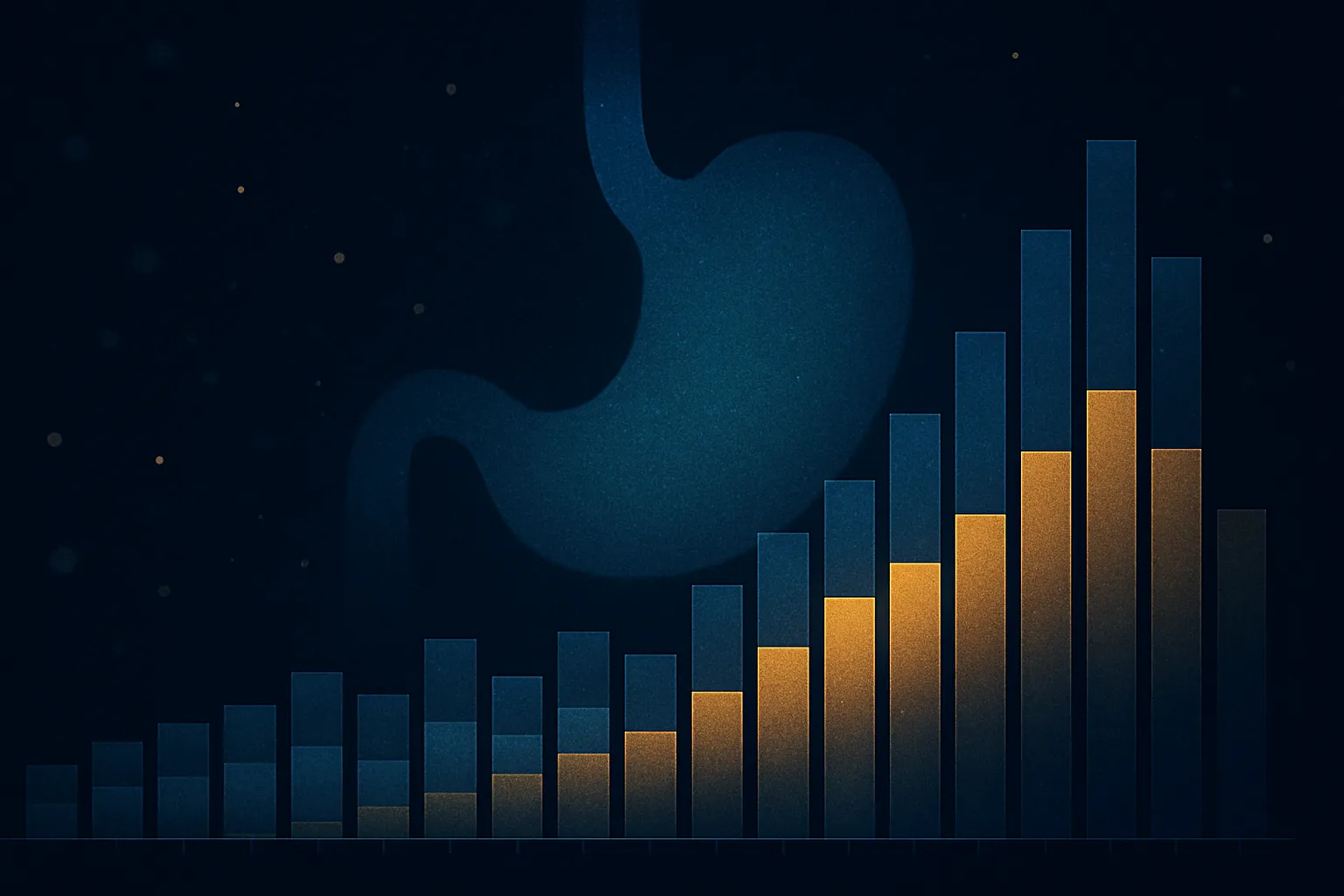
CJC-1295 DAC vs non-DAC event pattern chart

IGF-1 Monitoring Patterns

CJC-1295 DAC's sustained IGF-1 elevation makes monitoring more practical (steady-state levels rather than chasing pulses). Community sources commonly describe IGF-1 measurement at baseline, 4-6 weeks (steady-state), and 12-16 weeks. Self-reported community sources describe dose reduction when IGF-1 exceeds the lab's upper reference range, often by switching to less-frequent dosing rather than reducing per-injection amount.

Dose-Response Patterns

Phase 1/2 dose-finding work tested CJC-1295 DAC at single doses ranging from 30-250 mcg/kg (PMID 16352683). Dose-proportional GH and IGF-1 elevation was observed across that range. Community-reported research-peptide doses cluster around 1-2 mg per injection, 1-2x weekly.

Self-reported community sources describe water-retention symptoms and hand tingling scaling clearly with per-injection dose and with dosing frequency.

30ml bacteriostatic water vial — 0.9% benzyl alcohol multi-dose
Bac Water Made for Peptides
Don't risk a $300 peptide on generic bac water.
Most cloudy reconstitutions trace back to one thing — and it isn't the peptide. Sterile, non-pyrogenic, 0.9% benzyl alcohol — formulated for peptide reconstitution, not repackaged from generic stock.
0.9% benzyl alcohol Made for peptides 30 mL multi-dose
See why our bac water doesn't ruin peptides
30ml from $18.75 · Ships fast · Code thepeptidecatalog

Dose-Pause and Discontinuation Patterns

Trial protocols allowed dose-interruption for protocol-defined adverse events. Community sources describe three patterns. Dose reduction — halving the per-injection mass when fluid retention is intrusive. Less-frequent dosing — moving from twice-weekly to once-weekly. Transitioning to non-DAC — switching to short-acting CJC-1295 when DAC-attributable patterns don't resolve.

Permanent discontinuation is uncommon. The most-cited reasons: hand-tingling persists despite dose reduction, IGF-1 elevation doesn't normalize at lower doses, or sleep disruption is intolerable.
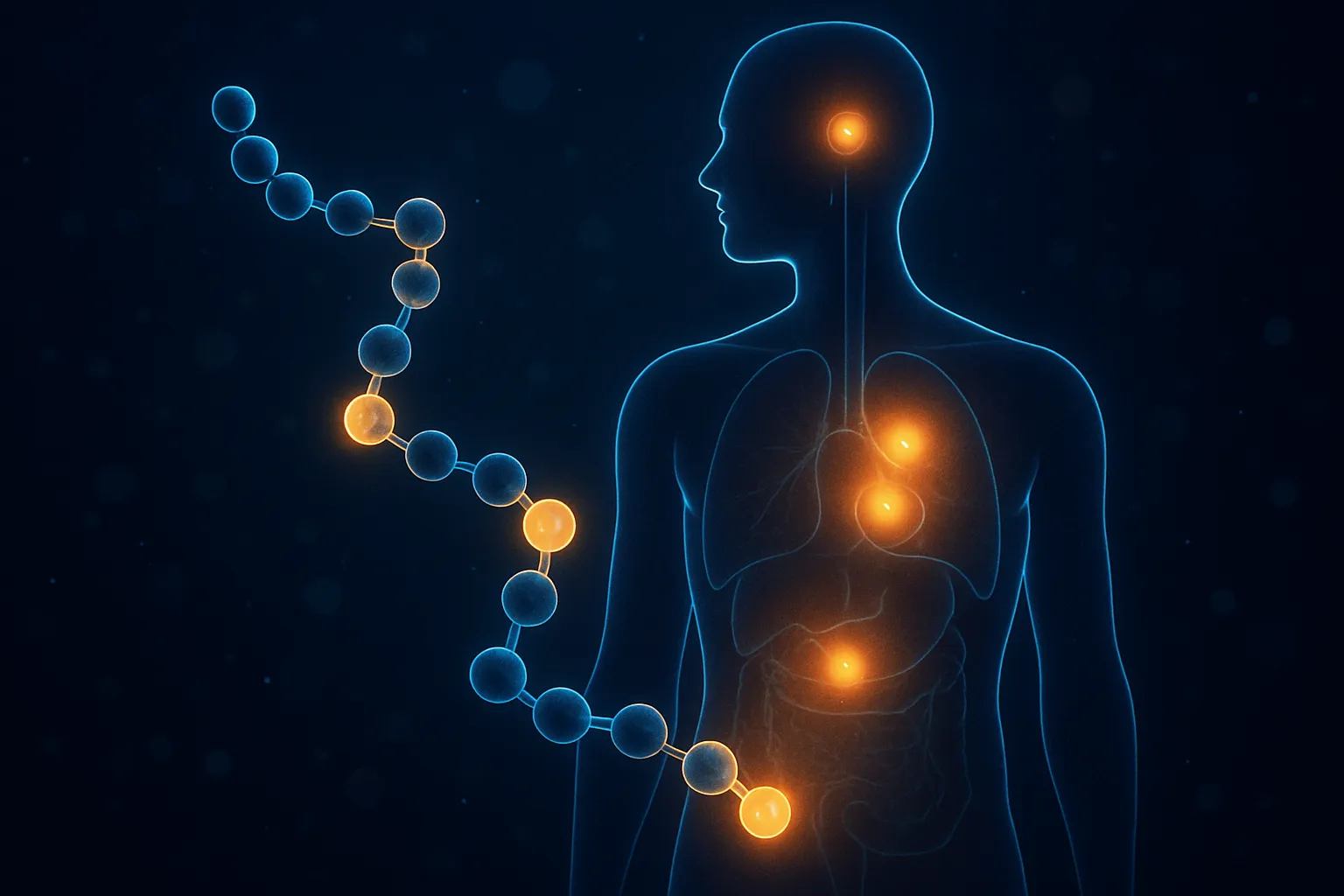

CJC-1295 DAC pharmacokinetic curve diagram

Frequently Asked Questions

What's different about CJC-1295 DAC vs the non-DAC version?
The DAC (drug affinity complex) modification covalently binds endogenous albumin, extending the molecule's half-life to 5-8 days versus minutes for the non-DAC form (Teichman et al., PMID 16352683). This produces sustained GH and IGF-1 elevation rather than pulsatile.
What side effects do users self-report with CJC-1295 DAC?
Self-reported community data clusters around hand tingling, mild facial fluid retention, and vivid dreams or sleep disruption during the first 2-4 weeks. Injection-site reactions and brief flushing also feature. The pattern is more pronounced than non-DAC CJC-1295 in community reports.
Why does DAC cause more water retention?
The sustained GH elevation across 5-8 days produces more cumulative GH/IGF-1 exposure than pulsatile non-DAC dosing. GH-induced fluid retention is well-documented in the GH-replacement literature; the same pharmacology applies here.
Does CJC-1295 DAC cause carpal tunnel symptoms?
Self-reported community timelines describe hand tingling and numbness consistent with median-nerve compression — a documented GH-pharmacology effect. Community sources commonly describe dose reduction or transitioning to non-DAC CJC-1295 to resolve this. Trial data on the DAC version specifically did not characterize carpal-tunnel-pattern symptoms in detail.
Is once-weekly DAC dosing safer than daily non-DAC?
Published trials did not directly compare equipotent dosing. Community sources describe DAC's once-weekly convenience as a benefit but flag the sustained exposure as the source of more pronounced water-retention and hand-tingling reports.

References

Citation Topic PMID
Teichman et al., J Clin Endocrinol Metab (2006) CJC-1295 DAC sustained GH/IGF-1 elevation, Phase 1/2 16352683
Jetté et al., Endocrinology (2005) DAC technology, GRF analog half-life extension 15817669
Ionescu & Frohman, J Clin Endocrinol Metab (2006) Sustained GHRH receptor effect via CJC-1295 DAC 16822960

For educational and research purposes only. This is not medical advice. CJC-1295 DAC is not FDA-approved for any indication. Consult a healthcare provider before use.