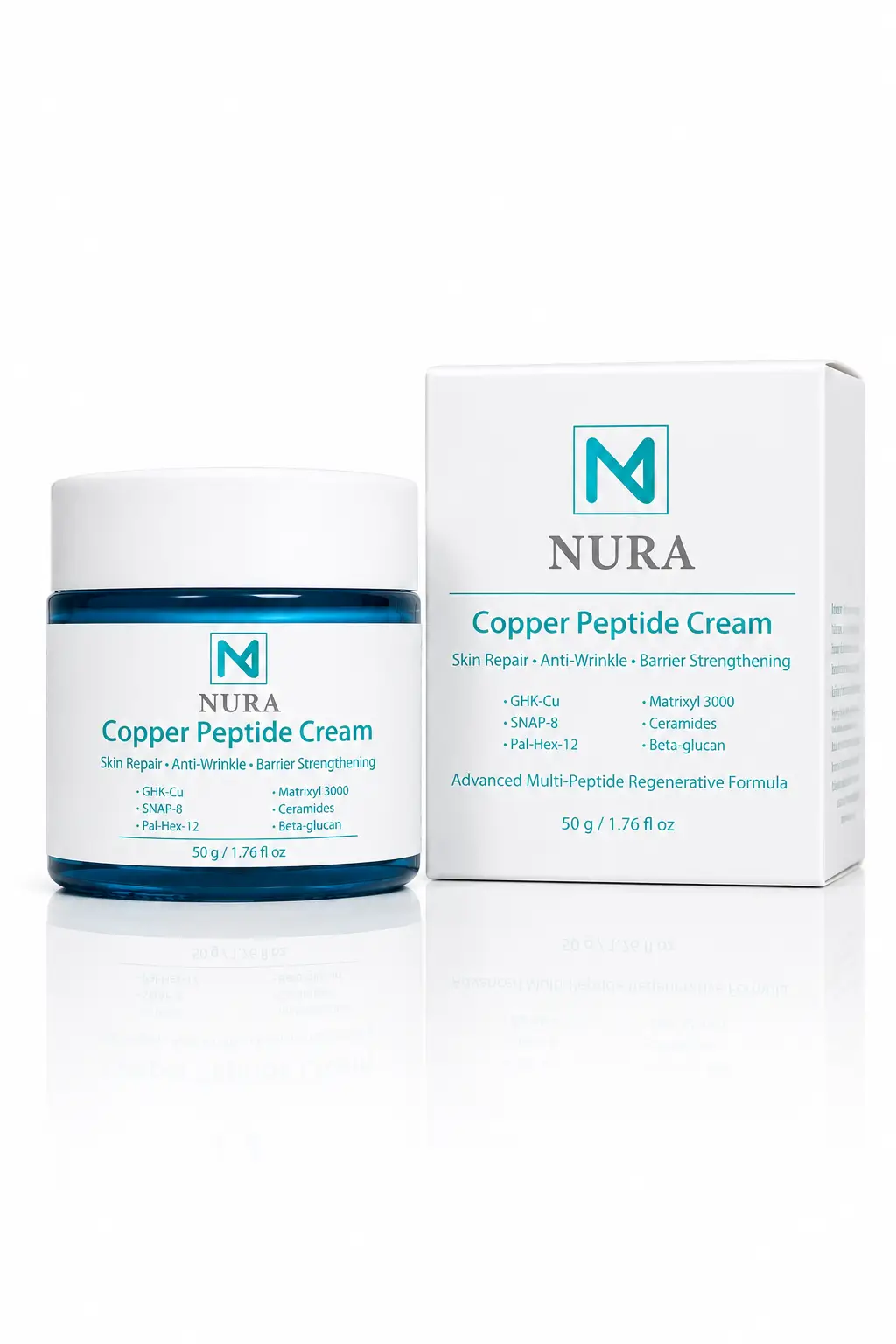
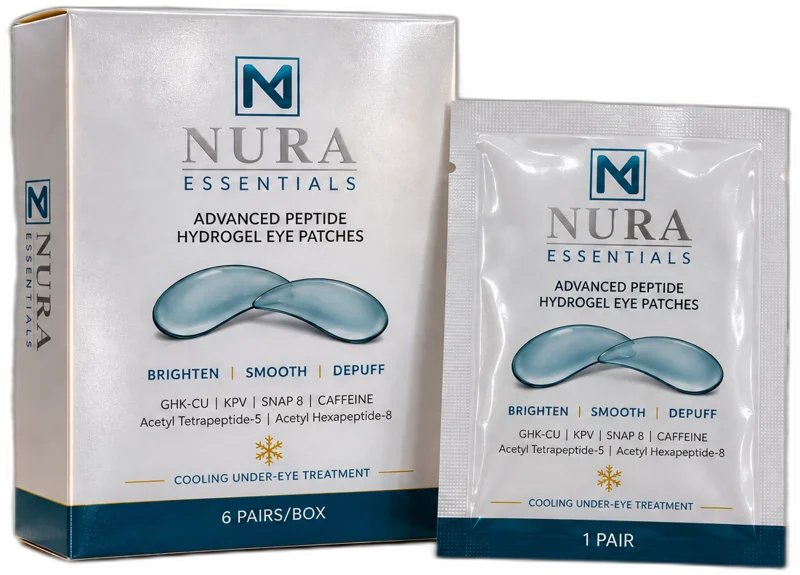
GHK-Cu (glycyl-L-histidyl-L-lysine copper complex) occupies a rare position among research peptides: it has been commercially available in both topical and injectable formats for years, with each route backed by fundamentally different bodies of evidence. The topical form draws on decades of clinical data in human skin studies. The injectable form relies almost entirely on animal models and community-reported protocols with no published human trials.
That evidence gap makes the delivery method choice more consequential than for most peptides. Topical GHK-Cu has been studied in controlled human trials for wrinkle reduction, collagen synthesis, and post-procedure healing. Injectable GHK-Cu has demonstrated systemic effects in animal models -- lung fibrosis protection, connective tissue remodeling, neuroprotection -- but translating those findings to human subcutaneous injection protocols remains speculative. The bioavailability difference between the two routes compounds the distinction: topical application creates a localized skin depot, while injection delivers the peptide systemically at concentrations impossible to achieve through the skin barrier.
Research-context information only. GHK-Cu is a research peptide. Protocols, doses, and reactions reported below come from published research and self-reported community sources. This article reports what has been documented, not what should be done. Consult a licensed physician for personal medical decisions.
Quick Comparison Table
| Factor | Topical GHK-Cu | Injectable GHK-Cu |
|---|---|---|
| Evidence level | Human clinical trials (decades) | Animal models + community reports |
| Bioavailability | Localized skin depot; minimal systemic | Full systemic distribution |
| Primary use cases | Skin aging, wrinkles, post-procedure healing, hair | Systemic tissue repair, lung protection, joint support |
| Dose range | 0.01-1% concentration in serums/creams | Community-reported: 1-2 mg/day subcutaneous |
| Duration | Ongoing daily application | Community-reported: 8-12 week cycles |
| Convenience | High -- no reconstitution, no injection | Low -- requires reconstitution, subcutaneous injection |
| Monthly cost | Priced per finished product (serum/cream); no supplies needed | Priced per vial plus reconstitution supplies; live vendor offers below |
| Regulatory status | Sold in commercial cosmetic products | Research peptide, not for human use |
How Topical GHK-Cu Works
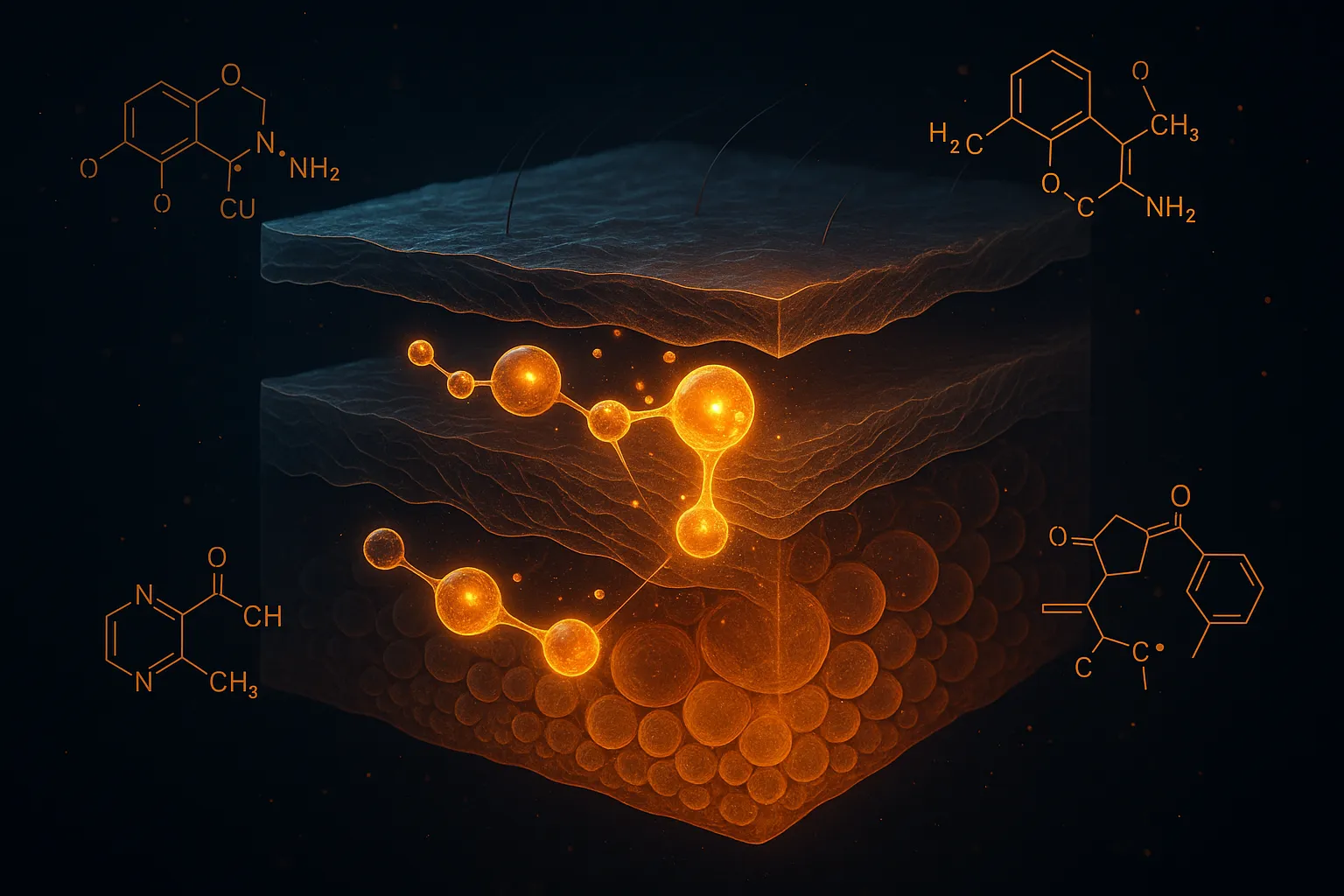
Topical GHK-Cu operates through a well-characterized mechanism: the tripeptide-copper complex penetrates the outer skin layers and accumulates as a depot in the epidermis and upper dermis, where it exerts localized effects on fibroblasts, keratinocytes, and extracellular matrix components.
Skin Penetration and Depot Formation
An ex vivo human skin penetration study measured a permeability coefficient of 2.43 x 10^-4 cm/h for copper tripeptide, with 82 micrograms per square centimeter retained in dermal tissue as a depot over 48 hours (PMID 20703511). This depot effect concentrates the peptide where it matters most for skin-related outcomes -- but it also means very little reaches systemic circulation.
Clinical Evidence in Humans
The topical evidence base is unusually robust for a research peptide:
- Facial aging study (71 women, 12 weeks): A GHK-Cu facial cream documented increased skin density and thickness, reduced laxity, improved clarity, and reduced fine lines and depth of wrinkles (as summarized in Pickart et al., 2015, PMID 26236730).
- Eye cream study (41 women, 12 weeks): GHK-Cu eye cream outperformed both placebo and vitamin K cream for reducing wrinkles and increasing skin density around the eyes (Pickart et al., 2015, PMID 26236730).
- Collagen comparison (thigh skin, 12 weeks): GHK-Cu improved collagen production in 70% of treated subjects, compared to 50% for vitamin C cream and 40% for retinoic acid (Pickart et al., 2015, PMID 26236730).
- Post-laser healing (13 patients): Topical copper tripeptide complex applied after CO2 laser resurfacing produced no significant difference in erythema resolution or objective wrinkle scores versus the control regimen, though patient-rated overall skin quality was significantly higher in the GHK-Cu group (Miller et al., 2006, PMID 16847171).
- Collagen synthesis (in vitro): The tripeptide-copper complex stimulated fibroblast collagen synthesis at concentrations as low as 10^-9 M (PMID 3169264).
These findings represent the strongest evidence base for GHK-Cu in any format -- multiple controlled human studies with measurable outcomes.
What Topical Does Well
Published research documents topical GHK-Cu's effects in three primary areas:
- Wrinkle and fine-line reduction -- consistently documented across multiple facial and eye-area studies
- Collagen and extracellular matrix stimulation -- increased synthesis of collagen, elastin, glycosaminoglycans, and decorin in treated skin
- Post-procedure recovery -- higher patient-rated skin quality after CO2 laser resurfacing, though objective erythema and wrinkle measures did not differ from control
The limitation is equally clear: topical delivery confines the peptide's activity to the skin. Systemic effects documented in animal studies -- lung tissue protection, neurological effects, joint healing -- are not achievable through topical application.
How Injectable GHK-Cu Works
Injectable GHK-Cu bypasses the skin barrier entirely, delivering the peptide into systemic circulation where it distributes throughout the body. This is the route used in every animal study demonstrating GHK-Cu's effects beyond the skin.
Systemic Distribution
Subcutaneous injection delivers the full dose into circulation. GHK naturally occurs in human plasma at approximately 200 ng/mL in young adults, declining significantly with age (Pickart & Margolina, 2018, PMID 29986520). Injectable protocols effectively aim to restore or exceed youthful plasma concentrations -- a goal impossible through topical application.
Animal Model Evidence
The systemic evidence base is entirely preclinical:
- Pulmonary fibrosis (mouse model): Intraperitoneal GHK-Cu at 0.2-20 micrograms/g on alternate days protected against bleomycin-induced lung fibrosis by inhibiting TGF-beta1/Smad signaling and reducing oxidative stress (Ma et al., 2020, PMID 31809714).
- Emphysema (mouse model): Intraperitoneal GHK-Cu attenuated cigarette-smoke-induced emphysema and reduced inflammatory cytokines (Zhang et al., 2022, PMID 35936787).
- ACL reconstruction (rat model): Weekly intra-articular GHK-Cu injections at 0.3-3 mg/mL transiently improved knee laxity outcomes at 6 weeks post-surgery, though improvements were not sustained at 12 weeks (Fu et al., 2015, PMID 25731775).
- Gene expression: GHK-Cu has been documented to up- or downregulate over 4,000 human genes in cell-culture models, affecting pathways related to inflammation, tissue repair, and antioxidant defense (Pickart & Margolina, 2018, PMID 29986520).
What Injectable Lacks
The critical gap: no published human clinical trial has evaluated injectable GHK-Cu for any indication. Every systemic finding comes from animal models or cell culture. Community protocols describing subcutaneous injection at 1-2 mg/day are self-reported and undocumented in peer-reviewed literature.
This does not mean injectable GHK-Cu is ineffective in humans -- it means the evidence does not yet exist to confirm or quantify its effects. The distinction matters.
Evidence Comparison by Route
| Evidence Type | Topical | Injectable |
|---|---|---|
| Human clinical trials | Multiple (skin aging, post-laser, collagen) | None |
| Human observational data | Decades of cosmetic product use | Community self-reports only |
| Animal studies | Wound healing models | Lung fibrosis, emphysema, ACL repair, neuroprotection |
| In vitro / cell culture | Collagen synthesis, fibroblast activation | Gene expression (4,000+ genes), anti-inflammatory |
| Mechanism clarity | High -- well-characterized skin depot effect | Moderate -- systemic pathways mapped in animal models |
| Dose-response data | Established in human studies | Established in animal models only |
The bottom line: topical GHK-Cu has human-grade evidence for skin outcomes. Injectable GHK-Cu has promising preclinical evidence for systemic outcomes, with community adoption running ahead of published clinical validation.
Use Cases: When Each Route Fits
Topical GHK-Cu -- Localized Skin and Hair Goals
The evidence supports topical use for:
- Facial aging and wrinkle reduction -- the most clinically validated use case, with multiple controlled studies
- Post-procedure recovery -- higher patient-rated satisfaction after CO2 laser resurfacing (objective healing measures did not differ from control)
- Hair and scalp health -- community reports describe topical application to the scalp, though controlled hair-specific studies are limited
- General skin quality -- increased density, thickness, elasticity, and collagen documented in clinical studies
Common audience: users primarily targeting cosmetic skin outcomes with the strongest available evidence base and the simplest application method.
Injectable GHK-Cu -- Systemic Goals
Community-reported use cases for injectable GHK-Cu include:
- Systemic tissue repair -- community protocols describe subcutaneous injection for generalized healing support, particularly post-injury
- Joint and connective tissue -- animal models document connective-tissue effects; community sources report joint-related protocols
- Lung health -- mouse models demonstrated protection against fibrosis and emphysema, driving community interest
- Anti-aging / longevity -- the gene-expression data showing modulation of 4,000+ genes has generated significant community interest in systemic anti-aging protocols
Common audience: users pursuing systemic effects beyond what topical delivery can achieve, who accept the lower evidence threshold of animal data and community reports.
Both Routes Simultaneously
Community sources commonly describe running topical and injectable GHK-Cu concurrently -- topical for skin-specific goals and injectable for systemic distribution. Published research has not evaluated this dual-route approach, but the different distribution profiles suggest the routes are complementary rather than redundant.