Affiliate disclosure: This guide names and links to products from vendors we have affiliate relationships with — we may earn a commission at no extra cost to you. Prices are set by the vendor and may change.
The Three Categories of Peptide Skincare
Most products on the market fall into one of three buckets. Each has a different evidence base, a different mechanism, and a different best-fit concern.

1. Copper Peptides (GHK-Cu) — the collagen and remodeling category
GHK-Cu (glycyl-L-histidyl-L-lysine copper complex) is a naturally occurring tripeptide found in human plasma, and it carries the deepest research record of the three categories. Published research describes plasma GHK levels declining with age, and decades of laboratory work describe the copper complex stimulating collagen synthesis in fibroblast cultures at very low concentrations (Maquart et al., 1988). A 2015 review described GHK as a modulator of skin-regeneration pathways, reporting effects on genes tied to collagen production, antioxidant defense, and tissue remodeling (Pickart et al., 2015).
What it targets: firmness, fine lines, skin texture, and barrier/wound-healing support. In appearance terms, copper-peptide formulations are most associated with skin that looks firmer and more even over time.
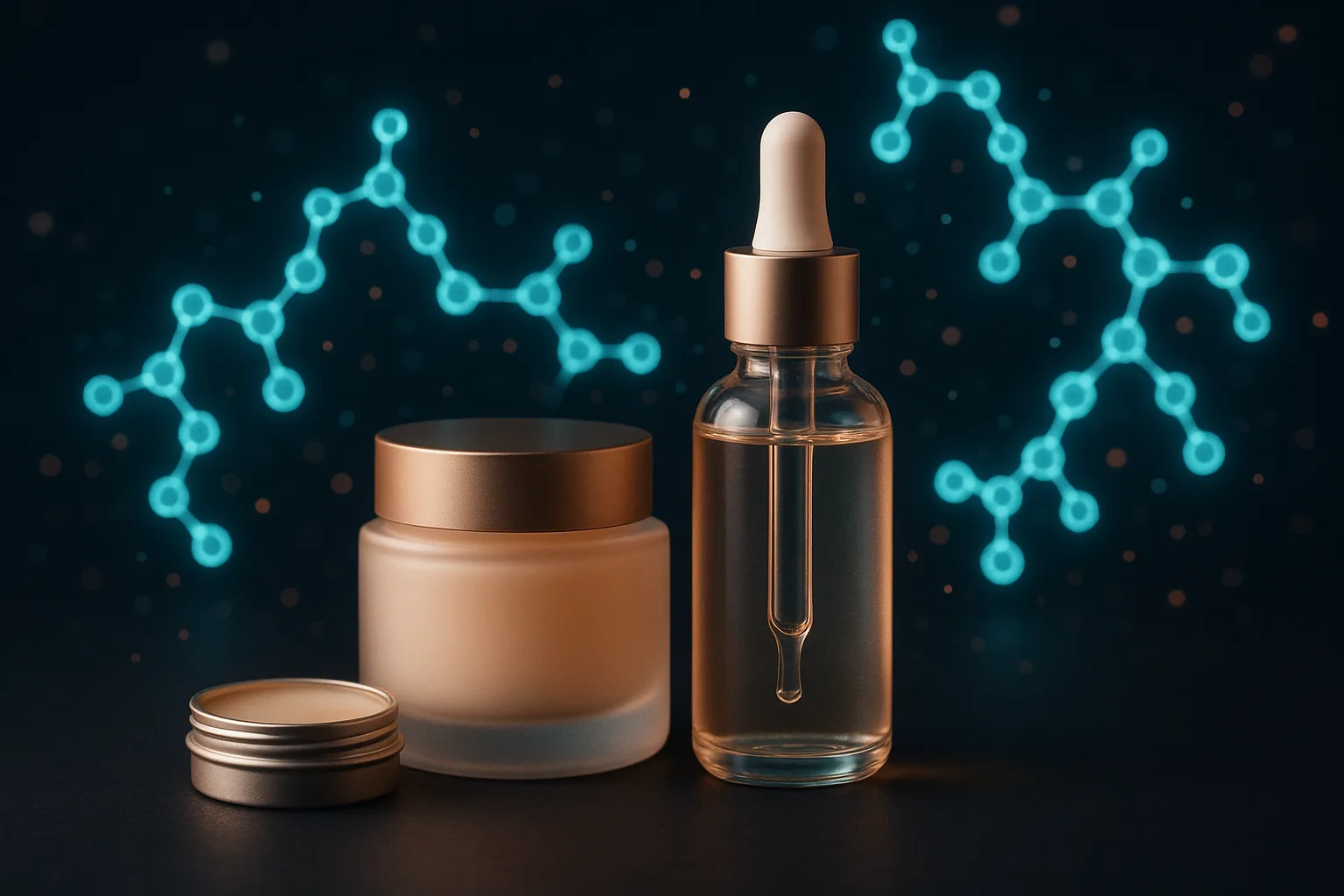
Copper peptides come as serums, creams, and lipid-rich balms. Concentration and formula stability matter — copper peptides can be sensitive to certain co-ingredients, which is why dedicated copper-peptide products tend to keep their ingredient lists focused. Community reports cluster around gradual texture and firmness changes described over 4 to 8 weeks of consistent evening use.
2. Exosomes and Growth Factors — the cell-signaling category
Exosome serums are the newest category. Exosomes are tiny membrane-bound vesicles that cells release to communicate — they carry proteins, lipids, and genetic signaling cargo. In topical skincare, they're typically sourced from platelet or stem-cell material and paired with growth factors like EGF (epidermal growth factor). The premise is that applying these signaling vesicles to the skin surface supports the skin's own repair and renewal signaling.
What it targets: tone, texture, post-procedure recovery, and overall radiance. Many exosome serums also include supporting cosmetic actives — niacinamide, tranexamic acid, alpha arbutin — aimed at evening out tone.
The evidence here is earlier-stage than for copper peptides, but it's growing. A 2024 exploratory trial reported that a topical platelet-exosome preparation reduced senescence signaling in human skin after 12 weeks of twice-daily use, with the largest responses in subjects who started with a higher senescent-cell burden (Wyles et al., 2024).
Important regulatory note: the FDA has not approved any exosome product for topical or cosmetic use, and has issued public safety communications about unapproved exosome products marketed with regenerative claims. Topical exosome serums are sold as cosmetics, and the human data remains early. Readers weighing an exosome serum should factor that regulatory status in.
The third category is the broad family of synthetic signal peptides that anchor many mainstream "peptide creams." The two most common are palmitoyl pentapeptide-4 (sold under the ingredient name Matrixyl) and acetyl hexapeptide-8 (often labeled Argireline).
Palmitoyl pentapeptide-4 is a lipidated fragment that mimics a piece of collagen, and published cosmetic-literature studies have reported improvement in the appearance of photoaged facial skin over roughly 8 to 12 weeks of use. Acetyl hexapeptide-8 is marketed as a "relaxing" peptide; a 2025 review of its cosmetic literature reported documented effects on the appearance of wrinkle depth and skin elasticity, while also noting that its size and water-loving structure limit how well it penetrates the skin barrier (Zdrada-Nowak et al., 2025).
What it targets: the look of fine lines and expression lines. Signal peptides are the most common peptide ingredient in drugstore and prestige creams, and they're often blended together (and with copper peptides) in finished formulas — for example, a copper-peptide cream that also carries SNAP-8, or an exosome serum built around acetyl hexapeptide-8 and Matrixyl 3000.
How the Categories Differ at a Glance
The three categories are complementary, not competing. Here's the practical breakdown:
- Copper peptides — deepest research record, single defined molecule, best associated with firmness and texture. The category most users start with.
- Exosome serums — newest and least regulated, mixed signaling payload, best associated with tone and post-procedure radiance. The category to approach with the FDA caveat in mind.
- Signal peptides — the workhorse ingredients inside most finished creams, best associated with the appearance of fine lines. Often already blended into copper-peptide and exosome products.
Because the mechanisms don't overlap, community routines commonly use more than one category — most often a copper-peptide product paired with an exosome or growth-factor serum.
Building a Simple Peptide Skincare Routine
A peptide routine doesn't need to be complicated. The pattern community sources most commonly describe layers a few well-chosen products rather than stacking everything:
- Evening copper peptide. A copper-peptide cream, serum, or balm applied to clean skin is the most common anchor. Copper peptides are often kept away from direct acids (strong vitamin C, high-strength AHAs) in the same application, since some formulators note potential ingredient interactions.
- Exosome or growth-factor serum. Layered after cleansing or used on alternating evenings. Several users describe pairing it with copper peptides on different nights rather than mixing both into one routine step.
- Moisturizer and daytime SPF. The foundational base under any active routine. Published photoaging research broadly supports broad-spectrum SPF in the morning as the highest-leverage daily step for the appearance of aging skin over time.
For readers also using retinol, community routines commonly alternate retinol and copper peptides across the week rather than layering both at once, since both are actives and combining them can raise irritation for sensitive skin. Patch-testing any new combination first is the standard cautious approach described in community sources.
What to Buy
For readers ready to choose a product, three options span the range from budget entry point to a paired copper-plus-exosome routine.
The bundle pairs a copper-peptide cream with an exosome serum, which covers two categories in one purchase and typically costs less than buying each separately. The standalone exosome serum suits readers who already own a copper-peptide product and want to add the cell-signaling layer. The copper-peptide balm is the lowest-barrier entry — a single COA-tested product around the $35 range, drawing on the category with the deepest research backing.