Mazdutide and tirzepatide are both once-weekly injected dual agonists built on a GLP-1 backbone, and both pair that backbone with a second receptor. The second receptor is where they diverge: mazdutide adds the glucagon (GCG) receptor, tirzepatide adds GIP. That single difference is the whole substance of the comparison, and it is the question Google's own "people also ask" box puts first for mazdutide.
One thing has to be said before any number below, because it changes how the entire comparison should be read. There is no head-to-head trial. Mazdutide's published evidence comes from trials run mostly in Chinese adults and one US phase 2 study; tirzepatide's comes from the global SURMOUNT and SURPASS programs. The two compounds also sit in different regulatory worlds — tirzepatide has FDA-approved finished products behind it, and mazdutide does not.
Research-context information only. Mazdutide is an investigational drug in the United States: it is not approved by the FDA, and no vendor tracked on this site lists it. Tirzepatide is the active ingredient in FDA-approved products for type 2 diabetes and chronic weight management; research-peptide and compounded forms are not FDA-approved and are sold for research purposes only. Protocols, doses, and reactions reported below come from published clinical trials and self-reported community sources. Possession or use of investigational drugs outside an authorized clinical trial may be illegal in your jurisdiction. This article reports what has been documented, not what should be done. Consult a licensed physician for personal medical decisions.
Quick Comparison
| Mazdutide | Tirzepatide | |
|---|---|---|
| Receptors | GLP-1 + glucagon (GCG) | GLP-1 + GIP |
| Route | Once-weekly subcutaneous injection | Once-weekly subcutaneous injection |
| Developers | Eli Lilly, licensed to Innovent Biologics in China | Eli Lilly |
| Trial-reported dose range | 3-6 mg maintenance up to 16 mg (US phase 2); 4, 6 and 9 mg in the Chinese phase 3 program | 5, 10 and 15 mg |
| Peak reported weight change | -16.65% at 60 wk (9 mg, GLORY-2); -18.1% at 32 wk (16 mg, US phase 2) | -20.9% at 72 wk (15 mg, SURMOUNT-1) |
| Reported HbA1c change | Superior to dulaglutide 1.5 mg by -0.24 pp (4 mg) and -0.30 pp (6 mg) at 28 wk (DREAMS-2) | -2.30 pp at 15 mg over 40 wk (SURPASS-2) |
| FDA status | Not approved; investigational in the US | Approved for type 2 diabetes and chronic weight management |
| Other approvals | China: weight management (June 2025), type 2 diabetes (September 2025) | Approved across major markets |
| Head-to-head data vs the other | None published | None published |
Mechanism: Glucagon as the Second Receptor Instead of GIP
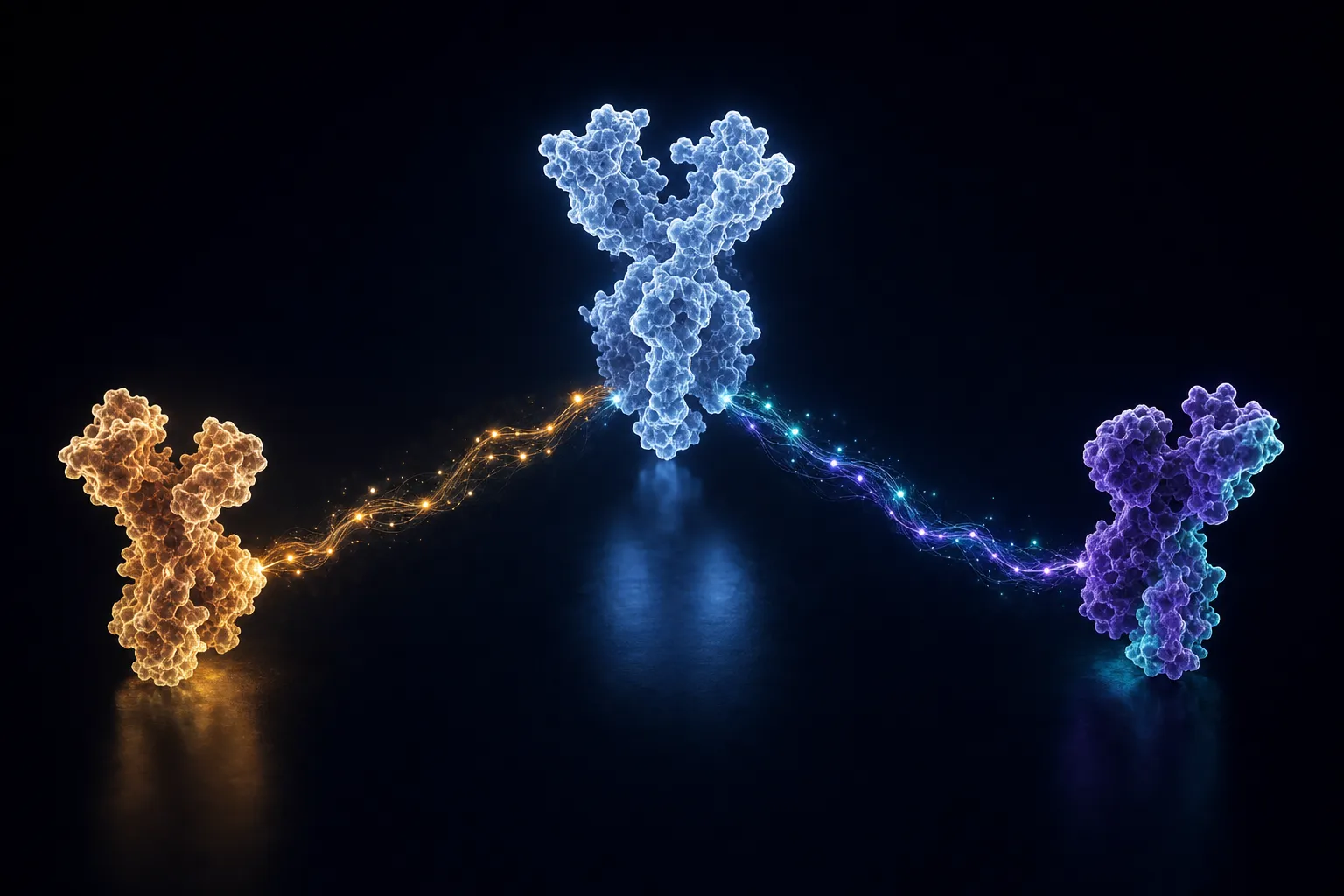
Both compounds start from the same place. GLP-1 receptor agonism is the shared arm, and the published literature describes appetite suppression, slowed gastric emptying and improved insulin response as its documented effects. The difference is what gets layered on top.
Mazdutide — GLP-1 plus glucagon
Mazdutide is described in the published literature as a dual glucagon-receptor and GLP-1-receptor agonist, developed by Eli Lilly together with Innovent Biologics (PMID 41028652). Glucagon-receptor agonism is a different kind of addition to GIP: rather than a second incretin signal, it engages hepatic and energy-expenditure pathways.
That orientation is visible in the development program rather than in marketing copy. The same review documents mazdutide under clinical evaluation for metabolic dysfunction-associated fatty liver disease, obstructive sleep apnea and alcohol use disorder — indications that track the liver-and-metabolism side of glucagon signaling rather than appetite alone.
Tirzepatide — GLP-1 plus GIP
Tirzepatide activates two incretin receptors:
- GLP-1 receptor — appetite suppression, slowed gastric emptying, improved insulin response
- GIP receptor — a second incretin pathway layered on top of GLP-1
SURMOUNT-1, the pivotal obesity trial of this receptor pair, reported the largest weight-loss figures of any approved incretin product to date (PMID 35658024), and the published literature describes the GIP arm's rationale as insulin response and incretin-pathway breadth rather than hepatic signaling.
What the mechanism difference does not settle
Mechanism families do not rank themselves. Glucagon agonism is also the arm that retatrutide adds to GLP-1 and GIP in its triple-agonist design, and survodutide — the GLP-1/glucagon dual agonist covered in depth on this site — shares mazdutide's receptor pair. Receptor count and receptor identity are design choices with trial consequences, not a hierarchy that can be read off a diagram.
Weight Loss: What the Trials Reported
Three mazdutide trials carry the weight-loss evidence, and they were run at different doses, durations and in different countries.
Mazdutide — GLORY-1 (phase 3, China)
GLORY-1 randomized 610 Chinese adults with obesity or overweight, mean baseline BMI 31.1, to 4 mg, 6 mg or placebo (PMID 40421736). On the treatment-policy estimand:
- Week 32: -10.09% (4 mg), -12.55% (6 mg), +0.45% (placebo); 73.9%, 82.0% and 10.5% of participants respectively reached at least 5% weight reduction
- Week 48: -11.00% (4 mg), -14.01% (6 mg), +0.30% (placebo); 35.7%, 49.5% and 2.0% respectively reached at least 15%
- Discontinuation for adverse events: 1.5% (4 mg), 0.5% (6 mg), 1.0% (placebo)
Mazdutide — GLORY-2 (phase 3, 9 mg, China)
GLORY-2 tested a higher dose for longer. It randomized Chinese adults with obesity (BMI at least 30, mean 34.3) 2:1 to 9 mg weekly or placebo for 60 weeks, with 461 participants analyzed (PMID 42251595):
- Week 60 weight change: -16.65% versus -1.50% on placebo, a between-group difference of -15.15%
- At least 5% reduction: 84.3% versus 33.1%
- Discontinuation for adverse events: 2.9% versus 0%
Mazdutide — the US phase 2 trial
The one mazdutide trial run in a US population escalated further than the Chinese program did. Across 24 US centers, 179 adults with obesity or overweight and without type 2 diabetes received mazdutide at 3-6 mg, 10 mg or 16 mg and 48 received placebo for 48 weeks, with the primary endpoint at week 32 on the efficacy estimand (PMID 42628555):
- Week 32 weight change: -7.3% (3-6 mg), -15.6% (10 mg), -18.1% (16 mg), versus -0.9% on placebo
- Further weight reduction was reported at week 48
- Discontinuation for adverse events: most frequent at 16 mg, at 20%, driven primarily by gastrointestinal events
Tirzepatide — SURMOUNT-1
SURMOUNT-1 randomized 2,539 adults with obesity or overweight plus a weight-related complication, mean baseline body weight 104.8 kg, to 5 mg, 10 mg, 15 mg or placebo for 72 weeks (PMID 35658024):
- Week 72 weight change: -15.0% (5 mg), -19.5% (10 mg), -20.9% (15 mg), versus -3.1% on placebo
- At least 5% reduction: 85%, 89% and 91% across the three doses, versus 35% on placebo
- At least 20% reduction: 50% (10 mg) and 57% (15 mg), versus 3% on placebo
- Discontinuation for adverse events: 4.3%, 7.1% and 6.2% across the three doses, versus 2.6% on placebo
Reading the gap honestly
Lined up at the top doses each program tested, tirzepatide's -20.9% at 72 weeks is the largest figure in the set, with mazdutide's -18.1% at 32 weeks on 16 mg and -16.65% at 60 weeks on 9 mg behind it. What that ordering does not support is a clean statement that one compound outperforms the other.
The confounds are substantial and run in both directions. The durations differ (32, 60 and 72 weeks). The populations differ: GLORY-1's mean baseline BMI of 31.1 and GLORY-2's 34.3 in Chinese cohorts are not SURMOUNT-1's mean body weight of 104.8 kg in a largely Western one, and baseline weight affects percentage change. The dose ceilings differ, and mazdutide's highest reported figure came from its least-mature trial — a phase 2 study of 227 randomized participants, against SURMOUNT-1's 2,539. Mazdutide's 9 mg phase 3 result at 60 weeks is the closest thing in the set to a like-for-like comparison with SURMOUNT-1, and it sits roughly four percentage points below it.
The defensible summary is narrow: in their own trials, both compounds reported weight-loss figures in the range that dual agonists have established, tirzepatide's largest published figure is higher, and the spread is not a measured margin.
Blood Sugar: Different Comparators, Not Each Other
Neither compound's diabetes data was generated against the other, which makes this section a comparison of comparators.
- Mazdutide: DREAMS-2 randomized 731 Chinese adults with type 2 diabetes on background oral agents 1:1:1 to mazdutide 4 mg, mazdutide 6 mg or dulaglutide 1.5 mg for 28 weeks (PMID 41407860). Both mazdutide doses were non-inferior and superior to dulaglutide on HbA1c change, with least-squares mean treatment differences of -0.24 pp (4 mg) and -0.30 pp (6 mg), and greater weight reduction, at -3.78% and -5.76% versus dulaglutide.
- Tirzepatide: SURPASS-2 randomized 1,879 adults with type 2 diabetes, mean baseline HbA1c 8.28%, to tirzepatide 5 mg, 10 mg, 15 mg or semaglutide 1 mg over 40 weeks (PMID 34170647). Estimated mean HbA1c change was -2.01, -2.24 and -2.30 pp across the tirzepatide doses, and all three doses were non-inferior and superior to semaglutide 1 mg.
Mazdutide beat an older weekly GLP-1 agonist; tirzepatide beat a newer one, at a higher baseline HbA1c, over a longer trial. Both results are internally valid and neither licenses a claim about how the two would compare directly.
Side Effects: Gastrointestinal in Both, With Dose-Dependent Discontinuation
Every trial cited above reported gastrointestinal events as the most common adverse events, mostly mild to moderate, and concentrated during dose escalation. The informative difference is in the magnitude at the top of each dose range.
GLORY-2 reported, at 9 mg versus placebo:
| Effect | Mazdutide 9 mg | Placebo |
|---|---|---|
| Vomiting | 53.1% | 1.3% |
| Nausea | 46.9% | 3.2% |
| Diarrhea | 39.4% | 6.5% |
Those are high absolute rates, though GLORY-2's adverse-event discontinuation stayed low at 2.9%. The Chinese 4 mg and 6 mg arms in GLORY-1 reported discontinuation of 1.5% and 0.5%. The US phase 2 trial is where tolerability became the limiting factor: discontinuation for adverse events reached 20% at the 16 mg dose, primarily gastrointestinal — which is the practical cost attached to that trial's -18.1% figure.
SURMOUNT-1's discontinuation figures ran 4.3% to 7.1% across 5, 10 and 15 mg against 2.6% on placebo, with gastrointestinal events again the most common and most severe during titration. For the compound-level detail, see Tirzepatide Side Effects.
Read together, the pattern across both compounds is the familiar one for this drug class: the dose that produces the largest reported weight change is also the dose that produces the most discontinuation.