Oxytocin is unique among peptides in that it produces both rapid acute effects and cumulative benefits with sustained use. Unlike peptides that require weeks to show results, oxytocin has measurable effects within minutes of intranasal administration.
Research-context information only. Oxytocin is a research peptide. Protocols, doses, and reactions reported below come from published research and self-reported community sources. This article reports what has been documented, not what should be done. Consult a licensed physician for personal medical decisions.
This timeline is based on published clinical research data and commonly reported user experiences. Individual responses vary based on baseline oxytocin levels, social context, mental health status, and administration method.
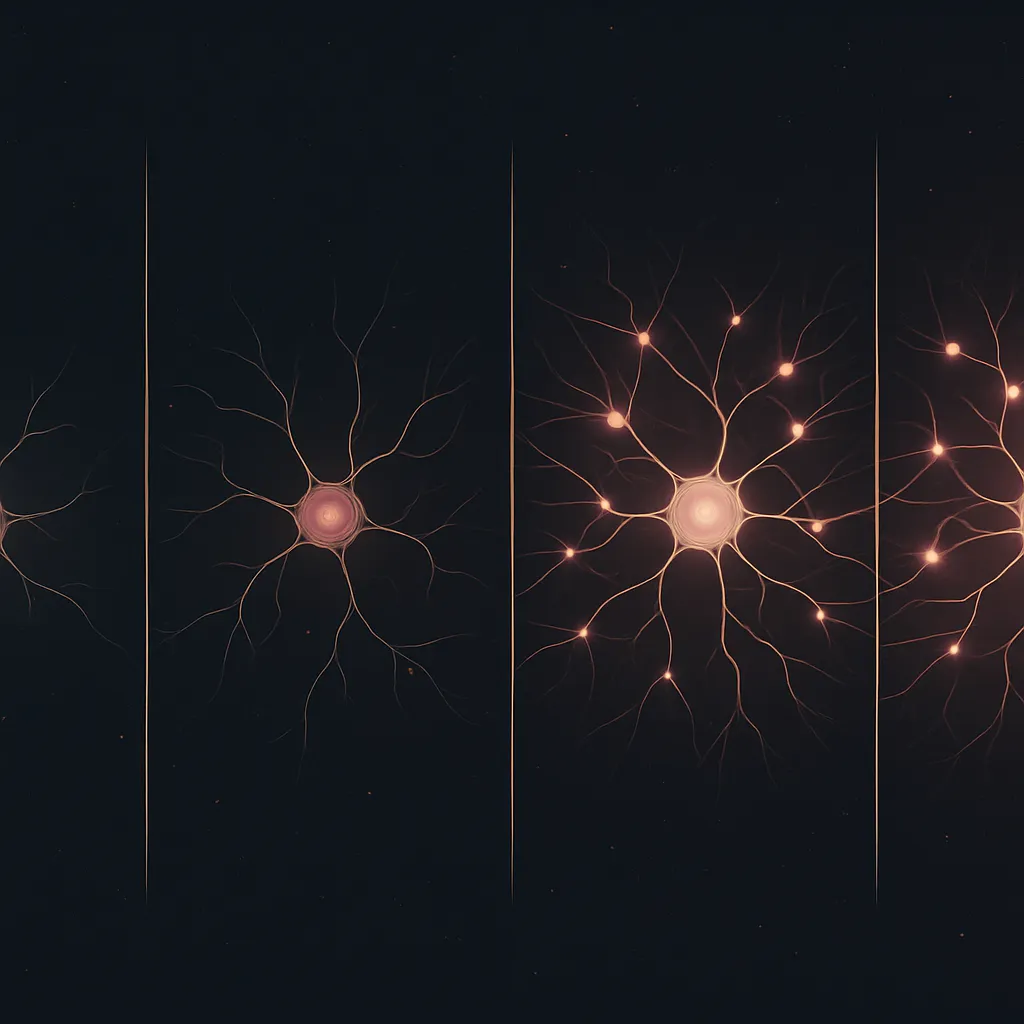
Oxytocin's timeline is shaped by its dual mechanism of action:
Rapid neuromodulation (minutes): Intranasal administration delivers oxytocin to the brain where it modulates amygdala reactivity, HPA axis activity, and social processing circuits within 15-45 minutes (Cardoso et al., 2013)
Receptor-mediated signaling (hours): Oxytocin receptor activation triggers intracellular cascades affecting smooth muscle, immune cells, and neural circuits over the duration of receptor occupancy
Cumulative adaptation (weeks): Repeated oxytocin exposure may upregulate receptor sensitivity and strengthen neural pathways associated with social reward and stress buffering
This multi-timescale mechanism produces different categories of documented effects at different time points.
Acute Effects: Minutes to Hours
Onset: 15-45 minutes after intranasal administration
What the research shows:
Intranasal oxytocin produced measurable increases in trust behavior within 45 minutes of administration in the landmark trust game study (Kosfeld et al., 2005)
Cortisol attenuation following intranasal oxytocin was dose-dependent and measurable within the acute dosing window (Cardoso et al., 2013)
Plasma oxytocin levels rise rapidly following intranasal delivery, with central effects detectable via neuroimaging within 30-60 minutes
What users commonly report within 1-4 hours:
A subtle sense of calm and reduced social anxiety
Increased comfort in social interactions and conversations
Greater emotional warmth and openness
Mild reduction in physical tension, particularly in the chest and shoulders
Enhanced sense of connection during intimate interactions
More natural eye contact and social engagement
What you probably will NOT notice:
Any dramatic mood alteration (oxytocin is subtle, not euphoric)
Pain relief without an existing pain condition
Effects without social context (many benefits are amplified by social interaction)
Duration: Acute effects typically last 2-4 hours, with a gradual return to baseline.
Realistic expectation: The acute effects of oxytocin are often described as a "volume knob" on social comfort rather than an on/off switch. Effects are most noticeable in social situations and may be barely perceptible when alone.
The meta-analysis of placebo-controlled trials found that intranasal oxytocin produced moderate reductions in anxiety, depression, and psychopathology symptoms across multi-dose studies (MacDonald et al., 2013)
Oxytocin as an adjunct to exposure therapy for social anxiety disorder showed improvements over the treatment course (Guastella et al., 2009)
Repeated oxytocin administration maintained efficacy on stress reactivity measures across multiple sessions (Yoshida et al., 2022)
What users commonly report over 1-4 weeks:
More consistent baseline sense of social ease
Improved ability to manage stressful social situations
Better relationship quality and communication
Reduced social avoidance behaviors
Improved sleep quality, particularly in those with stress-related sleep issues
Enhanced emotional regulation during conflicts or stressful events
Some improvement in sexual function and intimacy
Body-level changes:
Potential reduction in baseline cortisol levels with regular use
Improved gut comfort in those with stress-related GI symptoms
Mild reductions in blood pressure in some individuals (oxytocin has vasodilatory effects)
Realistic expectation: With daily or regular use over 1-4 weeks, the acute benefits become more consistent and may begin extending beyond the immediate dosing window. Social and emotional changes are the most commonly reported early improvements.
Sustained Use: Weeks to Months
Regular use over 4-12+ weeks
What the research suggests:
Oxytocin promotes wound healing in combination with social contact, with effects measurable over multi-week observation periods (Shrout et al., 2025)
The microbiome-oxytocin axis may strengthen with sustained signaling, as gut bacteria like Lactobacillus reuteri stimulate endogenous oxytocin release, potentially creating positive feedback loops (Varian et al., 2023)
Long-term oxytocin signaling influences neuroplasticity in social brain regions, potentially producing lasting changes in social cognition
What users commonly report over 1-3+ months:
Sustained improvements in relationship quality and social confidence
More robust stress resilience that persists between doses
Improved emotional baseline (less reactive to minor stressors)
Continued improvements in gut health for those with IBS or stress-related GI issues
Some users report faster healing from minor injuries and skin issues
Greater overall sense of well-being and connectedness
Important considerations for sustained use:
Tolerance development is poorly studied. Some users report maintaining efficacy; others note diminishing effects after several weeks
Cycling protocols (e.g., 5 days on, 2 days off) are common in user communities but not validated in research
Long-term safety data for exogenous oxytocin administration is limited
The best outcomes appear to occur when oxytocin use is combined with active social engagement, therapy, or relationship work
Realistic expectation: Sustained use may produce cumulative benefits in social functioning and stress resilience. However, the evidence base for long-term use is thinner than for acute effects. Medical supervision is recommended for extended protocols.
Intranasal vs Subcutaneous: Different Timelines
The timelines above are based primarily on intranasal administration, which is the route used in most clinical research on oxytocin's social and psychological effects.
Intranasal timeline: Rapid onset (15-45 minutes), peak effects at 30-60 minutes, duration 2-4 hours. This is the well-studied route for trust, anxiety reduction, social bonding, and cognitive effects.
Subcutaneous timeline: Systemic absorption is faster but brain penetration is limited. Peripheral effects (uterine contractions, cardiovascular changes, potential gut motility effects) may appear within minutes. However, the central nervous system effects that drive most of the benefits above are significantly attenuated via this route.
If you are using subcutaneous oxytocin, expect a different effect profile — more peripheral, less psychological. The week-by-week progression described above primarily applies to consistent intranasal use.
Bac Water Made for Peptides
Don't risk a $300 peptide on generic bac water.
Most cloudy reconstitutions trace back to one thing — and it isn't the peptide. Sterile, non-pyrogenic, 0.9% benzyl alcohol — formulated for peptide reconstitution, not repackaged from generic stock.
✓ 0.9% benzyl alcohol✓ Made for peptides✓ 30 mL multi-dose
Poor administration technique (much of the dose may not reach target tissues)
Concurrent use of substances that affect social processing
Individual variation:
Sex differences affect oxytocin responses. Some effects are more pronounced in men, others in women
Genetic variation in the oxytocin receptor gene (OXTR) influences individual sensitivity
Childhood attachment experiences may modulate adult oxytocin responsiveness
Baseline mental health status significantly affects the magnitude of observable benefits
What Oxytocin Will NOT Do
Clear boundaries on expectations:
It will not eliminate social anxiety. Oxytocin reduces the physiological stress response and increases social approach behavior, but it does not override deep-seated anxiety patterns without concurrent behavioral work.
It will not create feelings of love or bonding from nothing. It amplifies existing social processes rather than generating new ones.
It will not work well in isolation. Many of oxytocin's benefits require a social context to manifest.
It will not replace therapy. For conditions like social anxiety, PTSD, or attachment disorders, oxytocin may be a useful adjunct but not a standalone treatment.
It will not produce obvious, dramatic effects. Oxytocin is subtle. If you are expecting a clear "before and after" sensation, you may be disappointed.
Frequently Asked Questions
How fast does oxytocin work?
Intranasal oxytocin produces measurable effects within 15-45 minutes of administration. Social and anxiolytic effects peak around 30-60 minutes and can last 2-4 hours. The speed of onset is one of oxytocin's distinguishing features compared to most peptides.
How long do the effects of oxytocin last?
A single intranasal dose produces effects lasting approximately 2-4 hours for acute social and anxiolytic benefits. With sustained daily use over weeks, some effects like stress resilience and social comfort may become more persistent.
Can you build tolerance to oxytocin?
Research on tolerance development is limited. Some studies using daily dosing over several weeks have maintained efficacy, but long-term tolerance data is sparse. Cycling protocols are commonly discussed in user communities.
What does oxytocin feel like?
Users commonly describe a subtle sense of calm, warmth, and social openness rather than an obvious altered state. It is not psychoactive in the way that anxiolytics or mood-altering drugs are. Effects are often most noticeable in social contexts.
Research Supplies for Oxytocin
Hand-picked storage, injection, and recovery supplies paired with Oxytocin protocols.
Kosfeld, M., Heinrichs, M., Zak, P. J., Fischbacher, U., & Fehr, E. (2005). Oxytocin increases trust in humans. Nature, 435(7042), 673-676. PubMed
Cardoso, C., Ellenbogen, M. A., Orlando, M. A., Bacon, S. L., & Joober, R. (2013). Intranasal oxytocin attenuates the cortisol response to physical stress: a dose-response study. Psychoneuroendocrinology, 38(3), 399-407. PubMed
MacDonald, K., MacDonald, T. M., Brune, M., et al. (2013). Effect of intranasal oxytocin administration on psychiatric symptoms: a meta-analysis of placebo-controlled studies. Biological Psychiatry, 73(4), 349-355. PMC
Guastella, A. J., Howard, A. L., Dadds, M. R., Mitchell, P., & Carson, D. S. (2009). A randomized controlled trial of intranasal oxytocin as an adjunct to exposure therapy for social anxiety disorder. Psychotherapy and Psychosomatics, 78(4), 246-247. PubMed
Shrout, M. R., et al. (2025). Intranasal oxytocin and physical intimacy for dermatological wound healing and neuroendocrine stress: a randomized clinical trial. JAMA Dermatology. PubMed
Varian, B. J., et al. (2023). Microbial stimulation of oxytocin release from the intestinal epithelium via secretin signaling. Gut Microbes, 15(2), 2263206. PubMed
Yoshida, M., et al. (2022). Roles of oxytocin in stress responses, allostasis and resilience. International Journal of Molecular Sciences, 23(1), 150. PMC