dosingJune 3, 2026·7 min read

SNAP-8 Dosage: A Topical Anti-Wrinkle Peptide

SNAP-8 is a topical cosmetic peptide, not an injectable. The serum concentrations formulas use, the DIY conventions, and an honest read on the evidence.

SNAP-8 dosing — acetyl octapeptide-3 topical serum concentrations

SNAP-8 (acetyl octapeptide-3) is a topical cosmetic peptide, so the honest version of a "dosage" question is really a concentration question: what percentage of a skincare serum is SNAP-8, not how many micrograms get injected. It is the elongated, eight-amino-acid relative of Argireline (acetyl hexapeptide-8), marketed to soften expression lines by interfering with the SNARE complex that drives facial-muscle contraction. The catch worth stating up front: SNAP-8's documented use is as a leave-on topical, the supporting evidence is thin cosmetic data, and there are no injectable or systemic human trials. This guide reports the concentrations cosmetic formulas use and the DIY conventions around the research vial — honestly.

Research-context information only. SNAP-8 (acetyl octapeptide-3) is sold as a cosmetic research peptide and is not an FDA-approved drug. Its documented use is topical skincare; there are no systemic or injectable human trials. The concentrations below come from cosmetic-formulation convention, ingredient-supplier guidance, and self-reported community sources — not controlled clinical trials. This article reports what is documented, not what should be done. Consult a licensed professional for personal decisions.

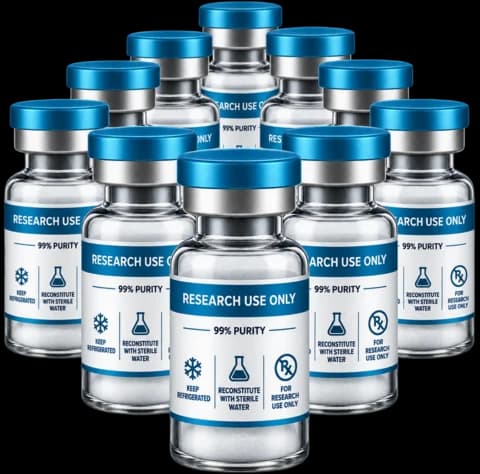
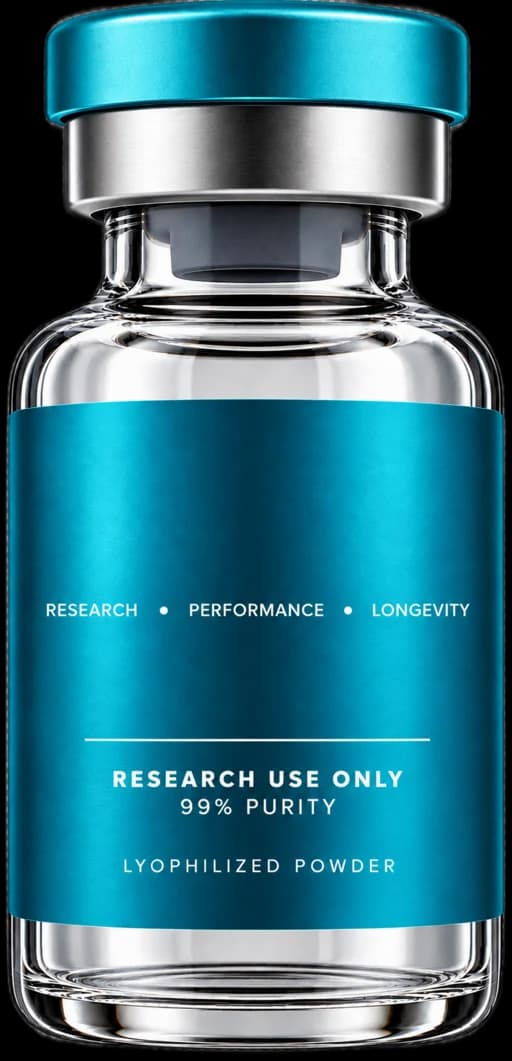
SNAP-8 is sold by research-chemical vendors as a 10 mg lyophilized vial, the same format as injectable peptides — but that format does not make it injectable. Below: the topical concentration range cosmetic products use, how the community blends the vial into DIY serums, and an honest read on how limited the SNAP-8-specific evidence actually is.

Quick Reference: Topical Use, Not an Injected Dose

Parameter Detail
Vial 10 mg lyophilized (the common research format)
Real-world use Topical — blended into a leave-on serum or cream
Cosmetic concentration ~3-10% of finished serum (formulation convention)
Route Applied to the skin; never an established injectable route
Timing Once or twice daily to clean skin
Target areas Expression lines — crow's feet, forehead, between brows
Storage Lyophilized refrigerated; reconstituted/blended kept cool, used within ~28 days

There is no SNAP-8 injection protocol. Unlike a systemic peptide with a published subcutaneous dose, SNAP-8's documented use is entirely topical. The percentages above describe how cosmetic chemists and DIY formulators blend it into skincare — not a clinical dose. For the full profile and vendor pricing, see our SNAP-8 peptide page.

How Cosmetic Formulas Use It

Commercial anti-wrinkle products containing acetyl octapeptide-3 typically list it in the 3-10% range of the finished formula, applied to the skin once or twice daily. Ingredient suppliers market it as a topical that interferes with neurotransmitter release at the neuromuscular junction, marketed as reducing the repetitive micro-contractions that etch expression lines over time — via the same SNARE-modulating mechanism proposed for Argireline. Whether enough peptide actually crosses the skin barrier to do that is an open question (see below).

  • Where it's applied: Around the eyes, forehead, and glabellar (between-brow) area — the dynamic-wrinkle zones
  • How often: Once or twice daily, to clean dry skin, usually under a moisturizer
  • What it is not: A spot treatment you inject, and not a systemic peptide

Bac water sold here is for cosmetic-serum preparation only; SNAP-8 has no injectable protocol.

30ml bacteriostatic water vial — 0.9% benzyl alcohol multi-dose
Bac Water Made for Peptides
Don't risk a $300 peptide on generic bac water.
Most cloudy reconstitutions trace back to one thing — and it isn't the peptide. Sterile, non-pyrogenic, 0.9% benzyl alcohol — formulated for peptide reconstitution, not repackaged from generic stock.
0.9% benzyl alcohol Made for peptides 30 mL multi-dose
See why our bac water doesn't ruin peptides
30ml from $18.75 · Ships fast · Code thepeptidecatalog

The DIY Vial Convention

Because vendors sell SNAP-8 as a 10 mg research vial, community formulators reconstitute the powder and blend it into a base serum to reach a target percentage. The arithmetic is straightforward but reveals why low-volume DIY rarely hits commercial strength.

Prep Result Notes
10 mg into 10 mL base 0.1% serum Far below the 3-10% commercial range
100 mg into 10 mL base 1% serum Still below typical formula strength
Multiple vials into a small base 3%+ serum Reaching commercial % takes substantial peptide

Math: concentration (%) = peptide mass (mg) ÷ base volume (mL) ÷ 10. A single 10 mg vial in a 10 mL serum is only 0.1% — an order of magnitude under the 3-10% formulas use. This is the honest tension in DIY SNAP-8: a research vial does not stretch far at cosmetic strength.
Top SNAP-8 Vendors

Ranked by price, COA availability, and reputation

1
Ion PeptideCOA
10/10
10mg$3.90/mg
2
EZ PeptidesCOA
9/10
10mg$3.50/mg

Affiliate disclosure: vendor links in this article are affiliate links — The Peptide Catalog may earn a commission if you buy through them, at no additional cost to you.

Where These Numbers Come From

This is the section that matters most for SNAP-8, because the honest answer is that the evidence behind any specific concentration is thin.

SNAP-8 serum being blended from a research vial

SNAP-8 itself has almost no dedicated efficacy literature. A peer-reviewed peptide review that does name acetyl octapeptide-3 describes its mechanism — blocking the SNARE complex to reduce muscle contraction — but the concentration figures circulating online come mainly from cosmetic-ingredient marketing, not controlled trials (Pintea et al., 2025).

The supporting science is mostly its parent, Argireline. SNAP-8 is an elongation of acetyl hexapeptide-8. The reviewed evidence for that parent compound reports possible reductions in wrinkle depth and improved hydration, but the same reviews flag a major limitation: the peptide's hydrophilic nature and size make it hard to permeate the stratum corneum, so reaching the neuromuscular junction is uncertain (Zdrada-Nowak et al., 2025).

Vendor "Botox-like" framing overstates the data. Manufacturer-funded cosmetic studies report large wrinkle-depth reductions, while independent assessments are more modest. SNAP-8 is a topical cosmetic with limited evidence — not an injectable neurotoxin substitute. Anyone presenting a precise "optimal dose" is overstating what the data supports.

Stacking in Skincare

There is no clinical data on SNAP-8 combinations. Cosmetic formulators pair it the way other peptide actives are layered, on a "different mechanisms" rationale.

Combination Rationale Notes
SNAP-8 + GHK-Cu Adds collagen-synthesis support to expression-line softening Topical layering convention; no controlled data on the pair
SNAP-8 + hyaluronic acid / humectants Hydration plus surface smoothing Standard cosmetic base, not a tested synergy

These reflect formulation convention, not validated combinations.

Safety Notes

  • Limited safety data — there is no published systemic human safety dataset for SNAP-8, because it isn't used systemically. As a topical cosmetic ingredient it is generally described as well tolerated, but that is formulation experience, not a clinical safety profile.
  • Skin reactions — the most commonly mentioned topical event is mild irritation or redness, consistent with other cosmetic peptide serums; patch testing is the conventional precaution.
  • Not for injection — SNAP-8 has no injectable safety data of any kind; the research-vial format does not imply an injectable route.

Absence of reported harm in cosmetic use is not the same as demonstrated efficacy.

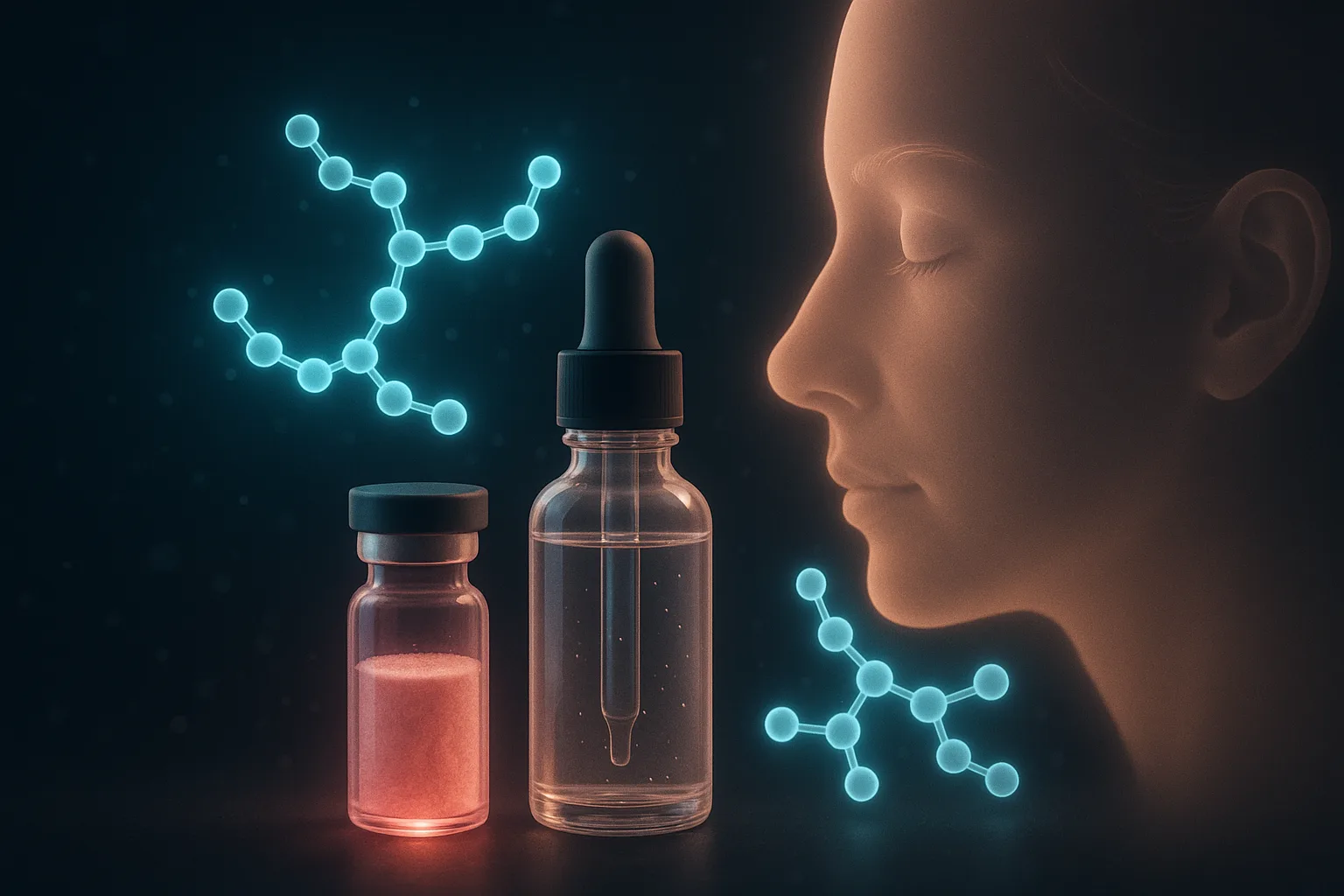
SNAP-8 serum concentration and skin-barrier diagram

Concentration Math for DIY Serums

Cosmetic "dosing" is percentage in a base, not units on a syringe. The conversion is deterministic.

Concentration (%) = peptide mass (mg) ÷ base volume (mL) ÷ 10.

Peptide in base Base volume Resulting concentration
10 mg 10 mL 0.1%
30 mg 10 mL 0.3%
100 mg 10 mL 1%
300 mg 10 mL 3%

These figures report how community percentage math is described. They are not a recommended formulation — no validated SNAP-8 cosmetic protocol exists, and reaching commercial strength from research vials takes considerable peptide.

Frequently Asked Questions

What concentration of SNAP-8 do cosmetic formulas use?
SNAP-8 is a topical peptide, so the meaningful number is concentration in a serum, not an injected dose. Cosmetic-ingredient suppliers and formulation studies describe SNAP-8 used at roughly 3-10% of a finished serum or cream, applied to the skin once or twice daily. There is no injectable dose — vendors sell a 10 mg research vial, but its documented real-world use is as a leave-on topical.
How is a SNAP-8 vial prepared for topical use?
Community DIY practice reconstitutes the lyophilized powder in water or a hydrating base and blends it into a serum to reach a target percentage. A 10 mg vial dissolved into, for example, 10 mL of base gives a 0.1% solution; reaching the 3-10% range used in commercial formulas takes far more peptide per volume. This is cosmetic formulation, not a clinical protocol.
Is SNAP-8 injected?
No. SNAP-8 (acetyl octapeptide-3) is a cosmetic anti-wrinkle ingredient with documented use only as a topical applied to the skin. There are no systemic or injectable human trials, and presenting it as an injectable peptide misrepresents how it is actually used and studied.
How strong is the evidence behind SNAP-8 concentrations?
Limited. SNAP-8 itself has essentially no dedicated peer-reviewed efficacy trials; the figures circulating come from cosmetic-ingredient marketing and from research on its parent compound, Argireline (acetyl hexapeptide-8). Even that parent literature is modest and complicated by poor skin permeability. Treat any precise SNAP-8 percentage as a formulation convention, not validated science.

References

Citation Topic PMID
Pintea A, et al., Biomolecules (2025) Names acetyl octapeptide-3 (SNAP-8); SNARE-complex anti-wrinkle mechanism review 39858482
Zdrada-Nowak J, et al., Int J Mol Sci (2025) Acetyl hexapeptide-8 (Argireline, SNAP-8's parent) — skin permeability and efficacy review 40565185
Khvotchev M, Soloviev M, Biomolecules (2022) SNARE mimetic peptides — Argireline SNARE inhibition and topical anti-wrinkle activity 36551207

SNAP-8 (acetyl octapeptide-3) is a topical cosmetic peptide. Most cited evidence describes its parent compound, Argireline (acetyl hexapeptide-8); there is little SNAP-8-specific trial data and no systemic or injectable human studies. This article is for educational and informational purposes only. It is not medical advice. SNAP-8 is not an FDA-approved drug. Consult a licensed professional before using any peptide.