Vilon has no validated human dose. It is a synthetic dipeptide (Lys-Glu, the KE sequence) sold as a research chemical, and the numbers circulating online trace to a Russian short-course convention — a 10-20 day course of small daily subcutaneous or intramuscular injections, repeated once or twice a year — not to any Western dose-ranging trial. This guide separates that convention from what was actually studied.
Vilon is one of the most-studied of Vladimir Khavinson's short peptide bioregulators, and it sits in the same thymic lineage as Thymalin and Thymogen. That lineage matters for reading dose claims: the human clinical work in this family was done on the tissue extracts, while Vilon is the synthetic two-amino-acid analog. Extract dosing does not transfer to the synthetic, and the synthetic dipeptide has essentially no independent Western data of its own.
Research-context information only. Vilon is a research peptide. Protocols, doses, and reactions reported below come from published research and self-reported community sources. This article reports what has been documented, not what should be done. Consult a licensed physician for personal medical decisions.
Vilon is a synthetic Lys-Glu dipeptide studied in rodent and cell-culture models for immune and geroprotective effects. The sections below cover the course convention, routes, reconstitution math for the 20 mg vial, and the honest provenance of every figure.
Quick Reference: Protocol
There is no Jay Campbell/Hunter Williams cheat-sheet entry for Vilon and no validated human dose, so the table below reflects the course convention carried through the Khavinson bioregulator literature and community research-chemical use — not a recommended schedule.
| Parameter | Community / research-chem convention (no validated dose) |
|---|---|
| Per-injection amount | No validated figure. The original Russian clinical Vilon used microgram-to-low-milligram amounts; research-chemical vials are supplied at 20 mg. Community reports describe low-milligram subcutaneous amounts. Treat every number as unverified. |
| Route | Subcutaneous in community use; intramuscular and intranasal in the original Russian clinical reports |
| Frequency | Once daily during the course |
| Course length | 10-20 consecutive days |
| Repeat interval | Community reports describe repeating roughly 1-2 times per year |
| Vial size | 20 mg lyophilized powder |
| Supplied as | Research chemical, not for human consumption |
| Storage | Refrigerate reconstituted vial at 2-8C, use within 28 days |
Community-reported variation (label: community/anecdotal — not from controlled trials): research-chemical protocols commonly describe a low-milligram subcutaneous amount once daily across a 10-20 day course. There is a wide gap between those amounts and the microgram-scale doses of the original Russian clinical Vilon, and nothing in the controlled literature validates either the amount or the route for the synthetic dipeptide. These figures are reported as community signal only.
Routes of Administration
- Subcutaneous (SC) — the route described in most community and vendor sources. Community reports frame SC as the convenient at-home route; it has no controlled-trial basis for Vilon specifically.
- Intramuscular (IM) and intranasal — the routes used in the original Russian clinical reports of the Vilon drug. No controlled study has established dose equivalence between these routes and community subcutaneous use.
The disambiguation matters when comparing route notes across sources: Vilon is a defined synthetic dipeptide (Lys-Glu), distinct from Thymalin (a crude thymus extract fraction) and Thymogen (the synthetic Glu-Trp dipeptide). Dose and route figures do not transfer between them.

Reconstitution Quick Reference
Community reconstitution guides describe bacteriostatic water for the 20 mg research-chemical vial, as with other research peptides. There is no validated concentration — the table below is a unit-conversion convention, not a dose.
| Vial Size | BAC Water | Concentration | 2 mg | 5 mg |
|---|---|---|---|---|
| 20 mg | 2 mL | 10 mg/mL | 0.2 mL (20 units) | 0.5 mL (50 units) |
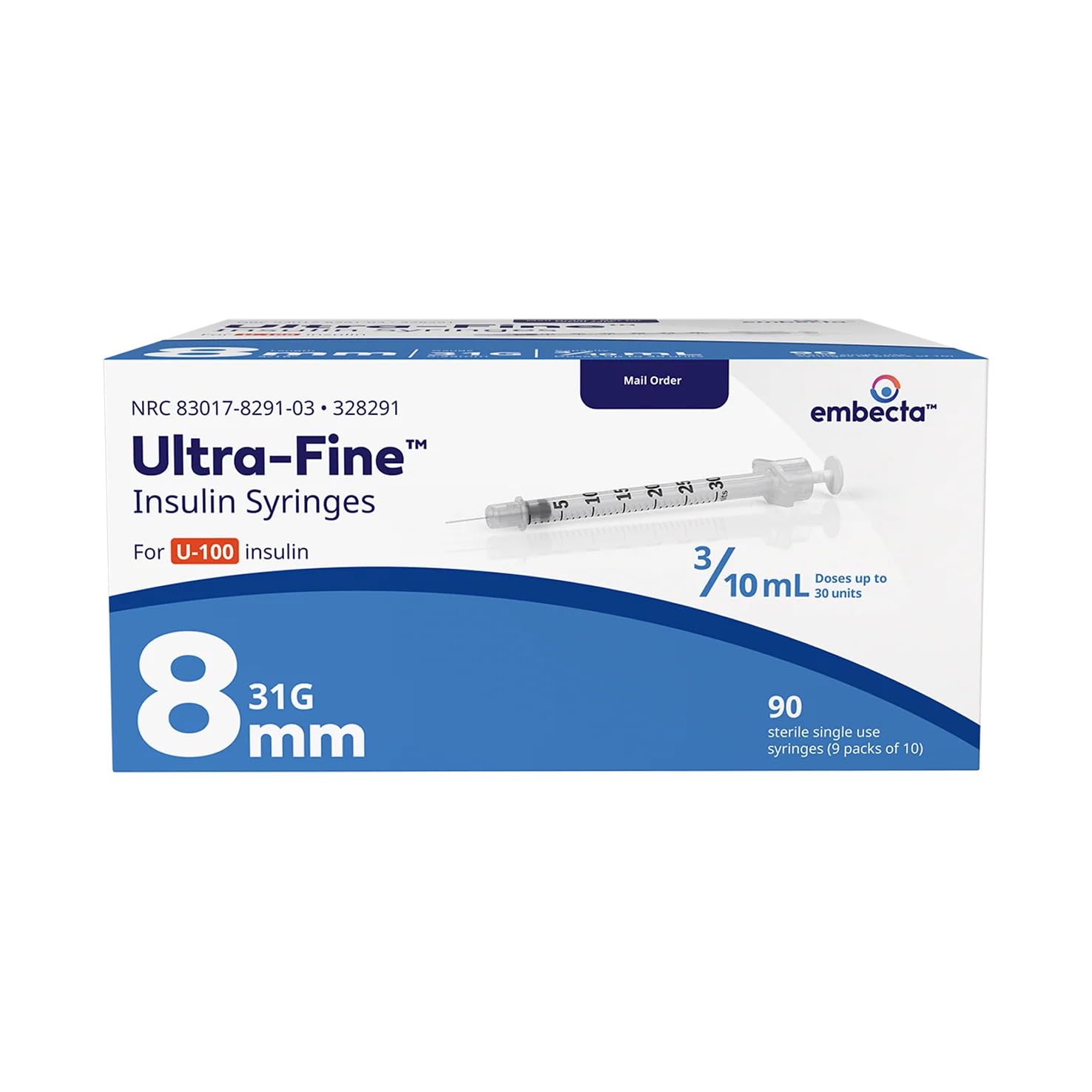
At 10 mg/mL, 20,000 mcg divided by 2 mL is 10,000 mcg/mL — so a 2 mg amount draws to 0.2 mL (20 units) and a 5 mg amount to 0.5 mL (50 units) on a 100-unit insulin syringe. This is arithmetic that converts a chosen amount into syringe units; it is not a recommendation of what that amount should be. Community protocols describe swirling gently (not shaking), refrigerating at 2-8C, and using the reconstituted vial within 28 days.
For the full step-by-step mixing walkthrough, see our Vilon Reconstitution Guide.
Ready to buy? Compare verified vendors on our best Vilon sources page, or browse all coupon codes for up to 50% off.