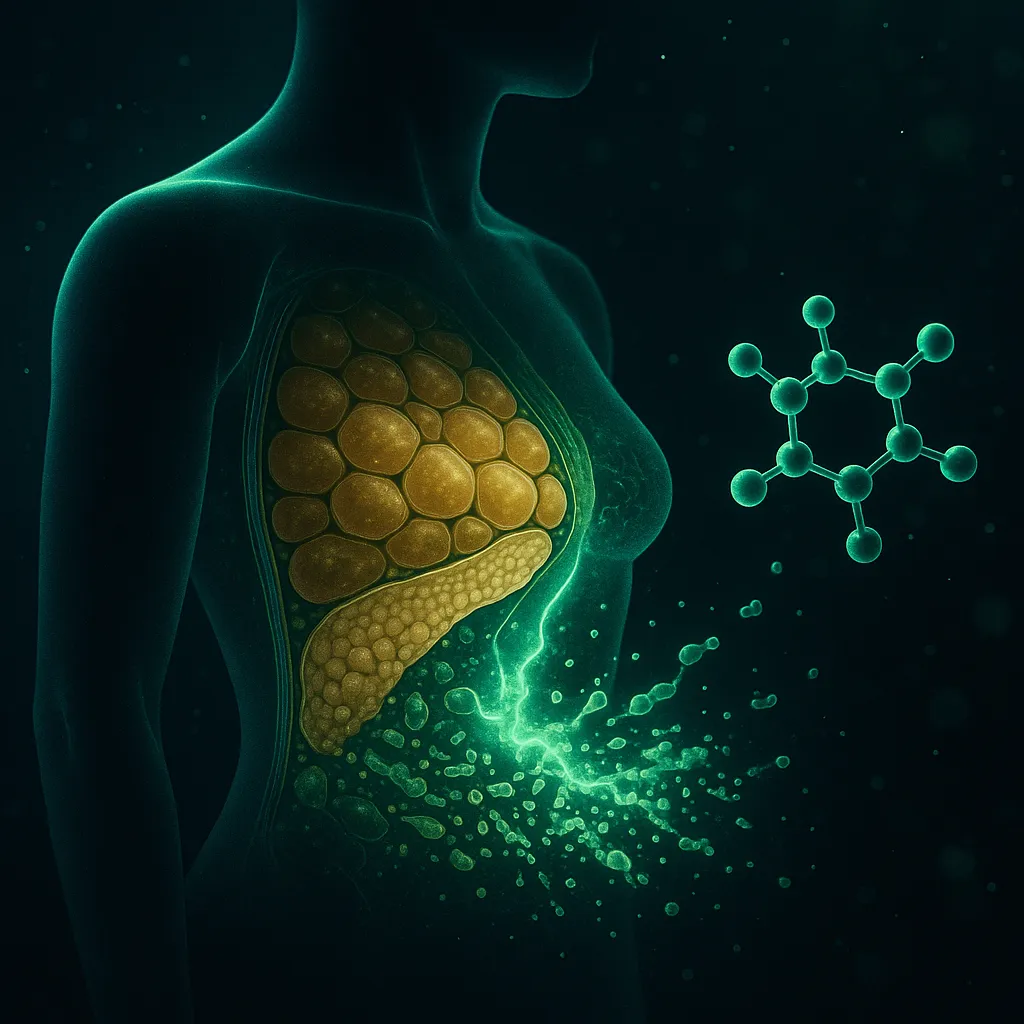
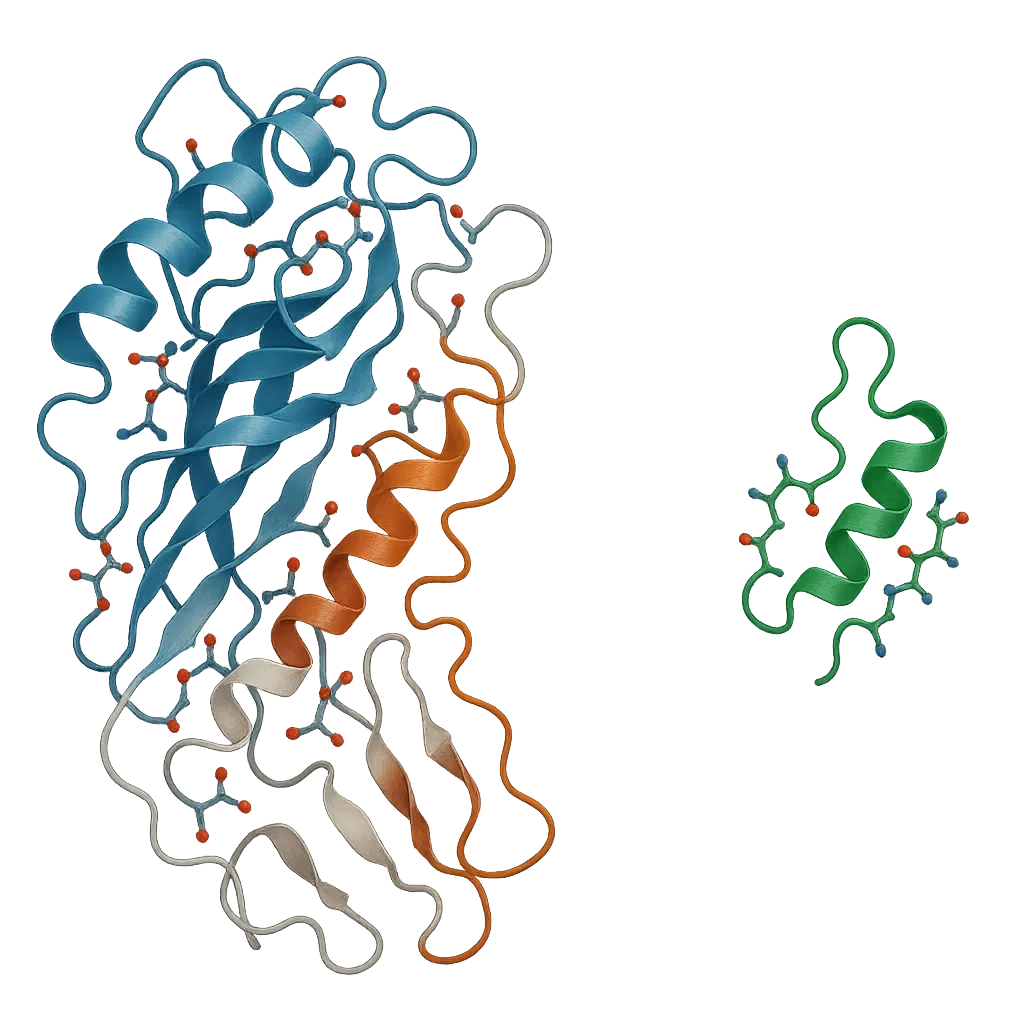
AOD-9604 is the C-terminal fragment of human growth hormone — specifically amino acids 176-191 with a tyrosine modification. It was engineered to isolate GH's fat-burning properties while stripping out everything else: the growth promotion, the insulin resistance, the IGF-1 elevation.
That "everything else" is actually AOD-9604's most important feature. Unlike full GH therapy, AOD-9604 targets fat metabolism without touching the hormonal axes that make growth hormone risky for long-term use. Six randomized clinical trials confirmed its safety profile is indistinguishable from placebo on metabolic markers.
Here are 5 benefits ranked by evidence quality — strongest first. For dosing protocols, see the AOD-9604 Dosing Guide.
Research-context information only. AOD-9604 is an investigational research peptide; FDA Phase 2 trial program for obesity was discontinued without approval. Protocols, doses, and reactions reported below come from published clinical trials and self-reported community sources. This article reports what has been documented, not what should be done. Possession or use of investigational drugs outside an authorized clinical trial may be illegal in your jurisdiction. Consult a licensed physician for personal medical decisions.
How AOD-9604 Works
AOD-9604 activates lipolysis through the beta-3 adrenergic receptor pathway. When researchers knocked out beta-3 receptors in mice, the chronic weight loss effects of AOD-9604 disappeared — confirming this receptor is essential for its long-term fat-burning action (Ng et al., 2001).
Unlike full growth hormone, AOD-9604 does not bind the GH receptor. This is why it burns fat without the growth-promoting, diabetogenic, or fluid-retention effects of hGH. The lipolytic domain operates independently of the somatotropic axis.
1. Lipolysis Without GH Side Effects (Human Data)
Evidence quality: Strong (6 human clinical trials)
This is AOD-9604's defining advantage. Across six randomized, double-blind, placebo-controlled trials, AOD-9604 showed no effect on serum IGF-1, no impairment of glucose tolerance, and no insulin resistance — all common problems with full GH therapy (Stier et al., 2013).
No anti-AOD-9604 antibodies were detected in any patient. No withdrawals or serious adverse events occurred related to AOD-9604 intake. The safety profile was indistinguishable from placebo.
This matters because growth hormone's fat-burning effects are real, but full GH therapy comes with significant metabolic risks. AOD-9604 extracts the lipolytic benefit without the cost.

2. Fat Oxidation and Weight Loss (Animal Data)
Evidence quality: Moderate (multiple animal studies)
In obese mice, chronic treatment with AOD-9604 significantly reduced body weight gain and increased fat oxidation (Heffernan et al., 2001). The fragment increased lipolytic sensitivity in adipose tissue, meaning fat cells became more responsive to fat-burning signals.
In obese Zucker rats, oral AOD-9604 at 500mcg/kg daily for 19 days reduced body weight gain by over 50% compared to controls. Adipose tissue from treated animals showed increased lipolytic activity (Ng et al., 2000).
The animal data is consistent: AOD-9604 works as a lipolytic agent. The question has always been whether the effect translates to meaningful human fat loss — and the human trial data is more modest.
3. Modest Human Weight Loss (Phase 2 Data)
Evidence quality: Moderate (one phase 2b trial, 300 patients)
In a 12-week, randomized, double-blind, placebo-controlled trial with 300 obese adults across five sites, oral AOD-9604 produced measurable but modest weight loss. The 1mg dose group lost an average of 2.8kg versus 0.8kg for placebo — roughly 2kg of additional fat loss over 3 months.
The trial also showed small improvements in cholesterol profiles and a reduction in patients with impaired glucose tolerance.
For context: 2kg over 12 weeks is real but modest compared to GLP-1 receptor agonists like semaglutide (which produces 10-15% body weight loss). AOD-9604 development was ultimately discontinued in 2007 when the effect size was deemed insufficient for a standalone obesity drug.
That doesn't make AOD-9604 useless — it means expectations should be calibrated. It's a fat metabolism enhancer, not a dramatic weight loss agent.
4. No Blood Sugar or Insulin Impact (Human Data)
Evidence quality: Strong (clinical confirmation)
In contrast to full-length growth hormone — which reliably worsens insulin sensitivity — chronic AOD-9604 treatment showed no adverse effect on carbohydrate metabolism. Oral glucose tolerance tests confirmed no negative impact on blood sugar regulation (Stier et al., 2013).
This was specifically tested because insulin resistance is the primary concern with GH-based fat loss strategies. AOD-9604 eliminates this concern entirely.
For anyone with pre-diabetic tendencies or metabolic syndrome who wants GH-fragment-based fat loss support, this is a significant advantage over full GH therapy.
5. Cartilage Repair Potential (Animal Data)
Evidence quality: Low (one rabbit study)
In a collagenase-induced knee osteoarthritis model in rabbits, intra-articular AOD-9604 injections enhanced cartilage regeneration. The effect was even stronger when combined with hyaluronic acid — the combined group showed significantly better gross morphological and histopathological scores than either treatment alone (Kwon et al., 2015).
AOD-9604 promoted proteoglycan and collagen production in isolated bovine chondrocytes in vitro, suggesting a direct effect on cartilage-building cells.
This is early-stage data — one animal model, no human joint studies. But it opens a potential second application beyond fat loss that warrants monitoring.
Ready to buy? Compare verified vendors on our best AOD-9604 sources page, or browse all coupon codes for up to 50% off.