AOD-9604 Dosing Guide: Protocols (2026)
AOD-9604 dosing guide with subcutaneous fat loss protocols, GH fragment research, reconstitution, stacking, and safety.

AOD-9604 (Advanced Obesity Drug) is a synthetic peptide fragment of human growth hormone, consisting of amino acids 176–191 of the hGH sequence with a tyrosine substitution. It was developed to isolate the fat-loss properties of growth hormone while eliminating the growth-promoting and diabetogenic effects.
A GH fragment designed for fat loss: AOD-9604 retains the lipolytic activity of growth hormone without affecting IGF-1, insulin, or blood glucose. It has GRAS (Generally Recognized As Safe) status from the FDA as a food ingredient. This is not medical advice.
Quick Reference: Community Dosing
| Route | Dose | Frequency | Cycle | Notes |
|---|---|---|---|---|
| Subcutaneous | 300 mcg/day | Daily, AM fasted | 8–12 weeks on/off | Most common community protocol |
| Subcutaneous (conservative) | 250 mcg/day | Daily, AM fasted | 8–12 weeks on/off | Starting dose |
| Subcutaneous (aggressive) | 500 mcg/day | Daily, AM fasted | 8 weeks on/off | Upper range |
Standard protocol: 300 mcg SC injection into abdominal fat, first thing in the morning on an empty stomach. Wait 20–30 minutes before eating.
For weight loss peptide comparisons and stack protocols, see our semaglutide dosing guide and peptide stacking guide.
Loading vs Maintenance
AOD-9604 protocols are typically straightforward without loading phases:
Weeks 1–2: Start at 250 mcg daily to assess tolerance. AOD-9604 is generally very well-tolerated with minimal side effects.
Weeks 3–12: Increase to 300 mcg daily (standard) or up to 500 mcg if well-tolerated and seeking more aggressive fat loss.
Cycling rationale: Though AOD-9604 doesn't affect the GH axis, cycling 8–12 weeks on / 4–6 weeks off is standard practice due to limited long-term injectable data.
Timing Considerations
- Fasted morning injection: The primary recommendation — inject before eating to maximize lipolytic signaling
- Pre-exercise option: Some users inject 30 minutes before cardio for enhanced fat oxidation
- Avoid post-meal: Insulin elevation may counteract lipolytic effects
- Injection site: Abdominal subcutaneous fat — some users rotate to target stubborn fat areas (though localized fat loss is debated)
Routes of Administration

Subcutaneous Injection (Primary Community Route)
The most common route for AOD-9604 use in the peptide community:
- Injection sites: Abdominal fat (preferred), love handles, thighs
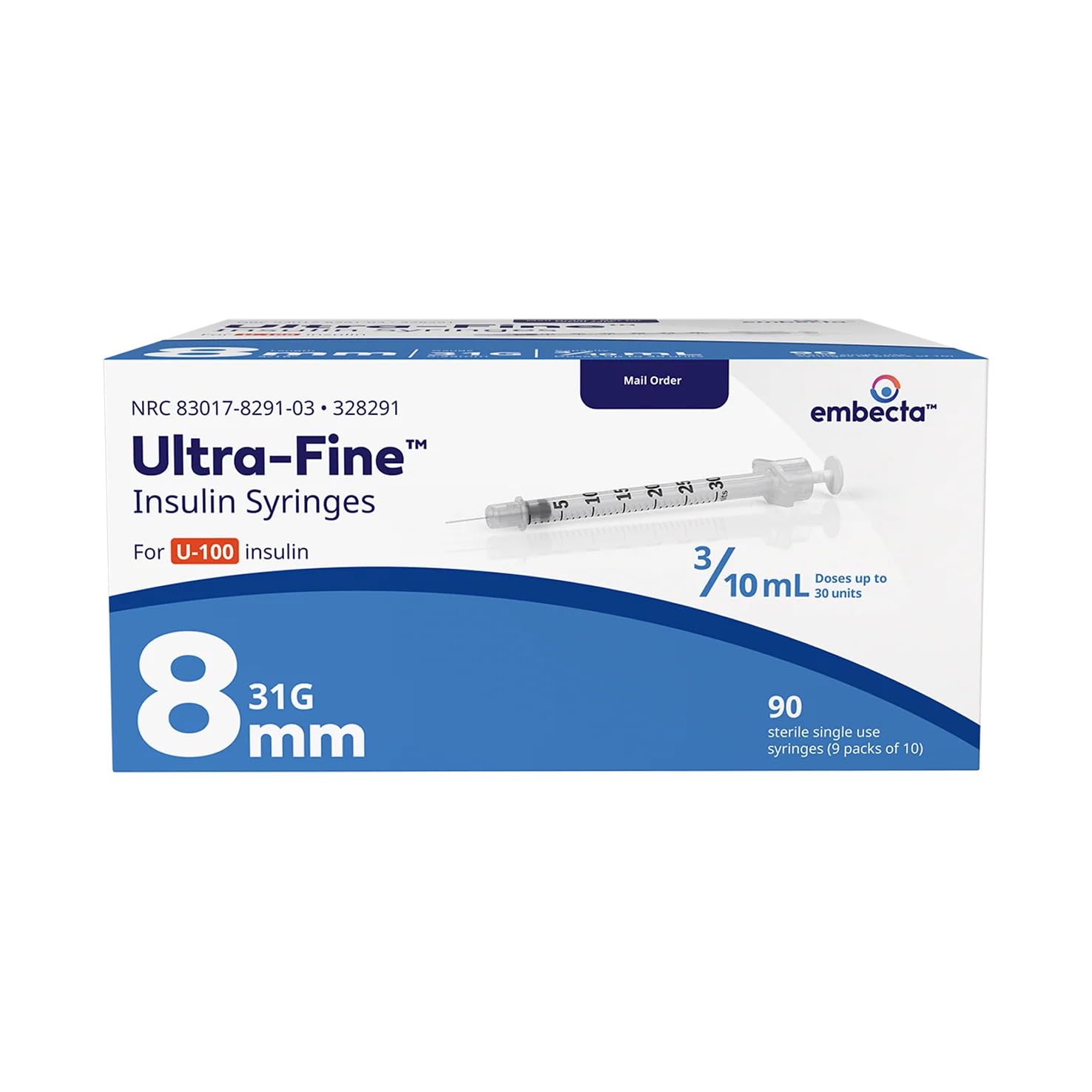
- Volume: Typically 0.1–0.3 mL with insulin syringe
- Reconstitution: Add 2 mL bacteriostatic water to a 5 mg vial (2,500 mcg/mL). 300 mcg = 12 units on insulin syringe.
Oral Administration (Research Context)
AOD-9604 has demonstrated oral bioactivity in animal studies:
- Animal studies used oral doses of 500 mcg/kg body weight
- GRAS status was granted for AOD-9604 as a food ingredient
- Community preference remains injectable for more reliable absorption
- Oral bioavailability is lower and more variable than SC injection
Intra-articular Injection (Emerging Use)
Recent research has explored AOD-9604 for joint health:
- Cartilage regeneration — AOD-9604 injected into joints showed cartilage-protective effects in animal models
- Combined with hyaluronic acid — Enhanced results when used with HA
Ready to Buy? Compare Prices
Best current prices from verified vendors with COA testing.
EZ Peptides · 10mg · $4.80/mgCOA ✓
The Peptide Brief
Weekly price drops, new research, and vendor deals — straight to your inbox.
No spam. Unsubscribe anytime.
Where These Numbers Come From: Clinical Context
AOD-9604 has a notable research history including animal studies, human clinical trials, and FDA GRAS evaluation.
Animal Studies
- Obese mouse models — Both hGH and AOD-9604 reduced body weight gain via increased fat oxidation and plasma glycerol levels (lipolysis marker) without affecting IGF-1 or insulin (Ng et al., 2001)
- Beta-3 adrenergic receptor mechanism — AOD-9604 stimulates lipolysis through beta-3 AR pathways in adipose tissue, with reduced effectiveness in beta-3 AR knockout mice (Heffernan et al., 2001)
- Oral activity in Zucker rats — 500 mcg/kg oral doses reduced body weight gain over 19 days and increased fat oxidation without affecting lean mass or blood glucose (Ng et al., 2000)
Human Clinical Context
AOD-9604 progressed through Phase 2 human clinical trials:
- Safety confirmed — Well-tolerated in human subjects with no significant adverse events
- Efficacy mixed — Weight loss observed in initial trials but not replicated in later studies that included intensive diet/exercise programs
- No GH axis effects — Confirmed that AOD-9604 does not affect IGF-1, insulin, or glucose levels in humans
Joint Health Research
- Osteoarthritis model — Intra-articular AOD-9604 injections enhanced cartilage regeneration in rabbit OA models, with combined AOD-9604 + hyaluronic acid outperforming either alone (Kwon & Park, 2015)
FDA GRAS Status
AOD-9604 received GRAS (Generally Recognized As Safe) status from the FDA as a food ingredient, reflecting its favorable safety profile. This does not constitute approval as a drug.
Mechanism of Action

AOD-9604 works through the lipolytic pathway of growth hormone while avoiding growth-promoting effects:
Beta-3 adrenergic receptor stimulation — AOD-9604 stimulates lipolysis primarily through beta-3 adrenergic receptor pathways in adipose tissue. This triggers cAMP signaling, activating hormone-sensitive lipase (HSL) to break down stored triglycerides (Heffernan et al., 2001).
Fat oxidation enhancement — Chronic treatment increases in vivo fat oxidation rates, meaning the body preferentially burns fat for energy. This was demonstrated by increased respiratory quotient shifts toward fat utilization (Ng et al., 2001).
Anti-lipogenic activity — Beyond stimulating fat breakdown, AOD-9604 inhibits lipogenesis (new fat synthesis), providing a dual mechanism for reducing adipose tissue.
No IGF-1 or insulin effects — Unlike full growth hormone, AOD-9604 does not increase IGF-1 levels, affect insulin sensitivity, or promote growth in non-adipose tissues. This is its key differentiator from GH therapy.
Cartilage-protective effects — Recent research suggests AOD-9604 may stimulate chondrocyte activity and promote cartilage repair through mechanisms separate from its lipolytic activity (Kwon & Park, 2015).
Side Effects & Safety
AOD-9604 has a favorable safety profile supported by human clinical data and GRAS status:
Clinical Safety Data
- GRAS status — FDA Generally Recognized As Safe as food ingredient
- Human trials — Well-tolerated in Phase 2 clinical trials
- No GH axis effects — Does not alter IGF-1, insulin, or glucose levels
- No proliferative concerns — Unlike GH, does not promote tissue growth
Reported Side Effects
Common (mild):
- Injection site redness or irritation
- Mild headache (infrequent)
- Slight stomach upset if injected too close to eating
Uncommon:
- Water retention (rare, unlike full GH)
- Mild joint discomfort (rare)
- Dizziness (rare)
Key Safety Advantages Over Growth Hormone
- No diabetogenic effects (blood sugar neutral)
- No acromegaly risk (no growth stimulation)
- No carpal tunnel syndrome
- No organ enlargement
- No IGF-1 elevation
Stacking AOD-9604
AOD-9604 is frequently combined with other fat loss and body composition peptides:
AOD-9604 + CJC-1295/Ipamorelin (GH + Fragment Stack)
Combines GH secretagogue effects with targeted lipolysis:
- AOD-9604 → direct lipolysis, fat oxidation
- CJC-1295/Ipamorelin → GH pulse, recovery, sleep quality
| Peptide | Route | Dose | Timing |
|---|---|---|---|
| AOD-9604 | SC | 300 mcg | AM fasted |
| CJC-1295/Ipamorelin | SC | 100/100 mcg | PM before bed |
AOD-9604 + BPC-157 (Fat Loss + Recovery)
For body recomposition with joint and tissue support:
- AOD-9604 → fat loss, potential cartilage support
- BPC-157 → tissue healing, gut health, anti-inflammatory
AOD-9604 + Tesofensine (Aggressive Fat Loss)
For more aggressive weight management protocols:
- AOD-9604 → peripheral lipolysis
- Tesofensine → central appetite suppression, monoamine reuptake inhibition
Stacking Considerations
- Fasted injection for AOD-9604 — Maintain morning fasted timing even when stacking
- Separate GH secretagogues — Dose CJC/Ipa at night, AOD in the morning
- Diet remains critical — AOD-9604 enhances fat loss but doesn't replace caloric deficit
Frequently Asked Questions
What is the standard AOD-9604 dose?
300 mcg subcutaneously once daily, injected into abdominal fat in the morning on an empty stomach. Range is 250–500 mcg daily depending on goals and tolerance.
How long does AOD-9604 take to work?
Most users report initial effects at 2–4 weeks, with noticeable fat loss at 4–8 weeks. Results depend heavily on diet and exercise — AOD-9604 is not a standalone solution.
Should I take AOD-9604 on an empty stomach?
Yes — fasted morning injection is the standard community protocol. The rationale is to avoid insulin competition with lipolytic signaling, though this specific interaction hasn't been clinically validated for injectable use.
Does AOD-9604 affect growth hormone levels?
No. AOD-9604 is the C-terminal GH fragment (176-191) that retains lipolytic activity without affecting IGF-1, insulin, or GH levels. This is its primary advantage over full growth hormone therapy.
How long should an AOD-9604 cycle last?
8–12 weeks on, 4–6 weeks off is standard. Some users run longer cycles since it doesn't affect the GH axis, but cycling is recommended given limited long-term injectable data.
Can AOD-9604 be taken orally?
Animal studies demonstrated oral activity, and it has GRAS status as a food ingredient. However, injectable use is preferred in the community for more reliable bioavailability.
Related Guides
- Semaglutide Dosing Guide — GLP-1 agonist for comprehensive weight management
- Tesofensine Dosing Guide — Central appetite suppressant for stacking
- CJC-1295/Ipamorelin Guide — GH secretagogue stack for body composition
- Peptide Stacking Guide — Principles for combining fat loss peptides
References
| Citation | Topic | PMID |
|---|---|---|
| Ng et al., International Journal of Obesity (2001) | Fat oxidation and weight loss in obese mice | 11673763 |
| Heffernan et al., Endocrinology (2001) | Beta-3 AR mechanism, lipid metabolism in obese mice | 11713213 |
| Ng et al., Hormone and Metabolic Research (2000) | Oral AOD-9604 metabolic effects in Zucker rats | 11146367 |
| Kwon & Park, Annals of Clinical and Laboratory Science (2015) | Intra-articular AOD-9604 for osteoarthritis | 26275694 |
For educational and research purposes only. This is not medical advice. AOD-9604 has GRAS status but is not FDA-approved as a drug. All protocols described are for informational purposes.