articlesMay 11, 2026·5 min read

GLP-1s for the Brain: 53% Lower Dementia + Addiction Use

UCSF May 5 synthesis pulls dementia and addiction data into one frame. What semaglutide, tirzepatide, and brenipatide buyers should track.

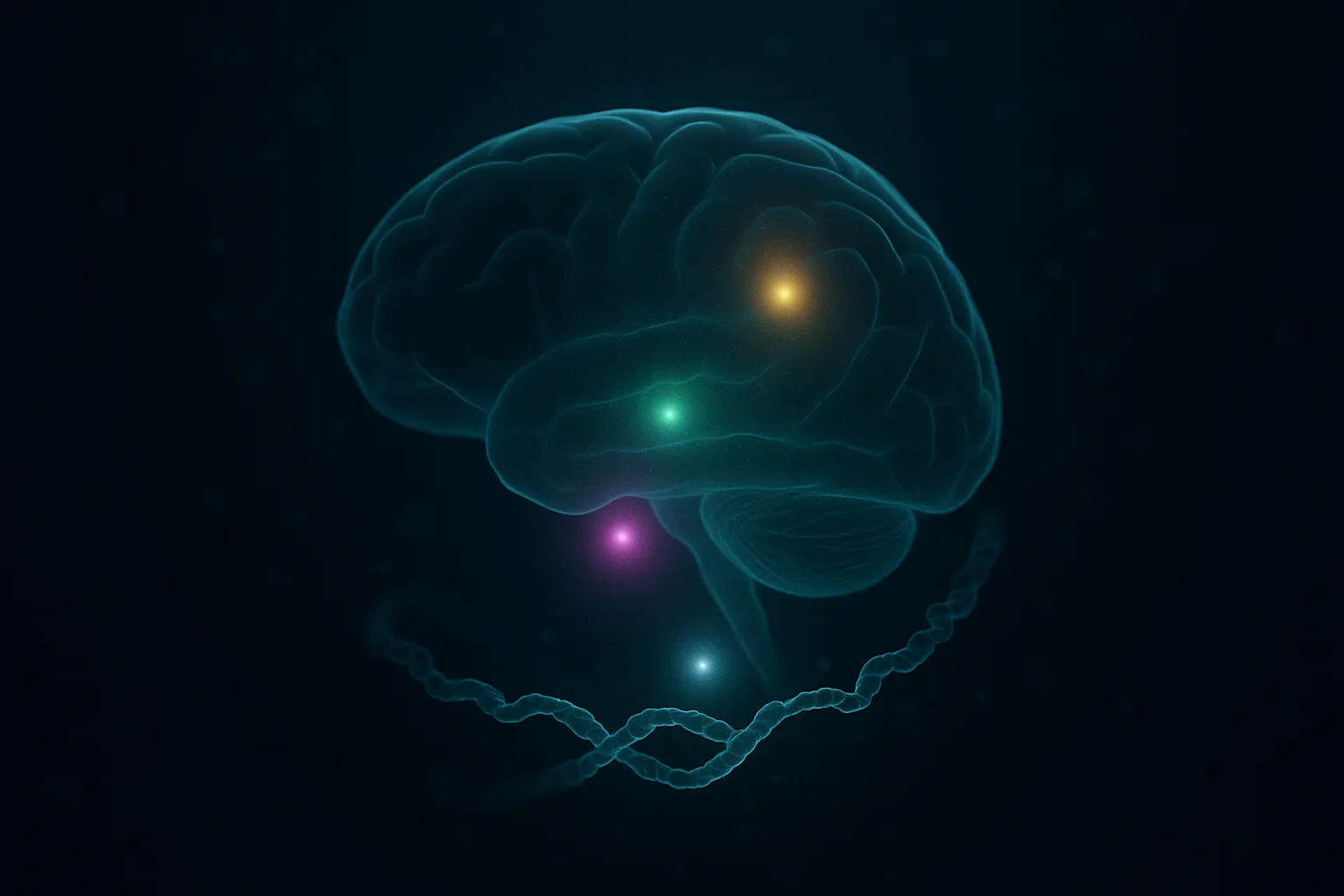
Stylized translucent brain glowing with three luminous nodes representing amygdala, hippocampus, and prefrontal cortex regions wrapped by faint GLP-1 peptide ribbons

UCSF published a May 5, 2026 synthesis pulling together a decade of GLP-1 neurological evidence into one frame — dementia, addiction, and the mechanistic case for repurposing weight-loss peptides as brain drugs. The headline number: a 53% lower dementia hazard in pooled cardiovascular trials. The catch: Phase 3 trials in established disease have so far failed.

What UCSF Pulled Together

The UCSF news synthesis — featuring Diana Thiara, MD (UCSF Weight Management), Jeffrey Fessel, MD (emeritus clinical professor), and Khaled Moussawi, MD, PhD — surveys two distinct evidence streams that have been running in parallel:

Dementia / cognitive protection. The Nørgaard 2022 pooled analysis (PMID 35229024) combined three cardiovascular outcome trials (15,820 patients) with the Danish nationwide registry (120,054 patients). Pooled-trial hazard ratio for dementia: 0.47 (95% CI 0.25-0.86), the 53% figure UCSF leads with. Nationwide cohort: HR 0.89 per year of GLP-1 exposure (95% CI 0.86-0.93), an 11% annual reduction. The dulaglutide REWIND exploratory analysis (PMID 32562683) tested 8,828 participants and found a 14% lower hazard of substantive cognitive impairment over 5.4 years. A 2026 REWIND post-hoc layered in plasma biomarkers — in participants with p-tau217 ≥0.25 pg/mL, dulaglutide cut substantive cognitive impairment by 22%.

Addiction / reward modulation. Observational data (Endocrine Society 2025) connects GLP-1 exposure to lower rates of alcohol, opioid, and nicotine use disorders. Animal work points to dampened dopamine surges in the nucleus accumbens and amygdala — the same circuit that drives drug-taking, food craving, and gambling. Lilly's brenipatide (LY-3537031), a once-monthly GLP-1/GIP optimized for the brain rather than weight loss, is in Phase 3 for alcohol use disorder and smoking-cessation relapse and Phase 2 for opioid use disorder, schizophrenia, and asthma.

The Phase 3 reality check. Semaglutide EVOKE and EVOKE+ (The Lancet, March 2026) randomized 3,808 patients with early Alzheimer's to oral semaglutide 14 mg or placebo for 104 weeks. Primary endpoint (CDR-SB change): 2.3 vs 2.3 — flat miss. Liraglutide ELAD (PMID 41326666, Nature Medicine Dec 2025) missed its primary FDG-PET endpoint but showed ~50% less MRI-measured brain volume loss and a positive ADAS-Exec secondary outcome. Net read: GLP-1s look better as long-horizon prevention than as treatment for established neurodegeneration.

Three vertical luminous particle bars of descending height beside a glowing brain silhouette, abstract data visualization of dementia risk reduction magnitudes

What This Means If You're Buying GLP-1 Peptides

The brain-health data does not change the dose, schedule, or vendor calculus for current GLP-1 buyers. It does shift the why — and changes how you should think about long-term cycles. Three practical takeaways:

1. Older long-acting GLP-1s have the cleanest cognitive evidence. Dulaglutide REWIND (14% lower cognitive decline) and liraglutide ELAD (50% less brain volume loss on MRI) both used compounds that have been on label for a decade. Newer agents — semaglutide, tirzepatide, retatrutide — have minimal dedicated brain data. EVOKE explicitly failed for semaglutide in established Alzheimer's. If brain health is the goal, the older GLP-1 mechanism class has more evidence than the latest molecule.

2. Duration matters more than peak dose. The Danish cohort showed an 11% dementia-risk reduction per year of exposure. REWIND ran 5.4 years. ELAD ran 52 weeks. The signal scales with cumulative time on drug, not with maximum titration. For research buyers running 12-week cycles for weight loss, that's likely too short to capture the cognitive benefit even if it's real.

3. Tirzepatide and retatrutide get studied next. No published cognition trials yet. Lilly's TRIUMPH and TRANSCEND programs will spin out cognition substudies as readouts complete through 2026-2027. Brenipatide is the dedicated brain-targeted GLP-1/GIP — Phase 3 alcohol-use-disorder data is the next major readout to watch.

For research-grade vials while the data evolves, see the live vendor data for semaglutide, tirzepatide, and retatrutide — pricing, COA status, and active coupons update from the database. Vendor-side discounts live on /deals.
Top Semaglutide Vendors

Ranked by price, COA availability, and reputation

1
Nura PeptidePREMIUMCOA
10/10
10mg$6.90/mg
2
Ascension PeptidesCOA
9.8/10
5mg$8.00/mg
3
Ion PeptideCOA
9.5/10
$3.45/mg

Top Tirzepatide Vendors

Ranked by price, COA availability, and reputation

1
EZ PeptidesCOA
10/10
$3.27/mg
2
Nura PeptidePREMIUMCOA
9.8/10
$5.67/mg
3
Ascension PeptidesCOA
9.5/10
$5.67/mg

Top Retatrutide Vendors

Ranked by price, COA availability, and reputation

1
Nura PeptidePREMIUMCOA
10/10
$6.50/mg
2
EZ PeptidesCOA
9.8/10
$7.80/mg
3
Ion PeptideCOA
9.5/10
$5.85/mg

Background: Why GLP-1 Drugs Might Reach the Brain

GLP-1 receptors are not confined to the gut and pancreas. They are expressed throughout the central nervous system — hypothalamus, brainstem, hippocampus, amygdala, nucleus accumbens. The receptor-occupancy logic that drives appetite suppression also gives GLP-1s a pathway into the reward circuit, the memory consolidation circuit, and the vascular-inflammation pathway that drives vascular dementia.

UCSF flags three plausible mechanisms: (1) vascular protection — GLP-1s lower stroke risk and improve blood pressure and glycemic control, all upstream drivers of vascular dementia; (2) synaptic plasticity — animal work shows GLP-1s increase hippocampal long-term potentiation, the cellular basis of learning; (3) dopamine modulation — GLP-1 signaling appears to mute the intensity of the dopamine surge that reinforces drug, alcohol, and food intake. The third mechanism is why a separate molecule (brenipatide) is being optimized for brain rather than gut binding.

For deeper context on the existing trial landscape, see our GLP-1 + Alzheimer's trial roundup, the GLP-1 oral pill brain reward circuit study, and the semaglutide alcohol use disorder Lancet trial coverage.

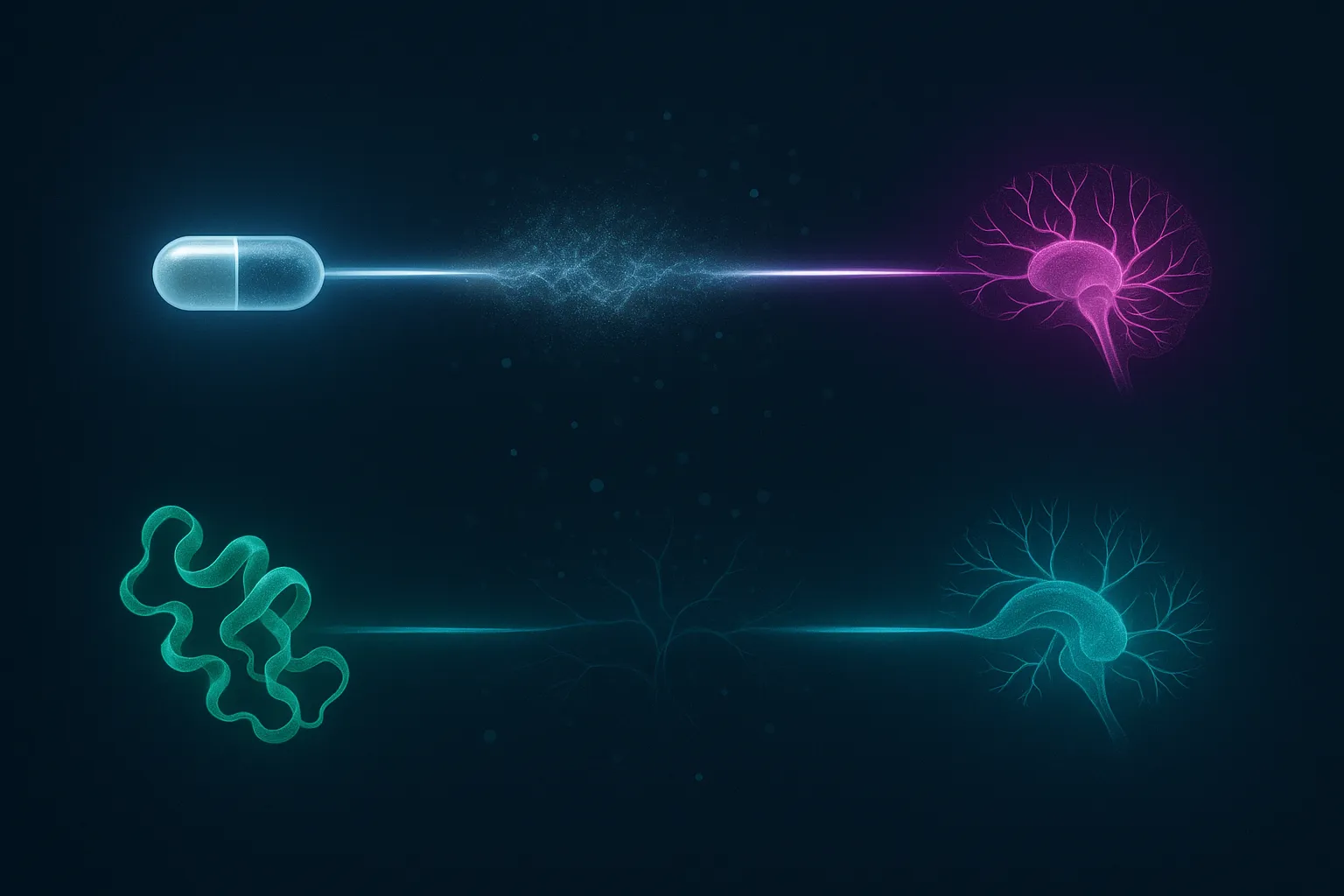
Two parallel glowing pathways: upper from an oral capsule through blood-brain-barrier to violet amygdala node, lower from a peptide ribbon through vascular branches to cyan hippocampus node

Frequently Asked Questions

Do GLP-1s reduce dementia risk?
Population data and one pooled-trial analysis suggest yes — the Norgaard 2022 study (PMID 35229024) reported a 53% lower dementia hazard in pooled cardiovascular trials and an 11% reduction per year of GLP-1 exposure in the Danish nationwide cohort. The dulaglutide REWIND analysis (PMID 32562683) showed a 14% lower risk of significant cognitive decline over 5.4 years. But the only Phase 3 trial in established Alzheimer's — semaglutide EVOKE — missed its primary cognitive endpoint in March 2026, so the brain benefit looks more like a prevention signal than a treatment effect.
Can semaglutide or tirzepatide treat addiction?
Not yet on label. Endocrine Society and observational data show GLP-1s blunt alcohol, opioid, nicotine, and food-reward signaling, and the lancet semaglutide alcohol-use-disorder trial readout in early 2026 confirmed reduced drinking days. Eli Lilly's brenipatide (LY-3537031), a once-monthly GLP-1/GIP optimized for neuroscience, is now in Phase 3 trials for alcohol use disorder and smoking cessation and Phase 2 trials for opioid use disorder and schizophrenia. Approval for any addiction indication is still 2027+ at the earliest.
Which GLP-1 has the strongest brain-health evidence?
Dulaglutide and liraglutide, the older long-acting GLP-1s, have the most clinical evidence. Liraglutide ELAD (PMID 41326666, Nature Medicine Dec 2025) showed nearly 50% less brain volume loss on MRI in mild-moderate Alzheimer's even though it missed its primary glucose-metabolism endpoint. Dulaglutide REWIND showed 14% lower cognitive decline. Semaglutide failed EVOKE in established Alzheimer's. Retatrutide and tirzepatide have no dedicated cognition trials yet — that data is still 18–24 months out.
Where can I source GLP-1 peptides while the brain data evolves?
For research-grade vials of semaglutide, tirzepatide, and retatrutide, our recommended vendors are EZ Peptides, Ascension Peptides, Ion Peptide, and Glacier Aminos. See the live /best/semaglutide, /best/tirzepatide, and /best/retatrutide pages for current pricing, COA status, and active coupons. Branded oral options require a prescription and run $149-$349 cash pay.
30ml bacteriostatic water vial — 0.9% benzyl alcohol multi-dose
Bac Water Made for Peptides
Don't risk a $300 peptide on generic bac water.
Most cloudy reconstitutions trace back to one thing — and it isn't the peptide. Sterile, non-pyrogenic, 0.9% benzyl alcohol — formulated for peptide reconstitution, not repackaged from generic stock.
0.9% benzyl alcohol Made for peptides 30 mL multi-dose
See why our bac water doesn't ruin peptides
30ml from $18.75 · Ships fast · Code thepeptidecatalog

References

  1. UCSF News, "Can Blockbuster GLP-1 Weight-Loss Drugs Also Protect Brain Health?" May 5, 2026. https://www.ucsf.edu/news/2026/05/431871/can-blockbuster-glp-1-weight-loss-drugs-also-protect-brain-health
  2. Nørgaard CH et al. Treatment with glucagon-like peptide-1 receptor agonists and incidence of dementia. Alzheimer's & Dementia: Translational Research & Clinical Interventions 2022;8:e12268. PMID 35229024.
  3. Cukierman-Yaffe T et al. Effect of dulaglutide on cognitive impairment in type 2 diabetes: an exploratory analysis of the REWIND trial. The Lancet Neurology 2020;19(7):582-590. PMID 32562683.
  4. Femminella GD et al. Liraglutide in mild to moderate Alzheimer's disease: a phase 2b clinical trial. Nature Medicine Dec 2025. PMID 41326666.
  5. Cummings J et al. EVOKE and EVOKE+ trial design for semaglutide in early Alzheimer's. Alzheimer's Research & Therapy 2024. PMC11708093.
  6. Endocrine Society, "GLP-1s show promise in treating alcohol and drug addiction," 2025.
  7. ClinicalTrials.gov NCT07420283 — Brenipatide in Participants With Opioid Use Disorder (UCSF).
  8. Eli Lilly investor materials, brenipatide development pipeline 2026.