Ipamorelin is the most selective growth hormone releasing peptide (GHRP) available. It triggers GH release from the pituitary without raising cortisol or prolactin — a selectivity profile no other GHRP matches. That distinction matters more than most users realize.
Research-context information only. Ipamorelin is a research peptide. Protocols, doses, and reactions reported below come from published research and self-reported community sources. This article reports what has been documented, not what should be done. Consult a licensed physician for personal medical decisions.
This article covers 6 research-backed benefits of ipamorelin, ranked by evidence strength. Every claim links to a published study. Where evidence comes from animal models only, that is stated clearly. This is not medical advice.
How Ipamorelin Works
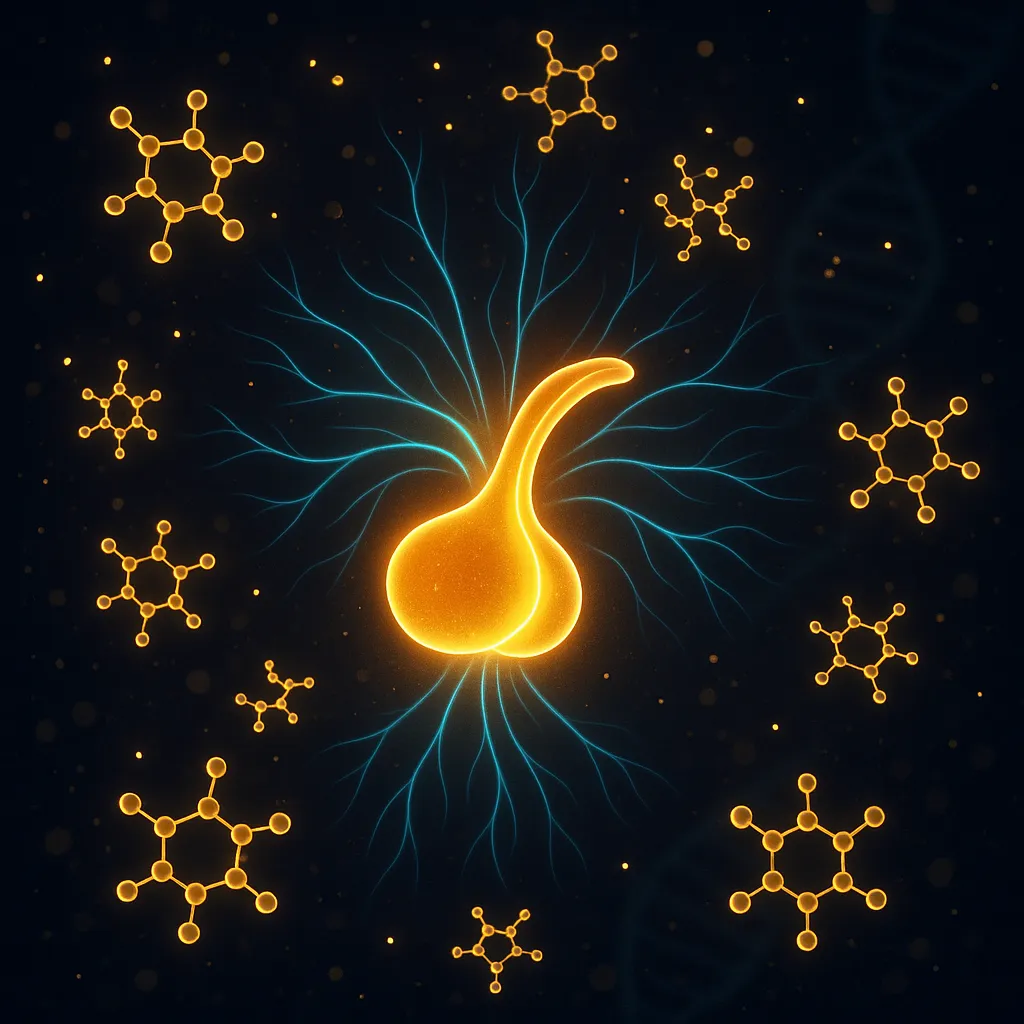
Ipamorelin is a synthetic pentapeptide that mimics ghrelin at the GHSR-1a receptor on pituitary somatotrophs. When it binds, it triggers a growth hormone pulse — similar to what happens naturally during deep sleep or intense exercise.
What makes ipamorelin unique among GHRPs is its selectivity. At doses over 200-fold higher than the effective GH-releasing dose, it still does not significantly increase ACTH, cortisol, or prolactin (Raun et al., 1998). GHRP-2 and GHRP-6 cannot make that claim. Neither can hexarelin.
This means ipamorelin produces clean GH pulses without the downstream hormonal disruption that limits other secretagogues. For dosing specifics, see our Ipamorelin Dosing Guide.
1. Selective GH Release Without Hormonal Side Effects
Evidence: Strong (human and animal data)
This is ipamorelin's defining advantage and its best-supported benefit. In the landmark characterization study, ipamorelin released GH with potency comparable to GHRP-6 but did not elevate ACTH, cortisol, FSH, LH, prolactin, or TSH at any dose tested (Raun et al., 1998).
Why this matters practically: cortisol elevation from GHRPs like GHRP-2 can blunt fat loss and disrupt sleep. Prolactin increases from hexarelin can cause mood changes and, in men, sexual side effects. Ipamorelin avoids both.
Pharmacokinetic modeling in swine confirmed dose-dependent GH release with an ED50 of 2.3 nmol/kg and Emax of 65 ng GH/mL plasma (Johansen et al., 1999). The GH response follows a predictable curve, making dosing straightforward.
For a comparison of ipamorelin's selectivity versus other GHRPs, see our Ipamorelin vs GHRP-2 vs GHRP-6 comparison.
2. Increased Bone Mineral Content and Bone Growth
Evidence: Strong (animal data)
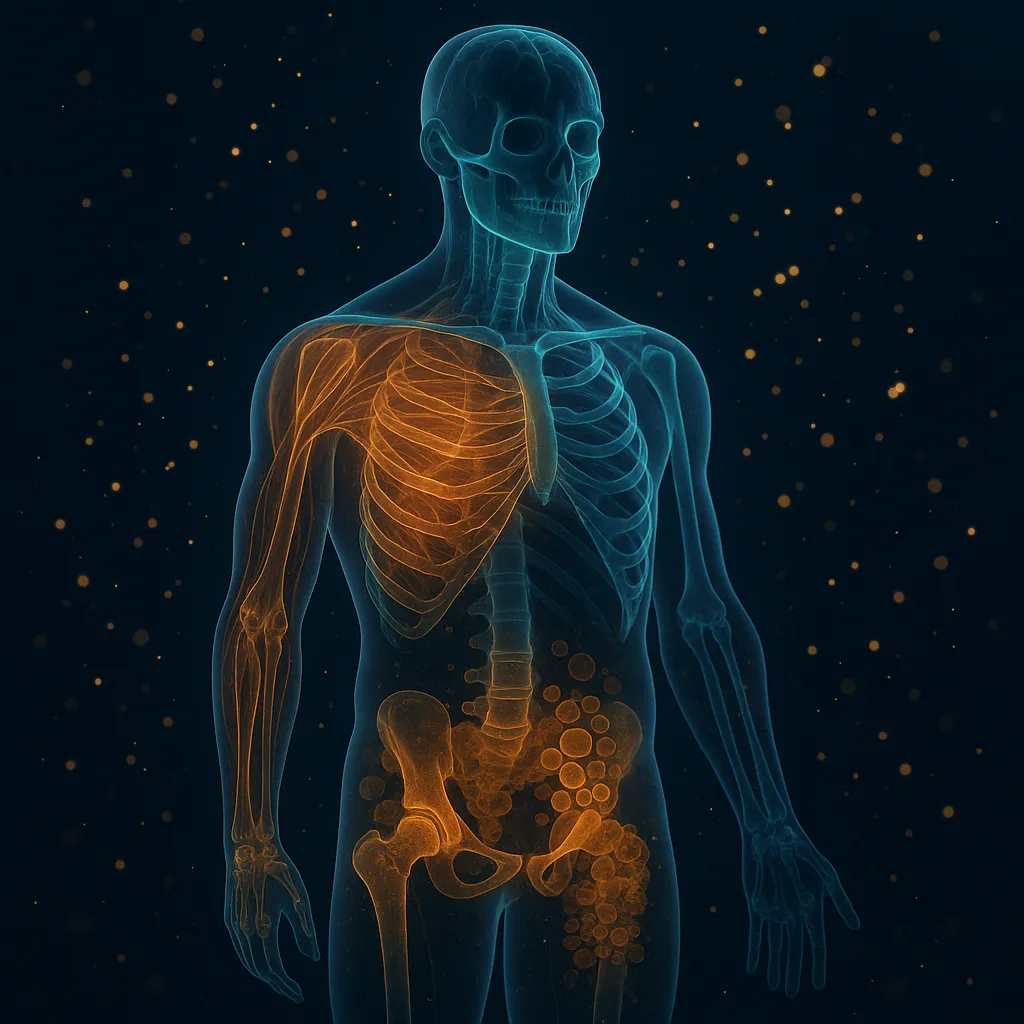
Ipamorelin has the most consistent bone data of any GHRP. In adult female rats, treatment with ipamorelin increased total tibial and vertebral bone mineral content measured by DXA. Tibial area bone mineral density was significantly increased compared to vehicle-treated controls (Andersen et al., 2001).
A separate study demonstrated dose-dependent increases in longitudinal bone growth — from 42 microns/day in controls to 52 microns/day at the highest dose (450 mcg/day). Body weight gain was also dose-dependent (Johansen et al., 1999).
Perhaps most clinically relevant: ipamorelin counteracted glucocorticoid-induced bone loss in adult rats. The periosteal bone formation rate increased four-fold when ipamorelin was co-administered with glucocorticoids, compared to glucocorticoids alone. Muscle strength decreases from glucocorticoids were also reversed (Svensson et al., 2001).
Limitation: All bone data is from rat models. No human bone density trials exist for ipamorelin. However, the mechanism (GH → IGF-1 → osteoblast stimulation) is well-established in humans.
3. Body Composition Improvements
Evidence: Moderate (animal data, mechanistic support)
Growth hormone is one of the most potent regulators of body composition. It promotes lipolysis (fat breakdown), increases protein synthesis, and shifts nutrient partitioning toward lean tissue. Ipamorelin reliably elevates GH, which is the upstream driver of these effects.
In rat studies, ipamorelin produced dose-dependent body weight increases alongside the bone growth effects, suggesting anabolic activity beyond skeletal tissue (Johansen et al., 1999). Chronic treatment influenced somatotroph cell populations, indicating sustained GH axis activation rather than a transient spike (Jimenez-Reina et al., 2002).
The body composition case for ipamorelin is largely mechanistic: if you increase GH pulsatility without raising cortisol (which promotes fat storage), the net effect on body composition should be favorable. This is why ipamorelin is preferred over cortisol-raising GHRPs for fat loss goals.
For monitoring these changes objectively, track your IGF-1 levels — see our Ipamorelin Bloodwork Guide.
4. Gastrointestinal Motility
Evidence: Moderate (animal data strong, human data mixed)
This benefit surprised researchers. As a ghrelin receptor agonist, ipamorelin activates the same pathways that regulate gut motility. In a rodent model of postoperative ileus, a single dose of ipamorelin (1 mg/kg) significantly reduced time to first bowel movement. Repeated dosing increased cumulative fecal output, food intake, and body weight recovery (Venkova et al., 2009).
The mechanism involves cholinergic excitatory neurons — ipamorelin stimulates gastric contractility through ghrelin receptor-mediated activation of the enteric nervous system (Greenwood-Van Meerveld et al., 2016).
The human data is less convincing. A Phase II randomized controlled trial in 114 bowel resection patients tested IV ipamorelin (0.03 mg/kg twice daily for up to 7 days). Time to first tolerated meal was 25.3 hours in the ipamorelin group versus 32.6 hours for placebo — a clinically meaningful difference that did not reach statistical significance (p = 0.15). The drug was well-tolerated with no serious adverse events (Beck et al., 2014).
This is a case where animal data is strong but human confirmation is still needed.
5. Counteracting Glucocorticoid Side Effects
Evidence: Moderate (animal data)
Long-term glucocorticoid use (prednisone, dexamethasone) causes well-documented problems: bone loss, muscle wasting, and impaired wound healing. Ipamorelin may offset some of these effects.
In glucocorticoid-treated rats, simultaneous ipamorelin administration restored periosteal bone formation to four times the level seen with glucocorticoids alone. Maximum tetanic muscle tension — a measure of muscle strength — was also significantly improved in the combination group (Svensson et al., 2001).
The proposed mechanism is straightforward: glucocorticoids suppress GH secretion and directly inhibit osteoblasts. Ipamorelin bypasses the suppressed GHRH pathway by acting on the ghrelin receptor, restoring GH pulses even in the presence of glucocorticoids.
Limitation: No human studies have tested this combination. However, for individuals on chronic glucocorticoid therapy who experience bone and muscle loss, this remains a compelling research direction.
6. Favorable Safety and Tolerability Profile
Evidence: Strong (human and animal data)
While not a "benefit" in the traditional sense, ipamorelin's safety profile is itself a meaningful advantage. The Phase II clinical trial in postoperative ileus patients established that IV ipamorelin at 0.03 mg/kg twice daily for up to 7 days was well-tolerated with no significant adverse events compared to placebo (Beck et al., 2014).
Unlike GHRP-6, ipamorelin does not cause intense hunger spikes. Unlike GHRP-2, it does not raise cortisol. Unlike hexarelin, it does not elevate prolactin. This selectivity profile means fewer management strategies, fewer side effects to monitor, and simpler bloodwork tracking.
Common reported effects are mild: transient injection site redness, slight water retention (less than other GHRPs), and occasional mild headache during the first week.
Ready to buy? Compare verified vendors on our best ipamorelin sources page, or browse all coupon codes for up to 50% off.