Liraglutide is one of the most extensively studied peptide therapies available, with clinical trial data spanning over 10,000 patients across multiple large-scale randomized controlled trials. It was the first GLP-1 receptor agonist approved for chronic weight management and has demonstrated benefits across weight loss, cardiovascular outcomes, glycemic control, and organ protection.
Research-context information only. Liraglutide is the active ingredient in FDA-approved products for diabetes and chronic weight management; research-peptide and compounded forms are not FDA-approved and are sold for research purposes only. Protocols, doses, and reactions reported below come from published clinical trials and self-reported community sources. This article reports what has been documented, not what should be done. Possession or use of investigational drugs outside an authorized clinical trial may be illegal in your jurisdiction. Consult a licensed physician for personal medical decisions.
Every benefit below is backed by published clinical data. No brand names are used — this article covers liraglutide, the molecule.
How Liraglutide Works
Liraglutide is a GLP-1 receptor agonist with 97% structural homology to native human GLP-1. A C16 palmitic acid chain attached at position 26 enables albumin binding, extending its half-life from 2 minutes (native GLP-1) to approximately 13 hours, allowing once-daily dosing (Neumiller, 2011).
It acts as a full agonist at the GLP-1 receptor (a class B GPCR), activating both Gs-cAMP and beta-arrestin signaling. This dual signaling is relevant because the downstream effects differ — cAMP mediates metabolic effects while beta-arrestin influences receptor desensitization and intracellular signaling.
For dosing protocols and titration schedules, see our Liraglutide Dosing Guide.
1. Weight Loss (Strong Evidence — Phase III RCT)
The SCALE Obesity and Prediabetes trial is the landmark study that established liraglutide for weight management.
This trial randomized 3,731 patients to liraglutide 3.0 mg daily versus placebo for 56 weeks. Results: 8.0% average weight loss with liraglutide versus 2.6% with placebo. 63.2% of patients lost at least 5% body weight (vs 27.1% placebo), and 33.1% lost at least 10% (vs 10.6% placebo) (Pi-Sunyer et al., 2015).
A separate trial in patients with type 2 diabetes confirmed 6.0% weight loss with liraglutide 3.0 mg versus 2.0% with placebo at 56 weeks, along with significant improvements in HbA1c and fasting glucose (Davies et al., 2015).
Context: These results are clinically meaningful but moderate compared to newer GLP-1 RAs. Semaglutide 2.4 mg weekly produces roughly double the weight loss. Liraglutide's advantage is established safety data, daily dose flexibility, and lower cost in some markets.
2. Cardiovascular Risk Reduction (Strong Evidence — Outcomes Trial)
The LEADER trial is arguably liraglutide's most important study — more significant than its weight loss data.
This trial enrolled 9,340 patients with type 2 diabetes and high cardiovascular risk, following them for a median of 3.8 years. Liraglutide produced a 13% reduction in major adverse cardiovascular events (MACE) — the composite of heart attack, stroke, and cardiovascular death. Cardiovascular death alone was reduced by 22% (Marso et al., 2016).
This was the first GLP-1 RA to demonstrate cardiovascular benefit in a dedicated outcomes trial. The benefit was consistent across subgroups including patients with and without prior heart failure, and those with and without prior myocardial infarction.
The cardiovascular protection appears partially independent of weight loss and glucose lowering, suggesting direct cardioprotective mechanisms — reduced systemic inflammation and improved endothelial function are the leading hypotheses.
3. Blood Sugar and A1C Reduction (Strong Evidence — Multiple RCTs)
Liraglutide's glucose-lowering effects are glucose-dependent, meaning the risk of hypoglycemia is low when used without sulfonylureas.
Across clinical trials at the 1.8 mg diabetes dose, liraglutide consistently reduced HbA1c by 1.0-1.5 percentage points. At the 3.0 mg weight management dose in patients with type 2 diabetes, HbA1c reductions exceeded those seen at lower doses (Davies et al., 2015).
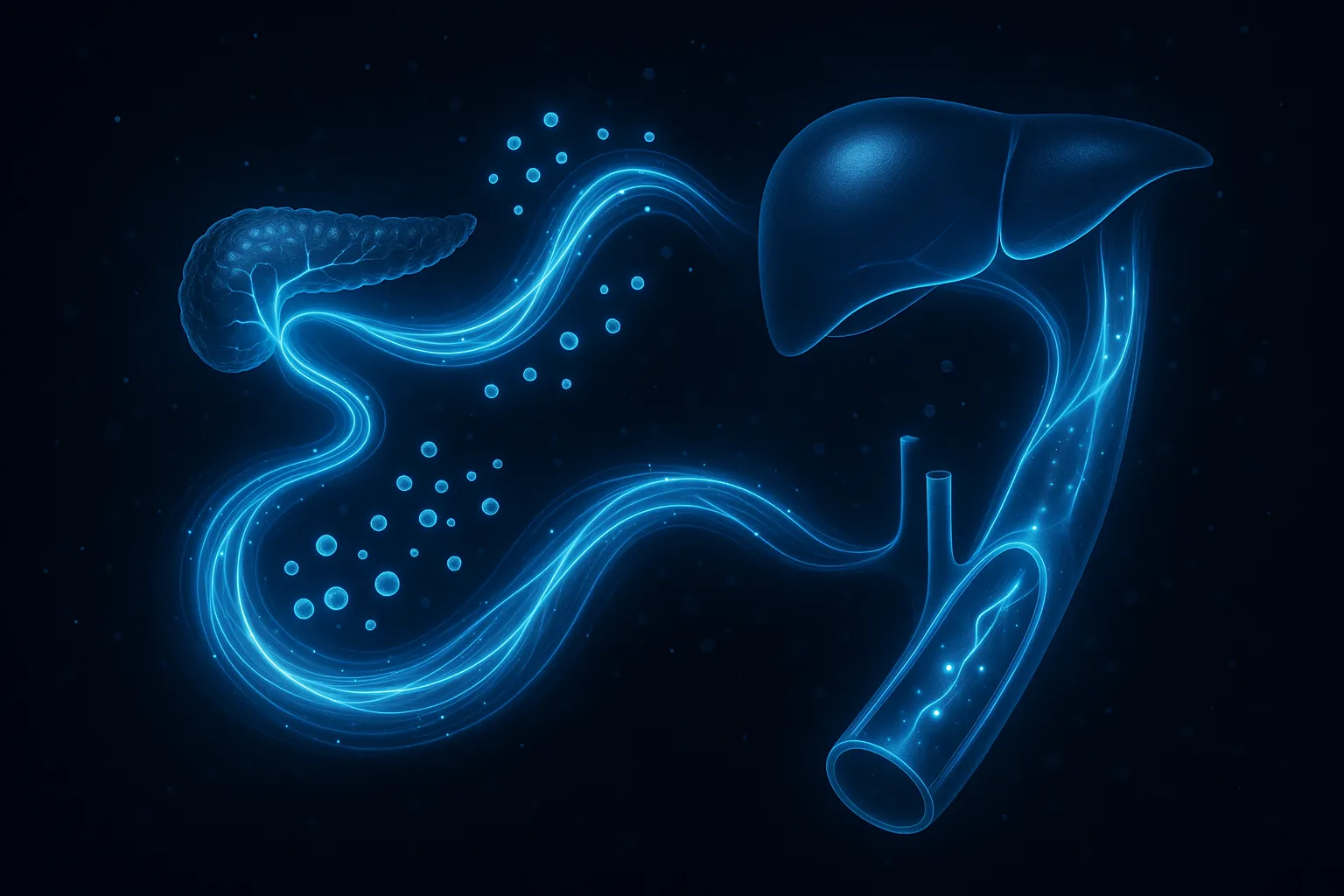
The mechanism: liraglutide enhances glucose-dependent insulin secretion while suppressing inappropriately elevated glucagon. It also promotes beta cell survival, which may help preserve pancreatic function over time. This glucose-dependent action is a key safety advantage over older diabetes medications.

4. Appetite and Craving Suppression (Strong Evidence — Phase III RCTs)
Appetite reduction is the primary driver of liraglutide's weight loss effect and the benefit most users notice first.
Liraglutide activates GLP-1 receptors in the hypothalamus — specifically the arcuate nucleus and paraventricular nucleus — increasing satiety signaling and reducing hunger. This central mechanism produces a sustained reduction in caloric intake that patients describe as simply not thinking about food as much (Muller et al., 2021).
A secondary mechanism is delayed gastric emptying (10-30% slower), which prolongs post-meal fullness. This effect partially attenuates over time (tachyphylaxis) but remains clinically relevant throughout treatment.
Most patients report noticeable appetite suppression within 1-2 weeks of starting liraglutide, even at the initial 0.6 mg dose. This early signal often predicts long-term response.
Ready to buy? Compare verified vendors on our best liraglutide sources page, or browse all coupon codes for up to 50% off.