guidesJune 3, 2026·6 min read

Buy PDA (Pentadeca Arginate): Compare 2 Vendors

Compare 2 PDA (Pentadeca Arginate) vendors: from $44 a vial, best value $4.40/mg. Codes save up to 15%. Vial sizes, COA status, cost per week.

Where to Buy PDA

PDA (Pentadeca Arginate) is a niche research peptide with two things a buyer should understand up front: it has no studies of its own — its reputation is entirely inherited from BPC-157, and the products are lightly regulated. That combination makes COA quality the single most important purchase factor — more than price, and more than any "upgraded BPC-157" marketing. This guide teaches you how to evaluate any PDA vendor; it pairs with our PDA dosing guide and reconstitution guide.

This is not a ranked vendor list — for that, see our Best PDA Vendors comparison. This guide teaches you how to evaluate any vendor yourself.

Research-context information only. PDA (pentadeca arginate) is an unapproved research compound not evaluated by the FDA. There is no PDA-specific human evidence; its claims are extrapolated from BPC-157. This article reports how it is sold, not medical or legal advice. Consult a licensed physician for personal medical decisions.

Understanding PDA Pricing

PDA is the arginate-salt form of the BPC-157 peptide — short and well-characterized to synthesize — and it is sold mainly as 10 mg lyophilized vials. Pricing tends to sit close to BPC-157, sometimes carrying a small premium tied to the "more stable" marketing.

Current Market Pricing (2026)

Vial Size Typical Price Range Price Per mg Best For
10 mg $44 - $49 ~$4.40 - $4.90/mg The common format; covers a full short course

The pattern: PDA is sold almost exclusively as 10 mg. Because community doses are small, even a single 10 mg vial holds many doses — so the practical question is how much you'll use within ~28 days of reconstituting, not how many vials a course needs. Do not pay a large premium over BPC-157 expecting a stronger effect; no evidence supports one.

Cost Per Course at Community Doses

There is no PDA-specific trial dose, so this is illustrative using common community figures (borrowed from BPC-157). A 10 mg vial at a 250 mcg/day community dose covers ~40 days.

Community dose Days per 10 mg vial Vials per 6-week course
250 mcg/day ~40 days ~1
500 mcg/day ~20 days ~2
500 mcg twice daily ~10 days ~4

For current vendor-specific pricing with exact $/mg breakdowns, see our Best PDA Vendors comparison.

How to Verify PDA Quality
COA verification process

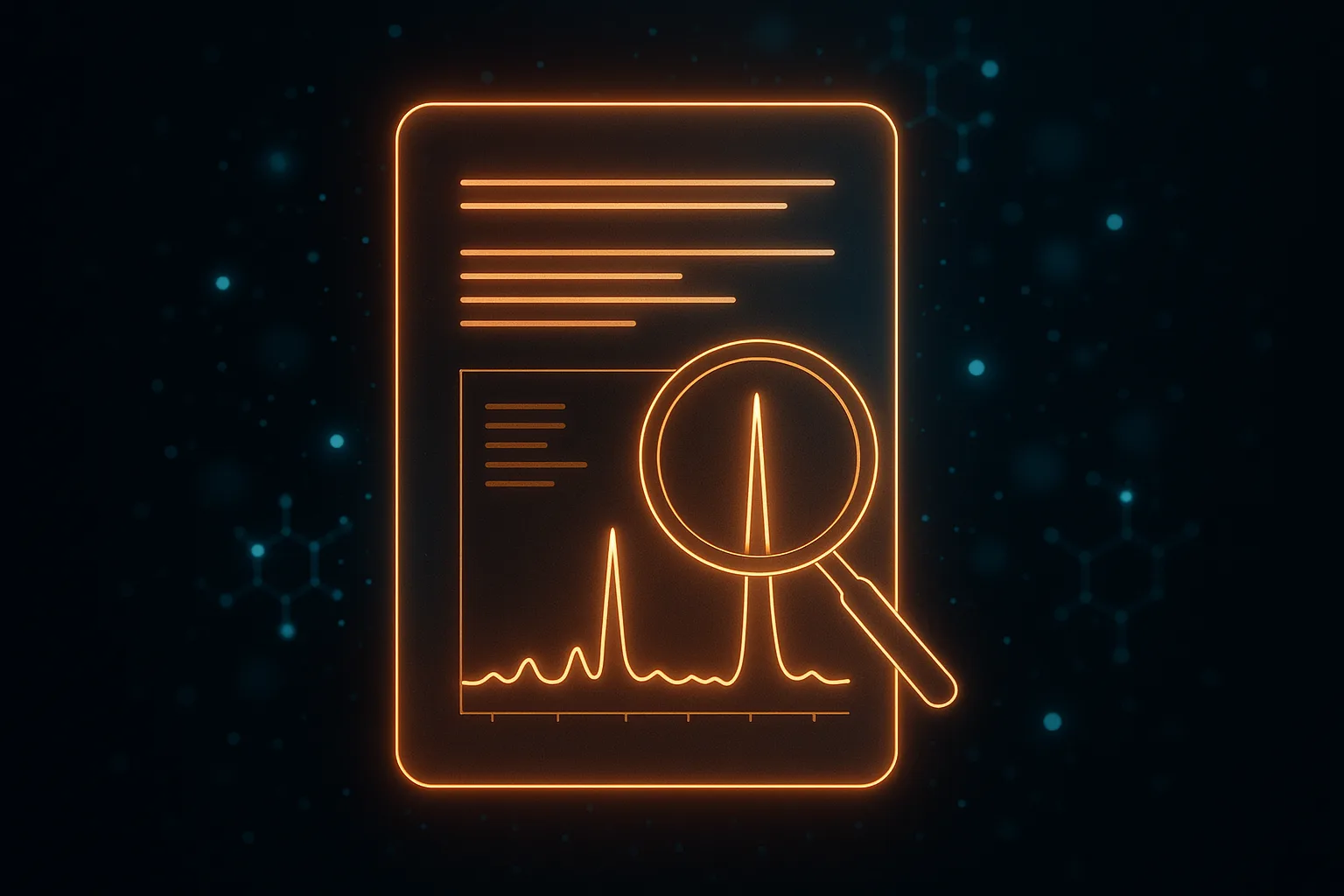
PDA is a short peptide whose lyophilized powder looks identical regardless of purity, salt form, or even identity. With a niche compound, limited oversight, and aggressive "upgraded BPC-157" marketing, the COA is the only reliable check — and arguably matters more here than for mainstream peptides.

What a COA (Certificate of Analysis) Should Include

Identity Confirmation

  • Mass spectrometry confirming the molecular weight expected for the BPC-157 sequence
  • Amino acid sequence verification

Purity Testing

  • HPLC purity — look for 98%+ (ideally 99%+) purity
  • HPLC chromatogram showing a single dominant peak

Contamination Testing

  • Endotoxin levels (bacterial contamination)
  • Residual solvent analysis
  • Heavy metals screening

How to Verify a COA Is Legitimate

  1. Check that the COA lists the specific product and a batch/lot number — not a generic template.
  2. Confirm the lot number on the COA matches the vial you receive.
  3. Look for a named third-party lab, not just an in-house claim.
  4. Cross-check the test date — a COA should be recent, not years old.
  5. Be wary if the vendor cannot produce a COA for the exact lot on request.

Red Flags to Avoid

  • No COA available, or only a years-old generic one
  • COA lot number that doesn't match the shipped vial
  • Purity claims with no HPLC chromatogram attached
  • A vendor making strong human efficacy or "clinically proven" claims for PDA — there are no PDA studies to support them
  • "1,000x more stable than BPC-157" or similar marketing presented as if it were tested data
  • No batch traceability, or a vendor unwilling to answer testing questions
Top PDA (Pentadeca Arginate) Vendors

Ranked by price, COA availability, and reputation

1
Ion PeptideCOA
10/10
10mg$4.90/mg
2
EZ PeptidesCOA
9/10
10mg$4.40/mg

Choosing the Right Vial Size

Vial size comparison

The 28-Day Rule

Once reconstituted, peptides are typically refrigerated and used within ~28 days. This is the practical tension for PDA: a 10 mg vial at small community doses can take a month or more to finish — around the edge of a single reconstituted vial's window. The practical move is to reconstitute the whole vial only if you'll use it within ~28 days, or keep it lyophilized and mix as needed.

Vial Size At 250 mcg/day At 500 mcg/day At 1 mg/day
10 mg 40 days 20 days 10 days

Solution: Match how much you reconstitute at once to a window you can actually use up in ~28 days. At a low 250 mcg/day dose, a single 10 mg vial comfortably covers a course.

Trying it / low community doses (around 250 mcg/day): a single 10 mg vial is plenty for a full short course.

Higher community doses (500 mcg+ once or twice daily): plan on two or more 10 mg vials per 4-6 week course, and buy enough per order to amortize shipping.

Buying Multiple Vials

Factor Multiple vials
Cost per mg Per-mg price is similar across 10 mg vials; bulk discounts vary by vendor
Freshness Keep spares lyophilized; mix as needed
Flexibility Easy to adjust course length
Storage Keep sealed vials refrigerated or frozen
Shipping Buy enough per order to amortize shipping

Our recommendation: Buy from the lowest verified per-mg vendor with a real, lot-matched COA, and don't pay a premium over BPC-157 expecting more — it's the same peptide in a different salt.

Vendor Evaluation Methodology

We weight three factors when ranking PDA vendors:

Price Competitiveness (40%)

Per-mg price across 10 mg vials, including any multi-vial discounts.

COA & Testing (30%)

Recent, lot-matched, third-party HPLC + mass-spec documentation — weighted heavily for a niche compound with no studies of its own.

Reputation (30%)

Community feedback, shipping reliability, and responsiveness to COA requests.

Shipping and Storage

What to Expect When Your Order Arrives

PDA ships as a white-to-off-white lyophilized powder in a sealed glass vial, often with a cold pack. Check the seal and crimp are intact and the powder is a solid cake or fine powder, not discolored.

Storage Guidelines

State Storage
Lyophilized at room temp Acceptable short-term during transit
Lyophilized, refrigerated Preferred for medium-term storage
Lyophilized, frozen Best for long-term storage
Reconstituted Refrigerate 2-8 C, use within ~28 days
30ml bacteriostatic water vial — 0.9% benzyl alcohol multi-dose
Bac Water Made for Peptides
Don't risk a $300 peptide on generic bac water.
Most cloudy reconstitutions trace back to one thing — and it isn't the peptide. Sterile, non-pyrogenic, 0.9% benzyl alcohol — formulated for peptide reconstitution, not repackaged from generic stock.
0.9% benzyl alcohol Made for peptides 30 mL multi-dose
See why our bac water doesn't ruin peptides
Ships fast · Code thepeptidecatalog

Frequently Asked Questions

Is PDA legal to buy?
PDA is sold by research-chemical vendors labeled 'for research use only, not for human consumption.' It is an unapproved compound with no FDA evaluation, so possession or use may be restricted in your jurisdiction. This is reporting on how it is sold, not legal advice.
How much does PDA cost?
PDA typically ships as 10 mg vials, roughly $44-$49 each, or about $4.40-$4.90 per mg. Because community doses are small (250-500 mcg), a single 10 mg vial holds many doses and can last a full course or more.
Is PDA worth buying over BPC-157?
PDA is the arginate-salt form of BPC-157, often priced similarly or slightly higher. Vendors claim better stability, but no published study compares the two or shows the arginate salt heals better. If you are paying a premium expecting a stronger effect, understand that no evidence supports that — it is the same peptide in a different salt.
What purity should I look for in PDA?
Look for a recent COA showing 98%+ (ideally 99%+) HPLC purity with a single dominant peak, plus mass-spectrometry confirmation of the expected molecular weight for the BPC-157 sequence. Because PDA is a niche compound with thin oversight, lot-matched third-party testing matters more than usual.
Can I buy PDA from a pharmacy?
No. PDA is not an FDA-approved medication, so it is not available by prescription from a standard pharmacy. It is sold only through research-chemical suppliers, sometimes alongside compounding-pharmacy marketing that should be read critically.
  • BPC-157 Buying Guide — the parent compound, with deeper vendor options and the actual research record for comparison

References

Citation Topic PMID
Seiwerth S, et al., Front Pharmacol (2021) BPC-157 (PDA's parent compound) wound-healing mechanism review 34267654
Brcic L, et al., J Physiol Pharmacol (2009) BPC-157 angiogenesis in muscle and tendon healing (identity/context) 20388964

These references describe BPC-157, the peptide PDA is a salt form of. There are no peer-reviewed studies on pentadeca arginate itself. This article is for educational and informational purposes only. It is not medical advice and should not be used to diagnose, treat, or prevent any condition. Consult a licensed healthcare provider before using any peptide.