BPC-157 is the most-searched healing peptide of 2026 — but since the FDA moved it to the 503A Category 2 bulks list, compounding pharmacies can no longer produce it, and every legitimate source is now a research peptide vendor. That makes vendor selection the entire game.
This guide covers everything you need to evaluate before purchasing: what to actually pay per milligram, which vial size matches a 500 mcg/day protocol, how to read a COA, and the vendor red flags to avoid. BPC-157 is a 15-amino-acid peptide that's well-characterized and cheap to produce correctly — there is no excuse for a legitimate vendor to skip testing.
This is not a ranked vendor list — for that, see our Best BPC-157 Vendors comparison. This guide teaches you how to evaluate any vendor yourself.
Understanding BPC-157 Pricing
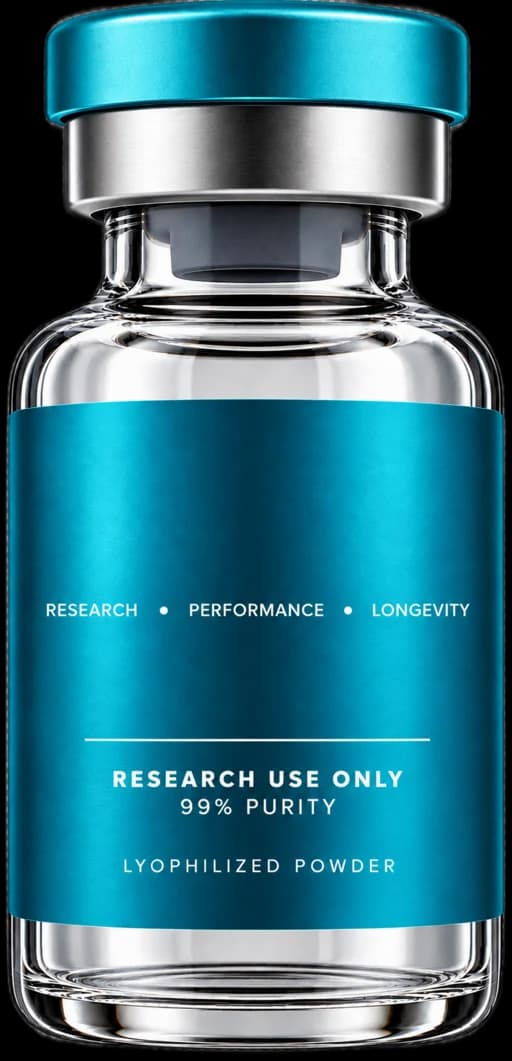
BPC-157 is sold as a lyophilized (freeze-dried) powder in sealed glass vials. The three factors that move price: vial size (bigger = cheaper per mg), vendor markup, and whether they invest in third-party COAs. The cheapest 5mg vial on a sketchy site can cost more per dose than a well-tested 20mg vial from a top-tier vendor.
Current Market Pricing (2026)
| Vial Size |
Typical Price Range |
Price Per mg |
Best For |
| 5 mg |
$25-55 |
$5-11/mg |
Tolerance testing, 250 mcg/day protocols |
| 10 mg |
$35-80 |
$3.50-8/mg |
Standard 500 mcg/day — best all-around |
| 20 mg |
$75-140 |
$3.85-7/mg |
Stacks with TB-500, long protocols |
The pattern is clear: 10mg is the sweet spot for almost every user. Jumping to 20mg saves roughly 10-15% per mg but locks you into a longer reconstitution cycle. 5mg only makes sense as a trial vial.
Cost Per Week at Common Doses
| Weekly Dose |
Monthly Cost (5mg vial) |
Monthly Cost (10mg vial) |
Savings |
| 1.75 mg/week (250 mcg/day) |
$17-35/month |
$12-25/month |
~30% |
| 3.5 mg/week (500 mcg/day) |
$35-70/month |
$25-50/month |
~30% |
| 7 mg/week (500 mcg 2x/day) |
$70-140/month |
$50-100/month |
~30% |
For current vendor-specific pricing with exact $/mg breakdowns, see our Best BPC-157 Vendors comparison.
How to Verify BPC-157 Quality
BPC-157 is a 15-amino-acid peptide (pentadecapeptide) with a molecular weight of 1,419.55 Da. It's small, stable, and simple to synthesize — which is exactly why there's no excuse for a vendor to sell untested product. Contamination or low purity in a healing peptide is a safety issue, not a potency issue.
What a COA (Certificate of Analysis) Should Include
Identity Confirmation
- Mass spectrometry confirming the correct molecular weight (1,419.55 Da for BPC-157)
- Amino acid sequence verification matching Gly-Glu-Pro-Pro-Pro-Gly-Lys-Pro-Ala-Asp-Asp-Ala-Gly-Leu-Val
Purity Testing
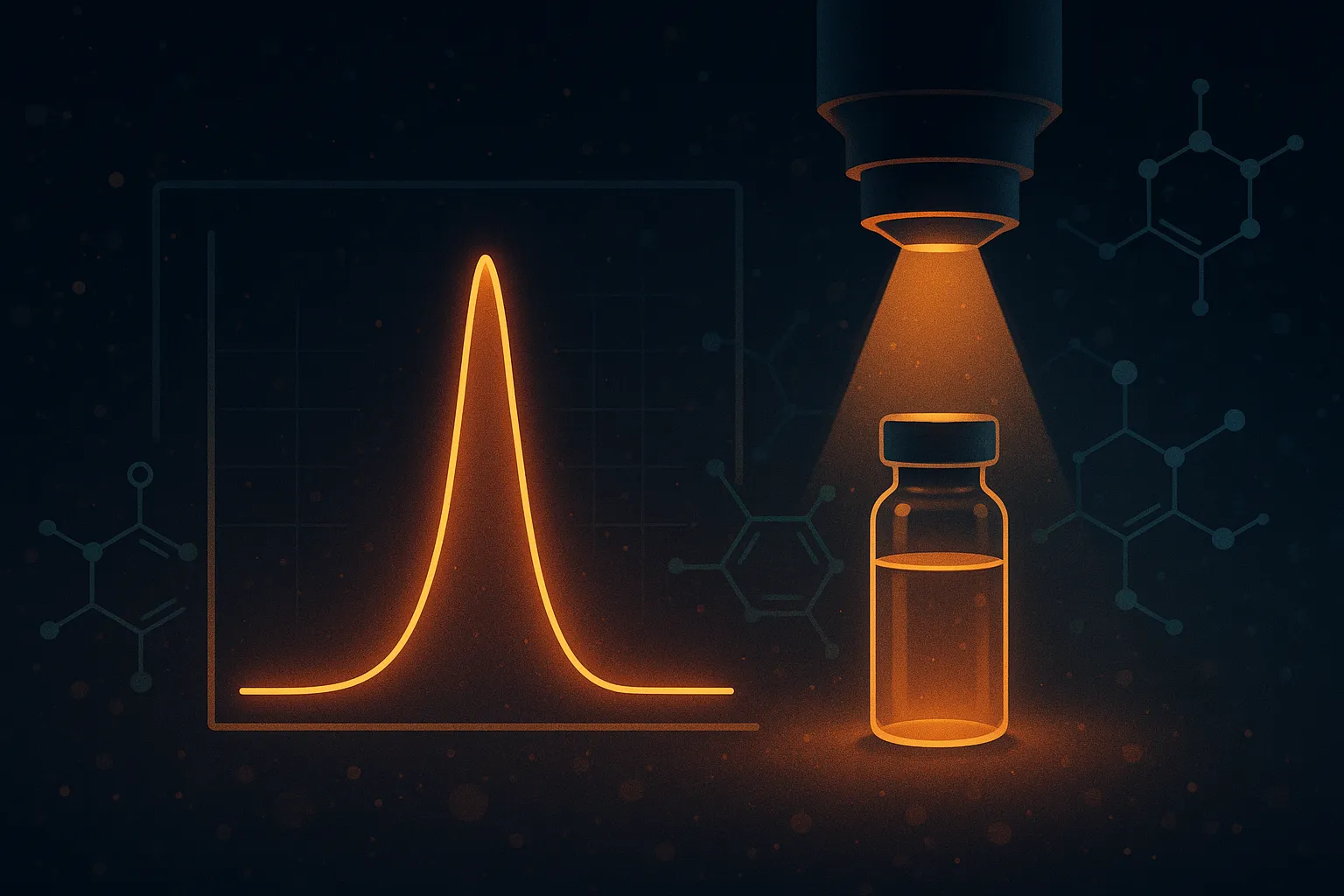
- HPLC purity — look for 98%+ purity
- The chromatogram should show a single dominant peak with minimal secondary peaks
Contamination Testing
- Endotoxin levels (bacterial contamination)
- Residual solvent analysis (acetonitrile, TFA)
- Heavy metals screening
How to Verify a COA Is Legitimate
Not all COAs are real. Some vendors photoshop results or reuse old certificates. Here's how to verify:
-
Check the testing lab — Reputable labs include Janoshik Analytical, MZ Biolabs, and Colmaric Analyticals. Avoid vendors who only show "in-house" testing.
-
Verify on the lab's website — Janoshik COAs have a task number you can look up directly at janoshik.com. If the vendor won't provide a verifiable task number, that's a red flag.
-
Check the date — COAs should be recent (within 6 months). Old COAs may not represent the current batch.
-
Match the batch — The batch/lot number on the COA should match what's printed on your vial.
-
Look for the original PDF — Screenshots of COAs are easier to fake than full PDFs with lab letterhead and signatures.
Red Flags to Avoid
- No COA available — any vendor unwilling to provide testing results is not worth the risk
- Only in-house testing — self-reported purity numbers are meaningless without independent verification
- Prices significantly below market — BPC-157 below $3/mg across every size is a quality concern
- No contact information — legitimate vendors have real customer service, not just a payment page
- Cryptocurrency only — good vendors accept crypto but also have standard rails (card, ACH, Zelle)
- No return or reship policy — reputable vendors stand behind their products
Choosing the Right Vial Size

Vial size selection isn't just about price — it's about matching your protocol duration to the 28-day reconstitution stability window.
The 28-Day Rule
Once reconstituted with bacteriostatic water, BPC-157 is stable for up to 28 days refrigerated. Sterile water (no preservative) drops this to 24 hours. That creates a practical constraint:
| Vial Size |
At 250 mcg/day |
At 500 mcg/day |
At 500 mcg 2x/day |
| 5 mg |
20 days ✓ |
10 days ✓ |
5 days ✓ |
| 10 mg |
40 days ⚠️ |
20 days ✓ |
10 days ✓ |
| 20 mg |
80 days ⚠️ |
40 days ⚠️ |
20 days ✓ |
⚠️ = exceeds 28-day window per reconstitution
Solution: Only reconstitute what you'll use in 28 days. Keep unreconstituted vials sealed and refrigerated — they're stable for months to years in powder form.
Recommended Vial Size by Protocol
Testing tolerance or low-dose (250 mcg/day):
- Start with a 5mg vial — one vial lasts 20 days, inside the stability window
- Low upfront cost to confirm you tolerate it before committing
Standard healing protocol (500 mcg/day):
- 10mg vial — lasts exactly 20 days at 500 mcg/day, the best balance of value and freshness
- The most commonly purchased size for a reason
High-dose or paired with TB-500 (500 mcg 2x/day or stacks):
- 20mg vial — lasts 20 days at split dosing, or pair with a 10mg TB-500 vial for the classic wolverine stack
- Better per-mg value when your daily use is high
Buying Multiple Smaller vs One Large Vial
| Factor |
Multiple Small (e.g., 2× 10mg) |
One Large (1× 20mg) |
| Cost per mg |
Higher ($3.50-8/mg) |
Lower ($3.85-7/mg) |
| Freshness |
Better (reconstitute as needed) |
Risk of degradation |
| Flexibility |
Can stop anytime |
Committed to full supply |
| Storage |
Easier (smaller volumes) |
Requires careful planning |
| Shipping |
More frequent orders |
Single shipment |
Our recommendation: For most users, a single 10mg vial per 20-day cycle is the simplest and most reliable approach. Only step up to 20mg if you're dosing twice daily or stacking.
Vendor Evaluation Methodology
When comparing BPC-157 vendors, we evaluate three weighted factors:
Price Competitiveness (40%)
We normalize to cost per milligram for fair comparison across vial sizes. A vendor selling 20mg at $80 ($4/mg) scores higher than one selling 10mg at $60 ($6/mg), all else being equal.
COA & Testing (30%)
We verify that COAs are:
- From recognized third-party labs
- Recent (within the last 6 months)
- Verifiable on the lab's website
- Testing for identity, purity, and contamination
Reputation (30%)
Community feedback from peptide forums, shipping reliability, customer service responsiveness, and business track record. We give additional weight to vendors with consistent multi-year operations and no history of batch recalls.
Shipping and Storage
What to Expect When Your Order Arrives
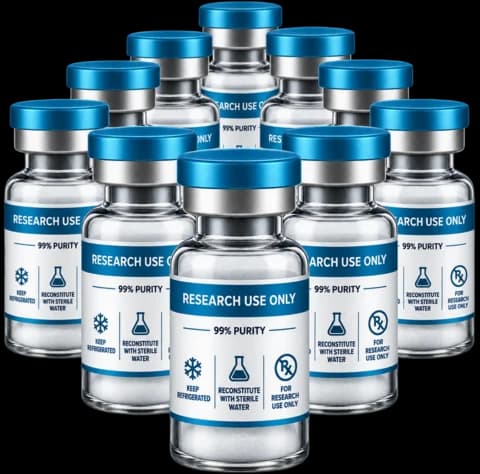
Lyophilized BPC-157 should arrive as a white or off-white powder cake in a sealed glass vial. Check:
- Vial integrity — no cracks, proper rubber seal, aluminum cap intact
- Powder appearance — solid cake or loose powder, NOT liquid or discolored
- Labeling — batch/lot number, milligram content, "for research use only"
- Cold pack — reputable vendors ship with cold packs in summer months
Storage Guidelines
| State |
Temperature |
Duration |
| Lyophilized (powder) |
Room temp |
Weeks (for shipping) |
| Lyophilized (powder) |
Refrigerated (2-8°C) |
12-24 months |
| Lyophilized (powder) |
Frozen (-20°C) |
2+ years |
| Reconstituted (BAC water) |
Refrigerated (2-8°C) |
28 days max |
| Reconstituted (sterile water) |
Refrigerated (2-8°C) |
24 hours |
| Reconstituted |
Frozen |
Not recommended (peptide degradation) |
Key point: Keep unreconstituted vials refrigerated and only mix what you'll use within 28 days. See our BPC-157 reconstitution guide for step-by-step mixing.
Frequently Asked Questions
Is BPC-157 legal to buy?
BPC-157 is sold as a research chemical and is legal to purchase in most jurisdictions for research purposes. It is not FDA-approved for human use. In 2023 the FDA placed it on the 503A bulks Category 2 list, meaning compounding pharmacies can't compound it. Research vendors label product "not for human consumption."
How much does BPC-157 cost per month?
At the community-standard 500 mcg/day dose, BPC-157 runs $25-50/month from a reputable vendor using a 10mg vial. Stepping to 20mg vials drops per-mg cost about 10-15%, but you must manage the 28-day reconstitution window.
What vial size should I buy?
For 500 mcg/day, a 10mg vial lasts exactly 20 days — inside the 28-day window and the best per-mg value for most users. Choose 5mg only for tolerance testing, and 20mg only for twice-daily dosing or stacks with TB-500.
What purity should I look for?
Look for vendors providing third-party COA testing showing 98%+ purity via HPLC, plus mass spec confirming the 1,419.55 Da molecular weight. Reputable vendors use independent labs like Janoshik or MZ Biolabs, and their COAs should be verifiable directly on the lab's website.
Can I buy BPC-157 from a pharmacy?
No. The FDA's 2023 decision to move BPC-157 to 503A Category 2 means compounding pharmacies cannot legally produce it. It is only available from research peptide vendors. See our FDA BPC-157 panel coverage for the full regulatory context.
How do I know if a vendor is trustworthy?
Check for: third-party COA testing, verifiable lab results, responsive customer service, community reputation on peptide forums, consistent pricing (not suspiciously cheap), and a clear return/reship policy. See our Best BPC-157 Vendors for pre-vetted options.
References
| Citation |
Topic |
PMID |
| Sikiric P, et al., J Physiol Paris (1993) |
Original BPC-157 pentadecapeptide characterization |
7904712 |
| Safety of Intravenous Infusion of BPC157 in Humans, Pharmaceuticals (2025) |
First human pilot safety study |
40131143 |
This article is for educational and informational purposes only. It is not medical advice and should not be used to diagnose, treat, or prevent any condition. Consult a licensed healthcare provider before using any peptide.