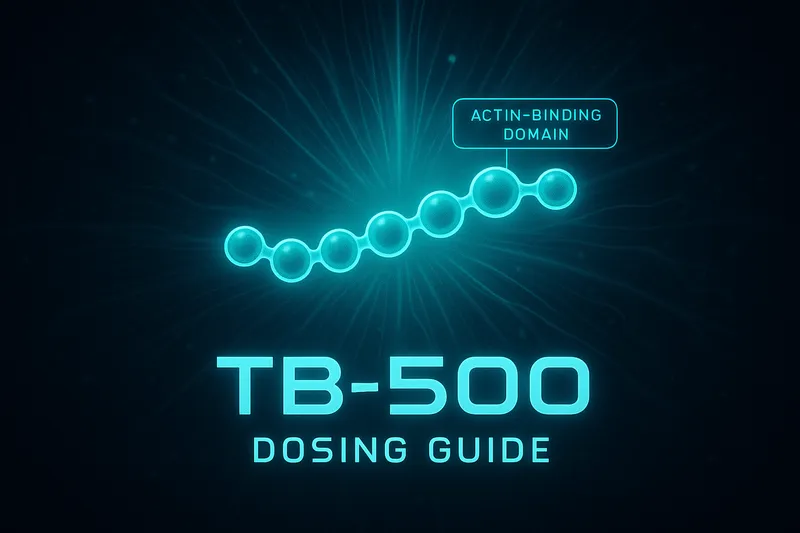
TB-500 is a synthetic 17-amino-acid fragment of Thymosin Beta-4, containing the active actin-binding domain responsible for cell migration and tissue repair. It's a cornerstone of healing peptide protocols, especially when stacked with BPC-157.
Research-context information only. TB-500 is a research peptide. Protocols, doses, and reactions reported below come from published research and self-reported community sources. This article reports what has been documented, not what should be done. Consult a licensed physician for personal medical decisions.
Clinical Status: No human trials exist for TB-500 specifically. All protocols are extrapolated from Thymosin Beta-4 research and animal studies. This is not medical advice.
TB-500 Dosing Table
Match your vial size below — reconstitution and dose math update automatically.
| Dose | Syringe units | mL volume | Schedule |
|---|---|---|---|
| 500 mcg | 20 units | 0.2 mL | Daily SubQStandard |
| 750 mcg | 30 units | 0.3 mL | Daily SubQ |
| 2 mg | 80 units | 0.8 mL | 2x/week SubQLoading dose (week 1-4) |
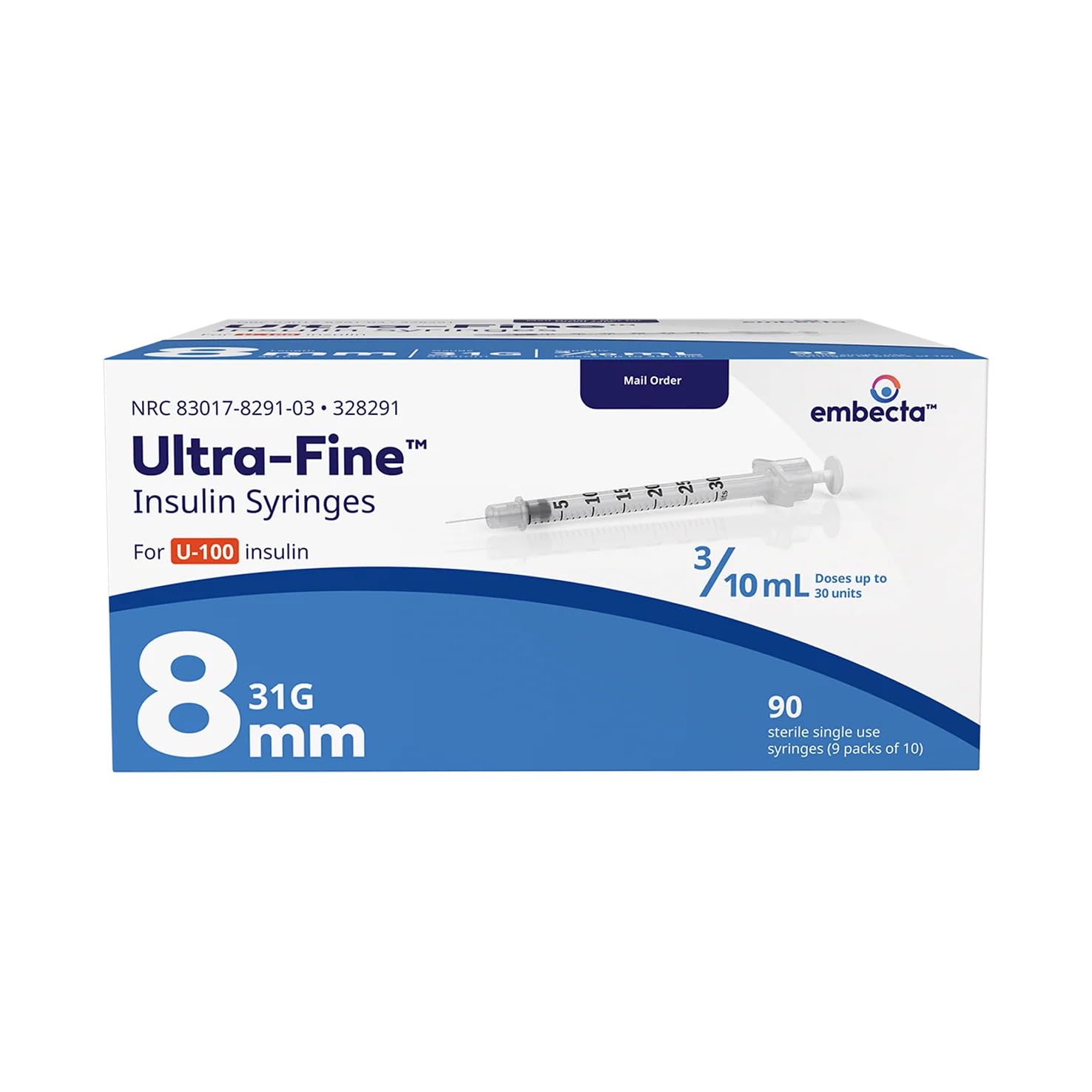
Math assumes U-100 insulin syringes (1 mL = 100 units). Verify your syringe matches before injecting. Round half-units to the nearest visible mark.
| Dose | Syringe units | mL volume | Schedule |
|---|---|---|---|
| 500 mcg | 10 units | 0.1 mL | Daily SubQStandard |
| 1 mg | 20 units | 0.2 mL | Daily SubQ |
| 2 mg | 40 units | 0.4 mL | 2x/week SubQLoading |
Math assumes U-100 insulin syringes (1 mL = 100 units). Verify your syringe matches before injecting. Round half-units to the nearest visible mark.
| Dose | Syringe units | mL volume | Schedule |
|---|---|---|---|
| 500 mcg | 10 units | 0.1 mL | Daily SubQStandard |
| 1 mg | 20 units | 0.2 mL | Daily SubQ |
| 2 mg | 40 units | 0.4 mL | 2x/week SubQLoading |
Math assumes U-100 insulin syringes (1 mL = 100 units). Verify your syringe matches before injecting. Round half-units to the nearest visible mark.
| Dose | Syringe units | mL volume | Schedule |
|---|---|---|---|
| 500 mcg | 10 units | 0.1 mL | Daily SubQStandard |
| 1 mg | 20 units | 0.2 mL | Daily SubQ |
| 2 mg | 40 units | 0.4 mL | 2x/week SubQLoading |
Math assumes U-100 insulin syringes (1 mL = 100 units). Verify your syringe matches before injecting. Round half-units to the nearest visible mark.
Quick Reference: Standard Protocol
| Parameter | Standard Protocol |
|---|---|
| Dose | 500 mcg (10 units on insulin syringe) |
| Route | Subcutaneous injection (systemic — site doesn't matter) |
| Timing | AM |
| Frequency | Every day |
| Cycle | 8 weeks on, 8 weeks off |
| Vial size | 10 mg |
| Reconstitution | 2 mL bacteriostatic water → 5,000 mcg/mL |
| Draw amount | 10 units on insulin syringe |
| Storage | Refrigerate, use within 28 days |
Community-reported protocol: 500 mcg daily in the morning for 8 weeks, then 8 weeks off. TB-500 works systemically, so injection site location doesn't affect efficacy. For the full TB-500 profile, vendor pricing, and stacking options, see our TB-500 peptide page.
Cycling Details
The standard cycle is 8 weeks on, 8 weeks off. Tissue remodeling and healing effects build over 4-6 weeks and continue through the full 8-week window. Community protocols describe the off period as allowing receptor sensitivity to reset, with the rationale that cycling may prevent receptor downregulation — though no direct TB-500 human trial data exists to confirm this.
Unlike some peptides, TB-500 protocols use consistent daily dosing throughout the cycle — no loading or tapering needed. The daily schedule is a community convention — no published human pharmacokinetic study of TB-500 has established its half-life or an optimal dosing interval.
Enhanced Protocol (Community)
Note: The standard protocol above reflects the common community protocol. The enhanced protocol below is based on community experience.
| Parameter | Enhanced Protocol |
|---|---|
| Dose | 2–2.5 mg twice weekly |
| Frequency | 2x per week |
| Weekly total | 4–5 mg (vs 3.5 mg standard) |
| Use case | Less frequent injections, mimics TB-4 research protocols |
Some users prefer twice-weekly pulsing for convenience. Weekly totals are similar, but daily dosing provides more stable tissue levels.
Routes of Administration
Subcutaneous (standard): Protocols describe injecting anywhere convenient — abdomen, thigh, upper arm. TB-500 distributes systemically regardless of site. A 29-31 gauge insulin syringe is commonly used.
Intramuscular: Occasionally used but offers no advantage over subcutaneous for a systemic peptide like TB-500.
Not recommended: Oral (peptide degradation), nasal (no data), topical (molecular weight too large).

Reconstitution Quick Reference
| Vial Size | BAC Water | Concentration | 500 mcg Dose |
|---|---|---|---|
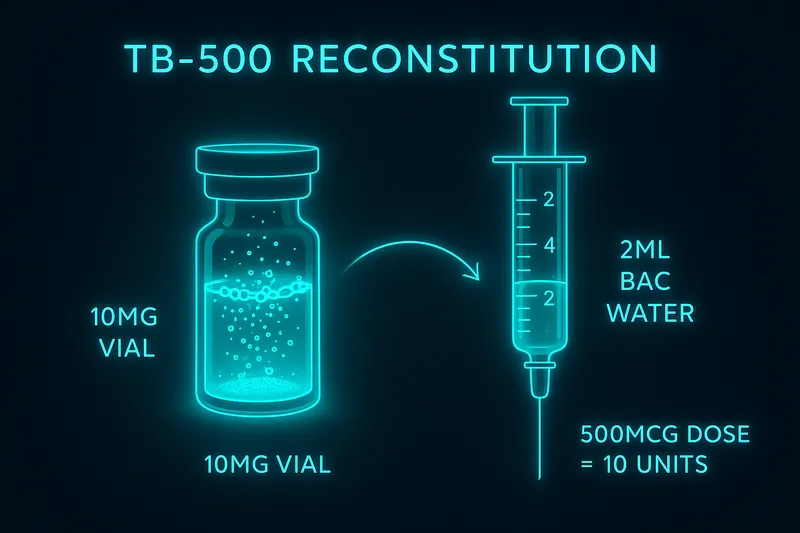
| 10 mg | 2 mL | 5,000 mcg/mL | 10 units |
10 mg vial + 2 mL BAC water = 5,000 mcg/mL. A 500 mcg dose draws to 10 units on an insulin syringe under this reconstitution. One vial covers 20 days at this protocol.
Community protocols describe gentle swirling — not shaking — then refrigerating at 2-8°C and using within 28 days. For the full step-by-step walkthrough, see the TB-500 Reconstitution Guide.