Testosterone replacement therapy restores what declining hormones take away — energy, muscle, libido, mood. But TRT operates on one axis. Peptides operate on others. Combined strategically, the two are described as producing compounding effects that neither delivers alone.
This is not about stacking everything at once. It is about understanding which peptide classes synergize with testosterone at the mechanistic level, and which combinations have actual clinical or research support.
Research-context information only. The peptides discussed below are research peptides. Protocols, doses, and reactions reported come from published research and self-reported community sources. This article reports what has been documented, not what should be done. Consult a licensed physician for personal medical decisions.
This guide reports 8 documented synergies below, organized by peptide class, with the doses described in research and community sources, timing, and the biological rationale for each pairing.
The synergy between peptides and TRT is not just additive — it is mechanistic.
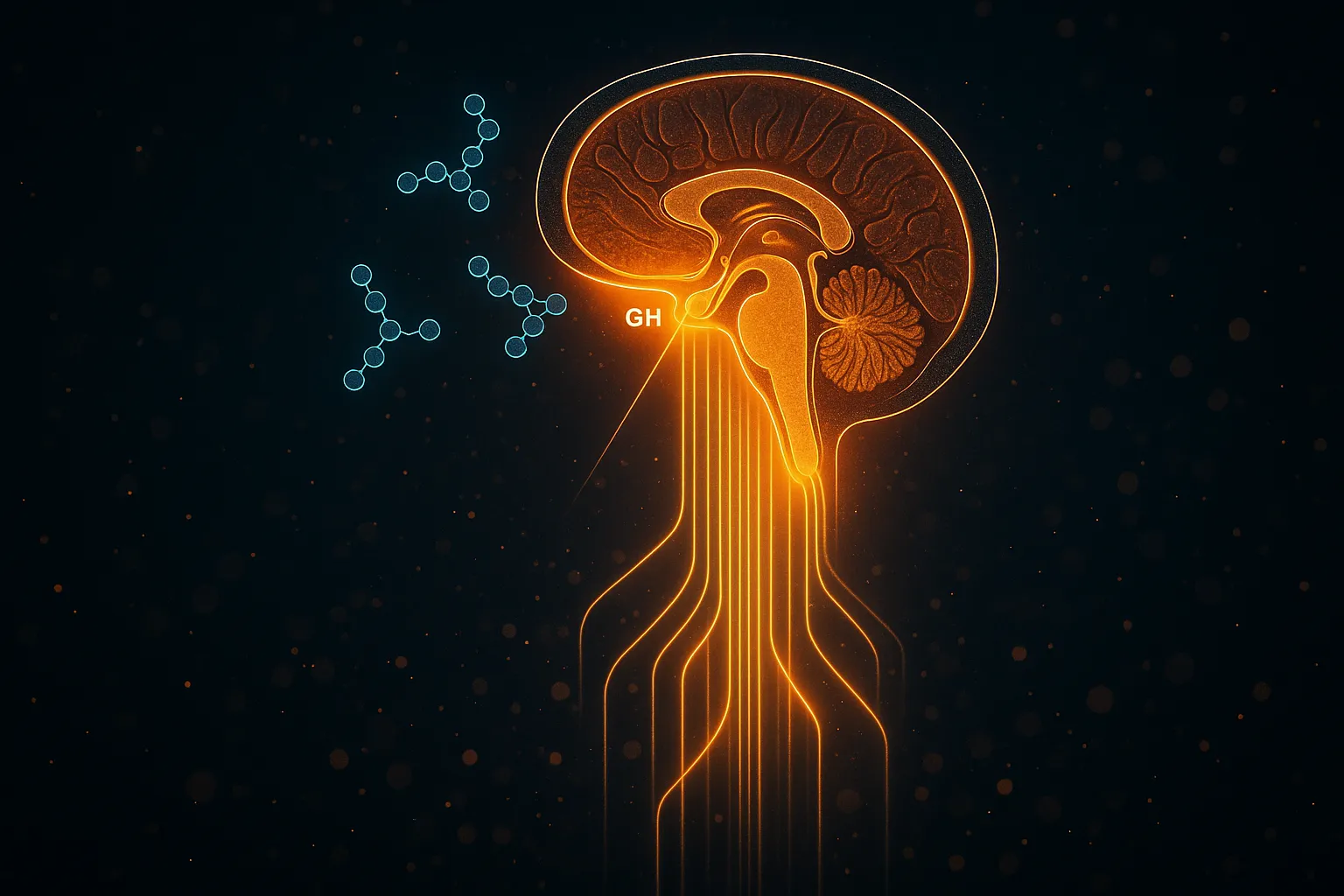
Testosterone increases growth hormone receptor density in skeletal muscle and hepatic tissue. This means every GH pulse triggered by a secretagogue peptide has a larger biological effect in a man (or woman) with optimized testosterone levels compared to someone who is hypogonadal.
Conversely, growth hormone and IGF-1 enhance androgen receptor expression. The two axes feed each other in a positive loop that drives protein synthesis, fat oxidation, and connective tissue remodeling beyond what either hormone system achieves independently.
This bidirectional amplification is why TRT clinics increasingly offer peptide add-ons. Defy Medical, Marek Health, and other top-rated TRT clinics now prescribe ipamorelin/CJC-1295 alongside testosterone protocols. For an in-depth look at how clinics are evaluated, see The TRT Guide's methodology.
The peptides covered here fall into four functional classes:
Recovery peptides — accelerate tissue repair in the anabolic environment TRT creates
Metabolic peptides — enhance body composition changes TRT initiates
Functional peptides — address libido, sleep, and quality-of-life alongside TRT
Synergy 1: CJC-1295 + TRT — Sustained GH Elevation
CJC-1295 is a GHRH analog that extends the duration of each growth hormone pulse. Unlike natural GHRH, which is rapidly degraded, CJC-1295 (with or without DAC) maintains elevated GH secretion for hours after injection.
Why it synergizes with TRT: Testosterone primes GH receptors. CJC-1295 provides the sustained GH signal. The result is higher effective IGF-1 output per dose compared to running CJC-1295 without testosterone optimization.
Community protocols on TRT describe:
CJC-1295 (no DAC): 100 mcg subcutaneous, 2-3x daily (pre-bed dose described as most important)
CJC-1295 (with DAC): 2 mg subcutaneous, 1-2x per week
Starting after the TRT protocol is stable (8+ weeks)
The combination is especially effective for men over 40 on TRT who want to recover the GH decline that parallels testosterone decline. TRT addresses the androgen deficit; CJC-1295 addresses the somatotropic deficit. Together they restore both axes to youthful ranges.
Synergy 2: Ipamorelin + TRT — Clean GH Pulses Without Side Effects
Ipamorelin is the most selective GHRP available. It triggers GH release from the pituitary without significantly raising cortisol, prolactin, or ghrelin — side effects that plague stronger GHRPs like GHRP-6 and hexarelin.
Why it synergizes with TRT: Men on TRT already have optimized androgen receptor signaling. Adding ipamorelin provides targeted GH pulses that enhance recovery, sleep quality, and fat metabolism without disrupting the hormonal balance TRT establishes. The clean side-effect profile makes ipamorelin the preferred GHRP for long-term TRT adjunct use.
The ipamorelin + CJC-1295 combination is the most widely prescribed peptide stack at TRT clinics. For how this fits into a broader TRT protocol structure and injection scheduling, The TRT Guide covers the foundational testosterone protocol these peptides layer onto.
Synergy 3: Sermorelin + TRT — The Clinical Standard
Sermorelin was the first GHRH analog approved for clinical use. It stimulates the pituitary to release GH through the natural GHRH receptor, preserving the body's pulsatile GH rhythm rather than overriding it.
Why it synergizes with TRT:Sermorelin's physiological GH release pattern complements TRT's steady-state testosterone. Both restore declining hormones through mechanism-appropriate pathways rather than supraphysiological dosing. This makes the combination particularly suitable for anti-aging and longevity-focused protocols.
Community protocols on TRT describe:
200-300 mcg subcutaneous before bed
Starting after TRT stabilization
6-month cycles, common in clinical settings
Monitoring IGF-1 quarterly
Many TRT clinics that prescribe sermorelin are the same ones that offer comprehensive testosterone protocols. For patients exploring whether to start TRT or add peptides to an existing protocol, sermorelin is often the entry point.
Synergy 4: GHRP-2 and GHRP-6 + TRT — Stronger GH Pulses for Specific Goals
While ipamorelin is the cleanest GHRP, GHRP-2 and GHRP-6 produce larger GH pulses at the cost of some additional effects. GHRP-6 strongly stimulates appetite (useful for muscle gain), while GHRP-2 offers a middle ground between potency and selectivity.
Why they synergize with TRT: The larger GH pulses from GHRP-2/6 drive more aggressive IGF-1 elevation. Combined with TRT's anabolic environment, this accelerates lean mass accrual for people whose primary goal is body composition transformation. Hexarelin, the strongest GHRP, pushes this even further but requires more careful monitoring.
Community protocols on TRT describe:
GHRP-2: 100-300 mcg subcutaneous, 2-3x daily
GHRP-6: 100-300 mcg subcutaneous, 2-3x daily (dosed before meals to leverage the appetite increase)
Pairing with CJC-1295 (no DAC) for amplified pulses
Shorter cycles (8-12 weeks) due to desensitization risk at higher doses
Synergy 5: Tesamorelin + TRT — Targeted Visceral Fat Reduction
Tesamorelin is the only GHRH analog with FDA approval (for HIV-associated lipodystrophy). It specifically reduces visceral adipose tissue — the metabolically dangerous fat surrounding organs — while preserving subcutaneous fat and lean mass.
Why it synergizes with TRT: Testosterone already improves body composition by increasing lean mass and reducing overall adiposity. Tesamorelin adds targeted visceral fat reduction that testosterone alone does not preferentially address. The combination is particularly valuable for men with metabolic syndrome who are starting TRT, where visceral fat is both a cause and consequence of low testosterone.
Monitoring waist circumference, fasting glucose, and IGF-1
For men tracking their body composition changes on TRT, adding tesamorelin can accelerate the visceral fat reduction that typically takes 6-12 months on testosterone alone. The TRT results timeline provides realistic expectations for what testosterone delivers at each stage.
Synergy 6: BPC-157 + TB-500 + TRT — The Recovery Triad
BPC-157 and TB-500 are the two most widely used recovery peptides. BPC-157 promotes angiogenesis and gut healing. TB-500 (thymosin beta-4) drives systemic tissue repair through actin regulation. Together they form the wolverine stack.
Why they synergize with TRT: Testosterone is fundamentally anabolic — it accelerates protein synthesis and tissue remodeling. BPC-157 and TB-500 direct that anabolic capacity toward injury repair. Men on TRT who add recovery peptides for a specific injury often report faster resolution than they experienced before TRT, because the testosterone-driven anabolic environment provides the raw building blocks these peptides need to execute repair.
Community protocols on TRT describe:
BPC-157: 250-500 mcg subcutaneous, 1-2x daily (near the injury site when possible)
TB-500: 2-5 mg subcutaneous, 2x per week (loading), then 2 mg weekly (maintenance)
Stacking both for 4-8 weeks for injury recovery
No cycling described — used as needed during recovery periods
TRT patients often encounter injection site management challenges early on. BPC-157 in particular can help resolve injection-site inflammation or discomfort that some patients experience when dialing in their injection technique.
MOTS-c is a mitochondrial-derived peptide that activates AMPK, enhances glucose uptake, and improves exercise capacity. It operates on a completely different axis than testosterone — cellular energy metabolism rather than hormonal signaling.
Why it synergizes with TRT: TRT improves motivation, energy, and exercise capacity through androgen receptor activation. MOTS-c improves mitochondrial efficiency and metabolic flexibility at the cellular level. The combination means TRT patients who exercise (which they should — see TRT vs natural optimization) get more metabolic benefit from each training session.
Community protocols on TRT describe:
5-10 mg subcutaneous, 3-5x per week
Dosing on training days for synergy with exercise
8-12 week cycles
Monitoring fasting glucose and insulin-sensitivity markers
Synergy 8: PT-141 + TRT — Libido Through Two Mechanisms
PT-141 (bremelanotide) activates melanocortin-4 receptors in the hypothalamus to increase sexual desire and arousal. Unlike PDE5 inhibitors that address blood flow, PT-141 works centrally on the desire circuit.
Why it synergizes with TRT: Testosterone restores baseline libido through androgen receptor activation. But some men on TRT still experience suboptimal desire — particularly those whose low T was long-standing, or those with psychological components to sexual dysfunction. PT-141 addresses the central nervous system component that testosterone alone may not fully restore.
Community protocols on TRT describe:
1.75-2 mg subcutaneous, 45-60 minutes before activity
Use as needed, not daily (community sources describe a 2x-per-week ceiling)
Nausea is commonly reported at first — community sources describe starting at 1 mg and titrating up
Beyond the 8 primary synergies, several other peptides complement TRT protocols:
MK-677 (Ibutamoren) — An oral GH secretagogue that raises GH and IGF-1 through the ghrelin receptor. Convenient for those who want GH benefits without additional injections on top of their TRT protocol. See our MK-677 dosing guide and MK-677 benefits overview. Monitor fasting glucose closely — MK-677 can impair insulin sensitivity, which matters when tracking lab markers on TRT.
NAD+ — Supports cellular energy, DNA repair, and sirtuin activation. NAD+ benefits complement TRT's anabolic effects by addressing age-related cellular decline. The NAD+ dosing guide covers subcutaneous protocols that fit alongside TRT schedules.
Hexarelin — The strongest GHRP available, hexarelin produces the largest acute GH pulses but carries more side effects (cortisol, prolactin elevation) and desensitizes faster. Best reserved for short 4-week blasts rather than ongoing TRT adjunct use. See our hexarelin dosing guide.
The Stacking Hierarchy Community Sources Describe
For those on TRT and considering peptides, community sources commonly describe this layering order:
Add one GH peptide — ipamorelin or CJC-1295, described as the safest starting point
Stack GHRH + GHRP — adding the complementary class for fuller GH-axis coverage (see GHRH vs GHRP for why both matter)
Add recovery peptides as needed — BPC-157 and/or TB-500 for specific injuries
Metabolic add-ons — MOTS-c for body composition, tesamorelin for visceral fat
Functional peptides — PT-141 for libido where testosterone alone is described as insufficient
Community sources consistently advise against adding more than one new peptide at a time, describing a 4-week gap between additions so effects (and side effects) can be attributed correctly.
Bloodwork Monitoring: The Combined Panel
When peptides are run alongside TRT, community and clinical sources describe expanding the standard TRT bloodwork panel:
Understanding how to read testosterone labs is described as important before layering peptides, since GH peptides can independently affect markers like fasting glucose and IGF-1 that interact with TRT protocol adjustments.
Combinations Community Sources Advise Against on TRT
A few cautions community sources commonly raise:
Combining multiple GHRPs simultaneously — stacking GHRP-2 + GHRP-6 + hexarelin is described as producing diminishing returns and amplified side effects. Community sources commonly describe selecting one GHRP paired with one GHRH.
IGF-1 monitoring — testosterone and GH peptides both raise IGF-1. Published research and clinical literature on growth-hormone excess associate chronically elevated IGF-1 with health risks; clinical sources describe keeping IGF-1 within the upper-normal reference range and adjusting GH peptide doses accordingly.
MK-677 + insulin-resistance risk — where fasting glucose is already borderline on TRT, MK-677 is described as potentially pushing it higher. Community sources commonly prefer injectable GHRH/GHRP combinations, which are described as carrying less metabolic burden.
HCG considerations — many TRT protocols include HCG for fertility preservation. HCG mimics luteinizing hormone to keep the testes producing testosterone locally — see our HCG benefits and IU dosing guide for the research and protocols. HCG and GH peptides are described as not interacting negatively, though the total injection burden increases. Scheduling is a discussion for a licensed provider.
Finding the Right Clinic
Not every TRT clinic offers peptides, and not every peptide source is legitimate. For men and women exploring TRT with peptide add-ons:
Clinic selection matters — the best TRT clinics now integrate peptide protocols. Evaluating clinic pricing should factor in peptide costs, which are often separate from the base TRT fee.
Ask the right questions — use these 25 questions when evaluating a clinic, and add: "Do you prescribe peptides alongside TRT? Which ones? How do you monitor IGF-1?"
Watch for red flags — clinics that push expensive peptide stacks without baseline bloodwork are a concern. See the TRT clinic red flags guide.
The synergies described above apply to women on testosterone therapy as well, with dose adjustments. Women using testosterone cream or testosterone gel can benefit from:
Ipamorelin/CJC-1295 at lower doses (100-200 mcg) for GH optimization
Which peptides do community sources pair most often with TRT?
GHRH peptides (CJC-1295, sermorelin) and GHRP peptides (ipamorelin, GHRP-2) are the pairings community sources most often describe alongside TRT. Published research describes testosterone as priming GH receptor sensitivity, and community sources describe layering GH-releasing peptides onto a TRT protocol for additive effects on lean mass, fat loss, and recovery.
What did research report about combining peptides with testosterone replacement therapy?
Published research describes favorable safety profiles for BPC-157, ipamorelin, and CJC-1295. Clinical literature describes monitoring IGF-1 when GH peptides and testosterone are used together, since both are described as raising IGF-1 independently. This is reporting, not medical advice — a licensed physician should guide personal decisions.
What does research describe about TRT and growth-hormone peptide response?
Published research describes testosterone increasing GH receptor density in muscle and liver tissue, meaning each GH pulse released by peptides such as ipamorelin or CJC-1295 is described as having a greater biological effect. Studies describe the GH-IGF-1 axis responding more robustly in eugonadal men than in hypogonadal men.
What sequencing do community sources describe for TRT and peptides?
Community sources commonly describe stabilizing TRT first over 8-12 weeks, confirming bloodwork, then layering in peptides one at a time. This sequencing is described as making it possible to attribute each compound's effects and catch issues early.
What did research report about recovery peptides like BPC-157 and testosterone?
Published research describes no direct pharmacological interaction between BPC-157 or TB-500 and testosterone. TRT is described as accelerating protein synthesis and tissue remodeling, which research and community sources describe as complementing the angiogenic and anti-inflammatory effects attributed to recovery peptides.
What bloodwork do community sources describe monitoring when combining peptides and TRT?
Commonly described markers include total and free testosterone, estradiol, IGF-1, fasting glucose, hematocrit, and liver enzymes. Community and clinical sources describe IGF-1 as especially relevant when GH peptides are added, with an upper-normal reference range of roughly 200-300 ng/mL described for most adults. See our per-peptide bloodwork guides for marker-specific ranges.
Veldhuis JD, et al. "Joint mechanisms of impaired growth-hormone pulse renewal in aging men." J Clin Endocrinol Metab. 2009.
Giustina A, Veldhuis JD. "Pathophysiology of the neuroregulation of growth hormone secretion in experimental animals and the human." Endocr Rev. 1998;19(6):717-797.
Bhasin S, et al. "Testosterone therapy in men with hypogonadism: an Endocrine Society clinical practice guideline." J Clin Endocrinol Metab. 2018;103(5):1715-1744.
Sigalos JT, Pastuszak AW. "The safety and efficacy of growth hormone secretagogues." Sex Med Rev. 2018;6(1):45-53.
Sikiric P, et al. "Brain-gut axis and pentadecapeptide BPC 157: theoretical and practical implications." Curr Neuropharmacol. 2016;14(8):857-865.
Lee C, et al. "The mitochondrial-derived peptide MOTS-c promotes metabolic homeostasis and reduces obesity and insulin resistance." Cell Metab. 2015;21(3):443-454.