GHRP-2 Dosing Guide: Protocols & GH Response (2026)
GHRP-2 dosing guide with 100-300mcg protocols, timing strategies, clinical data, and comparisons to other GHRPs.

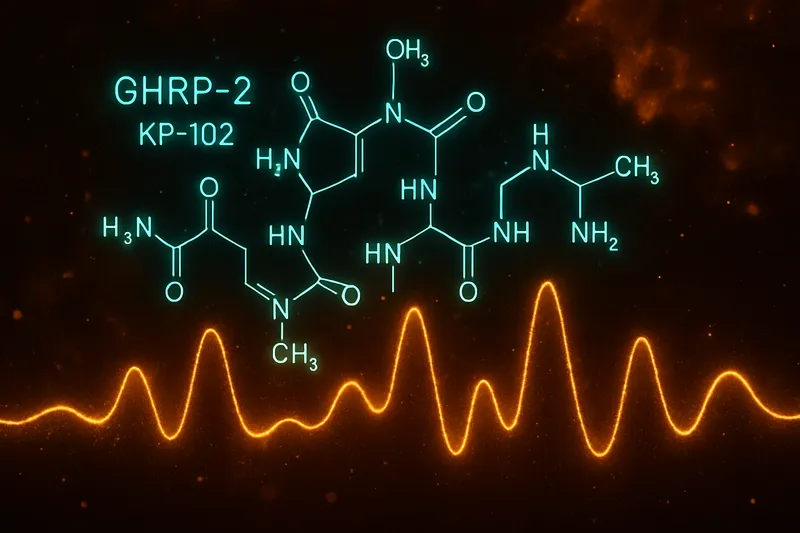
GHRP-2 (pralmorelin, KP-102) is one of the most studied growth hormone releasing peptides in the clinical literature. Originally developed as a diagnostic tool for GH deficiency, it has become a reference compound for understanding how synthetic ghrelin mimetics drive pulsatile GH release from the anterior pituitary.
GHRP-2 is not FDA-approved for therapeutic use. Everything below reflects published research and community protocols. This is not medical advice.
Quick Reference: Community Dosing
If you're here for the practical protocol, here it is:
| Parameter | Standard Protocol |
|---|---|
| Dose | 100–300 mcg per injection |
| Route | Subcutaneous injection (abdomen or thigh) |
| Frequency | 2–3 times daily, 3+ hours apart |
| Cycle | 5 days on, 2 days off, 8 weeks on/off |
| Timing | Empty stomach (30-60 min before meals) |
| Reconstitution | 2 mL bacteriostatic water per 5 mg vial |
| Storage | Refrigerate, use within 28 days |
Most people use: 100-200 mcg per injection (the clinical research range), 2-3 times daily on empty stomach. Common timing: morning (fasted), pre-workout, and before bed.
For the full GHRP-2 peptide profile, vendor pricing, and stack protocols, see our GHRP-2 peptide page.
Loading vs Maintenance
GHRP-2 protocols don't typically use loading phases, but do consider cycling patterns:
Standard Approach: Consistent 100-300 mcg doses throughout the protocol. GHRP-2's short half-life (~15-30 minutes) means each injection provides an acute GH pulse rather than sustained elevation.
Cycling: 5 days on, 2 days off to prevent GHSR-1a desensitization. A five-day treatment study showed response attenuation with consecutive daily use (Raun et al., 1998).
Protocol Length: 8 weeks on, 8 weeks off is common for long-term use.
Routes of Administration
Subcutaneous Injection (Most Common)
The standard route for community protocols. Inject into belly fat, thigh, or anywhere with subcutaneous tissue.
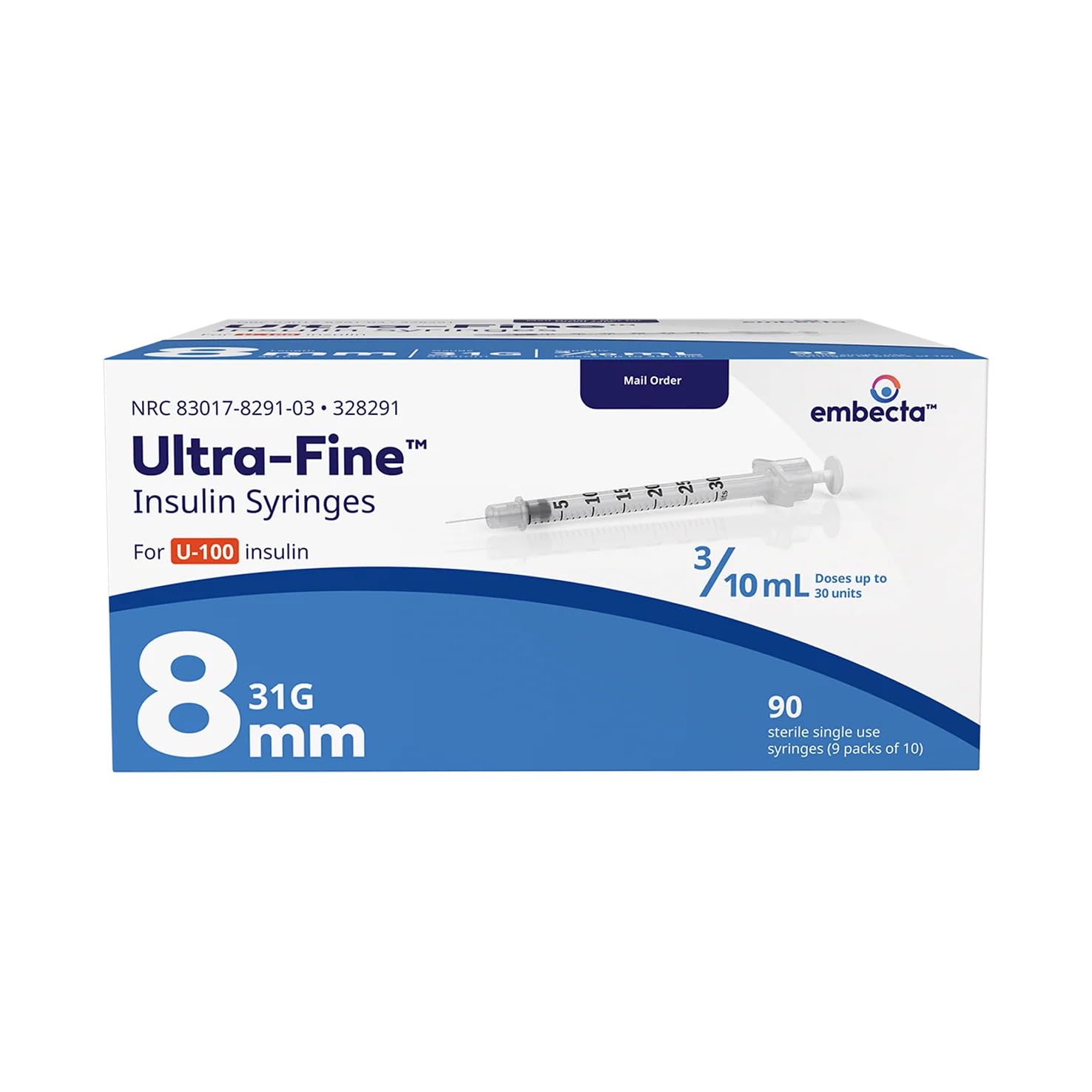
- Volume: Typically 0.1–0.2 mL with insulin syringe (29–31 gauge)
- Absorption: Provides rapid systemic distribution for GH pulse
- Sites: Rotate injection sites to prevent lipodystrophy
Timing Considerations
Empty stomach essential: GHRP-2 should be administered 30-60 minutes before eating or 2+ hours after meals. Elevated blood glucose and free fatty acids significantly blunt the GH response.
Frequency: 2-3 times daily with at least 3 hours between doses allows GHSR-1a resensitization.
Common timing patterns:
- Morning fasted + before bed
- Morning fasted + pre-workout + before bed
- Spacing around meal windows
Ready to Buy? Compare Prices
Best current prices from verified vendors with COA testing.
The Peptide Brief
Weekly price drops, new research, and vendor deals — straight to your inbox.
No spam. Unsubscribe anytime.
Where These Numbers Come From: Clinical Context
Unlike many research peptides, GHRP-2 community doses closely align with published clinical research — this is one of the few peptides where the research directly supports community protocols.
Clinical Research Doses
The vast majority of clinical research uses 1-2 mcg/kg, which translates to 100-200 mcg for most adults:
Diagnostic testing: 100 mcg (1 mcg/kg) is the standard dose for GH deficiency diagnosis, producing robust GH pulses in healthy individuals (Simple diagnostic test using GHRP-2, 2007).
Research studies: 200 mcg (2-3 mcg/kg) used in studies examining GH secretory dynamics (Secretagogues govern GH secretory-burst waveform, 2008).
Upper range: 300 mcg represents the high end where dose-response plateaus due to receptor saturation.
Why Community and Clinical Doses Align
This is unusual in the peptide world — most peptides require significant extrapolation from animal studies. With GHRP-2:
- Direct human data: Extensive clinical research in humans, not just animals
- Diagnostic use: Approved in Japan as pralmorelin for GH testing, establishing effective dose ranges
- Well-characterized pharmacology: Dose-response relationship clearly defined in clinical studies
- Plateau effect: Higher doses don't increase GH proportionally but do increase side effects (cortisol, prolactin)
GH Response Data
Clinical studies show predictable GH responses:
- Peak GH levels: 30-80 ng/mL at 100-200 mcg doses
- Time to peak: 30-60 minutes post-injection
- Duration: 2-3 hours elevated before return to baseline
- Synergy with GHRH: 3-10× greater response when combined with CJC-1295 or sermorelin
Mechanism of Action
GHRP-2 is a synthetic ghrelin mimetic that binds the GHSR-1a receptor, triggering pulsatile GH release from the anterior pituitary through a calcium/PKC signaling pathway distinct from GHRH's cAMP/PKA pathway — which is why the two classes synergize so powerfully. For the full mechanistic breakdown of GHRPs vs GHRHs, see our GHRH vs GHRP guide.
Side Effects & Safety

GHRP-2 occupies the middle ground in the GHRP family for side effects — more than ipamorelin but less than hexarelin:
Common Side Effects
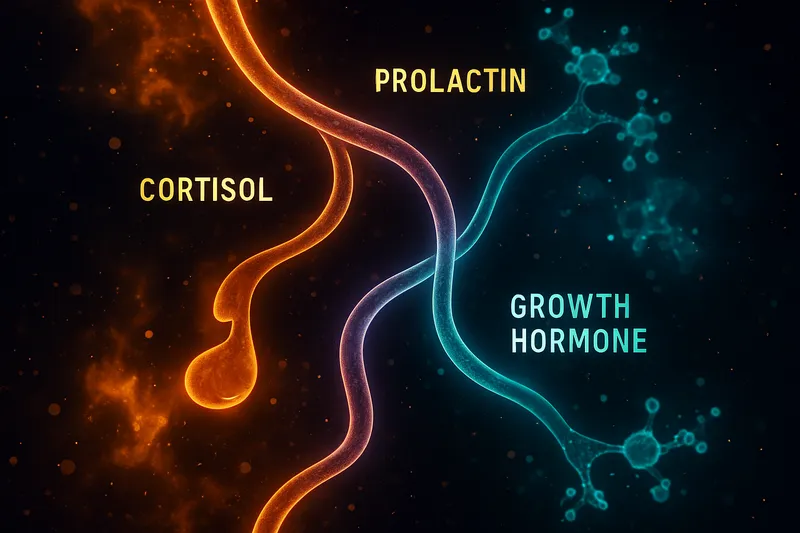
Cortisol elevation — GHRP-2 stimulates the HPA axis through CRF release, causing transient ACTH and cortisol increases. The effect is dose-dependent and typically mild to moderate at 100-200 mcg doses.
Prolactin elevation — Less pronounced than hexarelin but more than ipamorelin. Generally returns to baseline within 2-3 hours.
Appetite stimulation — As a ghrelin mimetic, GHRP-2 increases hunger 20-30 minutes post-injection. Generally milder than GHRP-6 but more than ipamorelin.
Water retention — Some users report mild fluid retention, likely related to GH-mediated sodium retention.
GHRP Family Comparison
| GHRP | GH Release | Cortisol/Prolactin | Appetite | Overall Profile |
|---|---|---|---|---|
| Ipamorelin | Moderate | Minimal | Minimal | Cleanest, least potent |
| GHRP-2 | Strong | Moderate | Mild | Middle ground |
| GHRP-6 | Strong | Moderate | Strong | More hunger |
| Hexarelin | Strongest | Highest | Moderate | Most side effects |
Desensitization
Five-day consecutive use leads to response attenuation, making cycling protocols (5 on / 2 off) important for maintaining efficacy.
Stacking GHRP-2
GHRP-2's strongest evidence base involves combination with GHRH analogs for synergistic GH release.
GHRP-2 + CJC-1295 (Most Evidence-Supported Stack)
This combination leverages two different receptor pathways:
- GHRP-2: GHSR-1a → Gq → PLC → PKC → calcium release
- CJC-1295: GHRHR → Gs → cAMP → PKA → calcium channel modulation
Result: Synergistic GH release 3-10× greater than either peptide alone (Veldhuis et al., 2009).
| Peptide | Dose | Frequency | Timing |
|---|---|---|---|
| GHRP-2 | 100-200 mcg | 2-3x daily | Empty stomach |
| CJC-1295 | 1-2 mg | 2x weekly | With GHRP-2 injection |
Other Stacking Options
GHRP-2 + Sermorelin: Shorter-acting GHRH analog with similar synergy mechanism but requiring more frequent dosing.
GHRP-2 + Ipamorelin: Some users combine GHRPs, but evidence is limited compared to GHRP + GHRH combinations.
For comprehensive stacking strategies, see our Peptide Stacking Guide.
Frequently Asked Questions
What is the standard GHRP-2 dose?
The most common community protocol is 100-300 mcg per injection, 2-3 times daily on empty stomach. This matches clinical research doses of 1-2 mcg/kg (100-200mcg for most adults).
Should I take GHRP-2 on an empty stomach?
Yes — GHRP-2 should be taken 30-60 minutes before eating or 2+ hours after meals. Elevated blood glucose and free fatty acids blunt the GH response to GHRP-2.
Does GHRP-2 cause hunger like GHRP-6?
GHRP-2 causes mild appetite stimulation as a ghrelin mimetic, but generally less than GHRP-6. The effect peaks 20-30 minutes after injection and is dose-dependent.
Can GHRP-2 be stacked with CJC-1295?
Yes — this is the most evidence-supported stack. GHRP-2 (GHSR-1a pathway) and CJC-1295 (GHRHR pathway) produce synergistic GH release 3-10× greater than either alone.
How often should I inject GHRP-2?
2-3 times daily with 3+ hours between doses. GHRP-2 has a short half-life (~15-30 minutes), so frequent dosing maintains tissue exposure. Most protocols use 5 days on / 2 days off to prevent desensitization.
Does GHRP-2 increase cortisol?
Yes — GHRP-2 stimulates ACTH and cortisol release through hypothalamic CRF pathways. The effect is dose-dependent and typically mild to moderate at standard doses (100-200mcg).
What's the difference between GHRP-2 and ipamorelin?
GHRP-2 produces stronger GH release but with more cortisol/prolactin elevation. Ipamorelin is more selective with minimal side effects but less potent. For a detailed comparison, see our GHRP comparison guide.
Does GHRP-2 suppress natural GH production?
No — unlike exogenous GH, GHRP-2 stimulates endogenous production through the pituitary's own machinery. However, chronic use may lead to GHSR-1a desensitization, making cycling protocols important.
Related Guides
- GHRP-2 Peptide Page — Vendor pricing, stack protocols, and full peptide profile
- GHRH vs GHRP — Mechanistic breakdown of the two peptide classes
- CJC-1295 vs Sermorelin — Comparing GHRH analogs for stacking
- Ipamorelin vs GHRP-2 vs GHRP-6 — Three-way GHRP comparison
- Hexarelin: Strongest GHRP — The most potent growth hormone peptide
- Peptide Stacking Guide — How to combine peptides effectively
References
| Citation | Topic | PMID |
|---|---|---|
| Bowers CY, Cell Mol Life Sci (1998) | Growth hormone-releasing peptide overview | 9893708 |
| Howard AD, et al., Science (1996) | GHSR-1a receptor discovery | 8688086 |
| Kojima M, et al., Nature (1999) | Ghrelin identification as GHSR-1a ligand | 10604470 |
| Bowers CY, J Clin Endocrinol Metab (2001) | Historical perspective: GHRP before ghrelin | 11297568 |
| Simple diagnostic test using GHRP-2, Endocr J (2007) | Clinical diagnostic applications | 17609397 |
| Secretagogues govern GH secretory-burst waveform, Am J Physiol Endocrinol Metab (2008) | GH response dynamics | 18703567 |
| Raun et al., Growth Horm IGF Res (1998) | Desensitization with consecutive use | 9820615 |
| Veldhuis et al., J Clin Endocrinol Metab (2009) | GHRP + GHRH synergy mechanisms | 19240251 |
| ACTH releasing activity of KP-102, J Pharmacol Sci (2005) | HPA axis stimulation | 15645295 |
| KP-102 cardioprotection study, Cardiovasc Drugs Ther (2006) | Cardioprotective effects | 16773386 |
| Ghigo et al., J Endocrinol Invest (1997) | GHRP-2 vs hexarelin comparison | 9285939 |
| Veldhuis et al., J Clin Endocrinol Metab (2008) | Age and body composition effects | 18073313 |
This article is for educational and informational purposes only. It is not medical advice. GHRP-2 is a research compound — consult a qualified healthcare provider before considering any peptide protocol.