benefitsMay 5, 2026·7 min read

SLU-PP-332: Mice Lost 12% Body Weight in 30 Days

DIO mice on SLU-PP-332 ran 70% longer and gained 10x less fat than controls. What ERR pan-agonism does, plus the asterisks behind the data.

SLU-PP-332 Benefits and ERR Mechanism

SLU-PP-332 is a synthetic small molecule — not a peptide — that activates all three estrogen-related receptors (ERRα, ERRβ, ERRγ). The published preclinical data are striking: mice ran longer, burned more fat, and gained less weight than vehicle controls. The asterisk that gets buried in the marketing copy: every benefit listed below was measured in mice, not humans.

Research-context information only. SLU-PP-332 is an investigational small-molecule pan-agonist of the estrogen-related receptors (ERRα/β/γ) developed at Saint Louis University. It is not approved by the FDA and has not entered human clinical trials. Effects reported below come from published preclinical studies and self-reported community sources. This article reports what has been documented, not what should be done. Consult a licensed physician for personal medical decisions.

How SLU-PP-332 Works

ERRα, ERRβ, and ERRγ are orphan nuclear receptors. They share structural homology with classical estrogen receptors but do not bind estrogen — that point matters because it's the most common misconception about this compound. Despite the name, SLU-PP-332 is not an estrogen receptor modulator and has no documented estrogenic activity.

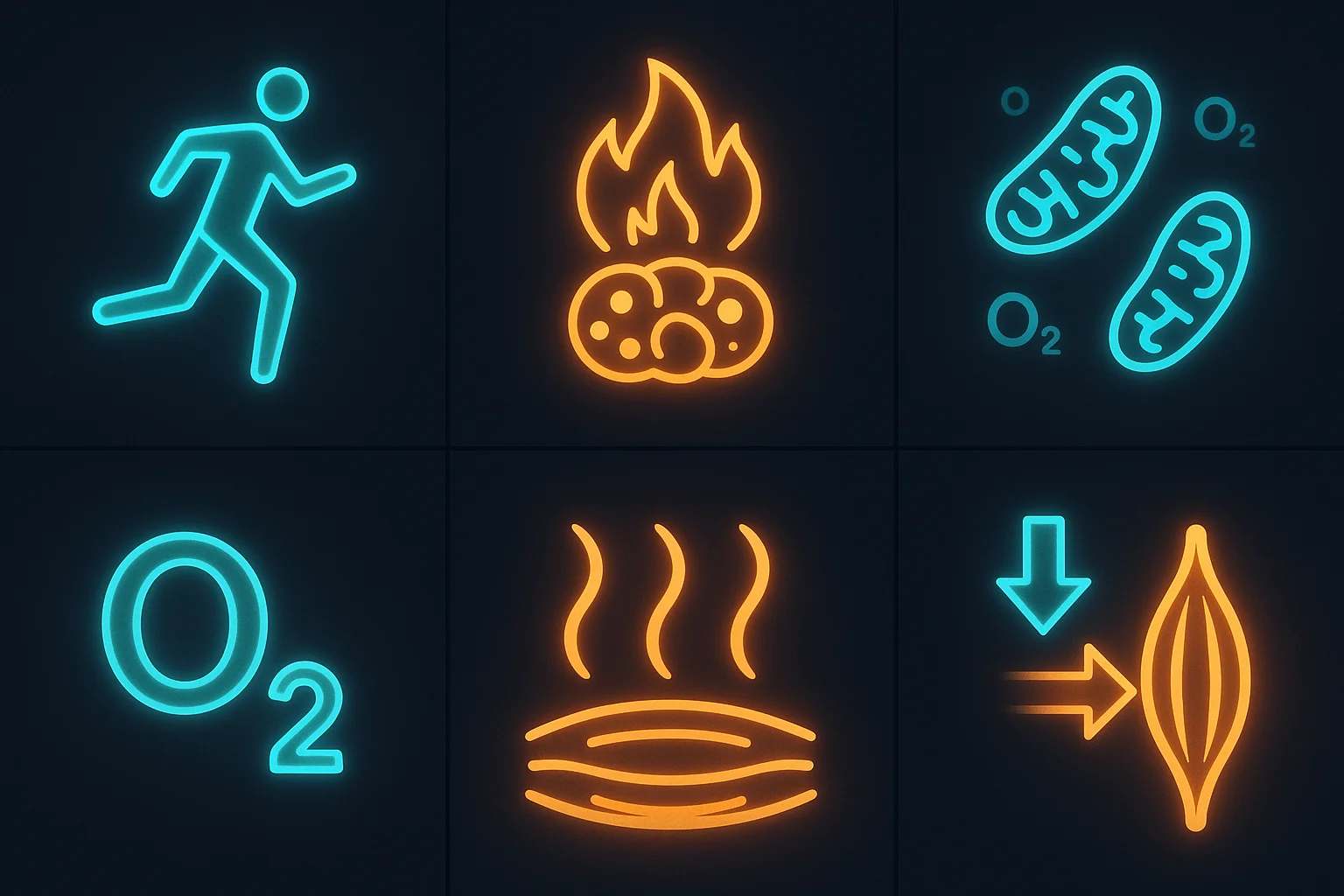
What ERRα does is sit downstream of PGC-1α and regulate the genetic program that governs mitochondrial biogenesis, fatty acid oxidation, and oxidative phosphorylation in metabolically active tissues — heart, liver, kidney, and skeletal muscle (Schreiber et al., PNAS 2004, PMID 15087503; Tripathi et al., review 2014, PMID 25222219). ERRα is functionally one of the master switches that endurance training flips. SLU-PP-332 flips that same switch pharmacologically.

The Billon group at Saint Louis University identified SLU-PP-332 as a synthetic pan-agonist of all three ERRs, with highest potency at ERRα, and characterized its effects in cells and mice (Billon et al., ACS Chem Biol 2023, PMID 36988910). For dosing detail, see our SLU-PP-332 Dosing Guide.

Benefit 1 — Increased Aerobic Exercise Capacity (Mice)

Evidence: preclinical (mouse), strong. Billon et al. (ACS Chem Biol 2023, PMID 36988910) treated mice with SLU-PP-332 IP and measured treadmill performance. Treated mice ran roughly 70% longer in time and 45% farther in distance than vehicle controls before exhaustion. The effect required ERRα — knockout mice showed no benefit, confirming that the exercise-capacity gain works through ERRα-dependent transcription rather than off-target mechanisms.

Mechanism: increased expression of mitochondrial biogenesis genes, fatty acid oxidation genes, and a shift in skeletal muscle fiber composition toward type IIa oxidative fibers — the same shift that endurance training produces. SLU-PP-332 also induced DDIT4, an acute aerobic exercise gene normally activated by training itself.

This is the single benefit with the strongest preclinical signal. It is also the benefit that has not been tested in any human.

Benefit 2 — Reduced Body Fat in Diet-Induced Obesity (Mice)

Evidence: preclinical (mouse), strong. Billon et al. (J Biol Chem 2023, PMID 37739806) put diet-induced-obese (DIO) mice on 25 mg/kg SLU-PP-332 IP twice daily for one month. Treated mice gained ~10× less fat than vehicle controls on the same high-fat diet and lost approximately 12% of body weight. Adiposity dropped, glucose tolerance improved, and resting energy expenditure rose.

The mechanism is consistent with ERR pan-agonism: increased fatty acid oxidation in skeletal muscle and liver, increased basal metabolic rate, and a metabolic profile that favors burning fat as fuel rather than storing it. This is fundamentally different from how GLP-1 agonists like retatrutide or semaglutide work — those reduce intake; SLU-PP-332 increases output.

Benefit 3 — Improved Cardiac Function in Heart Failure Models

Evidence: preclinical (mouse), moderate. Xu et al. (Circulation 2023, PMID 37961903) used pressure-overload heart failure mouse models to test pan-ERR agonism with SLU-PP-332 and the related compound SLU-PP-915. Both compounds improved ejection fraction, reduced fibrosis, and increased survival without inducing pathological cardiac hypertrophy. ERRγ was the main mediator of cardioprotection rather than ERRα.

This finding is relevant because some classes of metabolic agents drive maladaptive cardiac remodeling at chronic exposure. Pan-ERR agonism, in this preclinical model, did not. It is a single safety datapoint in mice — not evidence of cardiac safety in humans.

Benefit 4 — Mitochondrial Biogenesis and Fatty Acid Oxidation

Evidence: preclinical (mouse), strong on mechanism. Across all three primary studies, SLU-PP-332 reliably upregulated genes governing mitochondrial biogenesis (PGC-1α-coregulated), fatty acid β-oxidation (CPT1B, ACADM), and oxidative phosphorylation. The transcriptional fingerprint is what you would expect from chronic endurance training rather than a single molecule.

The downstream physiological effects in mice — more mitochondria per cell, more efficient fat burning, greater oxidative capacity — translate to the endurance and fat-loss phenotypes already discussed. Whether the same transcriptional response occurs in human tissue at orally absorbed doses has not been tested.

Ready to buy? Compare verified vendors on our best slu-pp-332 sources page, or browse all coupon codes for up to 50% off.

Where to buy SLU-PP-332
One verified, COA-tested SLU-PP-332 source
The verified, COA-tested source we track for SLU-PP-332 — shipped with a certificate of analysis. Research use only.
COA verified $10.00/mg Glacier Aminos
Save 10%thepeptidecatalogat checkout
Buy at Glacier Aminos — $49.99
5mg · sold research-use-only · we may earn a commission

Benefit 5 — Improved Glucose Tolerance and Insulin Sensitivity (Mice)

Evidence: preclinical (mouse), moderate. The DIO mouse work (Billon 2023, PMID 37739806) reported improved glucose tolerance alongside the body-weight changes. The mechanism is consistent with increased oxidative capacity in skeletal muscle: more mitochondrial activity means more peripheral glucose disposal at rest. This is the same pathway that exercise training improves over months.

Whether SLU-PP-332 produces clinically meaningful HbA1c reductions in humans, and whether those effects survive without concurrent caloric deficit or training, has not been tested.

Benefit 6 — Type IIa Oxidative Muscle Fiber Shift

Evidence: preclinical (mouse), moderate. The exercise-capacity paper documented a shift in skeletal muscle fiber composition toward type IIa oxidative fibers — the fibers that endurance athletes preferentially develop. This is not the same as muscle hypertrophy. SLU-PP-332 reshapes the type of muscle fibers, not the size of muscle bellies. Community claims of size or strength gains are not supported by published data.

Practical implication: if the rodent data translate, SLU-PP-332's muscle effect is more "endurance-cyclist physiology" than "hypertrophy-training physiology."

Evidence Summary

Benefit Evidence Level Tissue Where Tested Translation to Humans
Increased exercise capacity Strong Mouse skeletal muscle Untested
Reduced body fat (DIO) Strong Mouse adipose Untested
Improved cardiac function (HF) Moderate Mouse heart Untested
Mitochondrial biogenesis Strong (mechanism) Mouse muscle/liver Untested
Improved glucose tolerance Moderate Mouse Untested
Type IIa fiber shift Moderate Mouse skeletal muscle Untested

The pattern: the mechanistic case is strong and the mouse phenotypic case is strong, but zero human data exist. For an honest read on what to expect in self-experimentation contexts, see our SLU-PP-332 Results Timeline.

Dosing Context for Each Benefit

All published preclinical dosing was 25 mg/kg IP twice daily in mice — that does not translate cleanly to a human capsule or injection dose. Community reports describe oral protocols ranging from 250 mcg to 1 mg/day, but the orally active sibling compound SLU-PP-915 (PMID 41421047) was developed precisely because the parent SLU-PP-332 "lacks oral bioavailability." Oral SLU-PP-332 may produce no systemic exposure at all.

For the full dosing breakdown including the oral-vs-injectable bioavailability question, see our SLU-PP-332 Dosing Guide.

Who Considers SLU-PP-332

Researchers and self-experimenters interested in:

  • Endurance/aerobic capacity research without a corresponding training stimulus
  • Metabolic research where ERR-mediated fatty acid oxidation is mechanistically relevant
  • Comparative work alongside Cardarine (GW-501516), which targets PPARδ — a different but functionally related metabolic pathway. See SLU-PP-332 vs MOTS-c for the closest published comparison
  • Stacking experiments alongside GLP-1 agonists like retatrutide to combine appetite suppression with oxidative-capacity modulation

The compound is poorly suited for anyone who wants peer-reviewed human safety data, an established therapeutic dose, or a clinical evidence base.

30ml bacteriostatic water vial — 0.9% benzyl alcohol multi-dose
Bac Water Made for Peptides
Don't risk a $300 peptide on generic bac water.
Most cloudy reconstitutions trace back to one thing — and it isn't the peptide. Sterile, non-pyrogenic, 0.9% benzyl alcohol — formulated for peptide reconstitution, not repackaged from generic stock.
0.9% benzyl alcohol Made for peptides 30 mL multi-dose
See why our bac water doesn't ruin peptides
30ml from $18.75 · Ships fast · Code thepeptidecatalog

Frequently Asked Questions

Is SLU-PP-332 actually an exercise mimetic?
In mice, SLU-PP-332 induced an ERRα-dependent acute aerobic exercise transcriptional program and increased treadmill endurance by ~70% (Billon 2023, [PMID 36988910](https://pubmed.ncbi.nlm.nih.gov/36988910/)). Whether the same effect translates to humans has not been tested in any clinical trial.
Does SLU-PP-332 affect estrogen?
No. ERRα, ERRβ, and ERRγ are estrogen-related receptors — they share structural homology with classical estrogen receptors but are orphan receptors that do not bind estrogen. SLU-PP-332 has no documented estrogenic activity.
How much weight did mice lose on SLU-PP-332?
Diet-induced-obese mice on 25 mg/kg IP twice daily for one month gained roughly 10x less fat than vehicle controls and lost approximately 12% of body weight (Billon 2023, [PMID 37739806](https://pubmed.ncbi.nlm.nih.gov/37739806/)).
Does SLU-PP-332 build muscle?
Mouse studies showed a shift toward type IIa oxidative skeletal muscle fibers, not hypertrophy. Anecdotal community reports of muscle gain are not supported by published data — SLU-PP-332 changes muscle phenotype toward endurance, not size.
What is mitochondrial biogenesis and why does it matter?
Mitochondrial biogenesis is the process of cells building new mitochondria — the organelles that turn fuel into usable energy. ERRα regulates a broad set of biogenesis genes downstream of PGC-1α (Schreiber 2004, [PMID 15087503](https://pubmed.ncbi.nlm.nih.gov/15087503/)), so pan-ERR agonism increases mitochondrial density similar to what endurance training produces.

References

  1. Billon C, et al. Synthetic ERRα/β/γ agonist induces an ERRα-dependent acute aerobic exercise response and enhances exercise capacity. ACS Chem Biol. 2023. PMID: 36988910.
  2. Billon C, et al. A synthetic ERR agonist alleviates metabolic syndrome. J Biol Chem. 2023. PMID: 37739806.
  3. Xu W, et al. Novel pan-ERR agonists ameliorate heart failure through enhancing cardiac fatty acid metabolism and mitochondrial function. Circulation. 2023. PMID: 37961903.
  4. Schreiber SN, et al. The estrogen-related receptor alpha (ERRα) functions in PGC-1α-induced mitochondrial biogenesis. Proc Natl Acad Sci USA. 2004. PMID: 15087503.
  5. Tripathi M, et al. Estrogen-related receptor alpha and mitochondria: tale of the titans. J Biomed Res. 2014. PMID: 25222219.
  6. Billon C, et al. An orally active estrogen receptor-related receptor agonist, SLU-PP-915, enhances aerobic exercise capacity. J Pharmacol Exp Ther. 2025. PMID: 41421047.

This article is for educational and informational purposes only. It is not medical advice and should not be used to diagnose, treat, or prevent any condition. Consult a licensed healthcare provider before using any peptide or research compound.