SLU-PP-332 is a synthetic small molecule — not a peptide — that activates all three estrogen-related receptors (ERRα, ERRβ, ERRγ). The published preclinical data are striking: mice ran longer, burned more fat, and gained less weight than vehicle controls. The asterisk that gets buried in the marketing copy: every benefit listed below was measured in mice, not humans.
Research-context information only. SLU-PP-332 is an investigational small-molecule pan-agonist of the estrogen-related receptors (ERRα/β/γ) developed at Saint Louis University. It is not approved by the FDA and has not entered human clinical trials. Effects reported below come from published preclinical studies and self-reported community sources. This article reports what has been documented, not what should be done. Consult a licensed physician for personal medical decisions.
How SLU-PP-332 Works
ERRα, ERRβ, and ERRγ are orphan nuclear receptors. They share structural homology with classical estrogen receptors but do not bind estrogen — that point matters because it's the most common misconception about this compound. Despite the name, SLU-PP-332 is not an estrogen receptor modulator and has no documented estrogenic activity.
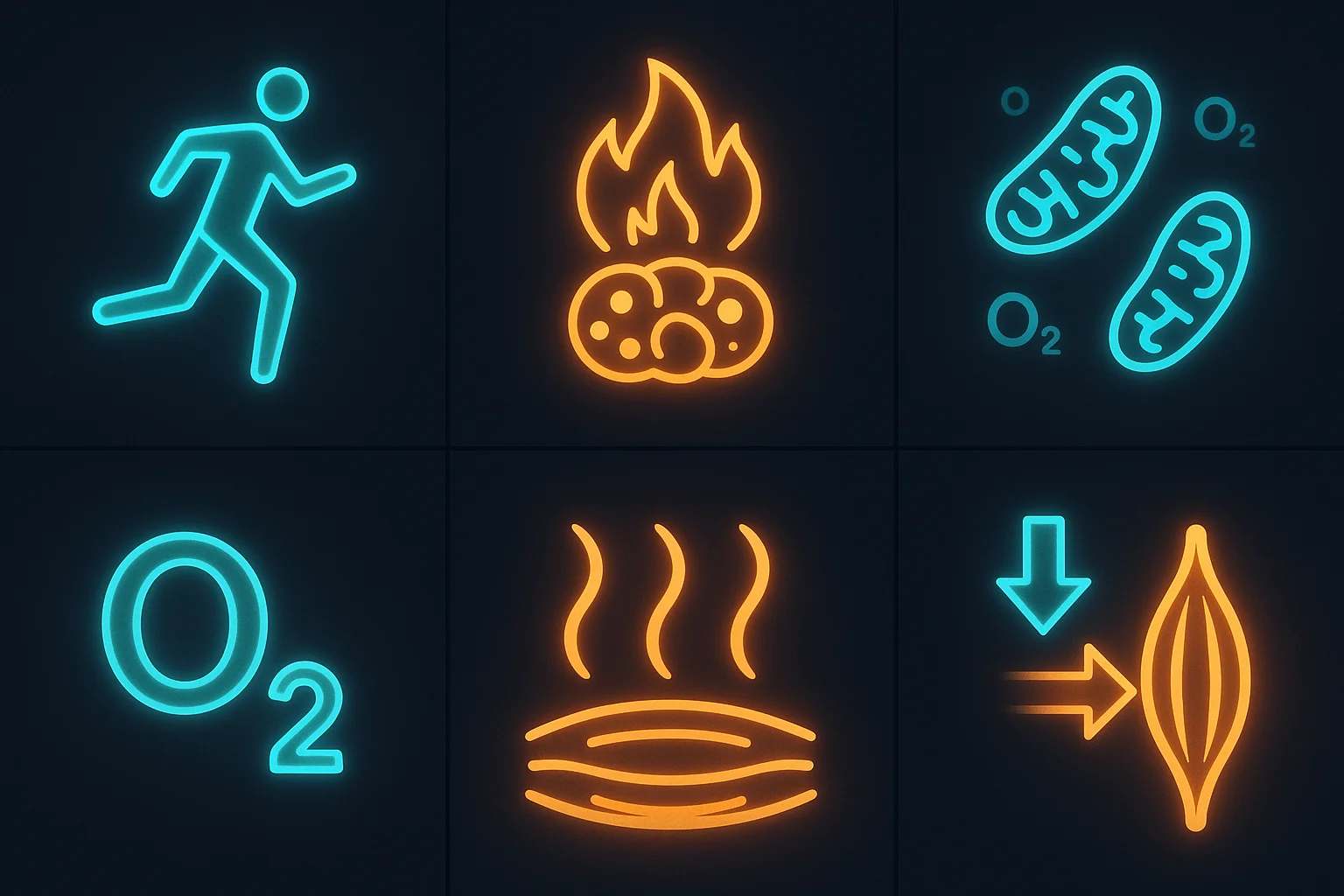
What ERRα does is sit downstream of PGC-1α and regulate the genetic program that governs mitochondrial biogenesis, fatty acid oxidation, and oxidative phosphorylation in metabolically active tissues — heart, liver, kidney, and skeletal muscle (Schreiber et al., PNAS 2004, PMID 15087503; Tripathi et al., review 2014, PMID 25222219). ERRα is functionally one of the master switches that endurance training flips. SLU-PP-332 flips that same switch pharmacologically.
The Billon group at Saint Louis University identified SLU-PP-332 as a synthetic pan-agonist of all three ERRs, with highest potency at ERRα, and characterized its effects in cells and mice (Billon et al., ACS Chem Biol 2023, PMID 36988910). For dosing detail, see our SLU-PP-332 Dosing Guide.
Benefit 1 — Increased Aerobic Exercise Capacity (Mice)
Evidence: preclinical (mouse), strong. Billon et al. (ACS Chem Biol 2023, PMID 36988910) treated mice with SLU-PP-332 IP and measured treadmill performance. Treated mice ran roughly 70% longer in time and 45% farther in distance than vehicle controls before exhaustion. The effect required ERRα — knockout mice showed no benefit, confirming that the exercise-capacity gain works through ERRα-dependent transcription rather than off-target mechanisms.
Mechanism: increased expression of mitochondrial biogenesis genes, fatty acid oxidation genes, and a shift in skeletal muscle fiber composition toward type IIa oxidative fibers — the same shift that endurance training produces. SLU-PP-332 also induced DDIT4, an acute aerobic exercise gene normally activated by training itself.
This is the single benefit with the strongest preclinical signal. It is also the benefit that has not been tested in any human.
Benefit 2 — Reduced Body Fat in Diet-Induced Obesity (Mice)
Evidence: preclinical (mouse), strong. Billon et al. (J Biol Chem 2023, PMID 37739806) put diet-induced-obese (DIO) mice on 25 mg/kg SLU-PP-332 IP twice daily for one month. Treated mice gained ~10× less fat than vehicle controls on the same high-fat diet and lost approximately 12% of body weight. Adiposity dropped, glucose tolerance improved, and resting energy expenditure rose.
The mechanism is consistent with ERR pan-agonism: increased fatty acid oxidation in skeletal muscle and liver, increased basal metabolic rate, and a metabolic profile that favors burning fat as fuel rather than storing it. This is fundamentally different from how GLP-1 agonists like retatrutide or semaglutide work — those reduce intake; SLU-PP-332 increases output.
Benefit 3 — Improved Cardiac Function in Heart Failure Models
Evidence: preclinical (mouse), moderate. Xu et al. (Circulation 2023, PMID 37961903) used pressure-overload heart failure mouse models to test pan-ERR agonism with SLU-PP-332 and the related compound SLU-PP-915. Both compounds improved ejection fraction, reduced fibrosis, and increased survival without inducing pathological cardiac hypertrophy. ERRγ was the main mediator of cardioprotection rather than ERRα.
This finding is relevant because some classes of metabolic agents drive maladaptive cardiac remodeling at chronic exposure. Pan-ERR agonism, in this preclinical model, did not. It is a single safety datapoint in mice — not evidence of cardiac safety in humans.
Benefit 4 — Mitochondrial Biogenesis and Fatty Acid Oxidation
Evidence: preclinical (mouse), strong on mechanism. Across all three primary studies, SLU-PP-332 reliably upregulated genes governing mitochondrial biogenesis (PGC-1α-coregulated), fatty acid β-oxidation (CPT1B, ACADM), and oxidative phosphorylation. The transcriptional fingerprint is what you would expect from chronic endurance training rather than a single molecule.
The downstream physiological effects in mice — more mitochondria per cell, more efficient fat burning, greater oxidative capacity — translate to the endurance and fat-loss phenotypes already discussed. Whether the same transcriptional response occurs in human tissue at orally absorbed doses has not been tested.
Ready to buy? Compare verified vendors on our best slu-pp-332 sources page, or browse all coupon codes for up to 50% off.