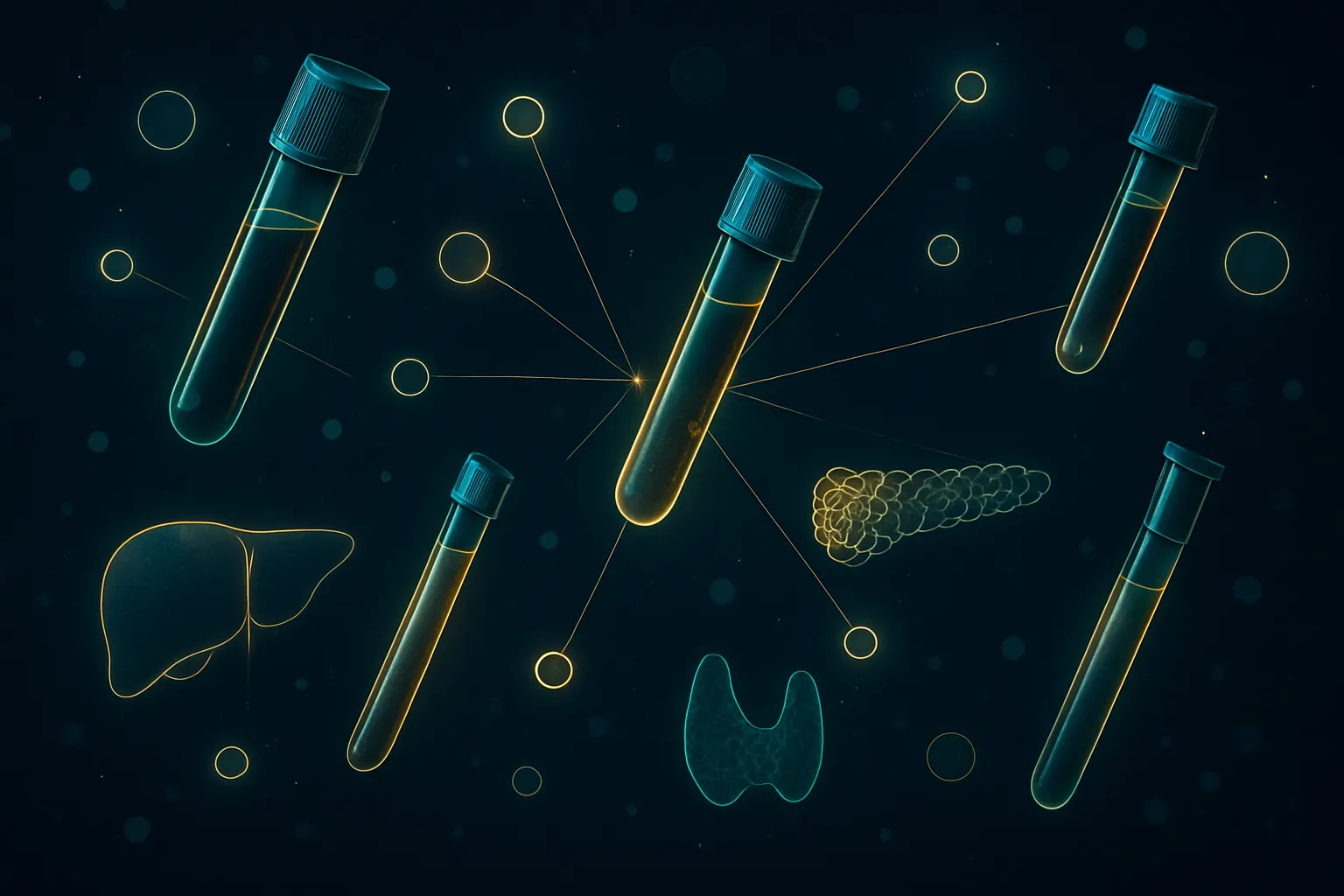
bloodworkApril 26, 2026·6 min read

Survodutide Bloodwork: 8 Labs to Track

Liver enzymes are the one most skip — and shouldn't with a glucagon agonist. 8 essential labs with optimal ranges and testing schedule.

Survodutide Bloodwork Guide

Survodutide Bloodwork Guide: What to Track and Why

Survodutide is a dual glucagon/GLP-1 receptor agonist — and that glucagon component makes liver monitoring more important than with GLP-1-only drugs like semaglutide. The glucagon receptor directly affects hepatic metabolism, fat oxidation, and energy expenditure. Tracking the right labs tells you whether these effects are working as expected.

This guide covers which labs to run, when to run them, and what the numbers mean.

Research-context information only. Survodutide is an investigational drug not approved by the FDA. Protocols, doses, and reactions reported below come from published clinical trials and self-reported community sources. This article reports what has been documented, not what should be done. Possession or use of investigational drugs outside an authorized clinical trial may be illegal in your jurisdiction. Consult a licensed physician for personal medical decisions.

The Testing Timeline

Baseline (before starting): Run all tests below 1-2 weeks before your first dose.

Dose escalation check (week 8-12): Retest liver enzymes, lipase, and fasting glucose. You're ramping doses during this period — this catches problems early.

Mid-protocol (week 20-24): Retest HbA1c, fasting insulin, lipid panel. By now you've reached or neared maintenance dose.

Post-protocol (2-4 weeks after finishing): Retest everything. This tells you what improvements persist.

Lab 1: Liver Enzymes — ALT & AST (Most Important for Survodutide)

Why They Matter More Here

Survodutide's glucagon receptor activation directly stimulates hepatic metabolism. This is beneficial — it clears liver fat — but it also means the liver is working harder. Monitoring ALT and AST confirms the positive trend and catches any unexpected hepatic stress.

In the Phase 2 MASH trial, survodutide dramatically reduced liver fat and improved histologic markers. Most participants saw ALT and AST improve over time.

Optimal Ranges

Marker Lab Reference Optimal Watch
ALT 7-56 U/L <25 U/L Rising trend or >3x baseline
AST 10-40 U/L <25 U/L Rising trend or >3x baseline

Expected pattern: ALT/AST may temporarily fluctuate early in treatment as hepatic fat oxidation increases, then trend downward as liver fat clears. A sustained upward trend is a red flag.

Lab 2: HbA1c (Glycated Hemoglobin)

What it measures: Average blood sugar over the past 2-3 months.

Why it matters: This is your primary efficacy marker for metabolic improvement. Survodutide's GLP-1 component enhances insulin secretion while the glucagon component improves hepatic glucose metabolism through liver fat reduction.

Status Range
Optimal <5.0%
Normal 5.0-5.6%
Pre-diabetic 5.7-6.4%
Diabetic ≥6.5%

High-performance target: Below 5.0% if non-diabetic. Below 5.4% is excellent metabolic health.

Lab 3: Fasting Glucose

What it measures: Blood sugar after 8-12 hours fasting.

Why it matters: Responds faster than HbA1c — you can see changes within 2-4 weeks. Your early signal that survodutide is affecting glucose metabolism.

Status Range
Optimal 72-85 mg/dL
Normal 70-99 mg/dL
Pre-diabetic 100-125 mg/dL

Lab 4: Fasting Insulin

What it measures: Insulin levels after overnight fast. High fasting insulin = insulin resistance.

Why it matters: Survodutide should improve insulin sensitivity, meaning your pancreas produces less insulin to maintain glucose levels. Falling fasting insulin with stable glucose is the ideal response.

Status Range
Optimal 2-5 µIU/mL
Normal <25 µIU/mL
Concerning >25 µIU/mL

Lab 5: Lipase (Pancreatic Safety)

What it measures: A pancreatic enzyme. Elevated lipase indicates pancreatic inflammation or injury.

Why it matters: GLP-1 receptor agonists carry a known risk of pancreatitis. Lipase above 3x the upper limit of normal with abdominal symptoms warrants immediate medical attention.

Status Range
Normal 10-73 U/L
Elevated 73-219 U/L (monitor closely)
Critical >219 U/L (3x ULN — seek care)

This is your most critical safety marker. Test at baseline and every dose escalation checkpoint.

Ready to buy? Compare verified vendors on our best survodutide sources page, or browse all coupon codes for up to 50% off.

Where to buy Survodutide
One verified, COA-tested Survodutide source
The verified, COA-tested source we track for Survodutide — shipped with a certificate of analysis. Research use only.
COA verified $7.80/mg EZ Peptides
Save 10%thepeptidecatalogat checkout
Buy at EZ Peptides — $78.00
10mg · sold research-use-only · we may earn a commission

Lab 6: Lipid Panel

Survodutide's metabolic effects extend to lipid metabolism. As insulin resistance improves and body fat decreases, lipid profiles typically follow.

Marker Optimal Normal Concerning
Total Cholesterol <180 mg/dL <200 mg/dL >240 mg/dL
LDL <100 mg/dL <130 mg/dL >160 mg/dL
HDL >60 mg/dL >40 mg/dL (M) / >50 (F) <40 mg/dL
Triglycerides <100 mg/dL <150 mg/dL >200 mg/dL
ApoB <80 mg/dL <100 mg/dL >130 mg/dL

Triglycerides are often the most responsive marker to GLP-1/glucagon therapy — expect meaningful improvement early.

Lab 7: TSH (Thyroid Stimulating Hormone)

What it measures: Pituitary signal to the thyroid.

Why it matters: GLP-1 receptor agonists carry a class warning for thyroid C-cell tumors based on rodent studies. While not confirmed in humans, baseline thyroid monitoring is recommended. Individuals with personal or family history of medullary thyroid carcinoma or MEN 2 should not use GLP-1 agonists.

Status Range
Optimal 1.0-2.0 mIU/L
Normal 0.4-4.0 mIU/L
Investigate <0.4 or >4.0 mIU/L

Consider adding calcitonin to baseline labs — a hormone produced by thyroid C-cells. Elevated calcitonin can indicate C-cell hyperplasia.

Lab 8: Kidney Function (BUN, Creatinine, eGFR)

Why it matters: Appetite suppression can lead to reduced fluid intake and dehydration, which affects kidney markers. GLP-1 agonists have shown renal protective effects in some studies, but monitoring is prudent.

Marker Optimal Normal
BUN 7-18 mg/dL 7-20 mg/dL
Creatinine 0.7-1.2 mg/dL 0.6-1.3 mg/dL
eGFR >90 mL/min >60 mL/min

Bonus: Insulin/C-Peptide

C-peptide is released 1:1 with insulin from the pancreas. It tells you how much insulin your body is actually producing (unlike fasting insulin, which can be affected by exogenous insulin use). Useful for tracking pancreatic function over time.

Putting It All Together: Sample Protocol

Week -1 (Baseline): HbA1c, fasting glucose, fasting insulin, ALT, AST, lipase, lipid panel, TSH, calcitonin, BUN/creatinine/eGFR.

Week 8-12 (Escalation check): Fasting glucose, ALT, AST, lipase. These catch safety issues during the critical dose-escalation period.

Week 20-24 (Mid-protocol): HbA1c, fasting insulin, lipid panel, ALT, AST. These should show meaningful improvement by now.

Week 46+ (Post-protocol): Retest everything from baseline. Compare each marker to starting numbers.

When to Stop: Red Flags

  • Lipase >3x ULN with abdominal pain → possible pancreatitis, discontinue and seek care
  • ALT/AST >5x ULN → significant hepatic stress, discontinue
  • Persistent severe GI symptoms despite dose reduction → may not tolerate the drug
  • Thyroid nodule or calcitonin trending up → refer to endocrinology

Frequently Asked Questions

Do I need bloodwork before starting survodutide?
Strongly recommended. Survodutide affects blood sugar, liver enzymes, lipids, and pancreatic markers. Baseline labs give you objective data to measure progress and catch potential issues early — particularly liver enzymes given the glucagon receptor activation.
How soon after starting survodutide should I retest?
Run safety markers (liver enzymes, lipase) at week 8-12 during dose escalation. Full panel retest at week 20-24 when you've been at maintenance dose long enough for HbA1c to reflect changes.
What's the most important blood test for survodutide?
Liver enzymes (ALT/AST) are uniquely important for survodutide because the glucagon receptor component directly affects hepatic metabolism. For overall efficacy tracking, HbA1c gives the broadest picture.
Will survodutide affect my liver enzymes?
Survodutide typically improves liver enzymes over time by reducing hepatic fat — the MASH trial showed significant liver fat reduction. However, initial fluctuations are possible as the glucagon component increases hepatic metabolic activity. Monitor trends, not single values.

References

  1. Blüher M, et al. (2024). Glucagon and GLP-1 receptor dual agonist survodutide for obesity — a phase 2 trial. Lancet Diabetes Endocrinol. PMID:38330987

  2. Sanyal AJ, et al. (2024). A Phase 2 randomized trial of survodutide in MASH and fibrosis. N Engl J Med. PMID:38847460

  3. Blüher M, et al. (2024). Dose-response effects on HbA1c and bodyweight reduction of survodutide in T2D. Diabetes Obes Metab. PMID:38095657

  4. Saxena AR, et al. (2023). Phase I studies of BI 456906 safety and tolerability. Diabetes Obes Metab. PMID:36527386


This guide is for educational and informational purposes only. It is not medical advice. Survodutide is an investigational compound not approved by the FDA. The biomarker ranges described here reflect optimization targets used in functional and sports medicine — they are not diagnostic criteria. Lab results should be interpreted by a qualified healthcare provider. The Peptide Catalog is not responsible for medical decisions made based on information presented here.