dosingJuly 11, 2026·6 min read

Thymalin Dosage Chart: 5-10mg IM Course Protocol

Thymalin is a thymus extract fraction, not thymulin or thymosin alpha-1. What Russian clinical literature documented vs community SC use.

Thymalin dosing guide

Thymalin dosing in the published Russian clinical literature centers on 5-10 mg intramuscular once daily, given as a short course of 5-10 consecutive days and repeated after roughly six months. Community and research-chemical sources instead describe subcutaneous use at loosely similar per-course amounts, but that route has no controlled-trial basis. This guide separates the two so it is clear which figures came from human studies and which did not.

Thymalin is a polypeptide fraction extracted from thymus tissue — a mixture of low-molecular-weight peptides, not a single defined molecule. That matters for dosing: because it is an extract rather than a synthetic sequence, batch composition is not standardized the way a defined peptide would be, and the dose figures below describe historical clinical practice, not a validated modern protocol.

Research-context information only. Thymalin is a research peptide. Protocols, doses, and reactions reported below come from published research and self-reported community sources. This article reports what has been documented, not what should be done. Consult a licensed physician for personal medical decisions.

Thymalin is a Soviet-era thymic peptide bioregulator developed in the 1970s-80s and used clinically in Russia as an immunocorrector. The sections below cover the documented course protocol, routes, reconstitution math, and the honest provenance of these numbers.

Thymalin Dosing Table

Match your vial size below — reconstitution and dose math update automatically.

Reconstitute: add 1 mL of bacteriostatic water to the 10 mg vial. Resulting concentration: 10 mg/mL.
5 mg50 units · 0.5 mL
Daily IM, 5-10 day course
Clinical-literature (Russian)
10 mg100 units · 1 mL
Daily IM, 5-10 day course
Clinical-literature (Russian)

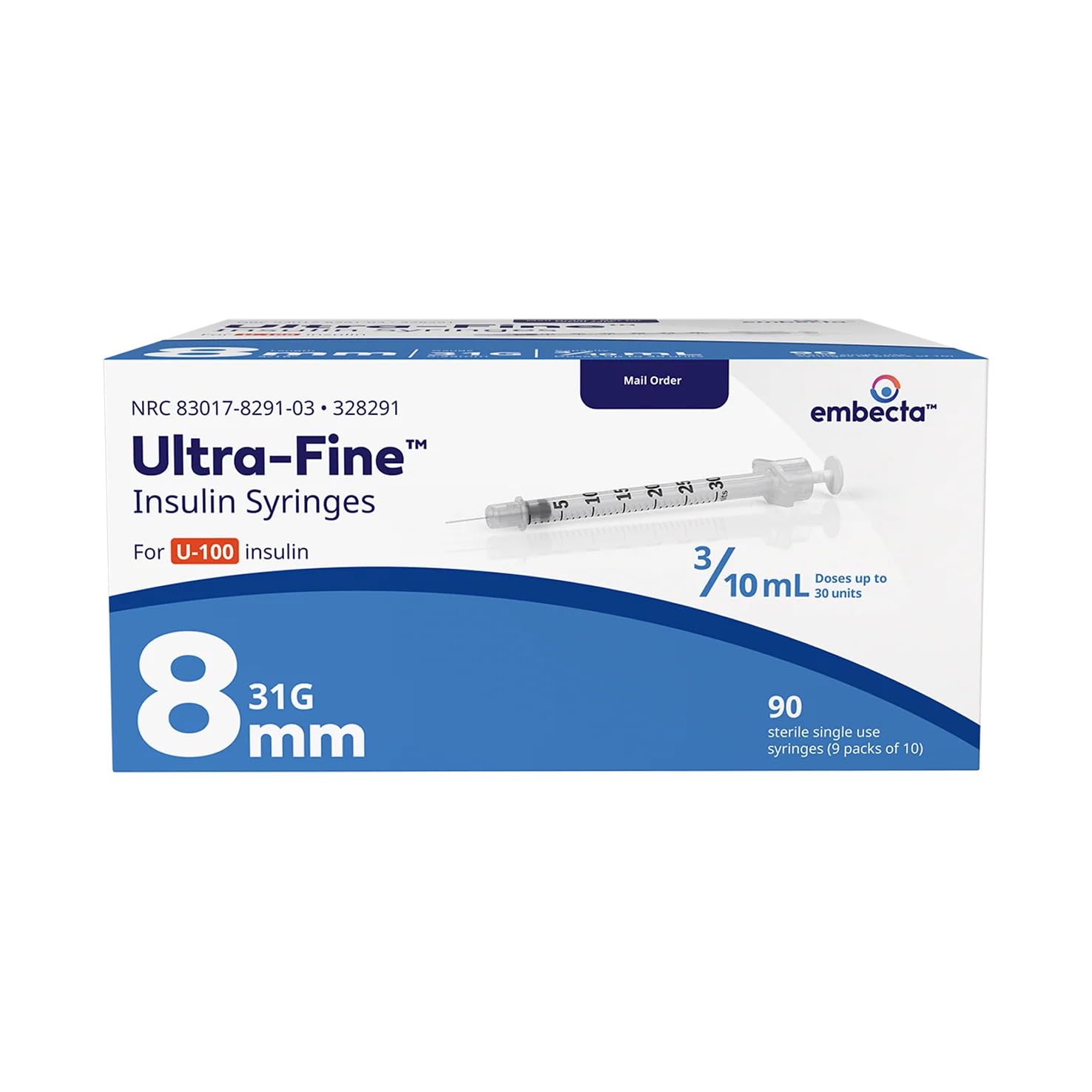
Math assumes U-100 insulin syringes (1 mL = 100 units). Verify your syringe matches before injecting. Round half-units to the nearest visible mark.

Quick Reference: Protocol

The table below reflects what the Russian clinical literature documented — not a recommended schedule. There is no Jay Campbell/Hunter Williams cheat-sheet entry for Thymalin, so no "standard protocol" figure exists in that source.

Parameter Clinical-literature figure (Russian sources)
Dose 5-10 mg (some reports 1-10 mg)
Route Intramuscular injection
Frequency Once daily
Course length 5-10 consecutive days (cited 3-10 days)
Repeat interval Course repeated after ~6 months; strongest signal from annually repeated courses
Diluent Sterile saline or procaine
Supplied as Lyophilized powder for injection
Storage Refrigerate at 2-8C, use reconstituted vial within 28 days

Community-reported variation (label: community/anecdotal — not from controlled trials): research-chemical and community protocols commonly describe subcutaneous administration at roughly 5-20 mg per course spread over several days, repeated 1-2 times per year. No controlled-trial basis supports the subcutaneous route or these amounts — the published human data is intramuscular. These figures are reported here as community signal, not as validated dosing.

Routes of Administration

  • Intramuscular (IM) — the route used in the published human studies. Original protocols dissolved the powder in sterile saline or procaine and injected once daily across the course.
  • Subcutaneous (SC) — described in community and vendor sources, not in the controlled literature. Community reports frame SC as the convenient at-home route; it carries no trial support for Thymalin specifically.

The disambiguation matters when comparing route notes across sources: Thymalin is a thymus extract fraction, distinct from thymulin (a single zinc-dependent nonapeptide) and thymosin alpha-1 (a defined 28-amino-acid peptide). Dosing figures for those two compounds do not transfer to Thymalin, and vice versa.

Reconstitution Quick Reference

The original clinical protocols dissolved Thymalin in sterile saline or procaine for intramuscular injection. Community reconstitution guides instead describe bacteriostatic water, as with other research peptides.

Vial Size BAC Water Concentration 5 mg dose 10 mg dose
10 mg 2 mL 5 mg/mL 1.0 mL (100 units) 2.0 mL (200 units — two draws or a larger syringe)

At 5 mg/mL, a 5 mg dose is 1.0 mL — a large draw relative to most peptides because these are milligram-scale, not microgram-scale, doses. Community protocols describe swirling gently (not shaking), refrigerating at 2-8C, and using the reconstituted vial within 28 days.

For the full step-by-step mixing walkthrough, see our Reconstitution Guide.

Ready to buy? Compare verified vendors on our best Thymalin sources page, or browse all coupon codes for up to 50% off.
Where to buy Thymalin
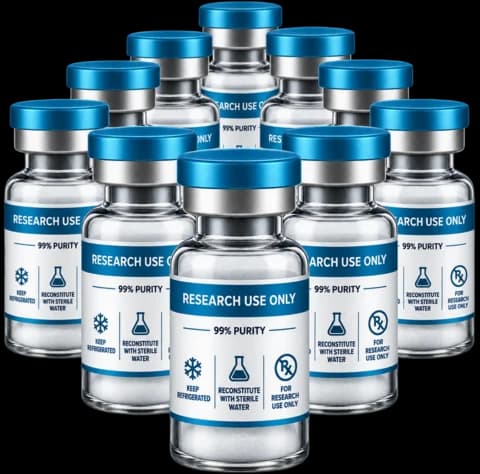
One verified, COA-tested Thymalin source
The verified, COA-tested source we track for Thymalin — shipped with a certificate of analysis. Research use only.
COA verified $5.90/mg Ion Peptide
Save 15%thepeptidecatalogat checkout
Buy at Ion Peptide — $59.00
10mg · sold research-use-only · we may earn a commission

Where These Numbers Come From

The dose figures above trace almost entirely to one research lineage: V.G. Morozov and V.Kh. Khavinson and colleagues, associated with the St. Petersburg Institute of Bioregulation and Gerontology. This is important context for anyone weighing the numbers.

The foundational report (Morozov and Khavinson, Int J Immunopharmacol, 1997; PMID 9637345) described isolating thymic peptides — Thymalin and Thymogen — reported to activate T-cell differentiation, and established the "practically no side effects" framing that later sources echo. The geroprotection dose signal comes from a 266-subject elderly cohort followed over several years, written up first in Russian (Khavinson and Morozov, Adv Gerontol, 2002; PMID 12577695) and then in English (Neuroendocrinol Lett, 2003; PMID 14523363). These two papers describe the same cohort — one dataset written up twice, not two independent confirmations. The English write-up reported mortality reductions of roughly 2.0-2.1x in the thymalin arm, with the largest effect tied to annually repeated courses.

More recent work is mostly in-vitro. A 2020 cell-culture study reported Thymalin increased the CD28 marker on human hematopoietic stem cells (Khavinson, Linkova, et al., Bull Exp Biol Med, 2020; PMID 33237528), and a 2023 study reported the component KE and EW dipeptides lowered pro-inflammatory cytokines (IL-1, IL-6, TNF-alpha) in human blood cells (Linkova, Khavinson, et al., Int J Mol Sci, 2023; PMID 37686182). A 2021 narrative review by the originators (Khavinson et al., Biol Bull Rev, 2021; PMC8365293, DOI-only — no PubMed record) summarizes the immunocorrection claims.

Honest provenance summary: the human dose evidence is old, single-group, Russian-language, and not independently replicated in the West. The published route is intramuscular; subcutaneous community use has no controlled basis. The recent supporting work is in-vitro and comes overwhelmingly from the compound's originators. These course figures describe historical clinical practice, not a validated protocol.

30ml bacteriostatic water vial — 0.9% benzyl alcohol multi-dose
Bac Water Made for Peptides50% off
Don't risk a $300 peptide on generic bac water.
Most cloudy reconstitutions trace back to one thing — and it isn't the peptide. Sterile, non-pyrogenic, 0.9% benzyl alcohol — formulated for peptide reconstitution, not repackaged from generic stock.
0.9% benzyl alcohol Made for peptides 30 mL multi-dose
See why our bac water doesn't ruin peptides
Ships fast · 50% off with code thepeptidecatalog

Stacking Protocols

In the originating literature, Thymalin was frequently studied alongside epithalamin (the pineal extract behind Epitalon), with the two given as separate annual courses rather than mixed. The 266-subject cohort reported the largest mortality signal in the combined-course arm — but that combined signal is not evidence for either compound alone, and both figures share the same non-independent dataset.

Peptide Documented pairing Source context
Epitalon Separate annual courses in the elderly-cohort geroprotection reports Russian originator studies (PMID 14523363) — combined-arm signal, not additive proof

No Western trial has evaluated Thymalin stacking. Community stacking claims beyond this pairing have no controlled support and are not reproduced here.

Side Effects & Safety

  • The originating literature states Thymalin and related thymic peptides had "practically no side effects" over decades of Russian clinical use (PMID 9637345; PMC8365293).
  • Independent safety data is essentially absent — no large Western trials, no modern pharmacovigilance.
  • General injectable-peptide risks apply: injection-site reactions, and the sterility/contamination risk of research-chemical products.
  • Because Thymalin is an extract, purity and composition of research-chemical products are unverified and can vary batch to batch.
  • Long-term immunomodulatory effects are not characterized in independent modern data.
  • Not an approved drug in the West; sold only as a research chemical, not for human consumption.

Framing: reported well-tolerated in older Russian clinical use, but with no independent modern safety evaluation.

Frequently Asked Questions

What dose of Thymalin does the clinical literature describe?
Russian clinical literature describes 5-10 mg intramuscular once daily, given as a course of 5-10 consecutive days, reconstituted in saline or procaine. Strongest signals came from courses repeated roughly every 6 months. This is single-group, decades-old, Russian-language data that has not been independently replicated in the West.
Is Thymalin the same as thymulin or thymosin alpha-1?
No. Thymalin is a crude thymus extract fraction — a mixture of low-molecular-weight peptides, not one sequence. Thymulin (FTS) is a single zinc-dependent nonapeptide. Thymosin alpha-1 is a defined 28-amino-acid peptide. All three are distinct compounds that readers routinely conflate.
What route do published Thymalin protocols use?
Published human data used intramuscular injection of powder reconstituted in saline or procaine. Community and research-chemical sources commonly describe subcutaneous use instead, but subcutaneous administration has no controlled-trial basis — the documented dose evidence is IM only.
How often were Thymalin courses repeated in the studies?
The geroprotection reports describe courses repeated after roughly 6 months, with the strongest mortality signal tied to annually repeated courses over several years. These figures come from one research group's cohort and are not independently confirmed.
How is Thymalin reconstituted?
It is supplied as a lyophilized powder. Original protocols dissolved it in sterile saline or procaine for intramuscular injection. Community reconstitution guides describe adding 2 mL of bacteriostatic water to a 10 mg vial, yielding 5 mg/mL. Swirl gently, refrigerate at 2-8C.
Is Thymalin approved or safety-tested in the West?
No. Thymalin is not FDA-approved and is not approved in the EU or UK. It is used clinically in Russia as an immunocorrector. In Western markets it is sold only as a research chemical, not for human consumption, with essentially no independent modern safety data.

References

  1. Morozov VG, Khavinson VKh. Natural and synthetic thymic peptides as therapeutics for immune dysfunction. Int J Immunopharmacol. 1997. PMID 9637345.
  2. Khavinson VKh, Morozov VG. Geroprotective effect of thymalin and epithalamin. Adv Gerontol. 2002. PMID 12577695.
  3. Khavinson VKh, Morozov VG. Peptides of pineal gland and thymus prolong human life. Neuroendocrinol Lett. 2003. PMID 14523363. (Same 266-subject cohort as PMID 12577695 — not an independent replication.)
  4. Khavinson VKh, Linkova NS, et al. Thymalin: activation of differentiation of human hematopoietic stem cells. Bull Exp Biol Med. 2020. PMID 33237528.
  5. Linkova N, Khavinson V, et al. The influence of KE and EW dipeptides in the composition of the thymalin drug on gene expression and protein synthesis involved in the pathogenesis of COVID-19. Int J Mol Sci. 2023. PMID 37686182.
  6. Khavinson VKh, et al. The use of thymalin for immunocorrection and molecular aspects of biological activity. Biol Bull Rev. 2021;11(4):377-382. PMC8365293, DOI 10.1134/S2079086421040046 (DOI-only — no PubMed record).