Thymalin has an unusual safety reputation: the Russian clinical literature that introduced it describes it as almost completely free of side effects across decades of use. That sounds reassuring, and it may well be accurate for the populations studied — but it comes with a large asterisk. Nearly all of that reputation traces to a single research lineage, and independent Western safety evaluation of thymalin is essentially absent. The honest version of thymalin's safety story is not "no side effects." It is "few reported side effects, from one group, never independently verified."
This article separates what the originating literature actually documented from what has been independently confirmed (very little), and lays out the general injectable-peptide and extract-specific risks that apply regardless of the published tolerability claims.
Research-context information only. Thymalin is a research peptide. Protocols, doses, and reactions reported below come from published research and self-reported community sources. This article reports what has been documented, not what should be done. Consult a licensed physician for personal medical decisions.
Thymalin is not FDA-approved in the United States and is sold in Western markets only as a research chemical labeled "not for human consumption." It is also routinely confused with two other thymic compounds — thymulin and thymosin alpha-1 — whose safety data do not transfer to it. Both points shape how the safety record below should be read.
What the Reported Safety Record Actually Shows
The foundational claim comes from the compound's originators. Morozov and Khavinson reported that thymalin and related thymic peptides produced "practically no side effects" over long clinical use (PMID 9637345), and a later originator review restated thymalin as well-tolerated across decades of Russian immunocorrection practice (Khavinson et al., Biol Bull Rev 2021, PMCID PMC8365293, DOI 10.1134/S2079086421040046). The largest supporting dataset is a geroprotection cohort of 266 elderly subjects followed for 6–8 years; the reports describe reduced respiratory infection and mortality with annually repeated courses and do not attribute adverse events to thymalin (Khavinson & Morozov, 2002, PMID 12577695; English write-up PMID 14523363).
Three caveats have to travel with that record every time it is cited:
It is single-source. The human tolerability data is dominated by one group (Khavinson, Morozov, and collaborators), is decades old, and is largely published in Russian. There is no independent Western replication of the safety findings.
The two main citations are one cohort, not two.PMID 12577695 and PMID 14523363 describe the same 266-subject population — an original report and its English write-up. They are not two independent confirmations of tolerability.
"Published" is not "surveilled." There is no modern pharmacovigilance system, adverse-event registry, or large controlled safety trial for thymalin. Absence of reported side effects in a small, non-independent literature is not the same as demonstrated safety.
So the reassuring headline — reported as nearly side-effect-free — is real, but it rests on a narrow evidentiary base. The risks below are the ones that apply regardless of what the originating literature reported, because they stem from the product format and the compound's biology rather than from trial incidence data (which, for thymalin, does not meaningfully exist).
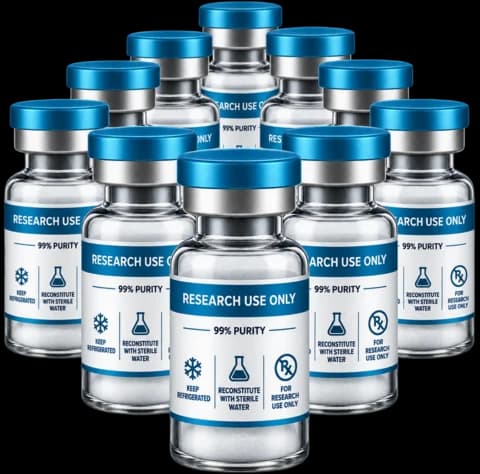
10mg · sold research-use-only · we may earn a commission
Documented and Plausible Risks
Because thymalin has no incidence tables from controlled trials, the categories below are framed by product format and mechanism, with attribution to what the literature and general injectable-peptide guidance describe — not by percentages, which do not exist for this compound.
Injection-site reactions
Thymalin's historical clinical use was intramuscular; community protocols also describe subcutaneous administration. Injection-site reactions — transient redness, swelling, soreness, or firmness — are among the most commonly documented events for injectable peptides generally, and the originating thymalin literature reported them as minimal to absent. General injection guidance describes rotating sites and aseptic technique as the documented mitigations. Spreading redness, warmth, streaking, or discharge are documented signs of infection rather than a simple site reaction.
Sterility and contamination risk of research-chemical products
This risk is a property of the supply chain, not of the molecule. Thymalin sold in Western markets is labeled "for research use only, not for human consumption" and is not manufactured under GMP standards for human injectables. Non-sterile or improperly compounded lyophilized products can carry microbial contamination or bacterial endotoxin, which are documented causes of injection-site infection and systemic reactions across the research-peptide category. Community sources describe the mitigations as third-party sterility and purity testing, sterile reconstitution, and refrigerated storage — none of which are guaranteed by a research-chemical label.
Unverified purity and batch-to-batch variability (extract-specific)
This is the risk most specific to thymalin and the one most often overlooked. Thymalin is not a single defined molecule — it is a low-molecular-weight polypeptide fraction extracted from thymus tissue (originally calf/bovine), and its bioactivity is attributed to a mixture of component peptides. Because it is an extract, its composition is not standardized the way a synthetic peptide's is, and batch-to-batch variability in the actual peptide content is an inherent property rather than a manufacturing defect. An animal-tissue-derived extract also carries the general considerations that apply to biologics of animal origin — foreign-protein content and the theoretical potential for immunogenic or allergic responses — which the originating literature did not report but which independent testing has never systematically evaluated for Western-sold products.
Unknown long-term immunomodulatory effects
Thymalin's proposed mechanism is immune bioregulation — promoting T-lymphocyte precursor differentiation and shifting cytokine balance. Those effects are described mostly in in-vitro and cell-culture work from the originators (for example, activation of hematopoietic stem cell differentiation, Khavinson et al., 2020, PMID 33237528). A compound that modulates immune signaling has an inherently harder-to-characterize long-term risk profile than a symptomatic agent, and no long-term independent safety follow-up exists outside the originators' geroprotection cohort. The honest framing is that the long-term immunomodulatory safety of thymalin is uncharacterized by independent research, not that it has been shown to be safe.
Bac Water Made for Peptides
Don't risk a $300 peptide on generic bac water.
Most cloudy reconstitutions trace back to one thing — and it isn't the peptide. Sterile, non-pyrogenic, 0.9% benzyl alcohol — formulated for peptide reconstitution, not repackaged from generic stock.
✓ 0.9% benzyl alcohol✓ Made for peptides✓ 30 mL multi-dose
Signs the Literature and Injection Guidance Flag for Medical Evaluation
The originating thymalin literature did not report adverse events that led to protocol discontinuation, so there is no thymalin-specific discontinuation table to reproduce. The signs below come from general injectable-peptide and injection-safety guidance and apply to any research-chemical injectable, thymalin included:
Spreading redness, warmth, streaking, pus, or discharge at an injection site — documented signs of local infection rather than a simple site reaction.
Fever, chills, or systemic malaise after injection — documented as possible signs of contamination or endotoxin reaction with non-sterile products.
Signs of an allergic or immunogenic response — hives, widespread rash, facial or throat swelling, or difficulty breathing, which carry added theoretical weight for an animal-tissue-derived extract.
Any unexpected, persistent, or worsening symptom during a course — relevant because independent safety surveillance does not exist to contextualize novel reactions.
These are described as prompts for medical evaluation in general injection-safety guidance; they are not thymalin-specific incidence data, because none has been independently established.
Why the Thymulin and Thymosin Alpha-1 Confusion Matters for Safety
Readers routinely conflate three different thymic compounds, and safety claims for one are frequently — and incorrectly — applied to the others:
Compound
What it is
Why its safety data does not transfer
Thymalin
Multi-peptide thymus extract fraction
Not one sequence; composition varies by batch; safety record is single-source Russian literature
Thymulin (FTS)
A single zinc-dependent nonapeptide (needs equimolar Zn²⁺)
Defined molecule with its own separate literature — not interchangeable with an extract
Thymosin alpha-1
A defined 28-amino-acid peptide (thymalfasin)
Studied as a defined single peptide with distinct pharmacology and its own adverse-event profile
The practical consequence: a "well-tolerated" claim sourced from thymosin alpha-1 trials or thymulin studies says nothing about a batch of thymalin extract, and vice versa. Because thymalin is the crude fraction and the other two are single defined peptides, their tolerability records are not portable across compounds. Any thymalin safety discussion that leans on thymosin alpha-1 or thymulin data is mislabeled evidence.
How the Literature and Community Sources Describe Reducing Risk
The mitigations documented in the literature and community protocols address product quality and injection practice rather than the compound's intrinsic pharmacology, since the latter is what independent research has not characterized:
Third-party testing. Community sources describe prioritizing products with independent sterility, identity, and purity testing — the extract nature of thymalin makes composition verification more relevant here than for a synthetic peptide. See the thymalin buying guide for what verification documentation covers.
Aseptic reconstitution and storage. Community protocols describe sterile reconstitution technique and refrigerated storage of the reconstituted vial; the thymalin reconstitution guide documents the handling steps.
Conservative, course-based use. The originating clinical literature used short courses (historically around 5–10 mg intramuscularly over several consecutive days, repeated after months) rather than continuous administration — the thymalin dosing guide covers how those documented protocols were structured and why community subcutaneous doses differ from the published intramuscular data.
None of these eliminate the core limitation: thymalin's safety in independent hands is unstudied, and no handling practice substitutes for the evidence base that does not yet exist.
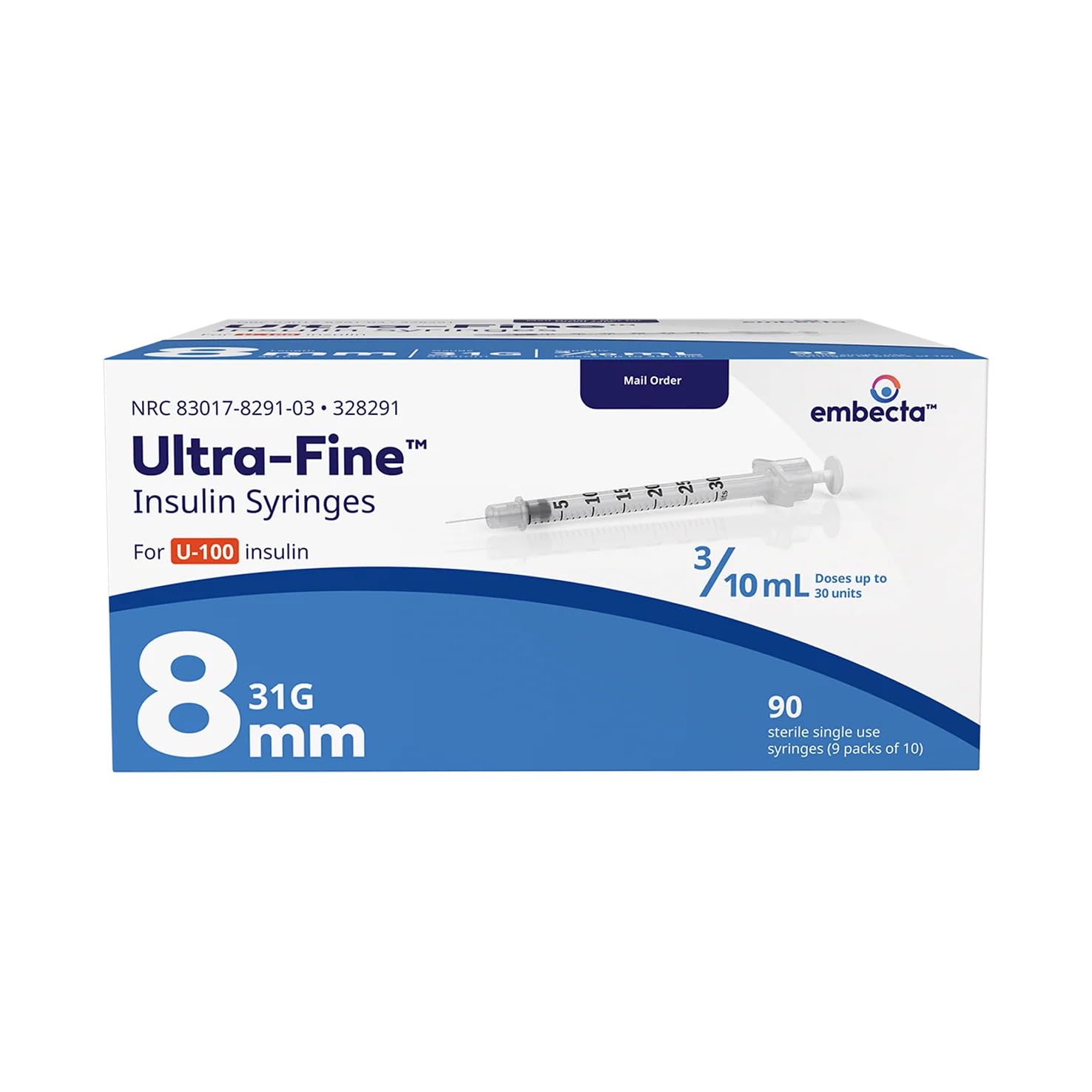
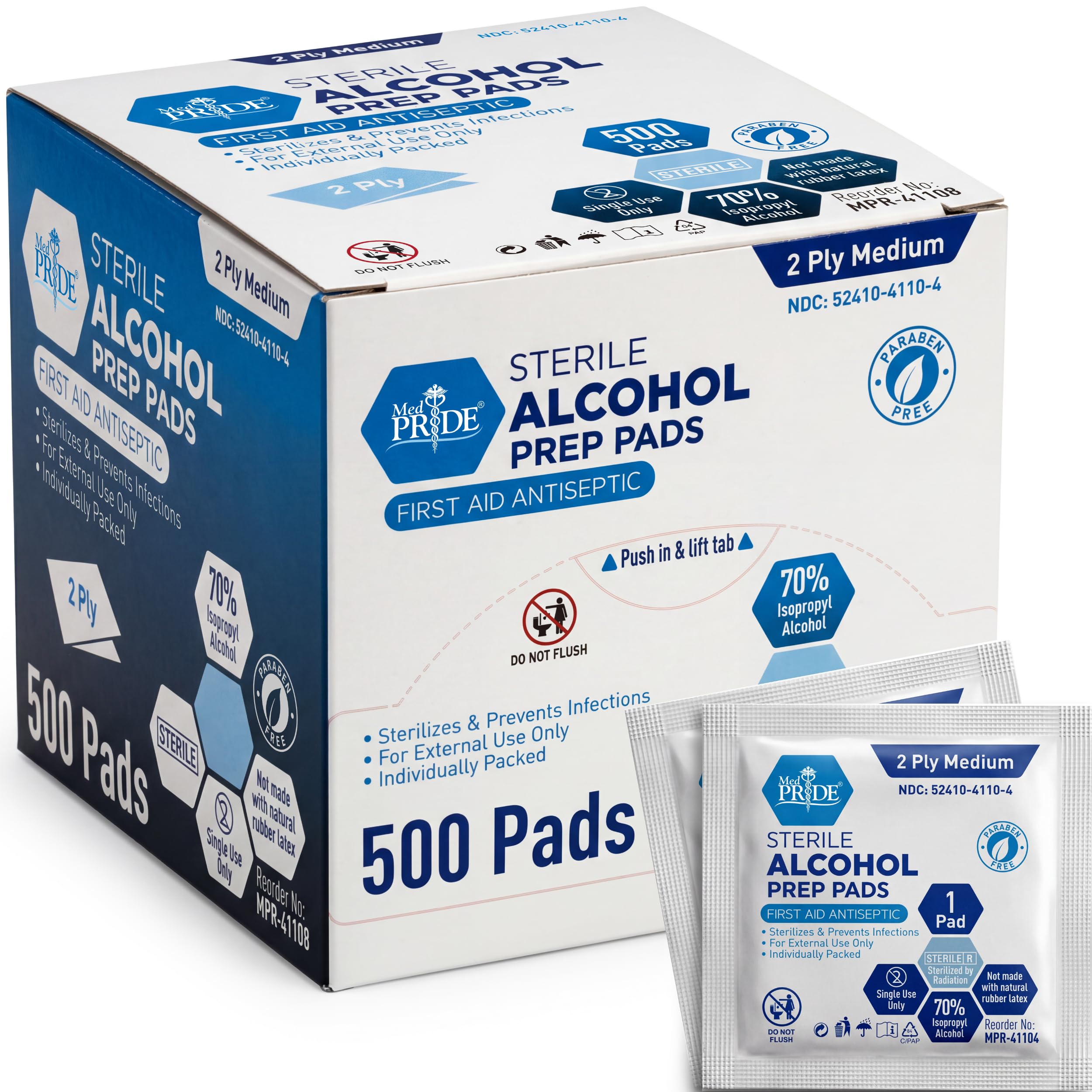
Core Supplies for This Protocol
The essentials for running any reconstituted injectable: cold storage, accurate syringes, alcohol prep pads, and metabolic tracking.
What side effects did the originating literature report for thymalin?
The originating Russian research group (Morozov and Khavinson) reported thymalin as having 'practically no side effects' across decades of clinical use, and their multi-year geroprotection cohort described no adverse events attributed to the compound. Those reports come from one research lineage and were not independently replicated in the West.
Is thymalin's 'well-tolerated' reputation independently verified?
No. The 'well-tolerated' record reflects reports from the compound's originators, not independent verification. There are no large Western trials, no modern pharmacovigilance, and no published adverse-event surveillance database for thymalin. Published tolerability data and independent tolerability data are not the same thing.
How does thymalin differ from thymulin and thymosin alpha-1 in safety terms?
Thymalin is a crude multi-peptide thymus extract, not a single defined molecule, so its composition varies by batch. Thymulin is a single defined nonapeptide and thymosin alpha-1 is a defined 28-amino-acid peptide. Safety data for one does not transfer to the others, and the extract nature of thymalin means batch composition is not standardized the way a synthetic peptide is.
What risks are specific to research-chemical thymalin products?
Products sold as 'research chemicals, not for human consumption' carry no GMP guarantee of sterility, identity, or purity. Documented general risks for injectable research peptides include injection-site reactions, contamination or endotoxin from non-sterile compounding, and — for an extract like thymalin — unverified peptide composition and batch-to-batch variability. None of these are quantified for thymalin specifically.
Originator review restating thymalin as well-tolerated (DOI-only, no PMID)
PMC8365293
For educational and research purposes only. This is not medical advice. Thymalin is not FDA-approved for any indication. Consult a healthcare provider before use.