guidesFebruary 21, 2026The Peptide Catalog

VIP Dosing Guide: CIRS & Mold Protocols (2026)

Evidence-based VIP (vasoactive intestinal peptide) dosing guide covering Shoemaker CIRS protocol, nasal spray administration, cycling, and safety.

VIP Dosing Guide

Vasoactive intestinal peptide (VIP) is a 28-amino-acid neuropeptide with broad regulatory roles across the immune, nervous, and cardiovascular systems. Originally discovered by Dr. Sami Said in 1970, VIP has emerged as a cornerstone therapeutic in the treatment of Chronic Inflammatory Response Syndrome (CIRS) caused by mold and biotoxin exposure. It is also under active investigation for pulmonary hypertension, neuroinflammatory conditions, and circadian rhythm disorders.

This guide covers evidence-based VIP dosing protocols, administration methods, safety data, and practical considerations for patients and practitioners.

Disclaimer: This article is for educational and informational purposes only. VIP is a prescription compound and should only be used under the supervision of a qualified healthcare provider. Nothing here constitutes medical advice.


Quick Reference: Clinical Dosing

ParameterDetails
PeptideVIP (Vasoactive Intestinal Peptide)
Molecular Weight~3,326 Da (28 amino acids)
Primary RouteIntranasal spray
Standard Dose50 mcg per spray
Starting Protocol4 sprays/day (200 mcg/day)
Maintenance/Extended6–8 sprays/day (300–400 mcg/day)
Protocol Duration30 days initial; 12+ weeks for grey matter restoration
StorageRefrigerated, 2–8°C, protected from light
Prescription RequiredYes
Key Lab MarkersMSH, VIP levels, C4a, TGF-β1, MMP-9, VEGF

How VIP Works

VIP exerts its biological effects through two G-protein-coupled receptors: VPAC1 and VPAC2. These receptors are distributed throughout the body—in the lungs, gut, brain, immune cells, and vascular smooth muscle—which explains VIP's remarkably diverse physiological roles.

Vasodilation & Cardiovascular Protection

VIP is one of the most potent endogenous vasodilators. It relaxes pulmonary and systemic vascular smooth muscle, reduces pulmonary artery pressure, and increases cardiac output. In patients with primary pulmonary hypertension, inhaled VIP decreased mean pulmonary artery pressure and improved oxygen saturation in a landmark clinical study (Petkov et al., 2003).

Immune Modulation

VIP is a powerful anti-inflammatory agent that operates at multiple levels of the immune cascade:

This immune-regulatory profile makes VIP uniquely suited for conditions driven by chronic, dysregulated inflammation rather than acute infection.

Neuroprotection

VIP provides direct neuroprotective effects through VPAC1 receptor signaling. It promotes neuronal survival, reduces neuroinflammation mediated by activated microglia, and supports the release of neurotrophic factors including activity-dependent neuroprotective protein (ADNP). In CIRS patients, extended VIP therapy has been shown to restore grey matter volume in multiple brain nuclei that had undergone atrophy (Shoemaker et al., 2017).

Circadian Rhythm Regulation

VIP is essential for maintaining circadian rhythmicity. In the suprachiasmatic nucleus (SCN)—the brain's master clock—VIP-producing neurons synchronize the firing patterns of clock cells through VPAC2 receptor signaling. Mice lacking the VIP gene show profound disruption of circadian rhythms (Aton et al., 2005). For CIRS patients who frequently report disordered sleep-wake cycles, VIP's circadian-normalizing effects may contribute meaningfully to symptomatic improvement.

VIP Mechanism of Action

🧪

Ready to Buy? Compare Prices

Best current prices from verified vendors with COA testing.

VIP

Limitless Biotech · 5mg · $13.00/mgCOA ✓

$64.99
💰

The Peptide Brief

Weekly price drops, new research, and vendor deals — straight to your inbox.

No spam. Unsubscribe anytime.


Protocol & Cycling: The Shoemaker CIRS Approach

VIP therapy is best understood within the context of the Shoemaker Protocol, a sequential treatment framework developed by Dr. Ritchie Shoemaker for patients with biotoxin-related CIRS. VIP is the final step in this protocol—used only after all preceding interventions have been completed.

Prerequisites Before Starting VIP

VIP should not be initiated until:

  1. Mold/biotoxin exposure has been eliminated (patient is living and working in a remediated environment)
  2. Cholestyramine (CSM) or Welchol binding therapy is complete
  3. MARCoNS (Multiple Antibiotic Resistant Coagulase Negative Staphylococci) has been eradicated from deep nasal cultures
  4. Inflammatory markers (C4a, TGF-β1, MMP-9) are trending toward correction
  5. MSH levels have been addressed (VIP itself helps restore low MSH)

Starting VIP with active mold exposure or persistent MARCoNS colonization may worsen the inflammatory cascade and negate therapeutic benefit.

Standard Dosing Protocol

Phase 1 — Initial (Weeks 1–4):

Phase 2 — Extended/Grey Matter Restoration (Weeks 5–18+):

Cycling:

Monitoring & Endpoints

Treatment endpoints are defined by normalization of:


Clinical & Research Context

CIRS and Mold Illness

The most robust clinical evidence for VIP comes from the CIRS population. In a 2013 study, Shoemaker et al. demonstrated that intranasal VIP (50 mcg, 4x daily for 30 days) significantly reduced inflammatory markers including C4a and TGF-β1, improved quality of life scores, and restored estradiol and testosterone levels in CIRS patients who had completed all prior protocol steps (Shoemaker et al., 2013).

A subsequent study showed that extended VIP therapy at higher doses (6–8 sprays/day for 12+ weeks) safely restored grey matter volume in multiple brain nuclei, with no significant adverse effects reported. This was a landmark finding, demonstrating that VIP-driven neuroplasticity could reverse structural brain changes associated with chronic biotoxin exposure (Shoemaker et al., 2017).

Pulmonary Hypertension

Petkov et al. (2003) published the first human trial of VIP for primary pulmonary hypertension in the Journal of Clinical Investigation. In eight patients, inhaled VIP reduced mean pulmonary artery pressure by 10–15%, increased cardiac output, and improved mixed venous oxygen saturation with no significant side effects. VIP-knockout mice spontaneously develop moderate pulmonary arterial hypertension, further supporting VIP's essential role in pulmonary vascular homeostasis (Said et al., 2007).

COVID-19 Respiratory Failure

Aviptadil, the synthetic IV form of VIP, received FDA Fast Track Designation for critical COVID-19 with respiratory failure. A 60-day randomized controlled trial in 196 patients showed that IV aviptadil was associated with improved recovery and survival compared to placebo, highlighting VIP's lung-protective and anti-inflammatory properties (Youssef et al., 2022).


Administration

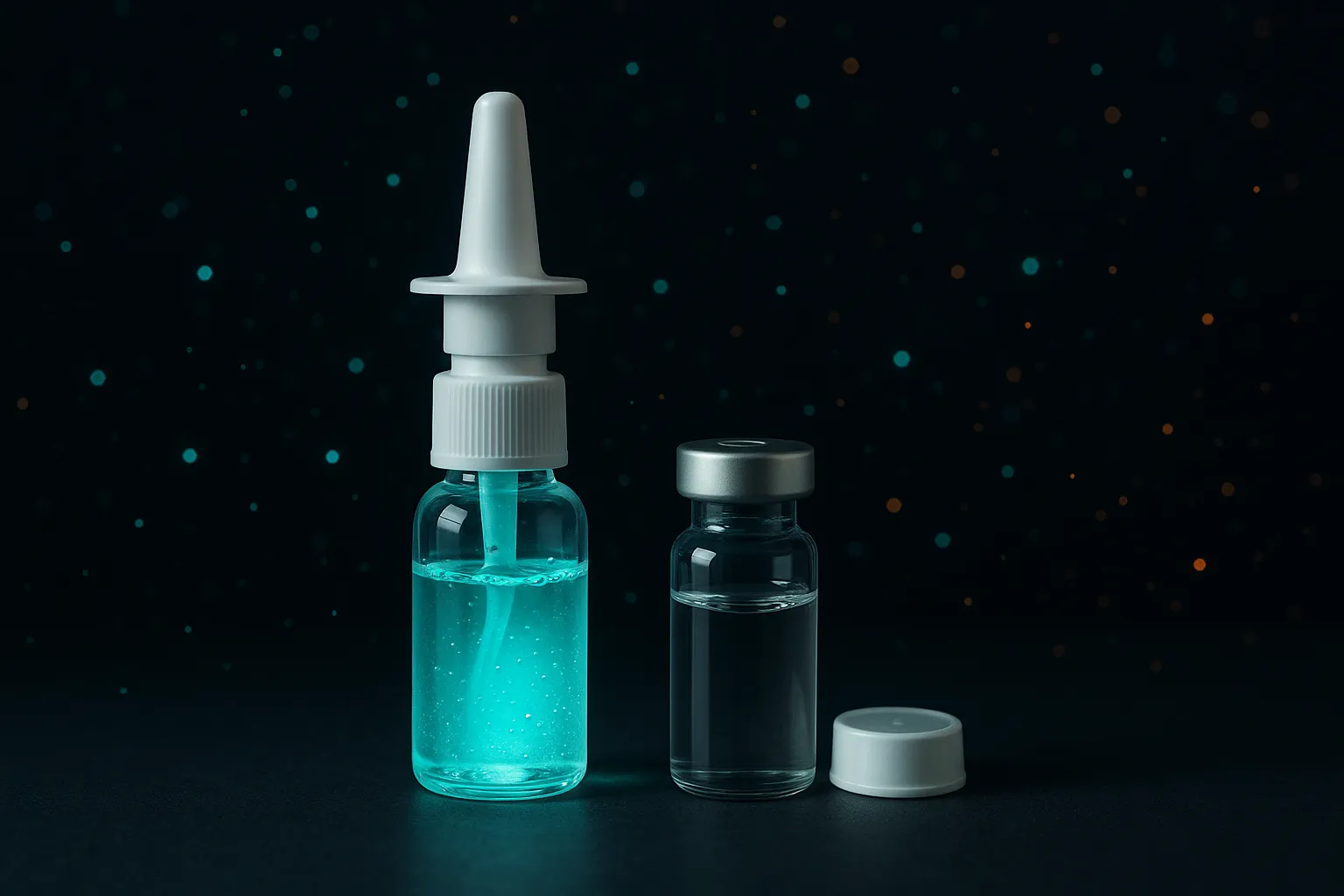
Intranasal spray is the primary and preferred route of VIP administration for CIRS and chronic inflammatory conditions. This route offers several advantages:

Obtaining Compounded VIP

VIP nasal spray is not commercially manufactured—it must be prepared by a licensed compounding pharmacy with peptide expertise. Your prescribing physician writes a prescription specifying:

How to Administer

  1. Prime the spray pump (if new or not used for several days) by pumping until a fine mist appears
  2. Gently blow your nose to clear the nasal passages
  3. Tilt your head slightly forward (do not tilt back)
  4. Insert the nozzle into one nostril, angling slightly toward the outer wall
  5. Press the pump once while inhaling gently through the nose
  6. Alternate nostrils with each spray throughout the day
  7. Avoid blowing your nose for 10–15 minutes after administration

VIP Nasal Spray Administration

Storage


Side Effects & Safety

VIP nasal spray has an exceptional safety profile. According to Dr. Shoemaker's clinical data, intranasal VIP at 50 mcg per spray (4–8 sprays/day) has been used safely in over 10,000 patients since 2008, with no serious adverse events attributed to the peptide.

Common Side Effects (Mild, Transient)

Rare or Theoretical Concerns

Contraindications & Precautions

Safety Monitoring

Check the following at baseline and every 30 days during therapy:


Stacking With Other Immune Peptides

While VIP is powerful as a standalone therapy in the CIRS context, some integrative practitioners combine it with complementary peptides. These combinations are empirical and should be managed by experienced clinicians:

VIP + Thymosin Alpha-1 (Tα1)

Tα1 enhances innate immune surveillance and supports NK cell and dendritic cell function. Combined with VIP's anti-inflammatory effects, this pairing addresses both immune suppression and chronic inflammation simultaneously.

VIP + BPC-157

BPC-157 promotes tissue healing and has its own anti-inflammatory properties via the nitric oxide system. Some practitioners use BPC-157 for gut healing alongside VIP's systemic immune modulation, particularly in CIRS patients with gastrointestinal involvement.

VIP + KPV

KPV (alpha-MSH fragment) is a potent anti-inflammatory tripeptide. Since CIRS patients typically have low MSH, some protocols add KPV to support the melanocortin pathway while VIP addresses broader immune dysregulation.

Important Stacking Considerations


Frequently Asked Questions

What is VIP peptide used for? VIP is primarily used for treating CIRS from mold/biotoxin illness as the final step in the Shoemaker protocol. It also has research applications in pulmonary hypertension, neuroprotection, and circadian rhythm disorders.

What is the standard VIP nasal spray dose? The standard dose is 50 mcg per spray, typically administered 4 times daily (200 mcg total). Extended protocols may use 6–8 sprays per day under medical supervision.

How long does a VIP protocol last? The initial protocol runs 30 days, after which labs are re-evaluated. Extended grey matter restoration protocols may continue for 12–18+ weeks.

Does VIP require a prescription? Yes. VIP nasal spray is a compounded prescription medication prepared by specialized pharmacies.

What are the side effects of VIP nasal spray? Side effects are generally mild and include nasal irritation, mild headache, slight blood pressure reduction, and occasional loose stools. The safety record across 10,000+ patients is excellent.

Can I use VIP if I still have active mold exposure? No. All Shoemaker protocol prerequisites must be completed first, including mold remediation and MARCoNS eradication.

How should VIP nasal spray be stored? Refrigerated at 2–8°C, protected from light. Typical shelf life is 30–90 days from compounding.

Can VIP be stacked with other peptides? Yes, under physician supervision. Common pairings include thymosin alpha-1, BPC-157, and KPV, though these combinations are empirical.


Related Guides


References

  1. Petkov V, Mosgoeller W, Ziesche R, et al. Vasoactive intestinal peptide as a new drug for treatment of primary pulmonary hypertension. J Clin Invest. 2003;111(9):1339-1346. PMID: 12727925

  2. Shoemaker RC, House D, Ryan JC. Vasoactive intestinal polypeptide (VIP) corrects chronic inflammatory response syndrome (CIRS) acquired following exposure to water-damaged buildings. Health. 2013;5(3):396-401. doi:10.4236/health.2013.53053

  3. Shoemaker RC, Katz D, Ackerley M, et al. Intranasal VIP safely restores volume to multiple grey matter nuclei in patients with CIRS. Internal Medicine Review. 2017;3(4):1-14.

  4. Aton SJ, Colwell CS, Harmar AJ, Waschek J, Herzog ED. Vasoactive intestinal polypeptide mediates circadian rhythmicity and synchrony in mammalian clock neurons. Nat Neurosci. 2005;8(4):476-483. PMID: 15750589

  5. Youssef JG, Lavin P, Schoenfeld DA, et al. The use of IV vasoactive intestinal peptide (aviptadil) in patients with critical COVID-19 respiratory failure: results of a 60-day randomized controlled trial. Crit Care Med. 2022;50(11):1545-1554. PMID: 36044317

  6. Delgado M, Pozo D, Ganea D. The significance of vasoactive intestinal peptide in immunomodulation. Pharmacol Rev. 2004;56(2):249-290. PMID: 15169929

  7. Gonzalez-Rey E, Chorny A, Delgado M. Vasoactive intestinal peptide generates CD4+CD25+ regulatory T cells in vivo. J Leukoc Biol. 2005;78(6):1327-1338. PMID: 16204628

  8. Said SI, Hamidi SA, Dickman KG, et al. Moderate pulmonary arterial hypertension in male mice lacking the vasoactive intestinal peptide gene. Circulation. 2007;115(10):1260-1268. PMID: 17309917

  9. Laburthe M, Couvineau A, Tan V. Class II G protein-coupled receptors for VIP and PACAP: structure, models of activation and pharmacology. Peptides. 2007;28(9):1631-1639. PMID: 17574305

  10. Ganea D, Hooper KM, Kong W. The neuropeptide VIP: direct effects on immune cells and involvement in inflammatory and autoimmune diseases. Acta Physiol (Oxf). 2015;213(2):442-452. PMID: 25345837