For readers searching "best peptides for energy," the short answer community sources commonly describe is this: fatigue is not a single problem — published research describes at least four distinct biological mechanisms (mitochondrial dysfunction, hormonal decline, sleep architecture disruption, and metabolic inflexibility), and different peptides target different ones. Treating "low energy" without identifying the underlying mechanism is what community sources commonly describe as why most generic supplements fail.
Research-context information only. Peptides discussed below are research compounds. Protocols, doses, and reactions reported come from published research and self-reported community sources. This article reports what has been documented, not what should be done. Consult a licensed physician for personal medical decisions.
Evidence at a glance
Peptides covered below, sorted by clinical evidence strength. Each peptide also carries a parallel community-evidence grade reflecting real-world adoption. How we grade evidence.
Improves insulin sensitivity and exercise tolerance in mice; limited human data.
This guide ranks the five peptides community sources most commonly describe for energy, in the order experienced users typically reach for them. Each entry explains what trial data and community usage describe for that compound, who typically chooses it, and what self-reported community outcomes look like. Dosing, injection timing, and bloodwork details live in the linked deep-dive guides.
The Rankings
Bac Water Made for Peptides
Don't risk a $300 peptide on generic bac water.
Most cloudy reconstitutions trace back to one thing — and it isn't the peptide. Sterile, non-pyrogenic, 0.9% benzyl alcohol — formulated for peptide reconstitution, not repackaged from generic stock.
✓ 0.9% benzyl alcohol✓ Made for peptides✓ 30 mL multi-dose
Best for: users whose fatigue tracks with metabolic inflexibility, insulin resistance, or age-related decline in exercise capacity.
MOTS-c is a 16-amino-acid peptide encoded within the mitochondrial 12S rRNA gene. Published research describes it as functioning as an endogenous metabolic regulator — the most direct pharmacological approach community sources commonly describe to the "exercise mimetic" concept. Trial protocols describe it as activating the AMPK-AICAR pathway, the same intracellular signaling cascade physical activity activates.
The foundational study described MOTS-c preventing high-fat-diet-induced obesity, reversing established insulin resistance, and enhancing glucose metabolism in skeletal muscle. Subsequent trial data in both young and aged mice described significantly enhanced physical performance — most strikingly in older animals. Published research in late-life MOTS-c treatment described increased physical capacity and healthspan with adaptations resembling those seen in physically active animals: improved antioxidant capacity, better insulin sensitivity, and enhanced metabolic flexibility. The human connection is established through exercise physiology research showing endogenous MOTS-c levels rise after physical activity.
Community reports on MOTS-c cluster around three themes: gradual improvement in exercise tolerance over 4-8 weeks, better post-meal energy stability, and improved subjective recovery from training. The most consistent community caveat is that large-scale human efficacy trials for fatigue outcomes have not been completed — community sources describe the biological rationale and animal data as strong but the human clinical proof gap as real.
2. SS-31 (Elamipretide) — the mitochondrial membrane stabilizer
Best for: users whose fatigue traces to age-related mitochondrial decline rather than hormonal or sleep issues.
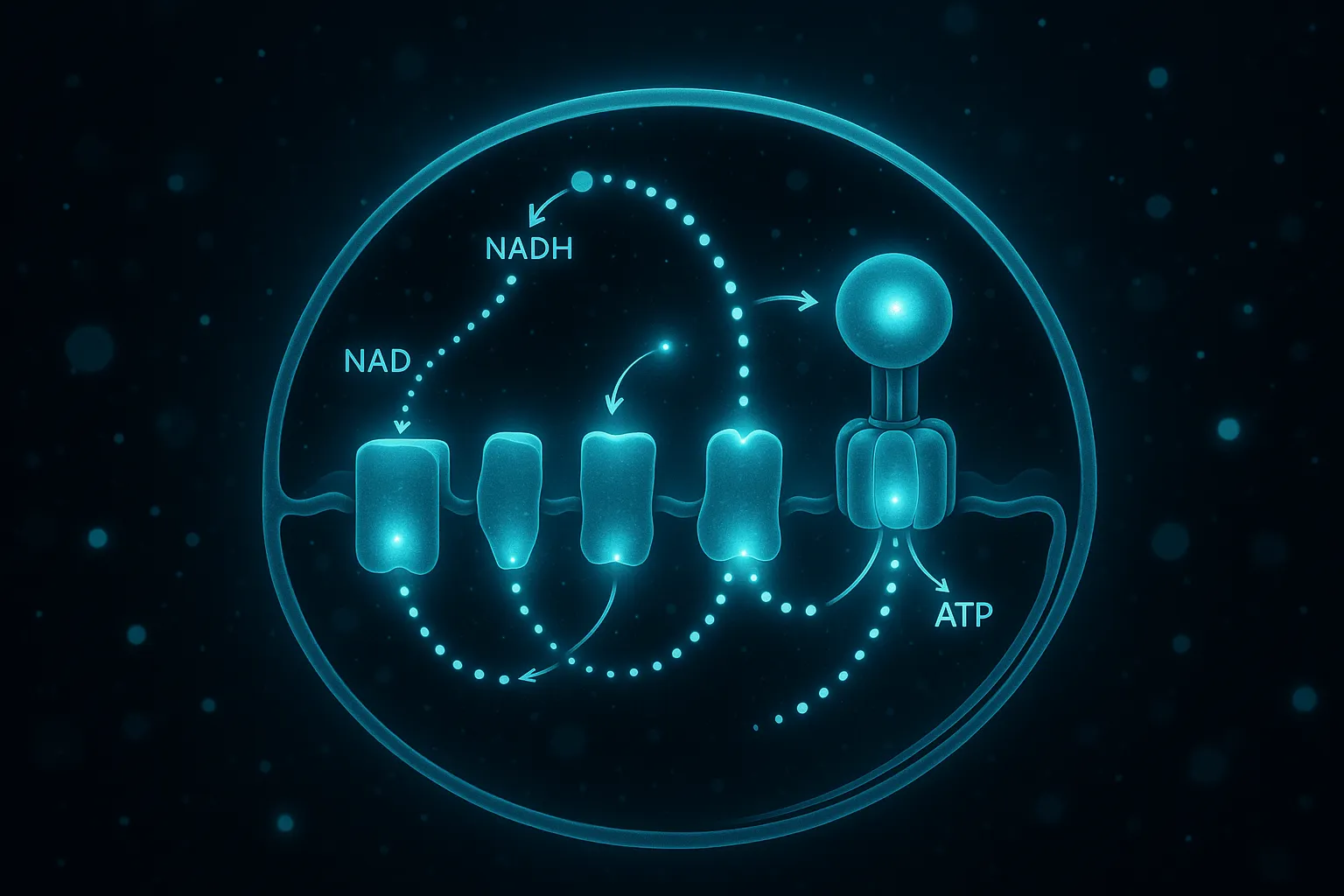
SS-31 (also known as elamipretide) is a tetrapeptide that targets the inner mitochondrial membrane with remarkable specificity. Published research describes it as binding to cardiolipin — a phospholipid unique to the mitochondrial inner membrane — and stabilizing the electron transport chain complexes that produce ATP. Trial data describe this as the most direct intervention point for cellular energy production currently available in peptide form.
The energy-relevant evidence is substantial. In aged mice, 8 weeks of SS-31 treatment was reported to reverse age-related mitochondrial dysfunction, restore redox homeostasis, and improve exercise tolerance — without increasing mitochondrial content. Trial data describe this as making existing mitochondria work better rather than producing more of them. Cardiac data extends the principle: late-life SS-31 treatment was reported to substantially reverse cardiac dysfunction in old mice, normalizing proton leak and reducing mitochondrial reactive oxygen species. A separate published study described SS-31 improving ADP sensitivity in aged mitochondria — a determinant of how quickly mitochondria can ramp up ATP production in response to demand.
Community reports on SS-31 are sparser than for the GH peptides because it's primarily a clinical-trial compound — community sources commonly describe it as the option for users who already know mitochondrial dysfunction is the issue (often confirmed via cardiology workup or specialty testing). Self-reported community timelines describe gradual exercise-tolerance improvement over 6-8 weeks. Clinical development of SS-31 has reached phase 2/3 trials for mitochondrial diseases (Barth syndrome) and heart failure.
Best for: users layering precursor support onto a mitochondrial peptide protocol or addressing age-related NAD+ depletion.
NAD+ (nicotinamide adenine dinucleotide) is not a peptide, but NAD+ precursors are essential context for any energy-peptide discussion because published research describes NAD+ as the central cofactor mitochondria require to produce ATP. Trial data document NAD+ levels declining approximately 50% between ages 40 and 60, making depletion a near-universal contributor to age-related fatigue.
Nicotinamide riboside (NR) has the strongest human clinical evidence on this list. A randomized crossover study in older adults reported acute NR supplementation improving isometric peak torque by 8% and the fatigue index by 15%, with increased NAD(P)H levels and decreased oxidative stress — but the published improvements were specific to older subjects and were not observed in young controls. Chronic supplementation has been documented as elevating NAD+ levels: trial data in healthy middle-aged and older adults reported NR raising NAD+ by 40-90% after 4-8 weeks. A 21-day muscle-specific trial in aged men reported NR elevating the muscle NAD+ metabolome and inducing anti-inflammatory transcriptomic signatures.
Community reports cluster around gradual energy improvement over 4-6 weeks, better subjective workout recovery, and reduced afternoon energy crashes. Users in community sources commonly describe NAD+ precursors as background cofactor support rather than acute energy enhancement. The most consistent community caveat: a published long-COVID fatigue trial reported NR raising NAD+ levels 2.6-3.1 fold without significantly improving fatigue, sleep, or mood versus placebo — community sources describe this as evidence that NAD+ depletion is not the limiting factor for every fatigue subtype.
4. CJC-1295 + Ipamorelin — the hormonal-axis option
Best for: users whose fatigue tracks with GH/IGF-1 decline (slow recovery, increased visceral fat, declining lean mass).
CJC-1295 and ipamorelin together represent the most widely used injectable growth hormone secretagogue combination for fatigue community sources commonly describe as related to hormonal decline. Published research describes CJC-1295 as a long-acting GHRH analog that stimulates pulsatile GH release, while ipamorelin is described as a selective growth hormone secretagogue that amplifies GH pulses through the ghrelin receptor.
The CJC-1295 clinical data is clear: a single trial-protocol injection produced dose-dependent increases in mean plasma GH concentrations 2-10 fold for 6 or more days, and IGF-I levels 1.5-3 fold for 9-11 days. Trial data describe pulsatile GH secretion as preserved during continuous CJC-1295 stimulation — meaning the published protocol enhances natural GH rhythm rather than replacing it with a flat supraphysiologic level. Ipamorelin's documented selectivity is described as its key advantage: published research describes it as stimulating GH release without increasing cortisol, prolactin, or appetite — the off-target effects trial data document for older GHRPs like GHRP-6.
Community reports cluster around three themes: deeper sleep within the first 1-2 weeks, gradual body composition shift over 6-12 weeks, and improved between-session recovery. The most common community caveat is that fatigue improvements are described as gradual rather than acute — community sources commonly describe a 12-16 week first cycle as the minimum for evaluation.
5. MK-677 (Ibutamoren) — the oral option for sleep-driven fatigue
Best for: users whose fatigue is primarily sleep-driven and who don't want to inject.
MK-677 is the only orally active growth hormone secretagogue on this list with published clinical trial data describing improved sleep architecture. Trial protocols describe single daily oral dosing, typically before bed. The sleep data is the most directly relevant to fatigue: in a published clinical study, high-dose MK-677 produced approximately a 50% increase in stage IV deep sleep duration and more than 20% increase in REM sleep versus placebo. The frequency of sleep deviations from normal decreased from 42% under placebo to 8% under MK-677. Trial data in older adults reported MK-677 increasing REM sleep by nearly 50% and reducing REM latency.
The GH axis effects parallel CJC-1295/Ipamorelin in published research — MK-677 was reported to increase plasma IGF-I 1.5-3 fold in a dose-dependent manner, with effects sustained over 12 months of trial-protocol treatment. Two months of treatment in obese trial subjects was reported to increase GH secretion, fat-free mass, and resting energy expenditure.
Community reports cluster around faster sleep onset, deeper subjective sleep, and improved daytime energy. The most consistent community caveats — also documented in published research — are increased appetite (MK-677 activates ghrelin receptors), transient water retention during the first 2-4 weeks, and measurable elevation in fasting blood glucose. Trial protocols and community guidance describe HbA1c monitoring at 8-12 weeks as non-negotiable, particularly for users with insulin resistance or pre-diabetes risk.
Community usage and trial-evidence patterns map cleanly onto reader profiles. Here's how the picks above tend to break down across common audiences:
Users with age-related mitochondrial decline (gradual onset over years, worse with physical exertion, slow recovery) commonly choose SS-31 or MOTS-c with NAD+ precursor support. Published research describes the strongest mechanistic match for cellular energy production deficits in this audience.
Users with metabolic or insulin-resistance fatigue (post-meal energy crashes, brain fog, associated with obesity or prediabetes) commonly choose MOTS-c paired with NAD+ precursors. Trial data describe AMPK activation and glucose metabolism improvement as the primary mechanism for this fatigue type.
Users with sleep-related fatigue (unrefreshing sleep, difficulty reaching deep sleep, daytime sleepiness) commonly choose MK-677. Published research describes the strongest direct evidence on this list for slow-wave-sleep enhancement, with the trade-off being the documented appetite, water-retention, and glucose-drift profile.
Users with hormonal/recovery fatigue (poor exercise recovery, decreased lean mass, generalized low energy) commonly choose CJC-1295 + ipamorelin. Community sources commonly describe this stack as the standard injectable approach to GH/IGF-1 axis support.
Users over 40 with mixed-mechanism fatigue commonly layer mitochondrial support (SS-31 or MOTS-c) with hormonal support (CJC-1295 + ipamorelin or MK-677) plus NAD+ precursors. Self-reported community protocols describe this three-pathway approach when fatigue has multiple contributors.
Users who can't or won't inject are limited to MK-677 (oral) for the GH secretagogue category and oral NAD+ precursors. Trial data describe the side-effect profile (water retention, appetite, glucose drift) as the documented trade-off.
Users sourcing through telehealth are typically limited to sermorelin or tesamorelin for the GHRH side. Community usage often describes pairing those with ipamorelin sourced separately to complete the synergistic stack.
For users whose energy issues have a hormonal-axis component, see best peptides for muscle over 40 for additional age-specific guidance.
What Trial and Community Data Describe as Signals of Effect
Three signals appear consistently in published research and community sources, in this order:
Weeks 1-2: Sleep changes first. This is the most consistently community-reported signal across the GH-secretagogue compounds (MK-677, CJC-1295 + ipamorelin). Trial subjects and community sources commonly describe deeper sleep, faster sleep onset, and more vivid dreams within the first 1-2 weeks. NAD+ precursor users in community sources describe a similar early-phase shift in subjective energy stability. Community guidance treats absence of any sleep or energy shift by week 2 as a flag for under-dosing or product issues.
Weeks 4-8: Bloodwork. IGF-1 is the most-tracked biomarker for GH-secretagogue protocols in both trials and community sources. Published research describes a working CJC-1295 + ipamorelin or MK-677 protocol raising IGF-1 30-60% from baseline; lower than that suggests under-dosing. Trial data also commonly tracked fasting glucose and HbA1c at 8-12 weeks because GH opposes insulin — community sources describe this glucose monitoring as non-negotiable.
Weeks 6-12: Functional energy and exercise capacity. Trial subjects on MOTS-c and SS-31 typically described measurable improvements in exercise tolerance and recovery in this window. Community sources describe a similar timeline for CJC-1295 + ipamorelin's impact on body composition and recovery — typically waist tightening, fuller-looking muscles, and improved between-session recovery. Trial-reported energy and exercise-tolerance improvements in mitochondrial-peptide protocols clustered in this window. Trial data does not support claims of acute, dramatic fatigue reversal from peptide protocols alone.
Running energy peptides without bloodwork is what community sources commonly describe as missing the diagnostic signal. The trial-and-community standard is baseline IGF-1, fasting glucose, HbA1c, comprehensive metabolic panel, thyroid panel, and (for men) testosterone — that's how trial protocols measured efficacy and what community sources commonly treat as the minimum monitoring set. Hypothyroidism and low testosterone are common treatable fatigue causes peptides do not address.
Lee C, et al. The mitochondrial-derived peptide MOTS-c promotes metabolic homeostasis and reduces obesity and insulin resistance. Cell Metab. 2015;21(3):443-454.
Reynolds JC, et al. MOTS-c is an exercise-induced mitochondrial-encoded regulator of age-dependent physical decline and muscle homeostasis. Nat Commun. 2021;12(1):470.
Siegel MP, et al. Improving mitochondrial function with SS-31 reverses age-related redox stress and improves exercise tolerance in aged mice. Free Radic Biol Med. 2019;134:268-281.
Martens CR, et al. Chronic nicotinamide riboside supplementation is well-tolerated and elevates NAD+ in healthy middle-aged and older adults. Nat Commun. 2018;9(1):1286.