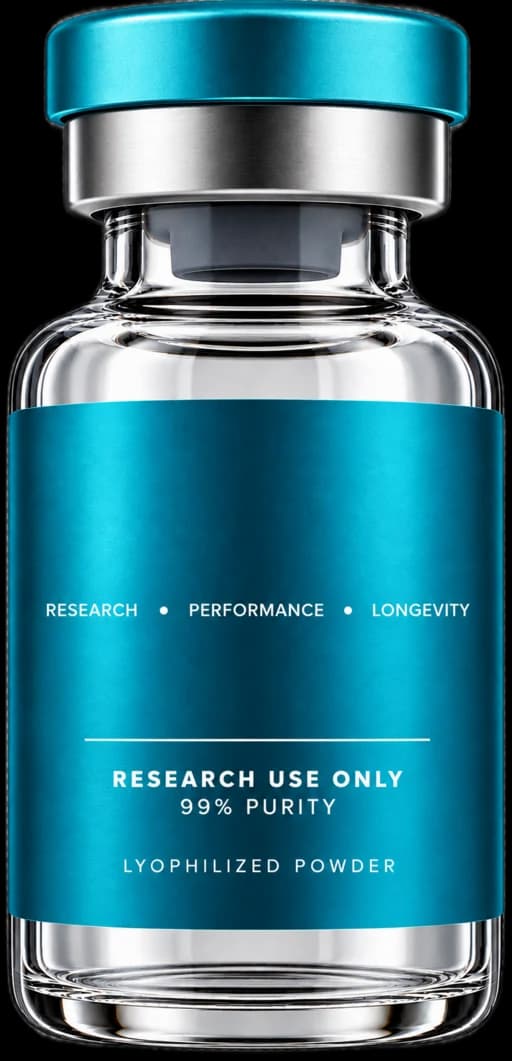
Melanotan I

afamelanotideMT-1Lyophilized powder

Melanotan I (afamelanotide) is a synthetic analog of alpha-melanocyte-stimulating hormone (alpha-MSH) that stimulates melanin production in skin. Afamelanotide is FDA-approved as a prescription implant for erythropoietic protoporphyria; the research-grade vials listed here are a different, unapproved product. Below: today's vial sizes, prices through our link and the vendor's COA details.

Size

$2.50/mg · In stock

Price

$25.00

List

$59.99

Buy 10 mg at Ascension Peptides

Price shown includes the 50% discount Ascension Peptides applies through our link.

Volume pricing at Ascension Peptides

  • 3+ vials3% offin cart
  • 5+ vials5% offin cart
  • 10+ vials10% offin cart

Applied in Ascension Peptides's cart; how it combines with our discount is set at checkout.

Sold by Ascension Peptides. The Peptide Catalog does not sell peptides; we earn a commission if you buy through this link, at no extra cost to you. For laboratory research use only, not for human or veterinary use. Not FDA-approved. Nothing on this page is medical or dosing advice.

Melanotan I research vial
Melanotan IAscension Peptides
Third-party testedResearch use only
Certificate of AnalysisVendor-stated: Third-party tested · HPLC · public COAView
  • Vendor-stated testing: Third-party tested · HPLC · public COA
  • Listed on our melanotan i vendor comparison, ordered by our vendor rankings
  • Lyophilized powder · laboratory research use only
Research-context information only. Melanotan I is the active ingredient in FDA-approved products for erythropoietic protoporphyria (EPP); research-peptide and compounded forms are not FDA-approved and are sold for research purposes only. Protocols, doses, and reactions reported below come from clinical trials and community sources. This article reports what has been documented, not what should be done. Consult a licensed physician for personal medical decisions.

Vial sizes listed by the vendor

Melanotan I Vial Sizes & Prices

Melanotan I vial sizes, prices and lots at Ascension Peptides
SizeListPricePer mgAvailability
10 mg$59.99$25.00$2.50In stock

Prices checked today, 5:01 AM CT on Ascension Peptides's site. Vendor-stated testing: Third-party tested · HPLC · public COA. The lot certificate is on Ascension Peptides's product page. Sizes not re-checked in the last 7 days are hidden. The vendor's checkout is final.

Test results

Melanotan I Certificate of Analysis

Ascension Peptides publishes its certificates publicly (vendor-stated: Third-party tested · HPLC · public COA). Match the lot number on the vial to its certificate.

View the Melanotan I certificate on Ascension Peptides's product page.

How to check one: how to verify a peptide COA.

Melanotan I Dosing in Clinical Research

Tanning / Photoprotection

Educational reference only. Individual responses vary. Consult healthcare provider before use.

Vial Size
10 mg
Reconstitution
2 ml BAC water
Dose
250 mcg (5 units on 1ml syringe)
Timing
AM
Frequency
2 days per week
Duration
8 weeks on, 8 weeks off
Protocol Notes
FDA-approved for EPP. More selective than MT-II with fewer side effects. Combine with UV exposure.

Why This Dosing Protocol

Why loading + maintenance? Melanin production takes time. Daily loading (2-3 weeks) builds initial pigmentation, then maintenance (2x/week) sustains it.

Why combine with UV? Melanotan-1 primes melanocytes to produce more melanin, but some UV exposure activates the full tanning response. Moderate sun exposure during loading accelerates results.

How Melanotan I Works

Melanocortin Agonist — MC1R Selective

Receptor → Melanocyte Activation → Eumelanin Production → Outcomes

1
Target

MC1R (Melanocortin-1 Receptor) — Selective

Melanotan-1 (Afamelanotide) selectively activates MC1R on melanocytes — the cells that produce melanin (skin pigment). Unlike Melanotan-2, it has minimal activity at MC3R/MC4R, avoiding the sexual and appetite side effects.

2
Cellular Signal

cAMP → Tyrosinase Activation → Eumelanin Production

MC1R activation increases cAMP in melanocytes, which activates tyrosinase — the enzyme that produces eumelanin (brown/black protective pigment). This is the same pathway triggered by UV exposure, but Melanotan-1 activates it without requiring UV damage.

3
Systemic Effect

Increased Melanin → Protective Tanning

Gradual increase in skin pigmentation (tanning) over weeks. The melanin produced is the protective eumelanin type — offering genuine UV protection. FDA-approved as Scenesse for erythropoietic protoporphyria (EPP), a condition of extreme UV sensitivity.

4
What You Notice

Gradual Tan → UV Protection → Fewer Sunburns

Gradual tanning visible over 2-3 weeks of loading. Increased UV tolerance and reduced sunburn risk. Color is more natural and even compared to Melanotan-2. Minimal side effects compared to MT-2 due to receptor selectivity.

What Makes This Peptide Different

Melanotan-1 is the selective, FDA-approved melanocortin. While Melanotan-2 hits multiple melanocortin receptors (causing libido effects, nausea, appetite changes), Melanotan-1 selectively targets MC1R for tanning with minimal off-target effects. The tradeoff: slower onset and more subtle tanning compared to MT-2.

Melanotan I Clinical Evidence

Two parallel grades per outcome — clinical RCT depth and real-world community adoption. See the Research Overview below for citations and detail.

OutcomeClinical EvidenceCommunity Evidence
Erythropoietic protoporphyria photoprotectionStrongWeak
Vitiligo repigmentation (with NB-UVB)ModerateWeak
Cosmetic tanningModerateWeak

Melanotan I Research Overview

Outcome-by-outcome look at what the evidence actually supports for Melanotan I, including human vs. animal study counts and our editorial take on each.

Erythropoietic protoporphyria photoprotection

Clinical:StrongCommunity:Weak

Langendonk 2015 (NEJM, n=168) randomized EPP patients to subcutaneous afamelanotide implants vs placebo across two multicenter trials and showed significantly increased duration of sun exposure without pain and improved quality of life. This led to EMA approval (2014) and FDA approval (2019) — the only melanocortin agonist with a fully approved adult indication.

4 human studies · 6 animal studies

Key findings & citations
  • Langendonk 2015: significant increase in pain-free sun exposure time vs placebo over 270 days.
  • Quality of life improvements consistent across European and US populations.
  • EMA and FDA approved (Scenesse, Clinuvel) for adult EPP.

Our take

Real, niche indication. Approved drug with clean evidence — but EPP affects fewer than 1 in 75,000, so this isn't relevant to most users.

Vitiligo repigmentation

Clinical:ModerateCommunity:Weak

Lim 2015 (n=55) randomized adults with non-segmental vitiligo (skin types III-VI) to NB-UVB plus afamelanotide implants vs NB-UVB monotherapy and showed 48.6% repigmentation in the combination arm vs 33.3% in monotherapy at day 168. Smaller incremental benefit, but clinically meaningful in dark-skinned patients where repigmentation is otherwise slow.

1 human study · 0 animal studies

Key findings & citations
  • Lim 2015: 48.6% repigmentation with NB-UVB + afamelanotide vs 33.3% NB-UVB alone.
  • Effect most pronounced in darker skin phototypes (III-VI).
  • Off-label combination — not FDA-approved for vitiligo as of 2026.

Our take

Real adjunctive benefit; not a standalone vitiligo treatment. Most relevant for skin types III-VI patients on NB-UVB therapy already.

What Melanotan I doesn't do

Claims that current evidence does not support. Worth knowing before you set expectations.

Technical specifications

Melanotan I chemical & analytical data

Also known as
afamelanotide, MT-1
Receptor targets
Melanocortin 1 receptor (MC1R)
Backbone length
13 amino acids
Modifications
D-Phe at position 7; C-terminal amidation; α-MSH superanalog
Half-life (clinical PK)
~1 hour
Form
Lyophilized (freeze-dried) powder in a sealed vial
Presentation
10 mg
Regulatory status
Active ingredient in FDA-approved prescription products; research-grade vials are not FDA-approved.

Melanotan I Reconstitution Calculator

Dilution math and unit conversions. Prefilled using a common vial size for this peptide.

Open calculator

Storage & Handling

Storage at a glance

Proper storage temperatures, shelf life, reconstitution best practices, and travel tips for lyophilized and reconstituted peptides.

Powder: Freezer
1+ year at -20°C
Reconstituted: Fridge
4 weeks max at 2-8°C
View Complete Storage Guide

Handling specifics

Educational overview on storage, labeling, and traceability considerations for lab environments. Consult primary literature and vendor documentation for specifics.

Powder storage (very stable)
  • Freezer (-20°C): 1+ year
  • Refrigerator (2-8°C): 1-3 months
  • Room temperature: 2-3 weeks (emergency only)
Reconstituted storage (fragile)
  • MUST refrigerate at 2-8°C
  • 4-week maximum shelf life
  • NEVER freeze after reconstitution
  • Use bacteriostatic water for multi-dose

8 answers

Melanotan I FAQ: Buying, COA, Storage & Research

What is the difference between Melanotan I and II?
Melanotan I is a linear peptide that primarily stimulates melanin production for tanning. Melanotan II is cyclic, more potent, and has additional effects on sexual function and appetite. Melanotan I is FDA-approved for a rare skin condition (EPP), while Melanotan II is not approved.
What are the two types of melanin and which does Melanotan-1 stimulate?
There are two main types: eumelanin (brown/black) and pheomelanin (red/yellow). Melanotan-1 stimulates eumelanin production via MC1R receptor activation. This is important because eumelanin provides real UV protection by absorbing and dissipating UV radiation. Pheomelanin actually generates free radicals when exposed to UV, potentially increasing DNA damage.
Why is eumelanin better for UV protection than pheomelanin?
Eumelanin acts as a natural sunscreen — it absorbs UV photons and converts the energy to harmless heat. Pheomelanin does the opposite: when exposed to UV light, it undergoes photochemical reactions that generate reactive oxygen species (free radicals), which can damage DNA and increase skin cancer risk. People with red hair and fair skin have more pheomelanin, which partly explains their higher skin cancer rates.
How does Melanotan-1 help people with fair skin?
Fair-skinned individuals often have MC1R gene variants that produce less eumelanin and more pheomelanin. Melanotan-1 strongly activates MC1R, shifting melanin production toward eumelanin regardless of genetic variants. This gives fair-skinned users actual photoprotective tanning rather than just burning. It's FDA-approved as Scenesse for erythropoietic protoporphyria (EPP), a condition causing extreme sun sensitivity.
What are the side effects of Melanotan-1?
Common side effects include nausea (especially initially), facial flushing, fatigue, and injection site reactions. Unlike Melanotan-2, it does NOT typically cause sexual side effects or appetite changes because it's more selective for MC1R. Darkening of moles and freckles can occur and should be monitored. Long-term safety data is limited outside of EPP clinical use.
How long does reconstituted peptide last?
Once mixed with bacteriostatic water, peptides remain stable for up to 4 weeks when refrigerated at 2-8°C (36-46°F). Unopened powder can last 1+ year in the freezer. Get our complete Storage & Travel Guide.
Is this peptide legal to purchase?
Peptides sold "for research purposes only" are legal to purchase in the US, but are not FDA-approved for human use outside of specific medical applications. Always consult a healthcare provider before use.
New to peptides?
Take our Peptide Match tool to find the best peptide for your goals. You can also read our Complete Guide to Peptides to learn the basics.

Melanotan I Studies & Sources

The following peer-reviewed studies and official resources provide additional scientific context for this peptide:

Melanotan I Research Articles

Compare Melanotan I to alternatives

Side-by-side mechanism, dose, half-life, and vendor pricing.

Open compare →

Compare Melanotan I Vendors Before You Buy

Disclosure: we may earn affiliate commission from qualifying purchases. Educational information only — not medical advice.