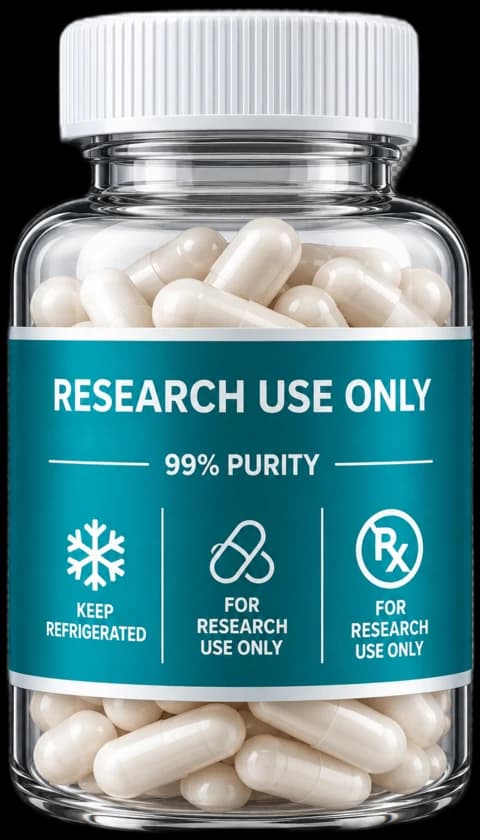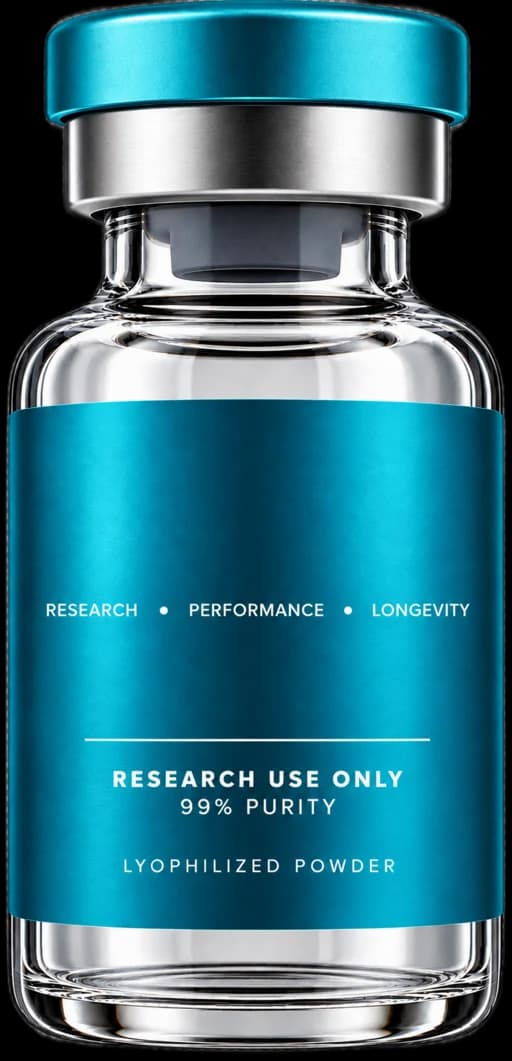
5-Amino-1MQ is a small-molecule NNMT inhibitor studied in preclinical obesity research and discussed in community sources in the context of fat loss, most often as an oral capsule (vials for subcutaneous use are also sold). It is not a peptide in the traditional sense but is commonly grouped with research peptides in the metabolic optimization space.
Research-context information only. 5-Amino-1MQ is an investigational drug not approved by the FDA. Protocols, doses, and reactions reported below come from preclinical animal research and self-reported community sources. This article reports what has been documented, not what should be done. Possession or use of investigational drugs outside an authorized clinical trial may be illegal in your jurisdiction. Consult a licensed physician for personal medical decisions.
No published human clinical trials exist. All protocols are based on preclinical animal data and community experience. This is not medical advice.
The dosing table below covers only the subcutaneous vial form: the community-reported 2.5 mg and 5 mg amounts at the 10 mg, 20 mg and 50 mg dilutions shown in the reconstitution arithmetic section. Oral capsule amounts (50-150 mg/day) are reported separately in the Quick Reference and are not converted into syringe units.
5-Amino-1MQ Dosing Table
Match your vial size below — reconstitution and dose math update automatically.
Subcutaneous vial use, community-reported amounts. Oral capsule doses (50-150 mg/day) are not interchangeable and are not shown as syringe units.
| Dose | Syringe units | mL volume | Schedule |
|---|---|---|---|
| 2.5 mg | 15 units | 0.15 mL | Daily SubQ (or 2x/day split)Community-reported tolerance phase |
| 5 mg | 30 units | 0.3 mL | Daily SubQCommunity-reported, day 3 onward |
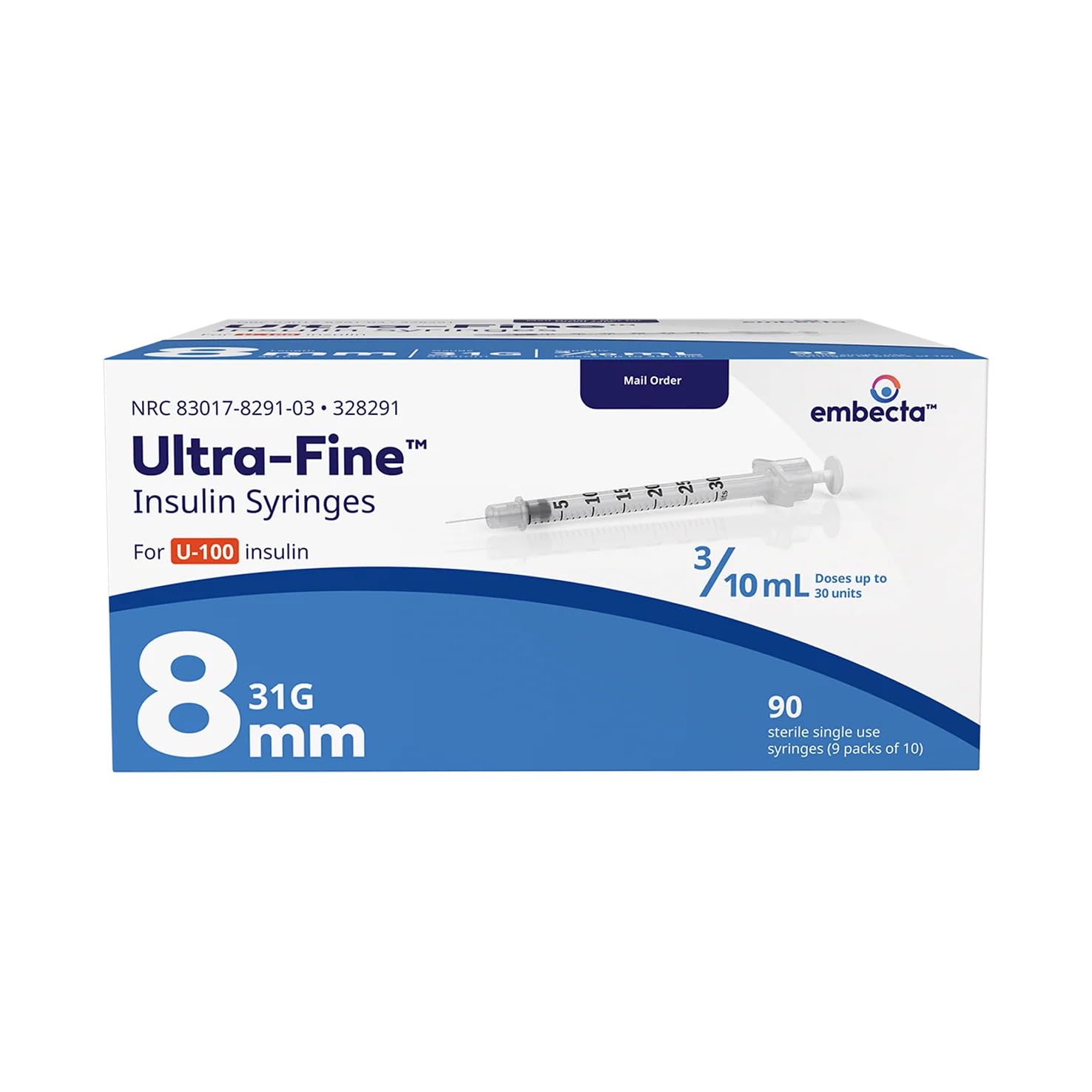
Math assumes U-100 insulin syringes (1 mL = 100 units). Verify your syringe matches before injecting. Round half-units to the nearest visible mark.
Subcutaneous vial use, community-reported amounts. Oral capsule doses (50-150 mg/day) are not interchangeable and are not shown as syringe units.
| Dose | Syringe units | mL volume | Schedule |
|---|---|---|---|
| 2.5 mg | 25 units | 0.25 mL | Daily SubQ (or 2x/day split)Community-reported tolerance phase |
| 5 mg | 50 units | 0.5 mL | Daily SubQCommunity-reported, day 3 onward |
Math assumes U-100 insulin syringes (1 mL = 100 units). Verify your syringe matches before injecting. Round half-units to the nearest visible mark.
Subcutaneous vial use, community-reported amounts. Oral capsule doses (50-150 mg/day) are not interchangeable and are not shown as syringe units.
| Dose | Syringe units | mL volume | Schedule |
|---|---|---|---|
| 2.5 mg | 25 units | 0.25 mL | Daily SubQ (or 2x/day split)Community-reported tolerance phase |
| 5 mg | 50 units | 0.5 mL | Daily SubQCommunity-reported, day 3 onward |
Math assumes U-100 insulin syringes (1 mL = 100 units). Verify your syringe matches before injecting. Round half-units to the nearest visible mark.
Quick Reference: Community Protocol
| Parameter | Community Protocol |
|---|---|
| Route | Oral (capsule) |
| Community-reported starting dose | 50 mg/day for 1-2 weeks |
| Commonly reported dose | 100-150 mg/day |
| Timing | Morning, with or without food |
| Frequency | Once daily |
| Cycle | 8-12 weeks on, 4-8 weeks off |
| Storage | Room temperature, cool dry place |
Community protocols describe a 50 mg/day starting phase lasting 1-2 weeks, escalating to 100-150 mg/day based on tolerance. Most reported protocols settle at 100 mg as the maintenance level. No reconstitution needed — oral capsule.
Dosage Per Day: What Protocols Report
Every documented community protocol quotes 5-Amino-1MQ per day, taken as a single morning dose: 50 mg per day during the 1-2 week assessment phase, 100-150 mg per day for the remainder of the cycle. Community protocols generally describe a single daily dose; sources attribute this to the compound's proposed sustained NNMT inhibition. Some subcutaneous reports use a twice-daily split (below).
Injection Dosage Per Day: What Community Sources Report
Oral capsules are the better-documented route, but vendors also sell 5-Amino-1MQ as lyophilised powder in 10 mg, 20 mg and 50 mg vials, and community discussion of subcutaneous use has followed. No human trial has established a dose for either route, and no study has established a conversion between them — the figures below are reported community practice, not clinical guidance.
Community sources that describe subcutaneous use report:
| Community-described phase | Community-reported amount | Frequency |
|---|---|---|
| Days 1-2 (tolerance) | 2.5 mg | Once daily |
| Day 3 onward | 5 mg | Once daily |
| Split alternative | 2.5 mg | Twice daily |
Reported cycling follows the same shape as the oral protocol — 8-12 weeks on, 4-6 weeks off.
The oral and subcutaneous amounts are not interchangeable. Oral community protocols run 50-150 mg per day; the subcutaneous figures above are roughly an order of magnitude lower. That gap reflects an assumption about bypassing first-pass metabolism which has not been tested in humans for this compound, so neither number can be derived from the other.
The only subcutaneous dosing in the published research is animal work: 20 mg/kg in diet-induced-obese mice, up to three times daily (Neelakantan et al., 2018). Mouse milligram-per-kilogram figures do not scale linearly to humans and are not the source of the community amounts above.
Cycling Details
Community protocols report 8-12 weeks on / 4-8 weeks off; sources commonly cite the absence of long-term human safety data as the rationale. Community protocols describe gradual dose escalation rather than a loading phase.
Community protocols describe 50 mg daily in weeks 1-2 (assessing GI tolerance, energy changes, and side effects), then 100-150 mg daily in weeks 3-12 among users who report tolerating it. The off period is described as allowing assessment of sustained metabolic changes after discontinuation.
Community sources commonly describe morning dosing and consistent daily timing.

Routes of Administration
Oral (the better-documented route): Capsule form, typically 50 mg capsules. Caco-2 cell assays showed excellent passive and active membrane transport with no detectable efflux (Neelakantan et al., 2018) — human oral bioavailability has not been formally established. Stable at room temperature. No reconstitution, syringes, or refrigeration needed.
Subcutaneous: Sold as lyophilised powder in 10 mg, 20 mg and 50 mg vials, requiring bacteriostatic water, syringes and refrigeration after reconstitution. Unlike most compounds on this site, 5-Amino-1MQ is a small molecule with demonstrated membrane permeability, so the oral route is not the compromise it is for injectable peptides — which is why the oral protocol is the better-documented one. Use of the vial form rests on community practice rather than trial data.
Reconstitution arithmetic (illustrative, from vendor vial sizes)
Community reconstitution guides describe the following arithmetic for the vial sizes vendors list (concentration = vial mg ÷ BAC mL; units = dose mL × 100 on a U-100 syringe). The table shows what those amounts work out to, not a directed protocol:
| Vial | BAC water | Concentration | 2.5 mg dose | 5 mg dose |
|---|---|---|---|---|
| 10 mg | 1 mL | 10 mg/mL | 0.25 mL — 25 units | 0.50 mL — 50 units |
| 20 mg | 2 mL | 10 mg/mL | 0.25 mL — 25 units | 0.50 mL — 50 units |
| 50 mg | 3 mL | 16.7 mg/mL | 0.15 mL — 15 units | 0.30 mL — 30 units |
Illustrative only; none of these volumes has been tested or validated for this compound. At the amounts reported above a 50 mg vial covers roughly 10-20 days. Community discussions note that larger BAC volumes make small doses easier to measure, at the cost of a shorter in-use window once reconstituted.
Where These Numbers Come From
5-Amino-1MQ dosing is entirely community-derived, extrapolated from preclinical animal research. No human clinical trials have been conducted.
Key Preclinical Study (Neelakantan et al., 2018): Treatment in diet-induced obese mice produced progressive body weight loss, reduced white adipose tissue mass and adipocyte size, decreased total cholesterol, and no changes in food intake — effects were metabolic, not appetite-driven. The study used 20 mg/kg SC three times daily in mice.
NNMT as Target (Kraus et al., 2014): NNMT knockdown in white adipose tissue and liver protected against diet-induced obesity by increasing cellular energy expenditure. This established the mechanistic rationale for NNMT inhibition.
Combined Approaches (Neelakantan et al., 2022): NNMT inhibition with reduced-calorie diet produced dramatic adiposity reduction in DIO mice, normalizing metabolic parameters and establishing a distinct gut microbiome.
Community oral doses (50-150 mg daily) are described as extrapolated from mouse data, membrane-permeability findings, and several years of self-reported community experience.
Ready to buy? Compare verified vendors on our best 5-Amino-1MQ sources page. Vendors label these products for research use only, not for human consumption; nothing on this page is a direction for use.