AICAR sits in an unusual corner of the research-chemical market. The molecule has a genuine scientific pedigree — it is a direct AMPK activator, the same energy-sensing switch that exercise flips, and a mouse study once branded it "exercise in a pill." It also carries a second name, acadesine, under which it was pushed all the way through late-stage human cardiac-surgery trials. That combination of real biology and a catchy headline is exactly why it gets marketed to athletes and biohackers, and exactly why buying it demands a clear head.
This guide is about the purchase decision, not a sales pitch. Before spending a dollar, it helps to know what the evidence actually says, what to check on a vendor's Certificate of Analysis, and where the legal and anti-doping lines sit. For a ranked, live comparison of vendor offers, see our Best AICAR Vendors page — this article teaches you how to evaluate any AICAR listing yourself.
Research-context information only. AICAR is an investigational drug not approved by the FDA. Protocols, doses, and reactions reported below come from published clinical trials and self-reported community sources. This article reports what has been documented, not what should be done. Possession or use of investigational drugs outside an authorized clinical trial may be illegal in your jurisdiction. Consult a licensed physician for personal medical decisions.
Affiliate disclosure: Some links on this page are affiliate links. If you buy through them, we may earn a commission at no extra cost to you. That does not change what the evidence shows, and it does not change the honest caveats below. AICAR is sold strictly as a research chemical labeled "not for human consumption."
This is not a ranked vendor list — for that, see our Best AICAR Vendors comparison. What follows is the buyer's due-diligence checklist.
Understanding AICAR Pricing
Two facts shape the AICAR market before price even enters the picture, and both should temper expectations.
First, the cited research does not establish a human fitness-use regimen. Narkar and colleagues reported that AICAR-dosed sedentary mice ran roughly 44% farther than controls (PMID 18674809) — a mouse result, at 500 mg/kg/day, not a validated human dose. The Phase 3 RED-CABG trial in about 3,000 cardiac-surgery patients (PMID 22782417) found no benefit on its primary cardiac outcome (5.1% vs 5.0%) and was stopped for futility. It is not the only human study: the AICAR evidence review also covers metabolic experiments in healthy volunteers and people with diabetes. Those findings should not be presented as proof of endurance or fat-loss benefits, and AICAR is not FDA-approved.
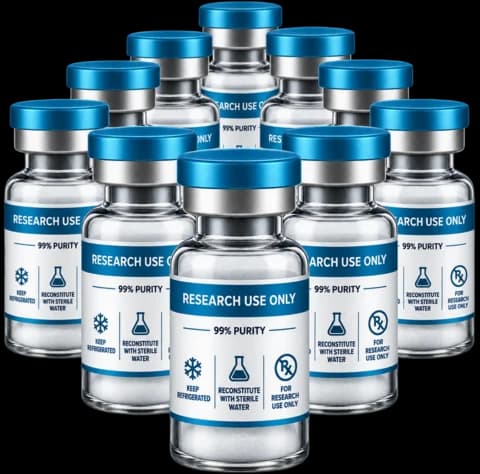
Second, there is no established retail category. AICAR is sold on the research-chemical market as a lyophilized powder, typically in small vials — community listings commonly describe around 50 mg per vial. Because no validated human fitness-use dose exists, there is no natural "monthly supply" to price against, and published $/mg figures are thin and volatile compared with mainstream research peptides.
Current Market Pricing (2026)
Rather than fabricate a granular multi-vial table that will be stale within weeks, treat AICAR pricing as a live, low-liquidity market. The practical takeaways:
| Factor | What buyers encounter |
|---|---|
| Format | Lyophilized powder, small vials (community listings often ~50 mg) |
| Price per mg | Higher and more variable than mainstream peptides — thin market, few reputable sellers |
| Dosing cost driver | AICAR's short half-life leads community sources to describe frequent dosing, which raises real-world cost |
| Best move | Compare live offers on /best/aicar rather than anchoring on any single quoted number |
The pattern is clear: because the compound has no proven human use and a shallow vendor pool, the meaningful variable is not squeezing out the lowest $/mg — it is finding a vendor whose identity and purity documentation you can actually trust. Price is secondary to proof.
For current vendor-specific pricing, see the live Best AICAR Vendors comparison.
How to Verify AICAR Quality

AICAR is a small nucleoside molecule (5-aminoimidazole-4-carboxamide-1-β-D-ribofuranoside), not a long peptide chain, so the verification questions are slightly different from what you would ask about a 30-amino-acid peptide. The two things that matter most are correct compound identity and purity, and both live on the Certificate of Analysis (COA).
What a COA Should Include
Identity confirmation
- Mass spectrometry confirming the correct molecular weight (~258.23 Da for AICAR)
- Confirmation that the compound is AICAR / acadesine / AICA-riboside — these are the same molecule, so seeing any of those names for one product is expected, not a contradiction
Purity testing
- HPLC purity — look for 98%+
- The HPLC chromatogram should show a single dominant peak, not a cluster of unexplained peaks
Contamination testing
- Endotoxin levels
- Residual solvent analysis
- Heavy metals screening
The Identity Trap Specific to AICAR
The single most common point of confusion — and a place where a sloppy or dishonest vendor is exposed — is the AICAR/acadesine naming overlap. "AICAR" is the research-chemical and fitness label; "acadesine" is the pharmaceutical name used in the cardiac trials. They are one compound. A trustworthy COA will name the molecule clearly and back it with a molecular weight and MS trace. A listing that treats "AICAR" and "acadesine" as two different premium products, or that can't produce identity data at all, is telling you something.
How to Verify a COA Is Legitimate
- Check that the COA names the specific product and lot/batch number you are buying — not a generic sample.
- Confirm the testing lab is named and independent (a third-party lab, not just the vendor's own claim).
- Cross-check the molecular weight on the COA against the known value (~258.23 Da).
- Look at the actual HPLC chromatogram image, not just a stated purity percentage.
- Where possible, verify the COA directly with the testing lab rather than trusting a PDF that could be edited.
Red Flags to Avoid
- No COA available, or "COA on request" that never materializes
- A purity number with no accompanying chromatogram
- COAs with no lot number, or the same COA reused across every product
- Molecular weight missing or wrong
- Prices dramatically below the market with no testing to justify them
- A vendor implying AICAR is safe, proven, or approved for human fitness use — it is none of those